Chemotherapy for Breast Cancer

What is chemotherapy?
Chemotherapy, often called chemo for short, uses medicines to stop or slow the growth of breast cancer cells. Chemotherapy for breast cancer and other cancers is considered systemic therapy because it travels through the bloodstream and affects the whole body.
Breast cancer cells grow and divide faster than healthy, normal cells. Chemotherapy affects rapidly dividing cells, such as cancer cells, more than it affects healthy cells. Still, chemotherapy medicines are powerful and can damage healthy cells, especially cells that grow and divide quickly.
Chemotherapy medicines may be given:
intravenously, which means they’re delivered directly into your bloodstream through an IV, a port, or a catheter
orally, as a pill or capsule that you take by mouth
There are a number of chemotherapy medicines used to treat breast cancer. In many cases, a chemotherapy regimen uses a combination of two or more medicines.
Depending on the breast cancer’s characteristics, chemotherapy medicines may be combined with other treatments, such as hormonal therapy, radiation therapy, targeted therapy, or immunotherapy.
How chemotherapy works
Chemotherapy medicines stop or slow the growth of breast cancer cells by destroying the cells or stopping them from dividing.
Breast cancer cells usually grow and divide very quickly in an out-of-control fashion with no order. Because the cancer cells grow and divide so quickly, they break away from the original tumor and travel to other places in the body.
Chemotherapy treatment is changing. Read our special series to learn more about chemo side effects and ways to manage them, how to know if you need chemo, and how to talk with your treatment team about chemo dosing options.
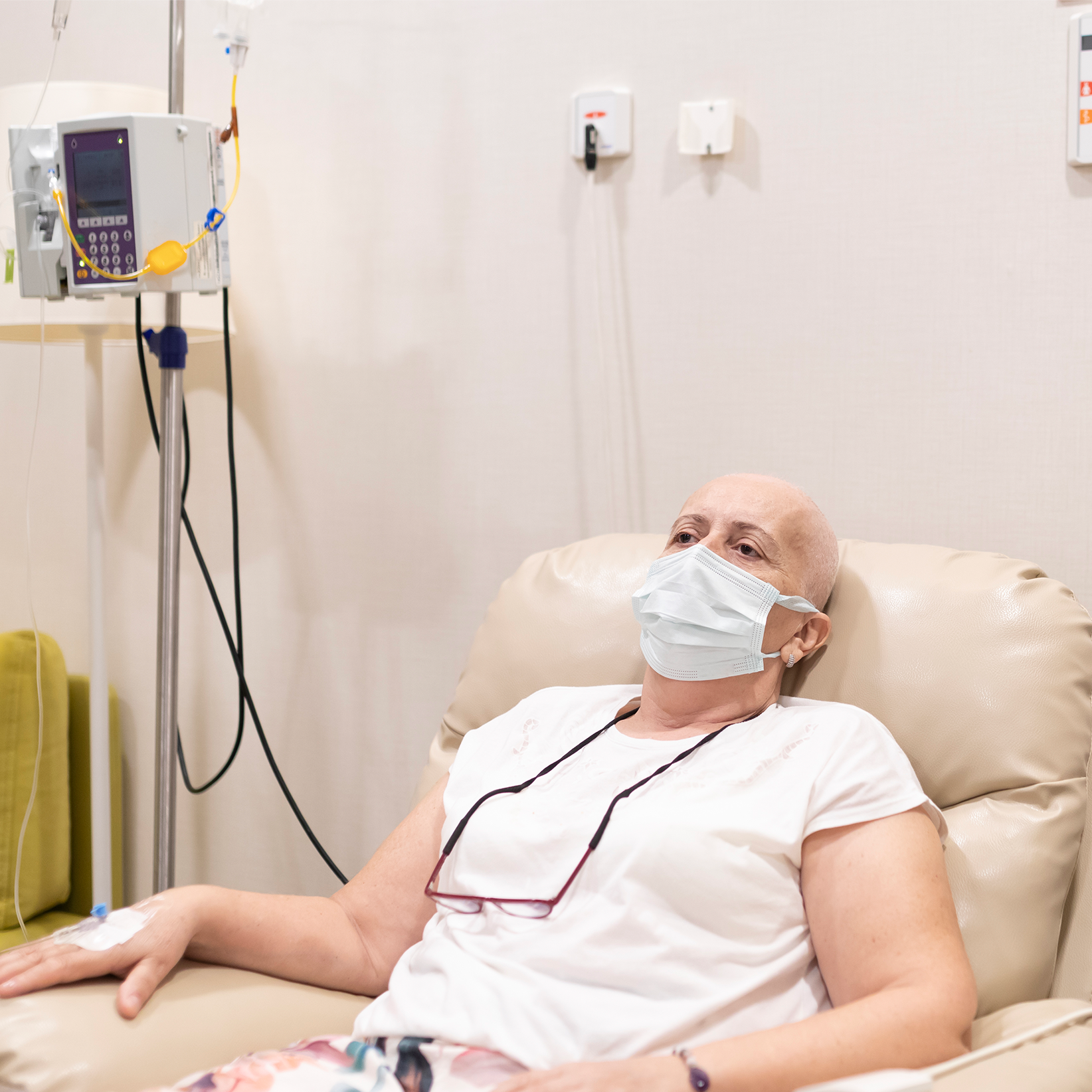
Because chemotherapy travels throughout the body in the bloodstream, it works on the cancer cells in the original tumor and throughout the body.
Most healthy, normal cells grow and divide in a precise, orderly way, so they aren’t as affected by chemotherapy as quickly dividing cells, such as cancer cells. Still, there are some healthy cells that divide quickly, such as cells in:
hair follicles
nails
the mouth
the digestive tract
bone marrow
So chemotherapy can harm these rapidly dividing cells, which can cause side effects such as hair loss, nail changes, mouth sores, nausea, and vomiting.
When is chemotherapy used for breast cancer?
Doctors use chemotherapy in several ways to treat all stages of breast cancer. Whether or not a doctor recommends chemotherapy for you depends on the breast cancer’s characteristics, your health history, and your personal preferences.
After surgery for early-stage breast cancer (adjuvant chemotherapy)
Doctors call chemotherapy given after surgery adjuvant chemotherapy. Chemotherapy is given after surgery to destroy any cancer cells that may have been left behind or may have travelled to other places in the body. These single cells — or groups of two or three cells — are very small and don’t appear on imaging tests. Chemotherapy after surgery reduces the risk of the cancer coming back, called recurrence by doctors.
Doctors don’t recommend chemotherapy after surgery for everyone diagnosed with early-stage breast cancer, except in the following situations:
If there are cancer cells in the lymph nodes near the affected breast, doctors may recommend chemotherapy.
If the cancer has characteristics that make it more aggressive, such as being hormone receptor-negative or HER2-positive, doctors usually recommend chemotherapy.
If you’re a pre-menopausal woman, your doctor is more likely to recommend chemotherapy because breast cancer in pre-menopausal women tends to be more aggressive.
Tumor genomic assays, or tests, analyze a sample of cancer tumor to see how active certain genes are. The activity level of these genes affects the cancer’s behavior, including how likely it is to grow and spread. If it’s unclear whether you would benefit from chemotherapy, your doctor may recommend a genomic test to help guide your decision.
Before surgery for early-stage breast cancer (neoadjuvant chemotherapy)
Doctors call chemotherapy given before surgery neoadjuvant chemotherapy. Chemotherapy is given before surgery to shrink large cancers, which may:
give your surgeon the best chance of completely removing the cancer
allow you to have less extensive surgery — lumpectomy rather than mastectomy, for example
reduce the amount of cancer in the lymph nodes, allowing you to have less extensive lymph node surgery
DCIS (stage 0), stage I, stage IIA and IIB, and stage IIIA are considered early-stage breast cancer.
Chemotherapy before surgery also allows your doctor to:
see how the breast cancer responds to the chemotherapy medicines
see whether other medicines are needed to treat the breast cancer if it doesn’t respond to the chemotherapy medicines
Again, doctors don’t recommend chemotherapy before surgery for everyone diagnosed with early-stage breast cancer. But, depending on the characteristics of the cancer, doctors may recommend chemotherapy before surgery for people diagnosed with:
large breast cancers
high-grade breast cancers
breast cancers that have spread to the lymph nodes
To treat advanced-stage and metastatic breast cancer
Advanced-stage breast cancer is cancer that has spread beyond the breast to nearby tissues, such as the skin or the chest wall. When advanced-stage cancer spreads to parts of the body away from the breast, such as the bones or liver, it’s called metastatic breast cancer.
Stage IIIB and IIIC, and stage IV are considered advanced-stage breast cancer.
Depending on where the breast cancer has spread, surgery to remove the cancer may not be an option. In this case, doctors may recommend treating the cancer with chemotherapy — often in combination with other medicines, such as targeted therapy or immunotherapy.
If the advanced-stage or metastatic cancer is a recurrence — meaning you were previously diagnosed with early-stage breast cancer and it has come back — your doctor takes into account any previous chemotherapy treatment you’ve had when developing a treatment plan.
Chemotherapy medicines and regimens
There are many chemotherapy medicines used to treat breast cancer. In most cases of early-stage breast cancer, doctors recommend a combination of two or three medicines, depending on the cancer’s characteristics. These combinations are called chemotherapy regimens, and there are several standard regimens doctors use for early-stage breast cancer.
For advanced-stage breast cancer, chemotherapy medicines are usually given one at a time, but doctors may recommend certain combinations in some cases.
Learn more about chemotherapy medicines and regimens.
What to expect during chemotherapy treatment
Some chemotherapy medicines for breast cancer can be taken orally as pills. But most chemotherapy medicines are given as an infusion into a vein through an IV, a port, or a catheter over a period of time.
Chemotherapy is given in cycles — a period of treatment followed by a period of recovery. One cycle may include chemotherapy on the first day and then three weeks of recovery with no treatment.
A chemotherapy treatment regimen is made up of several cycles. The number of cycles in a regimen and the total time it takes to complete one regimen depends on the chemotherapy medicines you receive. But most regimens take three to six months to complete.
In some cases, if the cancer is considered aggressive, doctors may recommend a dose-dense chemotherapy regimen. Dose-dense chemotherapy means there is less time between cycles — say every two weeks instead of every three weeks.
Learn about what to expect with chemotherapy.
Chemotherapy side effects
Chemotherapy works by harming cells that grow rapidly, which includes most cancer cells. As chemo moves through the body it can also harm healthy rapidly growing cells, such as cells in your hair and mouth.
When chemotherapy harms non-cancerous cells, it causes side effects. Learn more about chemotherapy side effects.
Paying for chemotherapy
There are many ways to ensure you can adequately cover the cost of your breast cancer care.
The cost of chemotherapy for breast cancer depends on:
the medicines used and their doses
how long and how often you receive chemotherapy
where you get chemotherapy
where you live
Before you start chemotherapy, someone in your doctor’s office contacts your insurance company to get your chemotherapy plan approved. Most insurance plans pay for chemotherapy, but there may be some facility fees that insurance doesn’t cover. A social worker or nurse navigator can help you if you have questions.
If you need financial assistance, there may be organizations that can help. The National Cancer Institute offers a list of financial and other support services. You also can call 1-800-422-6237 and ask for information on financial support organizations.
Staying on track with chemotherapy
Chemotherapy for breast cancer works best when you get the recommended amount of medicine for the recommended amount of time.
It’s a good idea to not skip a chemotherapy treatment. Still, your doctor may change your chemotherapy schedule to help you manage any side effects you may be having and let you know when treatment can start again.
Because chemotherapy can last for a number of months, coordinating a chemotherapy schedule with work and family activities can get challenging:
Some people may have trouble getting to and from chemotherapy infusions.
Some people who are taking chemotherapy as a pill or capsule may have trouble remembering to take the medicine every day.
Here are some steps you can take to stay on track with your chemotherapy treatment plan.
Ask for scheduling help. In general, it’s not a good idea to skip chemotherapy to go on vacation or to attend an event. But you can ask your doctor or treatment center staff to help you plan your treatment cycles so you can go out when you’re feeling good.
If you’re working, ask if you can schedule your infusions for Thursday or Friday afternoons. That way, you have all weekend to rest and manage any side effects.
If you have troubling side effects, talk to your doctor. There are medicines that can help manage the most common chemotherapy side effects, such as nausea, constipation, and diarrhea.
Here are some strategies to help you remember to take your chemotherapy medicine if you take a pill or capsule:
Ask for a written copy of your treatment plan, and ask your doctor to add what you should do if you miss a dose. Keep the plan where you can look at it every day.
Keep a medicine diary. Use a calendar or notebook to keep track of when you take your medicine each day.
Take your medicine at the same time every day. If you take your medicine right after doing something you do daily — such as brushing your teeth or eating breakfast — you’re more likely to remember to take it.
Use the alarm or calendar feature in your phone, watch, or computer.
Use a pill caddy so you can see if you’ve taken your medicine each day.
Use a visual cue. Keep your medicine bottles on the bathroom counter and turn them upside down after you’ve taken the medicine.
Plan ahead if you intend to be away from home. If you’re travelling, take your medicine diary and pack extra pills, keeping them in their original bottles. If you plan to be away from home for more than a week or so, ask your doctor for an extra prescription. You also can ask your doctor if you can fill a prescription at your destination, just in case.