Flaxseed and Breast Cancer
Flaxseeds are nutrient-rich seeds that can be eaten whole or ground and are often added to foods like bread, smoothies, salads, and oatmeal. They’re packed with fiber, which is good for gut health and regular bowel movements, and contain heart-healthy omega-3 fatty acids. Some research suggests regularly eating flaxseeds may help improve metabolic and cardiovascular health. Because of their nutrient profile, scientists have also been exploring flaxseed’s potential role in cancer prevention.
Key Takeaways:
It’s unclear whether flaxseed can reduce the risk of breast cancer.
Early research suggests that an estrogen-like component of flaxseed may help slow the growth of breast cancer. But experts recommend that people with hormone-sensitive cancer talk to their doctor before taking flaxseed.
Studies have found mixed results on whether flaxseed can improve menopause symptoms.
Research suggests flaxseed can benefit people with non-cancer conditions such as diabetes, obesity, high blood pressure, and constipation.
What the research shows
Most studies have looked at whether compounds in flaxseeds called lignans can reduce cancer risk. Flaxseed is the best food source of lignans, and it has 75 to 800 times more than other sources like cereals, legumes, fruits, and vegetables.
Early research suggests that lignans might affect the balance of the types of estrogen in the body in a way that could lower breast cancer risk and help slow the growth of breast tumors. Lignans, however, have a similar chemical structure to estrogen and can bind to estrogen receptors in the body. Because of this, some experts say that people with hormone-sensitive cancer should be cautious about taking flaxseed.
Cancer risk
There aren’t any studies on how flaxseed directly affects breast cancer risk. Instead, studies look at the impact of lignans, their main component. The results are mixed.
Some large studies have found that eating a lot of lignans lowers breast cancer risk in postmenopausal women.1, 2 (One gram of flax seeds contains anywhere from about 3 to 30 mg lignans, and benefits were seen starting at around 1 to 1.4 mg per day.) One study found that lignans did not affect breast cancer risk for postmenopausal women but did reduce the risk in women who are considered overweight. Still, other studies have found that lignans do not affect breast cancer risk for any group.
Menopause symptoms
Menopause symptoms, including hot flashes, can be triggered by taking hormonal therapy for breast cancer.
Although a few small studies suggest that flaxseed can improve menopause symptoms and quality of life, others have found no effect.3, 4, 5, 6 More research is needed.
Cancer-fighting effects
A small study suggests that flaxseed may affect the balance of different forms of estrogen in the body in a way that protects against breast cancer. Another small study found that when women ate flaxseed muffins from the time of breast cancer diagnosis to surgery, the breast tumors showed signs of slowed growth.
Cell and animal studies
Studies in cells and animals suggest that flaxseed and its components have the potential to help fight cancer in a few different ways.
A note about animal and cell studies
Studies in cells and animals are called preclinical studies because they’re done before any studies involving people. They are critical to developing new treatments for breast cancer. But just because a treatment works in a test tube or a mouse doesn't mean it will work in people. When a treatment enters a human body, it interacts with various systems, including the immune system. Experiments on cancer cells in a dish or a mouse can’t replicate those human conditions. This is why early results from preclinical studies can be promising and exciting, but don’t always lead to new treatments for people.
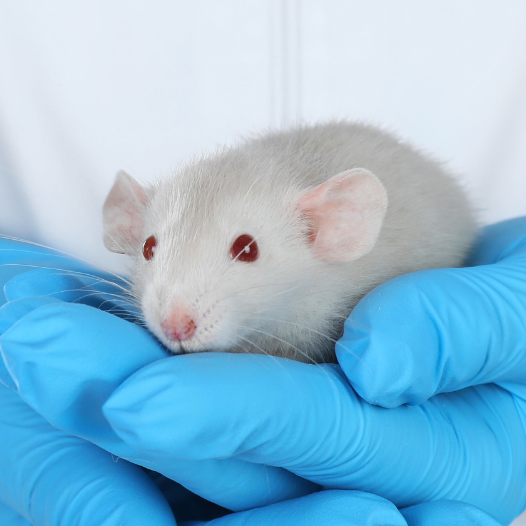
Lab studies suggest that flaxseed and its components may limit growth and metastasis of tumors, trigger the death of cancer cells, and even stop cancer from developing.7, 8 They may do this in part by altering the expression of cancer-related genes and cell signaling pathways.
Research also suggests that flaxseed may have anti-estrogen effects, and could slow the growth of both estrogen receptor-positive and estrogen receptor-negative breast cancer. Animal models show that flaxseed may boost the effects of the anti-estrogen drug tamoxifen in estrogen receptor-positive breast cancer, and it may help relieve side effects of radiation.
Other potential uses
Studies in people have found that some preparations of flaxseed are likely helpful for a few different conditions. Overall, ground flaxseed is the most potent preparation. Evidence suggests it can:
support weight loss in people who are overweight or have obesity9
reduce total and LDL cholesterol, and potentially triglycerides10
lower blood pressure11
reduce inflammation
relieve constipation12
improve glucose and insulin levels and decrease insulin resistance in people with diabetes and prediabetes13
Safety, risks, and side effects
Flaxseed is generally considered safe for most people. Though there is early evidence to suggest that flaxseed may help fight breast cancer, experts recommend that people with hormone-sensitive cancer talk to their doctor before eating or taking it. This is because flaxseed contains lignans, which may act like estrogen.
A lot of flaxseed research in people uses ground rather than whole flaxseeds or liquid flaxseed extract. This is because lignans are in the hard hull of the seed, and grinding up the hull makes it easier to absorb the lignans. You can buy ground flaxseeds, or you can grind whole flaxseeds yourself using a food processor or coffee grinder.
Experts suggest a safe amount of flaxseeds is 20-30 grams per day. This is about 3-4 tablespoons of ground flaxseeds. Studies have shown that people can safely eat up to 60 grams per day.
Side effects can include bloating, gas, constipation, and diarrhea. If you want to add flaxseeds to your diet, gradually increasing the amount you eat may help avoid side effects.
Should people with breast cancer eat flaxseed?
Flaxseeds contain beneficial nutrients like fiber and omega-3 fatty acids, and research suggests they may improve metabolic and heart health. It’s unclear whether flaxseeds can prevent cancer or relieve menopause symptoms, but early research suggests they may be able to help fight breast cancer as a complementary therapy. However, flaxseed contains lignans, which may in theory act like estrogen, so people with hormone-sensitive cancers should be cautious. Always ask your doctor before taking a new supplement, especially during cancer treatment.
1. Touillaud MS et al. Dietary lignan intake and postmenopausal breast cancer risk by estrogen and progesterone receptor status. J Natl Cancer Inst. 2007 Mar 21;99(6):475-86. doi: 10.1093/jnci/djk096.
2. Suzuki R et al. Dietary lignans and postmenopausal breast cancer risk by oestrogen receptor status: a prospective cohort study of Swedish women. Br J Cancer. 2008 Feb 12;98(3):636-40. doi: 10.1038/sj.bjc.6604175.
3. Lemay A et al. Flaxseed dietary supplement versus hormone replacement therapy in hypercholesterolemic menopausal women. Obstet Gynecol. 2002 Sep;100(3):495-504. doi: 10.1016/s0029-7844(02)02123-3.
4. Colli MC et al. Evaluation of the efficacy of flaxseed meal and flaxseed extract in reducing menopausal symptoms. J Med Food. 2012 Sep;15(9):840-5. doi: 10.1089/jmf.2011.0228.
5. Cetisli NE, Saruhan A, Kivcak B. The effects of flaxseed on menopausal symptoms and quality of life. Holist Nurs Pract. 2015 May-Jun;29(3):151-7. doi: 10.1097/HNP.0000000000000085.
6. Dodin S et al. The effects of flaxseed dietary supplement on lipid profile, bone mineral density, and symptoms in menopausal women: a randomized, double-blind, wheat germ placebo-controlled clinical trial. J Clin Endocrinol Metab. 2005 Mar;90(3):1390-7. doi: 10.1210/jc.2004-1148.
7. Chen J, Stavro PM, Thompson LU. Dietary flaxseed inhibits human breast cancer growth and metastasis and downregulates expression of insulin-like growth factor and epidermal growth factor receptor. Nutrition & Cancer. 2002;43:187-92. doi: 10.1207/S15327914NC432_9.
8. Lee J, Cho K. Flaxseed sprouts induce apoptosis and inhibit growth in MCF-7 and MDA-MB-231 human breast cancer cells. In Vitro Cell Dev Biol Anim. 2012 Apr;48(4):244-50. doi: 10.1158/1078-0432.CCR-04-2326.
9. Mohammadi-Sartang M et al. The effect of flaxseed supplementation on body weight and body composition: a systematic review and meta-analysis of 45 randomized placebo-controlled trials. Obes Rev. 2017 Sep;18(9):1096-1107. doi: 10.1111/obr.12550.
10. Hadi A et al. Effect of flaxseed supplementation on lipid profile: An updated systematic review and dose-response meta-analysis of sixty-two randomized controlled trials. Pharmacol Res. 2020 Feb;152:104622. doi: 10.1016/j.phrs.2019.104622.
11. Li L et al. Effect of flaxseed supplementation on blood pressure: a systematic review, and dose-response meta-analysis of randomized clinical trials. Food Funct. 2023 Jan 23;14(2):675-690. doi: 10.1039/d2fo02566c.
12. Soltanian N, Janghorbani M. Effect of flaxseed or psyllium vs. placebo on management of constipation, weight, glycemia, and lipids: A randomized trial in constipated patients with type 2 diabetes. Clin Nutr ESPEN. 2019 Feb;29:41-48. doi: 10.1016/j.clnesp.2018.11.002.
13. Villarreal-Renteria AI et al. Effect of flaxseed (Linum usitatissimum) supplementation on glycemic control and insulin resistance in prediabetes and type 2 diabetes: A systematic review and meta-analysis of randomized controlled trials. Complement Ther Med. 2022 Nov;70:102852. doi: 10.1016/j.ctim.2022.102852.