5 Breakthroughs That Could Transform Breast Reconstruction

Breast reconstruction surgeries have come a long way in recent years. But they still have significant risks and potential complications, and in some cases require ongoing maintenance.
Fortunately, researchers around the world are working on advances that could help make the reconstruction process safer and easier, with better long-term results. Here are five new, possibly game-changing technologies to watch for.
1. 3D-printed breast implants
Today’s breast implants have an outer silicone shell and are filled with either saline or silicone gel. They generally need to be removed and replaced every 10 years or so. But the next generation of implants could gradually, safely dissolve in the body so that no foreign material remains.
Using 3D printing, researchers in several countries are creating custom breast implants made from a material that’s similar to the one used for dissolvable stitches. The implants are hollow when they’re inserted. Then they’re filled with the patient’s own fat, which is removed from the belly or thighs using liposuction. The implant’s outer shell is absorbed by the body over a period of months, while at the same time, the fat, tissue, and blood vessels in the breast are growing. The result is a reconstructed breast made from natural tissue. And this approach could eliminate some of the risks of complications from traditional implant or flap reconstruction.
Other researchers are working to develop bioengineered tissue implants made from a person’s own cells that then integrate with the body as living tissue.

2. An injectable implant alternative
Acellular dermal matrix (ADM), is a soft tissue substitute made from human or animal skin. Currently, it’s sold as a flat sheet. Surgeons often wrap part of a breast implant in ADM before inserting it in the body, which helps keep it in place and prevents scarring and rippling.
Recently, researchers in Korea found an innovative new way to use ADM. They created a paste made from skin cells that can be injected into the breast to fill in lost volume after a breast tumor is removed. Injectable ADM could be a less-invasive alternative to implant or flap reconstruction, with less scarring, fewer complications, and quicker healing.
3. Robotic-assisted reconstruction
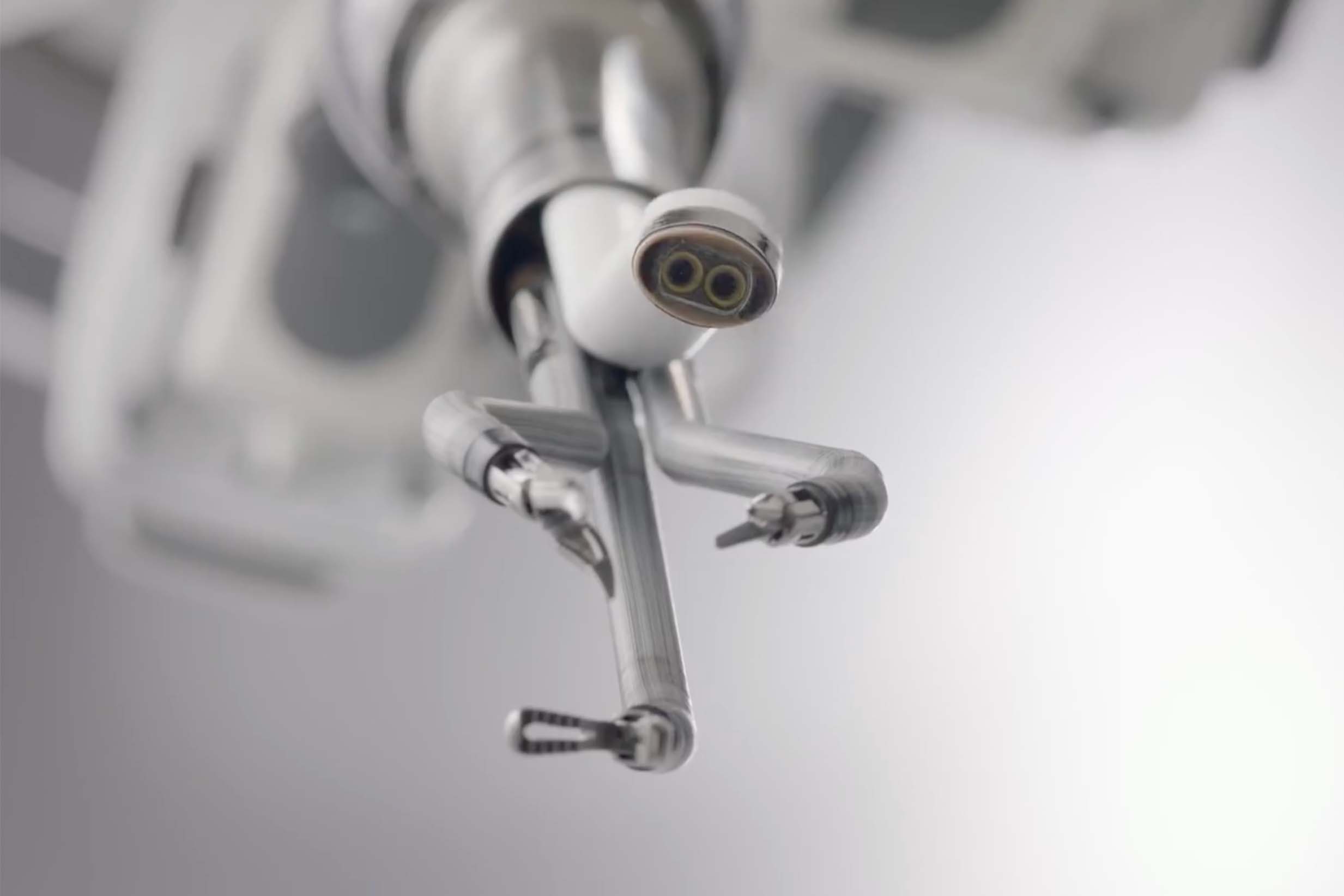
Surgeons have been using robotic-assisted systems to perform more precise, less invasive surgeries for prostate, colon, and gynecological cancers for many years. More recently, robotic systems are being used for nipple-sparing mastectomies with immediate reconstruction with implants or tissue flaps. Some of these are still in the experimental phase, but one robotic-assisted system has received clearance from the FDA for performing mastectomies.
To operate the system, the surgeon sits at a console and uses joysticks to control the robotic arms. The arms hold the surgical instruments and a camera that shows the surgical site. Robotic-assisted breast surgery allows for fewer and smaller incisions, better preservation of blood flow and nerves, less scarring, and faster recovery.
4. A test to detect infections earlier
Bacterial infection after breast implant surgery is a common problem, and it may lead to the need for intravenous antibiotics and surgery to remove the implant.
Researchers at Washington University School of Medicine in St. Louis, Missouri are developing a test that could be given at routine doctors visits after surgery to detect infections days or weeks before symptoms even appear. The test analyzes fluid from the surgical drains to see if it has certain biomarkers that indicate an infection is developing. If the test is positive, the patient could start taking antibiotics right away, preventing a serious infection and the need for more aggressive treatment.
5. An implantable device that restores sensation
During a traditional mastectomy, nerves in the chest are cut or damaged, leading to a loss of sensation and in some cases chronic pain. Some surgeons are offering new procedures to preserve and reconnect nerves, which can help prevent these side effects. And a clinical trial at the University of Chicago is investigating another approach to restoring feeling that could be used along with breast reconstruction.
In the study, a small device is implanted in one of the breasts during a mastectomy with immediate tissue expander reconstruction. The device has pressure sensors and sends electrical currents to nerves in the chest in response to touch and pressure. It remains in place for a few months, and is removed when the tissue expander is replaced with a breast implant. This short-term intervention may prove to help restore touch sensation in the breast.
Image: Copyright © 2026 Intuitive Surgical Operations, Inc.