Breast Cancer Breaks the Fourth Wall
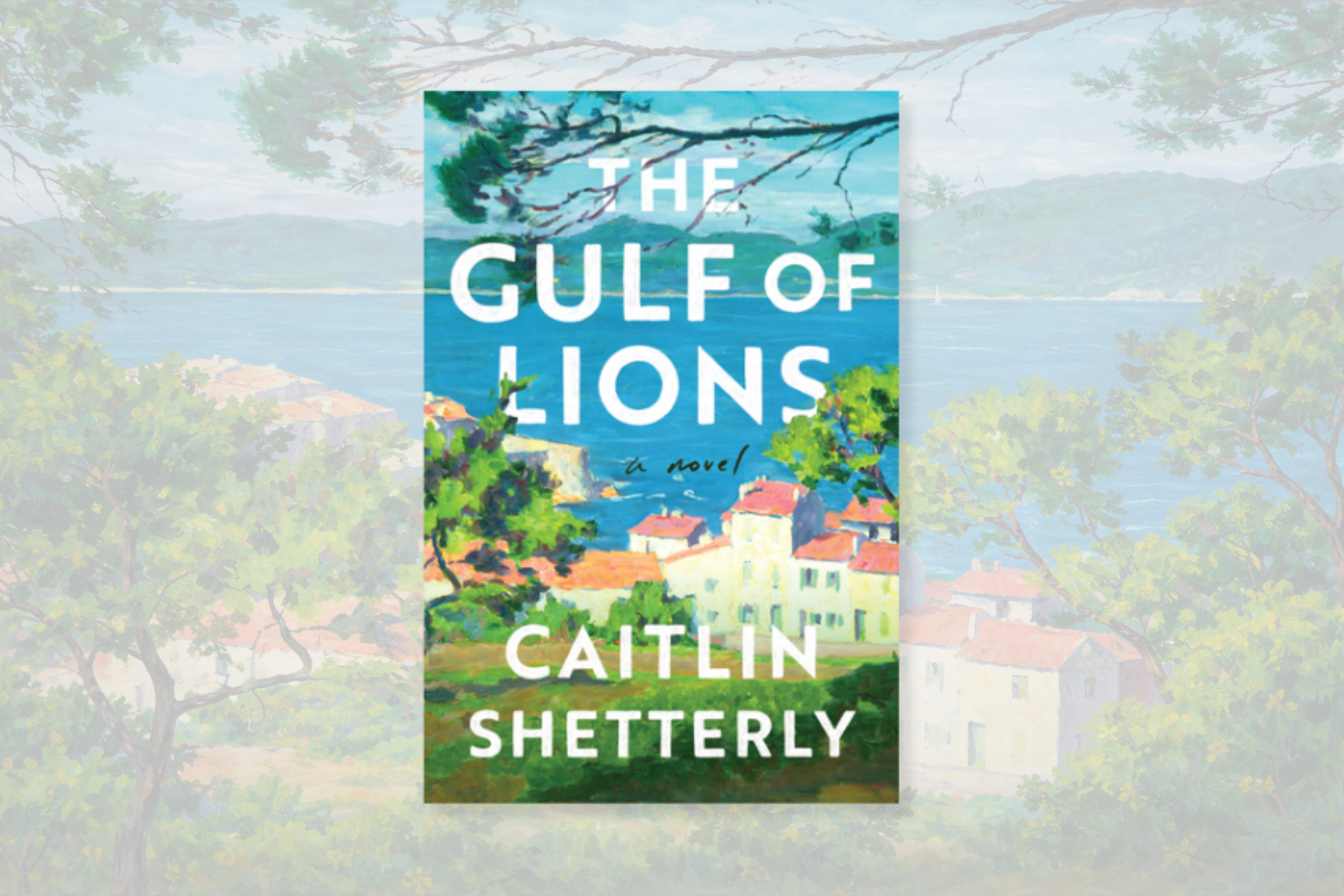
In Caitlin Shetterly’s latest novel, the main character has been diagnosed with breast cancer in her left breast. Six months after sending in her draft, Shetterly was diagnosed with breast cancer in her left breast. Breast cancer had broken the fourth wall between Shetterly, her characters, and her readers.
Listen to the episode to hear Caitlin explain:
- Sponsor Message
how she came up with the idea of her character Alice being diagnosed with breast cancer
- Sponsor Message
why she thought Alice would be the only person who could understand what she was going through
- Sponsor Message
how breast cancer changed her as a person and as a writer
Welcome to The Breastcancer.org Podcast, the podcast that brings you the latest information on breast cancer research, treatments, side effects, and survivorship issues through expert interviews, as well as personal stories from people affected by breast cancer. Here’s your host, Breastcancer.org Senior Editor, Jamie DePolo.
Jamie DePolo: Hello, thanks for listening. My guest today is Caitlin Shetterly, a writer and author of several books whose work has been featured in The New York Times, Boston Globe, Elle, Self, and other publications. Her most recent book is entitled The Gulf of Lions. In the novel, Alice, one of the main characters, is diagnosed with stage IIB breast cancer in her left breast. Six months after Caitlin sent the book to her editor, she was diagnosed with the same type of cancer in the same breast. She joins us today to talk about the book, her diagnosis, and how breast cancer broke the fourth wall between Caitlin and her characters and her readers. Caitlin, welcome to the podcast.
Caitlin Shetterly: Thank you so much. It’s really meaningful for me to be here. I think that talking about breast cancer and making it so that other women feel a little less alone going through this experience, just hearing each other’s narratives, it’s really important to me. So, I'm so thrilled you’ve invited me.
Jamie DePolo: Thank you. The character of Alice is in your first novel, Pete and Alice in Maine. So in this sequel, how did you come up with her breast cancer diagnosis? What was the rationale for that?
Caitlin Shetterly: You know, that’s a really great question. So, it’s a little bit of a layered answer if you don’t mind.
Jamie DePolo: Sure.
Caitlin Shetterly: So, I ended Pete and Alice in Maine on a cliffhanger, where she finds something in her breast, but we don’t know exactly what that’s going to mean for her, if anything. I wasn’t planning when I finished that book on having her have cancer. I hadn’t even really thought about that. It just seemed — in that book, I was interested in marriages, in relationships. I had written a novel about two people coming from New York City to Maine with their two girls to shelter in place during COVID. I’m born and raised in Maine, so is my husband. There were a lot of people coming to Maine from away.
There was a story I read about some people from away on an island called Vinalhaven off the coast of Maine where locals had cut down trees to force the people to quarantine. Because in Maine it actually, despite what you think you may know about Maine and the coast, it’s a very poor state. It’s an aging state. We didn’t have enough hospital beds. We didn’t have enough ventilators. In our hometown, for instance, and in most towns around Maine, we were being rationed two rolls of toilet paper a day and you had to sign your name. So, I think there was a real chip on a lot of our shoulders about all these people coming in.
But then I kind of wanted to turn it around and think about, who are these people and what are they trying to get refuge from?
Anyway, the book examines their marriage, their relationship with their daughters, their relationship to Maine, which they actually have very little relationship to. And his desire to go back to New York and her desire to stay. I was interested at that time in the events, like COVID or personal events, that can throw people back together without them ever making decisions to stay married or not stay married, stay together, separate. I guess I was interested in what inertia does to regular lives.
And so, when I gave her a lump in her left breast at the end of that book, I was thinking about that. And also when I was 25, I had a benign tumor in my left breast called a fibroadenoma. And it was very large and I had it taken out by this woman, who was an amazing surgeon in New York City. I lived there at that time. In fact, Bruce Springstein’s wife was right down the hall, and she had also just operated on her. So, that’s my claim to fame. And you know, that was a big thing for me, like why did I have that? And, you know, when it came out.
So I wrote, you know, at the time when Alice finds that tumor, one thing I did borrow from my life, though I really made the entire world up, I borrowed from my own life the experience of being in a bath, having a bar of soap, and how it kind of like hit this thing, and sort of you could tell that it was hitting something. And so, I had that happen to her.
When I sat down to write The Gulf of Lions a few years later, I was thinking about how I had spent so many years by then reading these books aloud to my sons where a mother is often ill or dying. And I wanted to change that narrative. I was interested in the mothers who survive until they don’t, but who are thriving and surviving. And then I just did some quick looking it up and I realized that there are way more of us who survive than don’t survive. And yet, the narrative is almost always weighted towards the death part. And so I thought, well, what would this do to this family? Again, this question of inertia and relationships. What would it do to this family and to these girls if Alice has gone through this terrible thing, but she takes her daughters to France because she’s trying to reclaim herself, reclaim her life, live with joy, but also recklessly, and what would that mean? So, that’s what I set out to do. Very long answer, excuse me.
Jamie DePolo: No, that’s great. So now I’d like to move to your personal story. So if you’re comfortable, could you tell us about your diagnosis? Did you find a lump? Was the cancer found by a mammogram? What was your experience?
Caitlin Shetterly: Yeah. So, I handed the book in in October of 2024. I was supposed to have had a mammogram in August of 2024. I was so deeply involved in the book that I kept pushing it off. Now, my grandmother died of breast cancer when I was three, but in my case, nobody had ever seen anything and I had — I don’t know, I think I was a little casual about it. I thought, you know, that won't happen to me. So I handed the book in.
Now looking back, I now can see that my breasts were sort of tender that whole fall, especially my left breast, and a little swollen. But that can also happen when you're going through peri-menopause and that’s what my doctors kept telling me.
I went, finally, to my mammogram in February of 2025. I went on a Saturday because the Mid Coast Hospital and MaineHealth, they are amazing up here in Maine. They’re so great, but they have made it so accessible. You can go any day of the week at almost any time because they're trying to get women in, right? So I went on a Saturday, and it was the start of my kids’ February break, and I got a phone call on Monday saying you need to come back. And I just sort of thought, what? They must have made a mistake. So, I went back. What happened then was 11 weeks of testing. I never felt anything. There was nothing there. I can tell you once I got that phone call, I didn’t even want to touch anything and see if I could feel anything. I was too scared.
Jamie DePolo: Sure.
Caitlin Shetterly: But it was way down deep, and I had this radiologist who, you know, God bless her. I sent her a card and thanked her profusely now. At the time, I felt like, my God, would no one rid of this meddlesome woman. She keeps calling me back. She keeps wanting —and then I would go in and the techs wouldn’t be able to find it, and they’d be like, where was this thing? And then she would come in the room and then it was, we need an MRI. And then it was a biopsy. And my OB/GYN was like, you have been through enough, there’s nothing there. I don’t think you need to go get the biopsy.
What happened then was I asked this radiologist and she said, “I’d like you to get the biopsy.” I then went in, I think it was early April right about now. I went in and my husband was allowed to come into the room with me. I’ll never forget that moment because of the care I got. They were so accurate, and they took such good care of me, and they were so gentle. But I did hear the radiologist who was performing the biopsy say, “This one’s fuzzy.” And as soon as he said, this one’s fuzzy, I knew that probably we were in trouble.
It took a couple more weeks to get the results back. And yet, it was really shocking. Getting a cancer diagnosis is shocking anyway. It was more shocking that I had pre-staged it with another character, which strangely you might think might give you some protection from having it. I know that sounds really twisted and weird, but like if I go through all these motions and think this all through, it’s less likely to happen to me. Why would anyone ever think that? But this is sort of some of the strange things that slip away when you are finally diagnosed yourself.
Jamie DePolo: Was that your first thought? I mean, given that Alice has breast cancer in the novel, did you think of her immediately when you were diagnosed?
Caitlin Shetterly: Yes. I was at a nearby farm with my younger son and his friend, our neighbor. And they were running around sort of looking at the goats and stuff. And I sat down at the picnic table. The nurse practitioner, she started with the good news, and I knew because there were two other benign breasts in my other – I knew the comedic rule of three. I knew that by the time we got to three there was going to be a problem. So, I was just wondering how long it was going to get to three. I could just tell.
Yes, I thought of Alice immediately. Then I thought, I need to go home. I brought the neighbor’s son home. I took my kids to the beach. I have two sons, and we went to the beach, and I told them in the car. My younger son, who was 10 at the time, started weeping in the backseat, and I kind of put my hand back on his shin. And my older son, who was 16, just got very still, and I put my hand on his shoulder, and I just held on to it for the rest of the drive, and he didn’t flinch. He let me hold me. You know, I needed him.
Jamie DePolo: Yeah. Can I ask about your treatment, and I'm wondering, too, if the research you did for the novel about Alice, did that help you at all with your treatment? Did that help you at all with the experience?
Caitlin Shetterly: That’s such a good question. You know, one of my best friends, Rachel, I wish she was sitting right here because she contends it did help me. But she’s seen me from the outside. I don’t know if I know if it helped me. I guess it did because I already knew a lot, but it also kind of sucks to know a lot.
Here’s what happened to me, anyway, when I got cancer. I wanted to know as little as possible. I wanted only the medical professionals to tell me. And I was going to assess person by person, situation by situation, if I could trust it.
But I wasn’t going to go Googling in the background. This was one of those things that I needed experts for. Yeah. So, diagnosed at the end of April, and they got me in like nine days later. And I had a lumpectomy and a lymphadenectomy. So, they took out my sentinel lymph gland and that one was clear, and I did not have stage IIB. I had stage IA. So, I was not as far along as Alice was.
Jamie DePolo: Okay.
Caitlin Shetterly: I then had five weeks of radiation about a month later, after I had healed enough. With cancer, there’s a lot of fear and everything’s always being checked. So I also have to have my lungs scanned every so often. There’s a little something they saw in my lungs, which may be totally benign, but I have to have it looked at every three months. So,that’s something I have to live with. You’ll never be the same after a cancer diagnosis because you're always going to be looking over your shoulder. You know, it’s the Orpheus thing.
You know, my agent, Lisa, I think she said it really well when she found out. She had a good friend, she said it’s the first thing she thinks about in the morning and the last thing she thinks about before she falls asleep. And then, you think about it 100 more times during the day.
I think it does bring into focus, sort of, this idea that if you’ve got one wild and precious life, what are you going to do with it? And, you know, you keep living with the most beauty and integrity as you possibly can and goodness, until you can't. And that’s really the most all of us can do. This just hones and sharpens that blade so you're way more aware of it than you were previously.
Jamie DePolo: Do you have to take any hormonal therapy? I know in the novel Alice is on tamoxifen. Do you have to take that?
Caitlin Shetterly: Oh my God. I have been on a drug roller coaster. I am on — so, I mean, do you really want me to tell you?
Jamie DePolo: Sure.
Caitlin Shetterly: Maybe that’s helpful to others.
Jamie DePolo: Yeah. It’s always good to hear what people have gone through.
Caitlin Shetterly: Okay. So we started — I'm very sensitive to drugs. So we started with 5 mg of tamoxifen, and we waited until the day after my birthday in August.
So, I’d had surgery in May. A month to recover. Five weeks of radiation. I had the best people. There was this young man named Moe, every day he would hug me. I would weep every day on the radiation table. Sorry. He would come and hug me before I got up every day. And every day when I walked in — he had found out I loved Led Zeppelin, in particular the song “Fool in the Rain.” And when I would be walking down the hall into the radiation room, he would have “Full in the Rain” blasting for me every day.
Jamie DePolo: That’s your walk-up music.
Caitlin Shetterly: It was my walk-up music. And they were all so tender and amazing with me. God, they were great. I was so blessed, really. MaineHealth was great. And we had thought about going to Boston and we went down there and I — in the end I chose to do it here, close to me, and I am so glad I did because my friends were here, my community was here, everything was close by. And they took amazing care of me at MaineHealth.
I went on 5 mg first and then I went on 10, and then I went up to 15 mg of tamoxifen in November. Now, November is a dreary month in Maine, to put it mildly. The holidays are coming and there’s lots happening there. I have a little side hustle of gluten-free and organic pies that I make for people. I started to feel a little, like, sort of stuck emotionally around then, but that’s November right? Anyway. Then Christmas came and then I went up to 20.
And here’s what I can tell you happened at 20 milligrams. On Jan. 28, my therapist called me and said, “What’s going on? I have not heard from you since before Christmas.” And I just wasn’t able to, like, call people back, respond, everything was taking me forever. Tamoxifen was also making me a terrible insomniac. And so, we were adding in all these other things like Xanax to help me sleep. I was also taking Zyrtec because I have always been allergic. To make a long story short, there was a lot of things layered up there.
But I called my doctor’s office that day because my therapist said, “I think this is chemical. You sound really depressed.” And actually, if I think back, I was feeling pretty hopeless. You have to remember also there had been a lot of horrible things going on in the world. So, to get cancer during a period in the world like this, when many of us are losing our healthcare. I mean, my cancer at that time almost felt like a footnote to lots of terrible things. So, it’s hard to tease it all apart, but I can tell you that I was feeling desperately crushed inside in January, that, you know, a lot of terrible things were happening.
I hadn’t been able to sleep for months and months and months. And now, I was on this drug that was really making me feel like I had a steel plate pushing my head down. That’s the only way I can describe it. So I called and they were like, okay, let’s go down to 10. And then, my primary care person gave me a microdose of Zoloft, which my oncologist didn’t love because Zoloft may react — not as much as Wellbutrin or Prozac — but with tamoxifen.
Jamie DePolo: Right.
Caitlin Shetterly: So I was just getting, like, sort of better on it when she said that. Anyway, she ended up keeping me on it because I'm taking like a tiny, tiny dose because anything higher than that has made me very nauseous. It’s given me a little energy. I'm on 10 mg of tamoxifen now. But the idea is, I'm going back up and we’re going to just see if I can tolerate it with the Zoloft.
I now don’t take Xanax anymore to sleep. We took me off that. I don’t take any allergy medications because they may have been contributing to the insomnia. When you start adding all these things in, you know? So I'm taking melatonin to sleep, which actually helps tamoxifen. It helps make it a tiny bit stronger, as I've understood it. And I’m doing way, way, way better. But yeah, I was in a pretty bad place for a little bit there. Like I felt — I’d never felt like that before.
Jamie DePolo: Yeah.
Caitlin Shetterly: I felt really emotionally stuck.
Jamie DePolo: That’s tough. I'm glad you're doing better now.
Caitlin Shetterly: And I was slow moving. Like, everything seemed, God, how am I going to do that? I'm still tired. I take a nap every day. I still have sleepless nights. I have to lie down in the middle of every day. Thank God, I'm able to. I mean, if I have to, I’ll push through, but I do nap a lot. Tamoxifen makes me very tired.
Jamie DePolo: Do you know how long you're supposed to be on it? Is it five years, 10 years?
Caitlin Shetterly: Well, I think what I was told was five years to start.
Jamie DePolo: Okay. Yeah.
Caitlin Shetterly: I'm not sure anyone boxes themselves in these days with telling a patient how many, how long because I think I've researched it now, like tamoxifen is like this wonder drug, right? It’s great to have people on it as long as they can handle it.
Jamie DePolo: Yeah. It definitely reduces the risk of recurrence.
Caitlin Shetterly: I think this is also part of the reason I didn’t do any research for myself. You know, I want my sons to realize that stuff will happen, medical stuff will happen in your life, health stuff will happen. What you need to do is get the best advice you can and follow what you're told. Take the medicine, follow the science, you know, and do it gracefully. So, that’s kind of how I live with it.
But I can tell you something interesting, which is that when I got my book back, I didn’t even see — I handed my book in the day before I had surgery in May. I handed it back in, and then I got it back in September, early September. And when it came back to me, the very first thing I did was sit down and I was like, okay, well, I have just been through all this. I'm going to read all the cancer stuff all the way through. Every bit about cancer because I want to make sure, you know, I don’t want to alienate anyone, and I don’t want to lose anyone’s trust. I don’t want to lose a woman who’s vulnerable. I don’t want to lose her trust. I want her to feel that I get it. That’s she’s got a friend sitting there next to her who gets it.
Like that’s — I can't tell you how important that is to me because there’s nothing more alienating than feeling like someone doesn’t actually get it, or they glossed over it, or they’ve gotten it wrong. That can actually hurt people. So I don’t know what you thought when you read the book, Jamie, but when I read all the cancer parts, what I said to myself was, oh no, you got this right. And I didn’t change any of it. That’s what’s so insane. I made lots of other changes to the book in that copy edit moment, but nothing to do with the cancer. Not a single word. I had done my work.
Jamie DePolo: Well, let me ask you this — and I do want to say thank you for sharing your experiences because what I've found is that’s very helpful for other people if they’re going through the same thing. It validates that. Because the reactions to the drugs, everybody’s experiences are so different, but it’s always good to hear because people can see themselves in your experience.
Do you think — now I know in the book Alice had chemotherapy, and you did not — do you think your experiences parallelled Alice’s in any way?
Caitlin Shetterly: Well, so, I wrote all the stuff about Alice before I had cancer. You know, now that you ask me that — so I just told you about how depressed I got in January. So, now I'm remembering that there’s a part that I wrote about her back in New York City in January, February, in the winter I think, and she’s like trying to take yoga classes on Zoom because they haven’t gotten vaccines yet. And she’s in her bedroom a lot, and she’s depressed. And yeah, I mean, and the aloneness. Like, one of the things I write about, that I just wrote about from health conditions I've had and from just thinking about how alone we can feel in our bodies.
One of the things I write about for Alice is, you know, going to the chemotherapy and her radiation by herself. Because her husband comes with her and she feels sort of burdened by him. She feels like she’s got to take care of him, as a lot of women do. And she feels like she’s just got to — there’s nothing he can do to take this away from her. It’s happening only to her. And the only people she can really connect with are the nurses. And you may have seen, I don’t know if the acknowledgments are in the advanced reader copy you got, but my very last line of my acknowledgments is: this book is for nurses everywhere, essentially.
Jamie DePolo: I did see that, yes.
Caitlin Shetterly: Like they save lives, right? And they are the people who are right there for you. So I think that, you know, this is the thing about being a human. Most of us don’t get out of the odyssey of life without suffering. And what’s terrible to realize, but is true, is that most of our suffering is alone. There’s not that many people who can take our suffering, be it psychological or physical, away from us. But they can improve it by validating, by sitting next to us, by holding our hand, by calling us, by making us a sandwich. It can be improved. And I really believe that now because I saw my friends do that for me. You know, it was interesting to write that kind of aloneness.
Now, in my case, I had my friend, Rachel. When I found out about the lung thing, that’s when they were mapping me. They were putting the tattoos for the radiation. And so, if I was scared before because I had breast cancer, well now we were in a different arena, right? And I went out to the car, and I told my husband. And we decided together, like our children did not need to know anything about this. And I then called my friend, Rachel, and I said to her, you know, all the courage I had, I was starting radiation in five days. And I suddenly said to her, I don’t think I can do this alone. Like, I'm no longer up for this. And she said, that’s okay. I got this.
And she reached out to like eight people, and she set up some sort of like, I don’t know, Google Meets or Sign-Up Genius or something. And she basically said to them — I don’t know because I wasn’t included — she basically said, you know, we’re going to drive Caitlin to her radiation, and she even got three husbands and she signed it all up, well, four including my own. And every night I would get a text message that said tomorrow your driver is, they will show up at your house at XYZ time. They want to go for a walk with you, whatever, and then they’re going to take you. And that was amazing.
I wrote about this in an essay that I'm submitting places now, but what was so incredible about it is that first of all, you know, these friends — I almost climbed into their laps, like in the radiation waiting room. I mean, here I am in my thing — even the husbands. You know, I would sit really close to them. Our shoulders would touch or our legs would touch and not one of them moved away. Not even the guys. And I also was really proud of my friends. They were healthy and beautiful, and they showed up with books or things they were reading or knitting. I was just so grateful that these were my people. That made a huge difference, that whole time. And you know, one of my friends, Leah, she would take me for smoothies, or Emma took me for ice cream, Emma’s husband took me for scones. And we would just talk and everybody just acted like they had all the time in the world.
Both times my best friend, Mary, she took me out for lunch, and we got avocado toast and we got all these things, I don’t even know if we ate them all, but we just loved going out together. And it was such a wonderful social time. I spend so much time alone as a writer. I think we all spend so much time alone in our heads. So, it was really beautiful. That was really great.
Jamie DePolo: Well, it’s interesting to me, too, because in the book, as you mentioned, Alice is alone a lot. And there’s one part, I think it’s toward the beginning, where she talks about liking that aloneness. Like when her husband would leave for work and the kids would go to school, and she felt like she had this gift of just being able to be alone, and she wasn’t expected to do anything. Which I get, but it also sounds like your experience with people helping you was very helpful and very — what do I want to say — good for your soul. It fed your soul as well.
Caitlin Shetterly: It really did, yeah.
Jamie DePolo: So, it’s kind of two different experiences, but both helped each person.
Caitlin Shetterly: Yes. Isn’t that interesting? So, I made Alice up, right? And so, she’s got some different circumstances. When they come to Maine during COVID, her husband recently cheated on her. When I was constructing Alice, what I was thinking about is all the pressures on her. And anyway, all the pressures on so many women. Like God, you know, we carry so much mental load. We do our jobs, we take care of our homes, we take care of our children, we take care of our husbands, we take care of our aging parents.
So many women embody and carry so much and carry so much of the stress, and yet women are responsible at such a smaller fraction for all the cruelty in the world, right? And we stand by and watch these things happening. So, I’m thinking about, when I'm writing that book, the fact that there’s no real room to be sick with cancer when you get cancer. It totally torpedoes your life. It sucks all your time. I didn’t work for eight months. So, in a weird way, she needs the alone time to calibrate herself and to focus on what’s happening to her. And that made perfect sense to me when I was writing the book.
And in a weird way, yeah, she’s very isolated, right? I mean, people bring over food and stuff, but she’s isolated. I think that can really happen to some people, and it almost happened to me. The grace of God was this funny moment about my lung and a best friend saying, yeah, you're not going to go alone. I got this. And I didn’t. But that was just how the cookie crumbled. What I can say is, if someone you know is going through cancer, it’s not the usual stuff that they need. They may just need you to sit down next to them quietly and be reading your magazine or knitting or whatever, or talk to you about anything but. And if you're going through cancer, it’s okay to ask, like I just don’t want to be alone.
Jamie DePolo: That’s hard for some people to ask, but I totally agree with you.
I'm wondering, too, in the letter at the beginning of the book, or at least in the copy that I have, you say that Alice seemed like the only person who could understand what you were going through. Given what you just said about some of your friends, do you still think that? Do you think there are other people that kind of understood what was happening to you?
Caitlin Shetterly: The people in the cancer world understood. Radiation is very, very painful. By the end, I was bleeding. My breast was the size of a watermelon. My entire areola had peeled off. Everything, I mean, I was in a lot of pain. I still get stabs of pain across that breast, but do I think, you know, yeah, intimately, you know — even my closest friends, my husband, my kids, they all have their own filter for what happened to me. But the person who gets it, who I know the best, is Alice, right?
Jamie DePolo: That makes sense. Because honestly, I tell people this a lot. I know about breast cancer because of my job, but if you don’t have to know about it for your job and you’ve never been diagnosed, why in the world would you know anything about breast cancer, or any kind of cancer, really? Unless somebody close to you or yourself has been diagnosed. It’s not something that people just learn about like they do about birds or boats or anything like that.
Caitlin Shetterly: Well, and what’s really hard about breast cancer in particular is that, you know, there are like 4 million of us surviving to a much, much smaller percentage who are going to die from it. And yet, the culture tells us constantly that mothers, that women die from breast cancer, right? It’s really hard to know beyond those confines anything about it because you get this glaring red flashing light, death. And that’s not necessarily true. At least not immediately. Many of us are just going to try the best we can to do everything we were told to do, and survive and survive and survive, until we don’t. And that’s the best we can do. And so, it’s hard to know much about a disease like this when the story about it is this very loud drum of death, you know?
Jamie DePolo: Sure. Finally, this is my last question. Do you think that breast cancer changed who you are as a person or changed who you are as a writer? Do you feel different?
Caitlin Shetterly: That’s such a hard question.
I'm going to say this two ways. I think writing about a woman who’s going through breast cancer was really, really important for me to do. It was really wonderful and meaningful for me to stretch that band to empathize with a woman who’s losing her breast because that’s really hard. I did not lose my breast when presented with the possibility, even though I had written a character who had, I did not want to. I really didn’t want to. It’s really hard. That can be, for many women, really hard.
So, I am eternally grateful for whatever kismet happened, I chose this disease and I chose to go into this woman and to make her a survivor and write a character for other women to feel seen and that they’ve got a person, whether it’s my imaginary friend, Alice, or you know, it’s just a character in a book, but it’s not, it’s also me who gets it. And I'm just trying to say to other women: I get it, I'm here. I'm right here next to you. You might be reading while your partner is snoring next to you and it’s late at night, but I'm here with you. I'm the friend sitting next to you in the radiation room, and I'm not going to let you be alone. That was what was really important to me.
What has changed is that I care so deeply about women going through this. It’s beyond the book for me and being a writer. It’s, how can I be there for other women and in a meaningful way? And say I get all the complications of this, how scary it is, how complicated, how you're already caring so much for your families or for yourself and in the world and in the culture, and then this. And it’s this one other thing and boy does it derail you. I get it.
And so, I guess I just — I think we always can expand into more empathy as people, always. And so, it’s been a gift to me that way. And now I just know, like you know, like the next person who tells me they have cancer or someone they know. Or the next person who reads my book even if they never meet me, I just hope they can hear me say, like I get it. I understand. And I'm not going to be the person who — I had these things happen to me when I would tell people — someone would tell you the whole list of people that they knew who had died of breast cancer. I mean it’s amazing. Why would you do that? It’s shocking.
But that’s part of the reason why I wrote this book, because I had read all these books to my kids and read them as a young girl and woman, seen all the TV shows. It’s always terminal, right? And the mother is always dying. So, it’s like, well, I'm going to write the book where she’s not dying, and I just want people to feel like they aren’t alone in this. That’s why I'm so glad that you asked me to come on this podcast. I'm so glad to be here. I want to be available to people. It’s so far beyond being a writer or selling books. This is about something so dear to me and that really matters.
Jamie DePolo: Well, Caitlin, thank you so much. I appreciate your time. I appreciate you being open to sharing your story. I find that it’s almost like sending up a flare for other people to see and hear and see themselves in this story, and they don’t feel so alone. So, thank you so much.
Caitlin Shetterly: I am so grateful. Anything I can do to improve other people’s lives or their suffering, I am right here for.
Thank you for listening to The Breastcancer.org Podcast. Please subscribe on Apple Podcasts, Google Podcasts on Android, Spotify, or wherever you listen to podcasts. To share your thoughts about this or any episode, email us at podcast@breastcancer.org or leave feedback on the podcast episode landing page on our website. And remember, you can find out a lot more information about breast cancer at Breastcancer.org and you can connect with thousands of people affected by breast cancer by joining our online community.
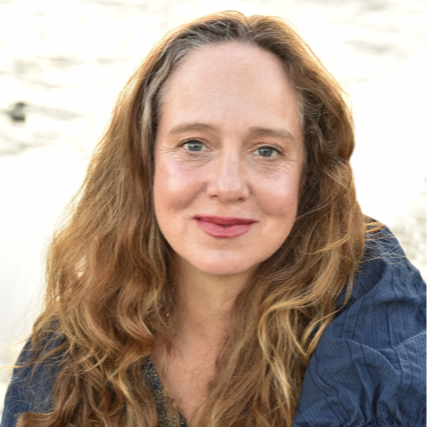
Caitlin Shetterly is a writer and an editor at large for Frenchly, a French arts and culture online news magazine. Shetterly’s work has been featured in the New York Times, Boston Globe, Elle, Self and other publications. Her most recent book is entitled The Gulf of Lions.
Your donation goes directly to what you read, hear, and see on Breastcancer.org.