Creating More Equitable Health Systems
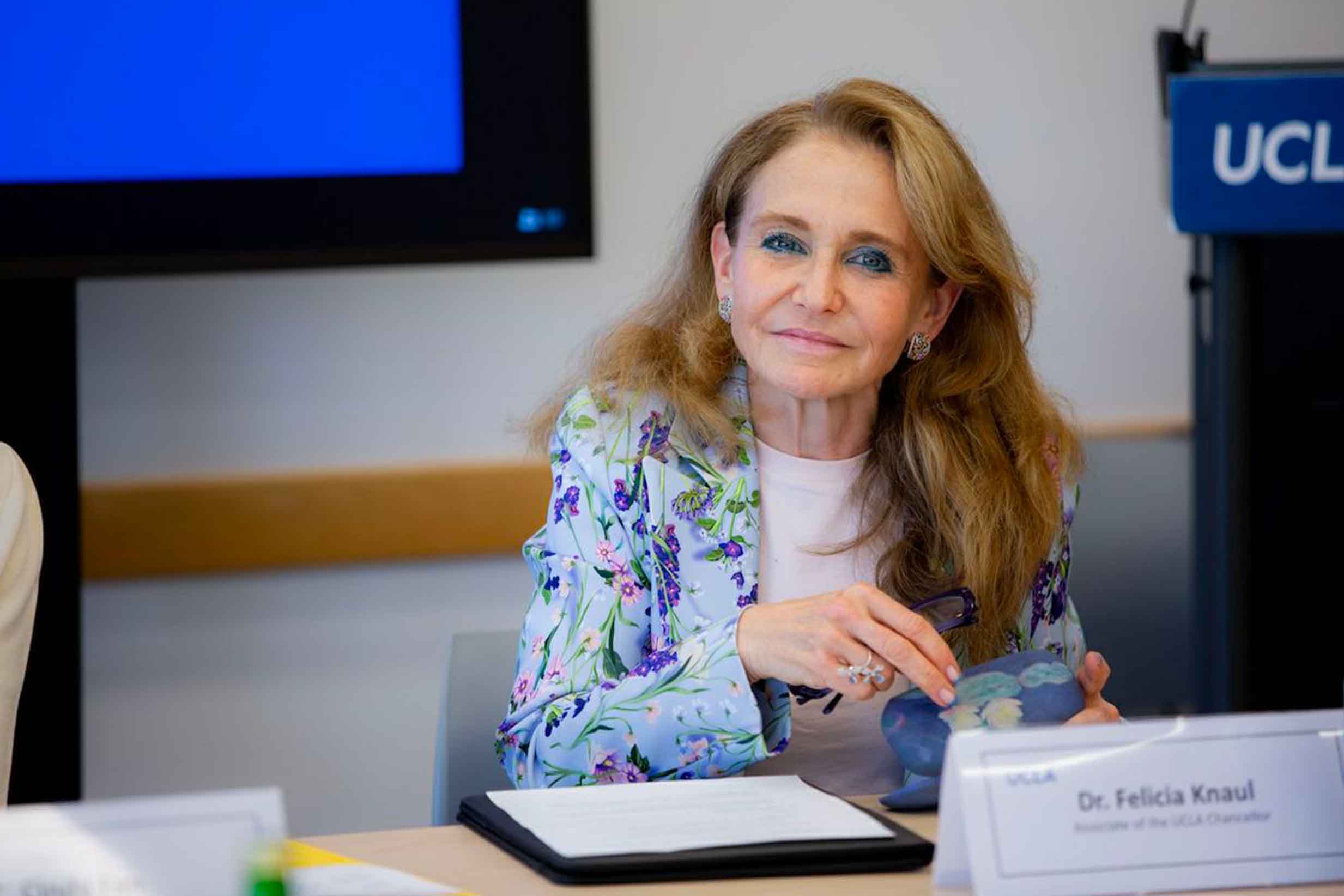
Felicia Marie Knaul, PhD, is a global health researcher whose work focuses on strengthening health systems, advancing gender equity, and improving access to care for those who need it most. She’s also lived through a breast cancer diagnosis and treatment, and that experience informs her efforts to transform health systems around the world.
Listen to the episode to hear Dr. Knaul discuss:
- Sponsor Message
her experience with breast cancer
- Sponsor Message
why she founded Tómatelo a Pecho and what the organization does
- Sponsor Message
why she thinks cancer control can drive the creation of better healthcare systems
Podcast photo credit: Oliver Chien/UCLA
This podcast episode is made possible in part by a grant from Lilly.
Welcome to The Breastcancer.org Podcast, the podcast that brings you the latest information on breast cancer research, treatments, side effects, and survivorship issues through expert interviews, as well as personal stories from people affected by breast cancer. Here’s your host, Breastcancer.org Senior Editor, Jamie DePolo.
Jamie DePolo: Hi, I'm Jamie DePolo, senior editor at Breastcancer.org. I'm podcasting live from the 2026 American Society of Clinical Oncology Annual Meeting. I'm joined by Dr. Felicia Marie Knaul. At UCLA, she’s the director of global health at the Johnson Comprehensive Cancer Center, distinguished professor of medicine, senior advisor to the dean of the David Geffan School of Medicine, and senior advisor to the president of UCLA Health. She’s also the co-chair of the Lancet Commission on Cancer and Health Systems. She also founded and led a non-governmental organization based in Mexico dedicated to breast cancer and women’s health advocacy and research.
At this conference’s opening session, Dr. Knaul asked leaders around the world to use cancer control as a way to create more effective and equitable health systems everywhere and for everyone. Dr. Knaul is also a breast cancer survivor and we’re going to talk about how that experience informs her policy work. Dr. Knaul, welcome to the podcast.
Dr. Felicia Knaul: Thank you very much. Appreciate being here.
Jamie DePolo: So, if you're comfortable, could you share a little bit about your diagnosis and treatment with us? I know you were diagnosed and treated in Mexico and if you felt like that was different than if you were being diagnosed in the U.S. or not?
Dr. Felicia Knaul: You know, since I was diagnosed in Mexico, I don’t know how different it was, but I do know how it shook down in Mexico.
So, it was my baseline mammogram. I was 41 years old. I had an 11-year-old and a 3-year-old at home. And it was in a small clinic in a town where we have our home, Cuernavaca Morelos, Mexico. And it was the last thing I expected. There was no family history, no reason to suspect. And in fact, I assumed that they were continuing to take shots because I was married to the man, and still am, who was thenhS just finished up as minister of health. And I remember calling my very good friend, Dilys Walker, my OB/GYN, and saying, you know, Dilys, they got me trapped here because I'm married to Julio. And so she said, I’ll get you out of this. She got on the phone and then she said, you stay and let them do whatever they want to do. At which point I thought, you know, something isn’t quite what it should be.
And it was, you know, it’s a diagnosis is a process. And in the book, I wrote about our cancer journey, I realized the other day I was looking up and like two-thirds of the book is the diagnosis. Because it’s when we were trying to understand and think things through and it was the scariest time of all of it. Certainly, the one where I understood very little. And it wasn’t, you know, only that first mammogram, of course. It was like…I described being harpooned when they were trying to mark the initial tumor.
You know, I remember when I was inside surgeon’s room and they were going through and doing the ultrasound. And when he said, oh, there’s a second one. And I was like, you know, do I have twins? And yeah, I had two tumors who ended up being three tumors. So, it was a whole, long process. Was it different than it would’ve been in the United States? You know, probably to some extent. But it was amazingly – it was an amazingly caring and thoughtful way by physicians who became close friends and colleagues with whom I still work.
What I was really blessed to have in complement to Mexico, which is where I chose to be treated and chose to be diagnosed, and it was very deliberate. We had finished the six years at the head of the Mexican health system, and you know I realized we had a message to give. That we could’ve run away to the north because we had private health insurance, but that most women couldn’t. And the message was, you don’t have to. You can get excellent treatment here.
But where I got the best of the best, which is how we now do global cancer, but at the time it was before Zoom, of course. Is that I had sort of this sub-specialist on my cancer. Julie Gralow, who’s the chief medical officer here at ASCO now, but then was with the Seattle Cancer Care Alliance at the Hutch. You know, I had Julie kind of as the orchestra leader, and saying, this is, you know, what we had just found out at ASCO. This is the most advanced way to think about things in a scientific point of view. My oncologist didn’t have at the time.
But the reason is, when I thought about it, you know, really interesting. In most parts of the world, low- and middle-income, you don’t get those sub-sub specialists. Right? So, there’s a shortage. And your oncologist may do like brain and lung and breast and cervical. And so, they’re not sub-sub specialized the way we have in the United States, in many other high-income countries, and certainly like what ASCO does. But the marvelous thing is, in today’s worl, you don’t have to go to where that specialist is. You just send your samples, right? And you get on Zoom and you can speak, and it’s a whole different world where we can make that a reality. And I think that is like precision medicine on steroids, but global. Right? There’s no reason that – the future may be that your sub-sub specialist is in China.
Jamie DePolo: Right. Right.
Dr. Felicia Knaul: It’s a different time zone, but other than that. So, the story of my diagnosis is very much one of learning, but it’s also one where when I meet and speak with patients, particularly in Mexico, but all over the world, particularly low-income patients they don’t have that same access to a process that helps them to understand what they’re going through.
No matter how much explanation and how much time you have — I know the audience will think the same who are listening in. It’s incredibly difficult to understand. And if you get 10 minutes, which is what a lot get, only 10 minutes, you can't possibly fathom what you're going through. So, the combination of having a patient navigator and a health promoter and a well-trained primary care nurse and physician to be at the side of these patients is really crucial.
Jamie DePolo: So, is that part of the reason — to give that to everyone — that you founded your non-governmental organization? And I'm going to ask you to say the name of it because I do not speak Spanish, really.
Dr. Felicia Knaul: I will. I will. And I’ll probably…my accent isn’t…you know, I'm bilingual, my accent is…it’s called Tomatelo a Pecho. And the name came actually from my husband. You know, he loves to think through interesting words, but there’s a story behind it. So, tomatelo a pecho means literally, take it to breast, which in, at least Mexican Spanish…the Spanish used in Mexico colloquially, is the same as take it to heart, and all over Latin America. It was used very often because it’s, take it to breast, as a slogan more around breast feeding than breast cancer. So, ours was really the first time that we applied it to breast cancer. That’s where the name comes from. It is, take it to breast, but in English it’s, take it to heart. It doesn’t translate quite the same way.
One of our major lines of work in addition to a lot of research and evidence-building, now with the broader mandate, but when we started it was really about helping to think through down staging in complement to a national insurance program that gave every woman in Mexico who beforehand was uninsured, access to the same treatment I got without having to shell out from their pocket to pay for. It was incredible. Right?
But there was this horrible, missed opportunity that we learned from patients, and I just spoke about Lucinda in the opening session. So, there was this horrible missed opportunity because even though these women were having contact with their primary healthcare sector in Mexico, an extensive primary health sector, and with the very strong anti-poverty program that included regular discussion topics on women’s health, there was nothing on breast cancer. Nothing. The bias was that poor women got cervical cancer, rich women got breast.
And so, it was all focused on maternal mortality, maternal health around child bearing and child rearing, child health, and a dose of cervical, but nothing on breast. And there still is a tremendous amount of late detection. You have much more than you’ll ever see or ever will or have seen in the U.S., it’s gone down. But the gap that we saw, was at the primary healthcare level. So, we started this process of, like, massively training nurses, physicians, but also health promoters. You know, if you’ve got…and this is what we would see, sort of tumors the size of a large orange, I used to say my six-year-old daughter could’ve done a better job of diagnosing this woman, Lucinda’s, cancer than our whole primary healthcare sector. What could possibly have happened?
So, you know, while without mammography you can’t get all the way to where you want to go, when you're talking about a large, orange-sized tumor, you can certainly do better, right? And an apricot-size is a lot better than an orange-size to be very specific about it. And I know our audience is going to understand what I'm saying, right? It’s not that we’re missing what’s hard to palpate with your hand. And so, we did…what we had learned from a lot of work on global health, the history of work with promoters, health promoters, in particularly HIV, it is longstanding. Most of them are women. They are open and wanting to help. They’re able to get close to women in their own communities. It’s all there except that kind of capacity to think, ah. this is likely a tumor.
So, yes, we train thousands throughout both social security system and the system that works with the uninsured population, and with the idea of being able to down-stage. But then also to like help to navigate these women through the health insurance process and their treatment into survivorship, which is the part that’s still really missing. No one expected us to survive this lot. And so, it’s like a shock to every health system that they need to care for us long term, which is good.
Jamie DePolo: Right. Right. Absolutely. So, you are a health policy expert. How do you…if this is true, I'm assuming it is. How does your diagnosis influence your policy work?
Dr. Felicia Knaul: You know, we spoke about this again in the opening session. And it is very specific to breast cancer, actually. I might be hard pressed to say that almost any other cancer or chronic disease will give you all the knowledge that breast cancer has given us. And why, it’s because it’s this whole spectrum or continuum of care and control, and because we go in and out of each stage. It’s a journey that is not linear and we may go…we can recur, we cannot recur, we can go out of survivorship and back into treatment.
But the fact is, we need to think about primary prevention, which reduces our population level risk, right? So, we need to make sure that those primary healthcare workers understand that good diet and exercise is also good for reducing risk of breast cancer. You know, we need to make sure, what I just said, that our primary healthcare workers are able to at least participate in the early detection process. We need good diagnostics, and that requires moving information back and forth across the system. We’ve got to have well-financed and thought-through treatment, survivorship, and end-of life-care.
And if you only do one part, it’s tragic. So, if you only finance treatment, you get so much late-stage and patients suffer so much more. And it’s so much more costly for us and for the health system. And if you're only doing the primary and secondary prevention, well, that’s not very effective. It’s important because it increases knowledge and advocacy. It gives us voice, but to tell us we have breast cancer and do nothing about it, isn’t what we want either.
What I'm getting at is, we understand health systems within functions. So, the idea of governance and leadership and setting standards. The idea of how you finance it, how you best deliver care, at what levels by whom and how, and what kind of human resources and evidence you need. Those are like the four main functions. You need to think about each of those in every stage. And then, you work across. And if you don’t, you have something that doesn’t work.
So, why is it so important now for health systems? And breast cancer is like for me the poster child helping to strengthen health systems. Is that most of our health systems historically…you would think this is not the case in the U.S. and it’s not, because it’s been a long time that we’ve been going through what we call epidemiologic transition towards longer term chronic diseases. But most health systems are originally set up for diseases that you either got cured from or died from quickly. So, you had one interaction with the health system, right? And it was relatively short and it either was positive or negative and that was it. And that’s what health systems were designed to do. That’s not what people need now.
We live these chronic diseases and now that we’ll survive our breast cancer more and more, we’ll survive it to get to other chronic illnesses. Not necessarily cancer. So, you're going to need to have the cancer, and the diabetes, and any other long-term chronic disease that you get. We live with multiple diseases. And that’s success and challenge forour health systems.
So, in summary, it’s something where breast cancer because of the nature of the disease and all that we know about what to do about it, can really strengthen health systems to understand chronicity.
Jamie DePolo: That’s great. Yeah. There was a speaker yesterday at the ASCO Voices session, and she talked about how her diagnosis and treatment that all went well, what she was struggling with was survivorship; because she felt like she was a totally different person and nobody was really addressing that with her.
Dr. Felicia Knaul: We want to change the whole lineup. Because otherwise we’ll never get to the survivorship, but I'm glad…it’s very important to think about…and I always, I use the term survivorship or thrivership because it’s a real journey. No one knows when we’re going to die and from what. And I learned, and I'm very against the idea that we separate, you know, the metastatic who will not survive from those who will. That’s not the way to look at it. It is a journey, which is why I add that S-H-I-P- to the end of survivor and see how long it goes.
The other thing is, because people live so much longer and because our treatment and having the disease itself affects so many parts of our bodies, literally from head to toe, there are so many ways that, not only the health system, but so many other systems can be supportive of helping us to have healthy, better lives. And that we can therefore contribute in so many different ways to a society that functions better.
I spoke a little bit in the session about how and why I think that cancer, but specifically, you know, breast cancer, has helped us to break down all kinds of barriers around discrimination, stigma. Yes, we’re cancer, but also stigma about women’s bodies. About the size of our breasts, about who we are, about what it is to be a woman, about what it is to be beautiful or not beautiful. We have this opportunity to break all of that down. It’s a part of the survivorship journey where we want to be interacting with the societies in which we live. So, I see it as a huge need for us, but also an opportunity to change the spaces in which we live in ways that go well beyond our own communities.
Jamie DePolo: Dr. Knaul, thank you so much. I really wish you much success with your policy work because it sounds like it’s very needed.
Dr. Felicia Knaul: I am very much looking forward to continuing to be in touch. And thank everyone for listening and for all your living through and all you do.
Thank you for listening to The Breastcancer.org Podcast. Please subscribe on Apple Podcasts, Amazon Music, Spotify, or wherever you listen to podcasts. To share your thoughts about this or any episode, email us at podcast@breastcancer.org, or leave feedback on the podcast episode landing page on our website. And remember, you could find out a lot more information about breast cancer at Breastcancer.org, and you can connect with thousands of people affected by breast cancer by joining our online community.
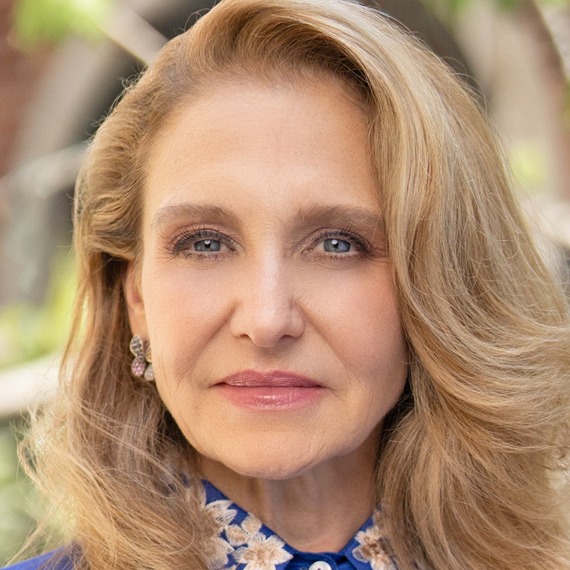
At UCLA, Felicia Marie Knaul, PhD, is the director of global health at the Jonsson Comprehensive Cancer Center, distinguished professor of medicine, senior advisor to the dean of the David Geffen School of Medicine, and senior advisor to the president of UCLA Health. In addition, she’s the co-chair of The Lancet Commission on Cancer and Health Systems and founded and led Tómatelo a Pecho, a non-governmental organization based in Mexico dedicated to breast cancer and women’s health advocacy and research. She chronicled her and other women’s cancer journeys in the books Tómatelo a Pecho and Beauty without the Breast.

This podcast episode is made possible, in part, by a grant from Lilly.
Your donation goes directly to what you read, hear, and see on Breastcancer.org.