Is Cannabis Why Breast Cancer Rates Are Up in Young People?
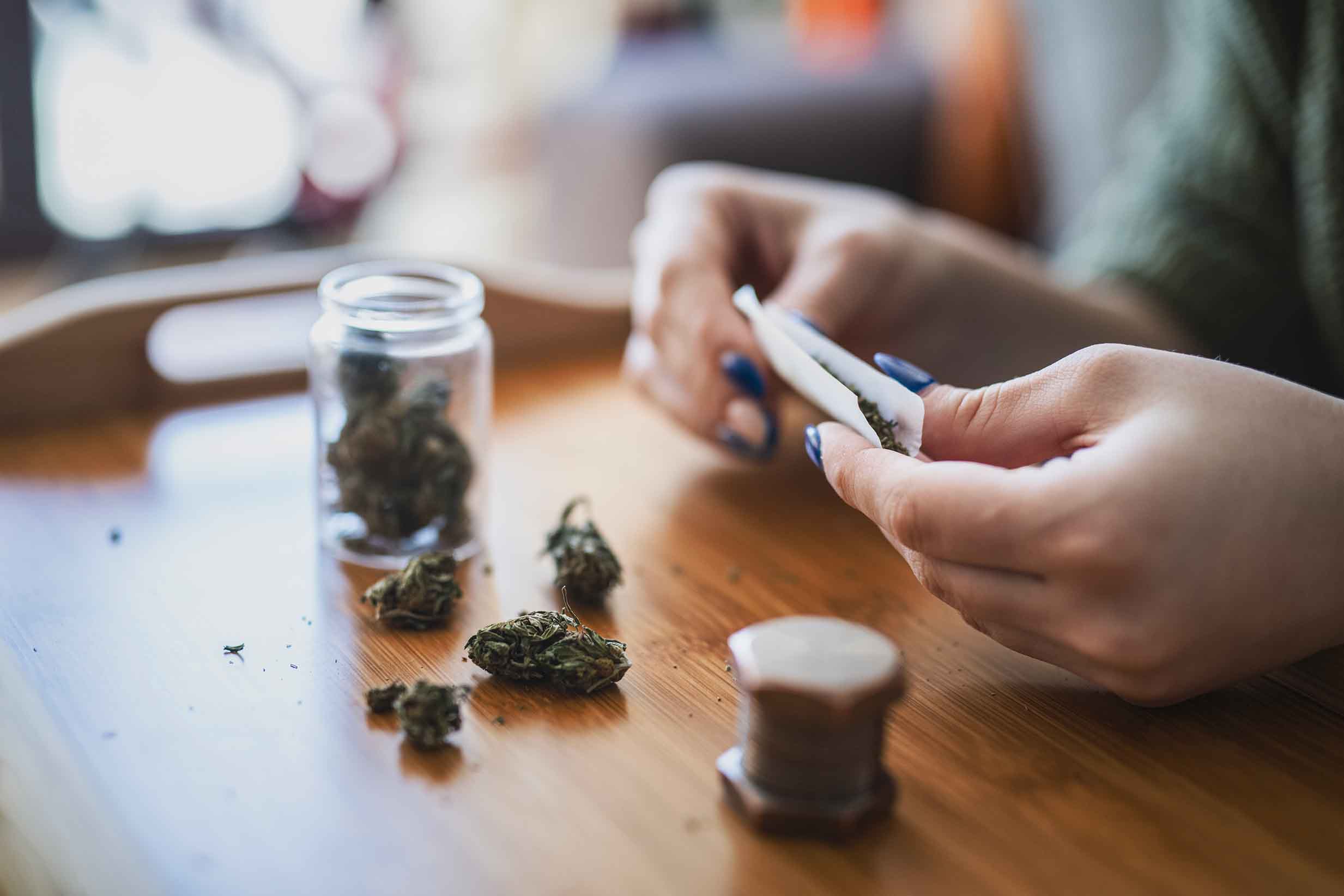
Studies show that rates of certain cancers, including breast cancer, are rising in adolescents and young adults, meaning people between the ages of 15 and 39. While the increase is likely due to a combination of factors, some explanations include obesity, more sedentary lifestyles, chest radiation, alcohol consumption, and genetics. Rebecca Johnson, MD, medical director of the Adolescent and Young Adult Oncology Program at Mary Bridge Children’s Hospital, and colleagues published a paper suggesting yet another piece of this puzzle: increasing cannabis use among young people.
Listen to the episode to hear Dr. Johnson explain:
- Sponsor Message
why she thought cannabis might be linked to cancer
- Sponsor Message
the reasons why cannabis could increase the risk of being diagnosed with cancer
- Sponsor Message
her advice to young people about cannabis and cancer
Welcome to The Breastcancer.org Podcast, the podcast that brings you the latest information on breast cancer research, treatments, side effects, and survivorship issues through expert interviews, as well as personal stories from people affected by breast cancer. Here's your host, Breastcancer.org Senior Editor, Jamie DePolo.
Jamie DePolo: Hello, as always, thanks for listening. Studies show that rates of breast, testicular and other cancers are rising in adolescents and young adults, meaning people between the ages of 15 and 39. For some cancers, rates have gone up 30% over the last 40 years. While the increase is likely due to a combination of factors, some explanations include obesity, more sedentary lifestyles, chest radiation, alcohol consumption, and genetics.
I’m joined by Dr. Rebecca Johnson, medical director of the Adolescent and Young Adult Oncology Program at Mary Bridge Children’s Hospital, in Tacoma, Washington. Last year she and her colleagues published a paper suggesting yet another piece of this puzzle: increasing cannabis use among young people. She is joining us to discuss the research.
Dr. Johnson, welcome to the podcast.
Dr. Rebecca Johnson: Hello. Thank you for having me.
Jamie DePolo: So, before we get into all the details of the study and the results, I’m wondering could you tell us what made you even think that cannabis use might somehow be linked to this increase in certain cancers in young people?
Dr. Rebecca Johnson: So, our research group has been interested in cannabis and cancer rates for over a decade. And that stems from a clinical observation among some urologists that we know that — and this was back in 2012 to 2013 — they mentioned that they thought that testicular cancer rates were potentially linked to cannabis because they thought they were seeing a lot of young people with testes cancer, which of course, you know, it has a prevalence in young adults, but also when they talked about drug use with those patients a lot of those patients were cannabis users.
And so, they actually, you know, brought the question from the clinic to us, and said, hey, you know, could this be correlated? And so, our research back at that time did show that there was a correlation, particularly with non-seminomatous germ cell tumors and cannabis use broadly.
Now, those were kind of high-level epidemiological studies and not studies that directly correlated a single person’s cannabis use with cancer incidence, and that’s the same with our recent study for breast and testicular cancer incidence. We looked at SEER data, epidemiological data covering 50% of the whole United States, and looked at the cancer incidence rise in the SEER database, and then we looked at legalization of marijuana in different states and correlated those two things.
And so, you know, as you mentioned there have been increases in many types of cancer that have been noted in young adults in the past, you know, 10 or 20 years. So, breast and testicular cancer are both cancers with endocrine correlations. There are cannabis receptors on both breast and testicular tissue, which gives some idea of why there might be a correlation between the incidence of these cancers and potential exposure to cannabis.
Jamie DePolo: Is there something in particular in cannabis, a compound or something, that increases cancer risk? Because you know we talk about cancer risk and we talk about certain chemicals and they’re endocrine disruptors. And I don’t know that much about cannabis, I’ll be very honest, is cannabis an endocrine disruptor? Is that part of the equation or is there some other compound in cannabis that increases cancer risk?
Dr. Rebecca Johnson: It is an endocrine disruptor, yeah, and it can decrease luteinizing hormone and that has downstream endocrine effects that could potentially be linked with breast cancer development.
And you know there are also hundreds of bioactive compounds in, you know, cannabis, like there are in most plants, and it probably depends. And it’s not well understood, to my knowledge, in terms of direct relationship with cancer incidence, but the way that you ingest the cannabis likely matters. So, for example, when you smoke cannabis there are all the toxic effects of smoke in the lungs that are probably similar to tobacco exposure, which have to do actually with the burning of the leaf, but ingestible cannabis has many, many different things in it as well.
Jamie DePolo: Well, that makes sense. Okay, well, and that was actually going to be one of my questions, if, you know, did the way that people took in the cannabis matter? And it sounds like potentially it could.
Dr. Rebecca Johnson: Potentially it could and my coauthors were not able to find any specific information on the way that cannabis was ingested and cancer incidence. And again, our study was a high-level epidemiological study that doesn’t track any one person’s cannabis intake, or lack thereof, and cancer incidence, but rather the rates of cancer over the period of 2000 to 2019 in the states that are sampled by SEER, the Surveillance, Epidemiology, and End Results database, and then comparing those to the cannabis legalization during that period within the United States.
And you know 13 of the registries that we studied had legalized cannabis by 2019 and seven of them had not, which correlates somewhat, but not completely to, you know, states because the SEER regions are a little bit different than states. So, we kind of overlayed the regions that the epidemiology was tracking in the SEER registry and then the states that those registries were in and whether or not they had legalized cannabis for medicinal use and/or recreational use.
Jamie DePolo: Okay. And I’m going to ask you to explain the results a little bit, but the bottom line is, the states that had legalized cannabis had higher rates, is that, am I understanding that correctly?
Dr. Rebecca Johnson: That’s correct, yeah. And so that was interesting and is an ongoing story because the number of states that have legalized cannabis keeps going up and up; it’s at 41 out of the 50 states have legalized cannabis either for recreational and/or medicinal use, so it’s becoming more and more common. And at the time of our study, it was less than that, significantly. So, it’s really, especially with the reclassification of some forms of oral cannabis as a schedule III instead of a schedule I controlled substance, it is likely that most, if not all, of the states within a few years will have legalized cannabis.
Jamie DePolo: I can’t remember, and I should’ve looked this up before we started, is cannabis still federally illegal? Do you know? And if you don’t know it’s fine. Because I guess that’s, my question is, for a long time it couldn’t be studied at the federal level, you couldn’t get money from the NIH to study cannabis because it was illegal.
Dr. Rebecca Johnson: Yeah. So, there’s been this recent legislation to reclassify cannabis from a schedule I substance, which is you know classified as having health risks and therefore you can’t as easily study it, and now it’s being reclassified as a schedule III, which does make it easier to do research on it, but also does suggest that it’s not dangerous to humans. Maybe that’s true and maybe it isn’t.
Jamie DePolo: We don’t know. Well and I guess that’s kind of my point, we have a lot of research on some of these other things that have been linked to cancer, but I feel like the research on the actual compounds in cannabis and cancer is just starting. There was no federal funding for it for so long and so I feel like we’re kind of behind, even though so many, as you said, so many of the states have legalized it, but we don’t really know that much about it. It seems like it’s all anecdotal, like, somebody will say, well, I use cannabis for my cancer pain and it really helps. And then people go out and use it.
Dr. Rebecca Johnson: Right. And you know it seems to be quite widely used by cancer patients on active therapy in, you know, a quarter to even up to 40% of patients report using cannabis while they’re being treated for cancer. And those patients, and you know I see a lot of young adults, and they really like it. You know they say it allows me to use, you know, just one medicine that treats, you know, pain and anxiety, and increases my appetite, and I don’t have to take, you know, three different medications, plus medications to, you know, pile on to control the side effects of the other medications.
And so, people like it, and dispensaries increasingly, I believe, you know I’ve heard talks on this, they will promote, okay, this one is good for sleep and this varietal is good for treating your anxiety. And so, they’re getting more and more specific in terms of how they’re going to treat the cancer symptoms without particular regard for what might be the longer-term effects of using those medications as supportive care adjuncts.
Jamie DePolo: Right. And I believe in your paper you talked about how cannabis might affect treatment outcomes, so could you talk a little bit about that?
Dr. Rebecca Johnson: Yeah. So, you know, I would classify our whole paper as kind of an early exploratory analysis of possible correlation. So, we found a correlation between cannabis legalization and the incidence of breast cancer, and we also studied testes cancer in young adults who lived in states that have legalized versus not-legalized cannabis, again, and found that in the legalizing states there was a more brisk increase in breast cancer and also testes cancer incidence.
So, our study, again, is a high-level epidemiological study and exploratory, and I think that studies of outcomes in people who use or don’t use cannabis are equally small and preliminary. So, in colon cancer there have been suggestions that people who use cannabis have worse outcomes in the setting of metastatic disease and there have been mixed studies for people with advanced cancer, some of which suggest that the use of cannabis could be associated with worse outcomes.
Jamie DePolo: But nobody’s actually done a prospective study on anything?
Dr. Rebecca Johnson: So, there’s a prospective, there’s a small prospective observational study of people with advanced cancer that showed a significantly shorter time to cancer progression and overall survival among people who are using versus not using cannabis. And then, again, a colon cancer study that showed that people who had a pre-existing diagnosis of cannabis use disorder had significantly higher odds of five-year mortality compared to people who were not, again, diagnosed with cannabis use disorder.
Now, cannabis use disorder is something that we use in our paper because it actually is reported in SEER, the Surveillance, Epidemiology, and End Results database, as a diagnosis in and of itself, but obviously that means that the person has had enough problems with cannabis that they’ve come probably to legal and medical attention for it. So, it’s a proxy for cannabis use, but it’s not exactly the same as just recreational use of cannabis.
Jamie DePolo: Sure. That makes sense. I’m curious, too, you mentioned some of the studies looking at colorectal cancer. Your study, if I am remembering correctly, there was a link between cannabis use and higher rates of breast and testicular cancer, but not colorectal or pancreatic.
Dr. Rebecca Johnson: But not colorectal.
Jamie DePolo: Right. So, do we have any ideas why that might be?
Dr. Rebecca Johnson: Our study can’t show causality, but our hypothesis is that it might be endocrine disrupting activity of cannabis on the testes and the breast as opposed to colon cancer, which again in our study showed no increases in the legalizing marijuana states versus the non-legalizing states.
Jamie DePolo: So, colorectal and pancreatic they’re not really affected by endocrine or that particular hormone?
Dr. Rebecca Johnson: They don’t have the CB1 cannabidiol receptors.
Jamie DePolo: Oh, I see, I see.
Dr. Rebecca Johnson: And so, you know, in breast cancer, for example, there are these CB1 receptors and it’s known in mice that if you expose adolescent mice to cannabis there are differences in the adipocyte fat distribution. It actually decreases the number of adipocytes in the breast, so it functionally confirmationally changes the breast tissue in adolescent mice in a way that’s not found in adult mice. So, the concern for young adults is there may be, you know, kind of an age-related or developmentally-related effect that cannabis has, particularly when it’s used in young people and so that’s a concern.
Jamie DePolo: Okay. Okay, that makes sense. And I’m sorry to harp on this, but I want to make sure I understand, so breast cancer cells, you said, have the receptors for the cannabinoid.
Dr. Rebecca Johnson: Yes.
Jamie DePolo: The breast cancer cells do. Is that all kinds of breast cancer or is it just specific subtypes? Do we know that? Like does triple-negative have it and hormone receptor-positive, have it?
Dr. Rebecca Johnson: Yeah, I believe they all have it. Yeah, I don’t, I don’t know of any differences in breast cancer subtypes and CB1 receptor status.
Jamie DePolo: Okay. And then finally, do you have a takeaway message or a take-home message for young people about cannabis and cancer? I mean, I know, as you said, your study does not prove cause and effect, but it is an interesting correlation. So, what would you say to somebody who said, I’m thinking about using cannabis for my anxiety?
Dr. Rebecca Johnson: Who was also a cancer patient or?
Jamie DePolo: Well, I guess, one message for cancer, somebody who has cancer and somebody who doesn’t have cancer, but both young people. Like, say, both people who are 20 years old.
Dr. Rebecca Johnson: Cannabis is widely used among young people and I think widely enjoyed. I live in Washington State, where cannabis is legalized for both medicinal and recreational use, available in dispensaries, and you know just lots of people use it before a cancer diagnosis, during a cancer diagnosis, after a cancer diagnosis. And there’s some data that people who, you know, were using before their cancer diagnosis are the ones who are most likely to use during it, but you know, again, up to 40% of people — and that’s of all ages, not stratified by age. So, it’s probably really a lot of adolescents and young adults who are diagnosed with cancer that end up using cannabis during their cancer journey.
So, you know, both for people who are already diagnosed, and for people who are not yet diagnosed with breast cancer, it’s important to remember as, you know, we all know on this podcast that breast cancer is the most common type of cancer in young adult women, right? About a quarter or so all cancer in adolescents and young adults is breast cancer. And so, by the age of 40, it’s about what, one in a 170 women these days, you know, who gets breast cancer. So, by the time people are 40 either they or someone they know, right, probably is going to get breast cancer.
And so, if cannabis increases that risk, then that’s important, not just on a, you know, oh, some number in a 100,000, but it’s important to every young woman and their friend group, that instead of one woman, you know, maybe it would be two, and maybe it would be three, and it ends up adding up to quite a lot of people.
And the other concern is that breast cancer is the most common second malignancy of cancer survivors. And so, if people are saying, oh, well, you know, I was diagnosed with cancer, darn, lightning struck, you know, I need to get through this and treat my symptoms. That’s true, but also, it’s important to look to the future for people who are likely going to survive their cancer.
You know, adolescents and young adults overall as a group have pretty good prognosis from their cancer, and you know people who do not have advanced cancer, you know, in the palliative care setting and are relieving their symptoms that’s a whole different group, right? Who’s not worried about their long-term late effects. But for anyone who is, which is going to be the majority of people diagnosed with cancer in young adulthood, it’s important to think about their long-term health and risk for second malignancies, which is obviously a very big cause of morbidity in cancer survivors. And so, do you want to use a medication for supportive care or recreational use if your risk of a second malignancy goes up later?
Jamie DePolo: Right. Right. Well, and I guess just an observation on my part, I see a lot of online ads promoting cannabis as a “safer alternative to alcohol” and I feel like the message of your research isn’t really out there. I mean, I know we have some pretty strong links between alcohol and cancer, but I feel like the message about cannabis and cancer isn’t really out there. People seem to think it has no risk at all.
Dr. Rebecca Johnson: I think that’s really true. And alcohol has been, you know, widely studied for decades for its cancer risk and other health risks, and to your earlier point, the studies on risk of routine cannabis use and health outcomes are way behind.
Jamie DePolo: Yeah. Dr. Johnson, thank you so much. This has been very, very interesting and I hope we can get the message out about this research.
Dr. Rebecca Johnson: All right. Thank you, Jamie.
Thank you for listening to The Breastcancer.org Podcast. Please subscribe on Apple Podcasts, Google Podcasts on Android, Spotify, or wherever you listen to podcasts. To share your thoughts about this or any episode, email us at podcast@breastcancer.org or leave feedback on the podcast episode landing page on our website. And remember, you can find out a lot more information about breast cancer at Breastcancer.org and you can connect with thousands of people affected by breast cancer by joining our online community.
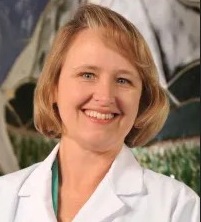
Dr. Rebecca Johnson specializes in treating childhood blood disorders and cancer in kids, teens and young adults and serves as medical director of the Adolescent and Young Adult Oncology Program at Mary Bridge Children’s Hospital in Tacoma, Washington.
Dr. Johnson was diagnosed with breast cancer when she was 27 years old. This personal experience helped shape her research interests, which include patient engagement, cancer epidemiology, and unmet needs and barriers to care among adolescents and young adults.
Your donation goes directly to what you read, hear, and see on Breastcancer.org.