The Guy With Stage 4 Breast Cancer

Male breast cancer makes up about 1% of all breast cancer cases. The numbers are small, but it does happen. Jake Messier is living with metastatic breast cancer after first being diagnosed with stage II disease in 2023. Jake has very active Tik Tok and Instagram accounts (theguywithstage4breastcancer) detailing his experience with breast cancer.
Listen to the episode to hear Jake explain:
- Sponsor Message
how he felt when he was diagnosed
- Sponsor Message
why and how he got a second opinion and moved his care to Dana Farber
- Sponsor Message
why he decided to be vocal about being a man with breast cancer
- Sponsor Message
why he started the Male Breast Cancer Research Foundation and what he hopes to accomplish with it
Welcome to The Breastcancer.org Podcast, the podcast that brings you the latest information on breast cancer research, treatments, side effects, and survivorship issues through expert interviews, as well as personal stories from people affected by breast cancer. Here’s your host, Breastcancer.org Senior Editor, Jamie DePolo.
Jamie DePolo: Hello, as always, thanks for listening.
In the United States and around the world, male breast cancer makes up about 1 percent of all breast cancer cases. The numbers are small, but it does happen. I'm honored to welcome Jake Messier as my guest today. Jake is living with metastatic or stage IV breast cancer after first being diagnosed with stage II disease in 2023. Jake has very active TikTok and Instagram accounts detailing his experiences with breast cancer, and he’s going to share his story with us today. Jake, welcome to the podcast.
Jake Messier: Thank you so much for having me.
Jamie DePolo: So, I saw an interview with you, a previous interview. You said you waited four months after you found a lump to get it checked out. And then, I just read the cover story in the New York Times Magazine last week that was talking about how men don’t want to go to the doctor for anything, let alone breast cancer. So, what made you finally decide to go get this lump checked out?
Jake Messier: Well, first of all, thanks for having me. It’s a great opportunity to be here and to spread the word about male breast cancer.
You're right. So, I got diagnosed in August of 2023, so I think if I go back four months from there, it was April, May, and I noticed a small lump in my armpit, in my axilla region. I was like, well, that’s weird. And I remember literally thinking, that’s weird. But at the same time, it didn’t really affect me. I didn’t think that it was cancer. I just sort of thought it was a cyst or literally anything else. I try to go back in my memory and think, did I know that guys could get breast cancer before I got breast cancer? And I don’t know. I think there was some synapses that fired, but it didn’t really affect me. But as that summer progressed and the lump didn’t go away, I was like, well, that’s even weirder, right? This is not a cyst. It doesn’t feel like there’s liquid in there. I'm not sure what.
Jamie DePolo: Not squishy.
Jake Messier: Right. Exactly. So, I went to my primary care physician, and I was like, okay. I mean I was going for a checkup, and I said, I have this weird thing here. Could you just take a look at it? And it’s funny because he listed off about 10 things that it could be and none of them were breast cancer.
Jamie DePolo: Oh, wow.
Jake Messier: Right. Because it’s so rare and he had never seen anybody with breast cancer, a male. But he said, you know, obviously we want to be safe so why don’t you go get it checked out, which I'm very thankful for, right? I hear a lot of stories where people just go to their primary care, they sort of dismiss it, and then they're like, okay, I'm good. A doctor told me that I'm fine, but they're not always.
So, I then went to my local cancer center and lo and behold I was diagnosed with cancer. I remember sitting there. I went in for a mammogram first and that was a little bit uncomfortable, right? But I was sitting there in the room and the nurse…there was a nurse sitting…it was a very dark room and we’re looking at these scans, and there was a nurse sitting there next to me and she can't tell me if I have cancer or not, right? She can't say, but she’s obviously seen a lot of cancer in her life working in that room. So, she can't tell me, but I sat there and she’s like, are you okay? I said, I think so. I don’t really know what I'm looking at. And without telling me she leaned in, and she said, your life is going to start moving incredibly fast and incredibly slow all at the same time. And really nothing has been… really the truth.
The past two years have been, you know, an eternity and they’ve gone by in like a month and a half. So, she’s really correct. I mean, time has stood still, and time has zoomed by. So, I waited. I don’t know how long I had that lump before I noticed it. I don’t know how long I had these things because again one of my flags I'm holding up in the air is that young girls in seventh grade, you know, in health class, they’re taught, when you find a lump, you go tell somebody. Tell mom or dad. You tell the doctor. You tell somebody right?
Jamie DePolo: Right.
Jake Messier: And boys are never taught this. They’re never taught this. It needs to be part of the health curriculum. I know that’s 50 years of change that we’d have to go through until we get to this point, but it’s got to start somewhere. Health classes for girls started somewhere. Health classes for boys need to start somewhere. So that when somebody feels a lump like I did, they don’t dismiss it for four to five months.
Jamie DePolo: Right. Right. Now, I did an interview with a man. He was young when he was diagnosed, in his 20s, he was in college. He and his mother then started the Male Breast Cancer Coalition, and he was trying to get his doctor, like, “Hey, just tell guys once a year when they come in like, check that whole area.” And the doctor’s like, well, you know, I can't really. I don’t have enough time. It’s so rare, it wouldn’t be cost effective. And my mind was blown because I couldn’t believe it.
But back to you. So, you're sitting in this chair in this dark room and while the nurse didn’t specifically tell you, you had cancer. If I could take you back, what were your first thoughts? Was it kinda like, this is impossible?
Jake Messier: Well, somewhat right? I mean, I'm like, well, maybe it’s something else. But I had also done a decent amount of Googling like anybody does during their initial diagnosis, right? What am I looking for when I go in for my scan? What am I looking for? And what I was seeing was pretty indicative of what I was seeing. So, I sort of knew at that point, and then, literally 10 minutes later, the doctor came in and told me. I didn’t have to wait long. He came in and he said, I need to confirm that you have…we’re going to do a biopsy obviously to really confirm, but the radiologist said I do believe you have breast cancer. So, yeah, it was a shock. You know, I walked out of that room, and I went downstairs and I called my brother. My brother and I don’t have particularly a close relationship. We’ve gotten a lot closer over the past couple of years, but at the time I called my brother. I needed to tell somebody. I didn’t know what to do. I couldn’t have the first person to tell be my wife. I needed to like practice this beforehand. I needed to soft launch this to somebody before I got to my wife. And so, I called my brother, and I told him and then I called my best friend, and I told him. And then, it was about 45 minutes later when I got home, and I came in and I told my wife.
Jamie DePolo: Did you have any family history? Were you offered genetic testing? Like was there any sort of hint in your background that this could potentially happen?
Jake Messier: No. We've gone back five generations, and we can't find any cancer. You know, my grandmother’s grandmother. There hasn’t been any – again, we’re going back to the early 1900s, who knows what people were dying of back then. But you know, there’s no family history of cancer. And I did get genetic testing, I'm negative, but I am ER, I'm estrogen positive. So, they pretty quickly determined that mine was some kind of environmental. And then, when they found out I had spent 10 years in the Marine Corps and three years at Camp Lejeune, they were like wait, hold on.
Jamie DePolo: Oh, wow.
Jake Messier: You see all those commercials. It hasn’t been pinpointed to that, but I think as any person in the service knows you get stuck and jabbed with all kinds of things in the military, you know, you just don’t know what it is. I remember I got a lot of anthrax vaccines back in the late ‘90s, you know, that was the big scare. So, we got all kinds of things when we were getting deployed. So, again, I don’t know that that’s where it came from, but signs seem to point towards that. You know, there is a growing number of men about my age that were around Camp Lejeune at that time that are coming up with weird cancers, you know, breast cancer being one of them. So, they’re not quite calling it a cluster yet, but there’s a number of male Marines, young, you know, I'm 53. I was 51 when I was diagnosed, you know, young male Marines that are in shape and shouldn’t be having these kinds of issues and they’re coming down with these odd cancers. It’s just sort of the not the normal ones that people get.
Jamie DePolo: Right.
Jake Messier: It’s the weird ones. And so, you know, nobody’s ever said, you got this here. You know, and I don’t know if anybody ever will be able to say that you got it here. But mine’s environmental.
Jamie DePolo: Okay. And you mentioned that it was hormone receptor-positive. So, could you tell us a little…and I'm assuming HER2-negative…
Jake Messier: Yes.
Jamie DePolo: …as well. Yeah. Okay. And so, how did your doctors then…you and your doctors decide on a treatment plan for you?
Jake Messier: Well, I mean, I think like a lot of people you just go into a state of shock, and you just start trusting people, right? Okay, you know how to treat cancer, and I don’t, right? I'm a marketing guy. I don’t know how to do any of this. And so, when they come back with the plan that you're going to do 16 weeks of chemo and then you're going to get a surgery and then you're going to do five weeks of radiation, and I was told pretty succinctly by my first oncologist that I was going to be just fine and this is the “run-of-the-mill breast cancer.” I put that in quotes. The “run-of-the-mill breast cancer” that sort of people get and you do your time in the chair, and you get, 10, 12 months later, you're done, right? And that’s sort of how it was presented to me.
And I soon learned that it is not a linear path and that the expectations that we had were not what they had. You know, so, I talk about if there was a rare percentage, if there was a low percentage, you know, I'm the guy, right? If it’s 99% women and 1% men, you know, I already hit that percentage. And then, when I went through chemo I had the red devil [Adriamycin or doxorubicin] for four weeks and then I went to Taxol. Once I went to the red devil, I get the Taxol they were like, oh, this is going to be so much easier and Taxol wiped me out. Like it was way worse than the red…and they were like, 10% of patients have a worse time with that. So, if there’s a low percentage number it’s going to be me. I'm going to get it every single time.
Jamie DePolo: You're in that group.
Jake Messier: I am in that group. And so, when I did my mastectomy, that was done, and they didn’t get clear margins, so 10 days later I was back in surgery getting another surgery. And they said that they got it and then about a month later I was doing radiation planning and my radiation oncologist was like, I think I found a couple more tumors on your scan. And I'm like, what? And she found three more and at that point, that’s really the beginning of my advocacy journey if I had to pinpoint a time. I was posting on my journey on TikTok, right? But I really don’t consider that advocacy. I was just sort of, here’s my day and here’s what I'm doing, but it wasn’t really advocacy. At that moment, I felt like I had to take control of my own healthcare because when I went in there for that third surgery there was an incident, a vascular incident, where they nicked a vein and I had to be…vascular emergency team had to come in and sew me back up, and they didn’t even get the tumor. So, it was really a terrible experience.
But it was after that that I was like, look, this team…I try not to besmirch them, but at the same time they didn’t find the tumors, and they didn’t excise the tumors. So, I gathered my oncology team and at first, I was just going to complain about my treatment, right? I think that was the easiest thing to do. Say you did this to me, you did this to me, you did this to me, and now I'm done and I'm leaving. And I had planned it for two or three days, you know, I had my notes. I didn’t want to make this as emotional as it was. It was a very emotional meeting, but I wanted to try and stay on target as much as I could. And when I was driving down to the hospital I was like, well, it’s not going to change anything. It’s just me crabbing about what they did. And so, I said, let me just spin this on its ear and talk about a policy of the hospitals. Because that’s what really needs to change. If I can effect some change that’s what needs to happen.
And so, I went into my oncologist’s office, and I gathered the team and I sat there. I said, I'm leaving. I'm going to Dana Farber and secondarily, you need to do better. You need to do better, not just in terms of the science but in terms of your humanity. You are physicians first before you are these world-class breast cancer surgeons and the very Greek meaning of the word for physician is taking care of another human being, and you're not doing that. You're not holding up your end of the bargain here. You're not taking care of me as a human being. And I very succinctly told them that they don’t have my trust anymore. I said to them, air quote, if I am the top of the healthcare food chain, right? Let’s just call it that. I am a white male, I'm fully insured, I'm paying my own way, I'm doing all of this on my own, and you're doing this to me, what the hell are you doing to the single, Hispanic mother of two that doesn’t speak English and doesn’t have the communication skills, that doesn’t have the engagement skills, and doesn’t have the ability to go to Boston that’s an hour-and-a-half away that she has to be here with you?
I said, what are you doing to all of these hundreds if not thousands of people in your system that don’t have the voice that I have? What are you doing to them? And I said, you need to change your policies so that you can take care of people at a very human level. And some of them got it and some of them didn’t. In fact, I'm good friends with one of them who got it. She’s an Instagram friend and she got it. And she told me multiple times that I made her a better doctor that day.
Jamie DePolo: Did that team have experience with male breast cancer? I'm just curious, before you?
Jake Messier: I don’t think so. And the reason I think that is because when I got there, everybody wanted to be on my case, right? I was the guy. I was the rock star. Not only was I…
Jamie DePolo: You were the unicorn.
Jake Messier: Right. Not only was I the guy, but I was the guy that was willing to talk about it, right? I was willing to go out there and put it on social media or talk at events or whatever. I wasn’t just the guy. I was the guy that was going to be public about it. And then, when they started failing, you know, things got bad because they wanted to disassociate from me. So, I was like, listen. We’re just going to go to Dana Farber. So, we went to Dana Farber in July of ‘24, and things have been from a care…now I was downgraded to stage IV at Dana Farber. But I used to tell the story that I was initially diagnosed with stage II and then I was downgraded to stage III and then I was downgraded to stage IV in like eight months, and now I understand that that’s not how that works, right? I was probably initially misdiagnosed at stage II. I should have been diagnosed at stage III and then when it metastasized to my hip that’s when I went to stage IV. So, you know, yes, I started off at stage II, but likely that was a misdiagnosis.
Jamie DePolo: Did you have your metastatic diagnosis before you went to Dana Farber, or it was just that the radiologist saw extra tumors?
Jake Messier: Right. She saw tumors in my chest. They hadn’t seen the one in my hip yet. And so, when I got to Dana Farber, that’s when they did another…they were like, we’re going to do all of our own scans, all of our own tests. We’re going to do everything from scratch ourselves. We want to start over and that’s when they found the tumor. So, that was in August of last year. And then, you know, you're having tough conversations at that point, right? I'm having…I have a 15-year-old, you know? I'm having conversations with my 15-year-old. You know, I have a 30-year-old and a couple in between there, but I have a kid in high school, you know? And I'm like, what are you talking about that I've got three to five years? This doesn’t make sense. And so, we started having tough…I'm telling my parents that they're probably going outlive me. I'm having really hard conversations.
But let’s go back to 2021 and 2020. I used to weigh almost 300 pounds, and I was an emotional, and workaholic, and I was stressed to the max. I had a stroke in 2018. I was a mess. And in 2020, I decided to fix my life. I dropped 120 pounds, and I've kept it off, but I also turned over every emotional stone that I felt was hindering me from being the best human that I could be. And that process, that two-year process of deep intensive therapy, going through my weight loss journey with yoga and meditation being a part of that, you know, and that entire transformation happened in 2021, 2022. And I don’t think that if I had done all of that work, when I got to 2023, I don’t know if know if I would have physically been able to handle the chemo and all the rigors of cancer as much certainly, but I certainly wouldn’t have been able to handle the emotional, the mental stuff that comes along with it if I hadn’t fixed my stuff before.
So, when I got to that moment in ’23, yes, it was shocking, but I was already sort of well onto this journey of being better and then I just had to extend that for another couple of years of being better on the other side of cancer. And you know, when I was told that I was metastatic then it’s like, that’s all changing now because I'm not going to get better, right? I could live a long time, but I'm not going to get any better. This doesn’t ever go away. That’s just a different mindset that you have to get involved with. And then, three months later in November…it was the Friday before Veterans’ Day weekend, we get a call, and I went into NED [no evidence of disease] status. And so, these tumors that are on my trach and in my hip and other things, they can't find them. And I was like, well, you mean I'm in remission? And they’re like, no, no, no, no. You're in NED status. And I didn’t know. I mean, the first time I'm sort of hearing…I mean, I've heard it online and things like that. And I'm like, okay. You need to really tell me what this means. And they’re like well, we don’t really know what it means other than the fact that you don’t have any tumors right now.
And so, I was like, okay. It was at that point in November of last year that all of the previous four years, the gratitude I had learned, the self-appreciation, the self-hatred that I had for a lot of…all of that was gone. And so, when I got to my NED status was like, okay, well I can live scan to scan or day to day or year to year and be happy and content and try to change the world. And that’s where I started really my active TikTok and Instagram was in December of this past year. It wasn’t that long ago.
I've had a TikTok for several years, but I was a filmmaker and a deejay and a video guy for a number of years, so really TikTok was me just making little love letters for my wife and making little movies around the property. It wasn’t anything about cancer. And then I started my cancer journey, but it wasn’t anything groundbreaking. It was just like, hey, I'm going to the chemo today, and it wasn’t anything like that.
But I got to the end of last year and I said, you know, I think I can be a voice. Again, I mentioned I was a deejay for a number of years. I was a news anchor for a number of years. So, you give me three bullet points, and I can talk for an hour, for better or for worse, right? I can blab. I used to do a four-hour talk morning radio show. So, yeah, I mean I can just talk. So, I was like, well I can do this, I think. I've watched enough TikTok, and I've seen enough people online, I could do that. I was in marketing for 30 years, and in fact the last seven years, including my two years of treatment, I owned my own marketing agency. We were the largest marketing agency that supported non-profits in New England. And even through all my treatment, I would have chemo in the morning and then I'd come home and do five client calls in the afternoon and then crash. But I had 14 people depending on me for paychecks and for their families and all these things. And so, I felt like I couldn’t let them down.
But when I got to the end of active treatment I was like, okay, now I'm really tired. I'm really tired. And so, I sold the agency and at that point I decided to turn 30 years’ worth of marketing experience, 20 years in social media, building brands, being a CMO, and a senior vice president of marketing, and all these things. I took all of that and I turned it on my personal channels. I turned it on to my branded channels. You know, I have my Jake Messier channels, but I have TheGuyWithStage4BreastCancer channels and those are the ones that have popped. So, I took those 30 years’ worth of marketing experience and what I know works on social media, and what I know doesn’t work on social media, and that’s when we started back in December really sort of pounding…I think back in December I maybe had 3,000 followers and I think as of today we’re at 31,000 followers, which I know and I'm very self-aware that in the world of social media 31,000 followers is nothing.
I understand that, but in the world of cancer, when you're talking to cancer and you're talking daily and all of those people are interacting with you, then it’s a much different conversation about those numbers. My goal on TikTok is to just make sure that enough people as possible know that guys can get breast cancer. People are not going on TikTok for really depressive news right? People are going on TikTok to be entertained or whatever. And so, I have to be really light in my messaging, right? Don’t get me wrong. There are some times when I've gone really heavy, and really deep, and really teary, and I've shared real emotions on TikTok. But most of the time, my message is, hey guys, you know, something’s going on over here. Oh, and by the way, guys can get breast cancer and then I sort of fade off into the distance, right?
Jamie DePolo: Right.
Jake Messier: Because the important part is that they get the message, not that I preach to them about all the things that can go wrong with breast cancer, right? The important thing is that I stop them, and they go, wait, what? Guys can get breast cancer? And that’s the conversation I probably have, I don’t want to say 100 times a week, but it’s 50 times a week where people go, wait, guys can get this? Or a guy will reach out to me saying, hey, I got a lump. And I reassure guys like, look, the odds are in your favor that it’s not, right? It’s 99% to one that it is, but at the same time you 100 percent need to go get checked out. I will tell every guy, go get checked out because that’s the first…they’re always asking me, should I go? Of course, you should go get…if you have a lump, you should go get checked out. And so, they just need a little bit of encouragement.
And I've had people, dozens if not hundreds of people, oh man, you reminded me to get my mammogram. Amazing. Like that’s great, or you know, my husband’s been having some pain, and I don’t know what…can you talk…of course, I will talk to anybody. If you have breast cancer identified on your page, I’ll talk to you. Like we can chat, and you know as my audience has grown, it’s harder to get into one-on-one conversations with people, but if there’s a guy out there, 100 percent I will take the time to make sure that he knows that he is in a community. Even if it’s a community of just he and I, it’s a community.
Jamie DePolo: Absolutely. Well, yeah, and I always say, I mean, I write and do these podcasts about breast cancer specifically, but it’s not a topic that you really learn about unless you have to. Unless you’ve been diagnosed or…
Jake Messier: That’s true. You see the Komen walks and you see all the things that are out there. You see all the things, and you know October is coming up and you see all the things and yes. I mean, I'm going to roll my eyes at sort of October, you know, but at the same time people talk about it. And so, if I can enter that pink world and say, oh by the way, guys can get it, too. And then people are like, wait, what? You know, at least we got them to turn around and at least acknowledge that there’s a message there, right? Which is cutting through all the noise, you know? Maybe I can cut through a little bit of noise this October. I'm working with a number of organizations on all kinds of things. All kinds of promotions. So, maybe we can cut through a little bit of the noise this year.
Jamie DePolo: Yeah. I want to go back to when you switched your care to Dana Farber because I've been talking to a couple of people lately and they're very hesitant to even get a second opinion. And I don’t know if that’s if they feel like they're going to offend their care team or they're not sure how to do it or where to go. And so, if you could just talk a little bit about, you know, how you…obviously Dana Farber is amazing…
Jake Messier: Right.
Jamie DePolo: …and so, I'm sure it was fairly easy to find them, and it sounds like you're at least an hour away so not super far, but how you went through that process and just like, okay, I've decided that this care is not good. I need to go someplace else.
Jake Messier: Yeah. I mean, I will tell you that I was the last one in my family to come to that realization. Everybody else was like, we are done. We are done with this team. And you know, I was more like, you know, shop local. I read all the billboards, and the billboards were like, don’t go to Boston, you can get your stuff here. And I was like, okay, I can do all this. And so, obviously growing up in New England, growing up in the Boston area, Dana Farber and the Jimmy Fund and those things are very prevalent in Bostonian’s lives, with their connection to the Red Sox and everything else. So, I always knew that Dana Farber existed obviously, but I'm also like, well, it’s an hour and 45 minutes away and this other thing is much closer so let’s make that work.
When I got to the point where an hour and 45 minutes was not a big deal, but more importantly I believe, and I don’t know this because I haven’t gone to every cancer center in the country. I think there’s only two, but only one that’s really sort of robust. Dana Farber is the only cancer center that has an entire male breast cancer department, and I happened to go to Dr. Pablo Jose Leone, who happens to be the chair of that department. And so, I felt like I was going to a place that at least understood me, right? Now, when I walked out onto the eighth floor at Dana Farber I see a huge sign that says, welcome to the Susan Smith’s Center for Women’s Cancers. And I'm like, well, all right, but it doesn’t make my mastectomy scar go away, but sure I can sit here in this waiting room.
But you know, it’s fine. I'm sure Susan Smith paid a lot of money. You know, I understand philanthropy and how that works. She paid a lot of money to have the floor named after her, but when I got there and Pablo really sort of sat me down and he’s like, look, I may be the head of men’s breast cancer here at Dana Farber, but I don’t know anything about male breast cancer. I don’t. He goes, there’s no differentiation. There’s never been a study done on whether tamoxifen or Verzenio are the right way to treat you. There’s never been any research or anything done so I treat you like the hundreds of women that I treat, but I don’t have any better…and I'm like okay. Well, if that’s your expert opinion as the male breast cancer guy, then I'm going to trust you. And he certainly hasn’t steered me wrong, and I've been in wonderful hands with Dana Farber.
Jamie DePolo: Yeah. It’s tough because there’s just not a critical mass to do the study because the numbers are so small. So, is that what you're on right…
Jake Messier: Yeah. I'm on tamoxifen and Verzenio right now.
Jamie DePolo: Okay. Okay.
Jake Messier: And likely I will be for the rest of my life. And they can point at it and say, look, tamoxifen and Verzenio, you went NED. And I'm like, yeah, I'm not going to complain. But we don’t know by any scientific method that men should be treated differently for breast cancer, if it’s a different disease, if it’s different treatments that could help. You know, there are at a biological level differences between gender. And so, you know, there are some things that work for women and some things that work for men, but we just don’t know. You know, 65% of all breast cancer trials intentionally exclude men because we are so statistically irrelevant that we’ll skew the numbers. And so, I get that. There are lots of people that when you go into any forum or whatever and the projector starts, and women, and they’ll raise their hands and like, “and men.” Yes, I get it. I get it, but all you're doing is pissing people off and interrupting the lecture. I mean, you're not…like do it once, or I would bring up gender specific questions, but I'm not just raising my hand and saying “and men” every time they mention women. Like, that’s just disruptive and it’s not going to get anybody’s point across.
So, when you're talking about second opinions, that was interesting because I don’t think my first care team was hesitant that I get a second opinion. I think especially because of what I told you, they were distancing themselves from me because they couldn’t figure me out. And when I went to Dana Farber they are like, we just told you…technically this is your second opinion even though you're here now, but we encourage you to get a third, fourth, fifth. We want you to go out and get all the opinions. They encourage us to go out and get all those opinions. They want us to feel like either they’re the best team for them or somebody else can do it better, but regardless, you're getting the best care that you can get.
And so, if you have to go out and shop around and still come back to Dana Farber and say, okay, this is the best I can get, then great. But they want you to know that rather than wondering, well, if I went to MD Anderson, if I went to City of Hope, if I went somewhere else, would I be better? And if you go everywhere else and they’re like, no, Dana Farber is doing the exact same thing that we’re doing then you have that peace of mind. Because, you know, I think during treatment you're just always looking for peace of mind. You're looking for something to grasp onto that is real and that can be a linear path because there’s so many windy roads and everything that is somebody presents something to you that could be real then you're like fine, yes, please, I’ll take it.
Jamie DePolo: Yeah. Absolutely. Now, going back to all of the pink and the women and all that, I've talked to other men, including one with metastatic disease, and they’ve all told me it’s very isolating, the whole pink thing. You know, when you're filling out forms the standard question is when was your last menstrual period…
Jake Messier: Correct.
Jamie DePolo: …and all those kinds of things. And there are some men, including Beyonce’s dad who’s been diagnosed with breast cancer, but they call it chest cancer. I'm not sure why, if it’s embarrassment or if they don’t want to be in there. And so, what’s your take on all that?
Jake Messier: Look, I mean, it is emasculating. It is when all you see is women’s cancer and women this and women…I don’t have a problem, I wear pink all the time. I don’t care, you know. I wear more pink than probably women do. So, it doesn’t bother me, but the exclusion of men is what bothers me. It’s not that it’s a pink world, it’s that the pink world doesn’t necessarily include men in their world. And so, when I looked at…I’ll give you an example.
When I was coming out of my mastectomy, the nurses…and I want to make sure I say that they were trying to be kind to me. They were not doing anything disingenuous. They were trying to be kind. But I woke up from my mastectomy and they did not put a bind on me, a surgical bind. It keeps everything in place, right. It keeps your whole torso…it’s basically a big compression thing for your entire chest.
Jamie DePolo: Yeah. Like a big…ace bandage.
Jake Messier: Exactly, but they didn’t put one on me because they said the only ones we had in here had pink and flowers on it. And I looked at them in my groggy, anesthetic state and I said, do you honestly think that I'm going to turn down a medical device because it has pink and flowers on it? I'm like please put it on me. And they were like, of course, we just didn’t want to embarrass you. And I get it, they were trying to be kind to me, but at the same time it was like, guys, it’s a medical device, like put it on me.
And so, there’s this pervasive, you know, I've talked to lots of people, lots of women who, you know, I've been in this world now for a couple years and I've been to some conferences and I've been to some places, and I would say there’s probably about 25% of women that do not want me in this world. I've been told to my face, you know, men have enough voice in this world, you're not taking this away from me. And I'm like, I am not trying to take anything away from you. I'm trying to get my voice heard. That’s all I'm trying to do.
That is pretty pervasive with people that have been doing this either professionally or whatever for…you know, they’ve been in this fight for 30, 40 years. I guess some people…some women have been here for a long time, and you know, there have been a few vocal guys about this and I'm happy to be one of them. And when they get the chance to express that to me, they do. And I have to take that. I'm in their world. It’s 99%...if I start battling people, nothing ever will get better with male breast…I'm just going to be in their pink world. If an organization doesn’t want to work with me because I'm a guy, okay, there’s hundreds of others that will, and I’ll just go work with the organizations that will. It’s not a big deal. I wish that you would.
And then, there are some organizations that have gone, you know, the other side where they’re like, oh my gosh. We really feel like we haven’t done enough. They had me review one of their sites and it was, I'm a veteran, again, and it was the Military Women’s Breast Cancer Program or something like that. And as I read down it, I was like, wait, this isn’t just for women. And as I go down there, I said, here’s an issue with your Military Women’s Veterans’ Program that the title of it and all throughout is all women. And I said, in this niche market there’s only 2 million women veterans out there. You’ve got 14 million male veterans out there. And yes, the numbers are going to be much smaller in the male veteran population, but the numbers of male veterans that get breast cancer is exorbitantly higher than the rest of the male population.
And so, at the end of the day, yes. The toxic masculinity that likely kills 30% more men than women in breast cancer should go away, right? 100 percent. I don’t disagree with any of that at all. And if guys are so masculine they can't walk into a pink waiting room or put on a pink gown or go get a mammogram, whatever. Like to save your own life. I get the frustration there of women saying, well, they’re just being dumb, and they just need to go do it. I get it. You know what’s easier, paint your waiting room green. Like that’s a much easier solution. We’ll work on the other stuff, but paint your waiting room green in the meantime, while we’re working on the toxic masculinity, just paint it green. Put less flowers out there. Try to make it less feminine. Because it’s not just men. You have the trans community…
Jamie DePolo: Exactly. That’s what I was thinking about. It’s not binary anymore.
Jake Messier: No. And you have women that don’t like the pink world. And so, you know, you do have some people that like that, but you have a lot of people that either don’t fit in there or don’t like it or whatever. So, when I play in the pink world, I am very cognizant that I am a visitor even though I have a mastectomy scar and I have stage IV…I'm a visitor in this world, right. But I often equate…you know, there’s about 2,800 guys in the U.S. that are going to get breast cancer this year. There’s also about 2,800 guys that are going to get appendix cancer this year. Now, I've never heard of appendix cancer in my life. So, I am happy to be under the big uber umbrella of breast cancer. Because if I was out there trying to yell about appendix cancer or some other rare cancer, nobody would be listening, right? When I talk on TikTok, my audience is not men with breast cancer at all. Like that’s much too small of a population.
My audience on TikTok, because I'm a data marketing guy, is 92% women, age 35 to 54. That’s my audience. And a lot of it is the cancer audience, right? I have colorectal people. I have melanoma people. I have lots of people in the cancer world that find either humor or perspective or personality in what I deliver, right? They don’t have to have the same cancer as me to know what was going on with chemo or whatever. You know, chemo is chemo regardless of whether you have breast cancer or melanoma.
Jamie DePolo: Kind of going back to the whole masculine thing. I've always thought…and it’s certainly their choice, I am not one to judge. But calling it chest cancer, I feel like dilutes the message because then you're still not spreading the message as you are, that men can get breast cancer. It’s almost like creating this totally new disease that still nobody talks about.
Jake Messier: That it’s not legit.
Jamie DePolo: Yeah. So, that’s my only issue. It’s like if you would just call it what it is, it would really help raise the awareness and maybe take away some of that embarrassment.
Jake Messier: Is there a thing as chest cancer? I don’t know.
Jamie DePolo: That’s what…
Jake Messier: I know that’s what they're calling it but is there a disease called chest cancer. I don’t know.
Jamie DePolo: I don’t know either. I mean, I suppose if you had skin cancer on your chest, but …
Jake Messier: Because chest is a region, right? Chest isn’t an organ. Breast is an organ, right?
Jamie DePolo: It’d be like to say can you have chin cancer.
Jake Messier: Right. Or I have leg cancer. Something like that.
We all have to navigate this our own way, right? Women, men, it doesn’t matter. And we all have to be comfortable in our own story. I'm a storyteller by nature, that’s why I can do this. But we all have to be comfortable with our own story. And while I may disagree personally on someone’s personal choice, especially someone in a public view like Beyonce’s father, to not talk about breast cancer in a way that might be helpful for other people, I certainly understand and respect their choice to call it whatever the hell they want to call it, right? Because it’s hard when you're like, well, it is emasculating to a point.
I spent the first three or four months, you know, I went back to my therapist that I had left a few years ago. I was like, listen. It’s not about the cancer, it’s how do I deal with this and everything that’s being thrown at me, all the literature, all the stuff, everything is pink and women and when was your last period, and when, you know, are you pregnant, and all these things. I mean, it’s all the things. And so, when I reached out and found the, you know, there’s three major male breast cancer organizations out there. They are major in their own right, but in terms of their numbers, they are just really small because the numbers are so small, but there’s three of them out there. One of them is more on the genetics side and the other two are, you know, they’re helpful.
They are a resource because I think when women get breast cancer there’s so much information. And then, also, you likely know someone in your sphere, in one in eight women, that has breast cancer. So, you can go to somebody…you can go to four people probably in your network of people that you know that have had this. Guys are like Googling and are like, what are you talking about? And so, you find one of these three organizations, and they have tremendous resources on these pages. They’re giving away chemo backpacks and they start talking about things that guys worry about, and guys do, which is different than the stuff that women think about and that women do, but you know, it’s not enough. The organizations are doing a good job but really has to happen is the major breast cancer organizations need to be talking about men and women more, right? It can't be up to the three tiny male breast cancer organizations yelling from the rooftops that we exist. It has to be organizations like Breastcancer.org and organizations like that that do these kinds of podcasts, and that spread the word that guys can get breast cancer. That’s what’s got to happen.
It’s got to be…it’s that organization that I went to and after I told them that their military women’s page was sort of screwy, it took them three weeks to rewrite, not just the title, all of their information, their brochure. And they came back to me, and they said, Jake, we need to start thinking about this across all of our pages. We need to start thinking about this across everything that we’re doing. Because I said, guys are going to go to that page, men veterans, male veterans are going to go to that page and self-select out because right at the very top it’s military women and you have a woman in uniform saluting, and they’ll be like, well, this isn’t for me. Even if everything else down below is inclusive, the name of your program isn’t. So yeah, it took them six weeks to change it.
And then when I was having a conversation with that vice president of programming, he took it a step further. He was like Jake, now I'm thinking about this sort of holistically. He goes, I don’t even know how many hours, sort of man hours, we spend as an organization on male breast cancer every year, but I can tell you it’s probably not very much. If you're 1% of the solution or 1% of the disease, then we should be spending 1% of our time at the very minimum. At the very minimum, if there’s 365 days in a year, I should be dedicating all of my staff three full days of staff time to male breast cancer. And if I have several dozen people that all their focusing on for three full days is male breast cancer, how much more that organization could do. And I'm like, that’s the way to be thinking about it. And you're doing this on your own and I said, that’s the way to affect some change. I'm not looking for a 50-50 split. We’re not looking for equity. We’re looking for a seat at the table in our 1% chair. That’s really what we’re looking for.
Jamie DePolo: Sure. Well, now speaking of organizations, I saw that you started the Male Breast Cancer Research Foundation. So, could you tell us a little bit about that?
Jake Messier: Sure. So, again, sort of figuring out where my advocacy could take me, I went to the National Breast Cancer Coalition Project LEAD training, which they train clinical trial advocates and legislative advocates. And you know, it was 49 women and me at this training, which was still not correct right? It should have been 99 women to me, right? But I was still vastly outnumbered, and it was the first time I had seen a representation of 50 women and me. And even then, I got up in front of everybody and said there should be double you. There should be a hundred women here and then there will be me.
As I sat through their training, some things applied to me from the science part and some things didn’t, right? Some things they were talking about, female-specific biology or female-specific things and that’s fine. But as I started going through this process I was like, well, I am sure I am not the smartest guy in the room and I can tell you I'm not the first guy that has thought, maybe we should think about studying male breast cancer, because I'm sure that conversation has happened at some point over the past 70 years of breast cancer research, right? I'm sure it has. What I sat there and thought…it’s funny. I have a notebook, and you can see the progression over the days. I'm asking questions and I'm circling things and I'm coming up with theses and I'm asking more questions, and I'm like, wait, now I come up with a solution. I ask more questions. And you can see this thing evolve in my notes over the eight days. It’s actually pretty interesting.
But what I got to was, am I going to just bang my head against the wall for the next 10 years trying to write grants or trying to sit in on grants that are going to affect male breast cancer? Because if anybody wanted to fund male breast cancer research over the past 70 years they would have. And I'm not saying it’s out of any kind of ne’er-do-well. I'm just saying it’s neglect. It’s just, well, it’s 99 to 1. And so, I decided to, instead of again banging my head against the wall for the next 10 years, I decided to…because I worked extensively in non-profits and I've worked extensively in foundations and my entire background is in non-profit marketing and operations, I decided to build the funding source for people to come to me, so that in 50 years there’s an established foundation when you want to do male breast cancer research, here’s where the money is. And our ask is very simple, we’re going to march around to all of the major funding organizations that already fund breast cancer and we’re going to ask them for 1%, that’s all we’re going to ask for. We don’t want anything more. We just want 1%.
And a lot of people are like, well, what are you going to do with 1%, you know, because yeah if I get a million dollars…if they give a million dollars, you're going to give me $10,000. Okay, sure, $10,000 doesn’t go very far in a clinical trial, right? But when you start talking about big money. When you start talking about NIH money, when you're talking about DOD money, when you're talking about big money, 1% can add up very quickly. And on the other side of that, when you're starting off at zero, when there’s literally never…there’s one clinical trial going on right now. It’s actually at Dana Farber with my oncologist, that’s called the ETHAN trial and it is a differentiation of male and female. It’s the first one ever and it’s like 60 guys. It’s very small, but it’s the first one ever.
So, let’s talk about creating a funding source with 1% of this money, where 60% of the funds go to true medicinal healthcare, right? They go to finding a cure. They go to finding out the biological differences between men and women, they do all that. Then 30% of the funds will go to the psychosocial support that is much needed in male breast cancer because women’s breast cancer has significantly — the mortality rate has significantly declined. Male breast cancer has not declined at all in 30 years. Anecdotally, because nobody’s ever studied it. It is due to the pink world. It is due to the emasculation. It is due to guys not wanting to be a part of this. So, they delay going into treatment. They get diagnosed later, you know? And even there are guys that when they get into treatment, they’re like, I'm not doing this anymore. I'm not going there to that thing and I'm not going to…and so they bail on their treatment much more than women and you have a much higher mortality rate. And it’s really the psychosocial stuff.
You know, 30% of the funds are going to go towards figuring that stuff out and then creating programming that can help guys with maybe some of these three other male breast cancer organizations. We’re a research foundation, we’re not going after the same; they’re there for service support. We’re research, we’re going after scientific dollars. They’re going after service support. But in a lot of ways, we might be able to inform some of their programming with, hey guys, we just found this out on this study. What do you guys want to do with this information? Like, we may be able to inform their programming because of the research that we’re hoping to do. We put together the website. We built all the templates. You know, we have our pitch date. I've got a board assembled. I've got a medical advisory board assembled. I've got a small staff. We just had our first staff meeting yesterday and we’re going to try this thing.
At the very least, underneath the Male Breast Cancer Research Foundation, after I was talking to several people, I talked to one guy, one researcher. He was a PhD researcher, but he said to me, he goes, Jake, if you gave me a million dollars to go do a clinical trial in my lab I couldn’t do anything with it in terms of male breast cancer. I'm like, okay, why? Give me the problems and I’ll try to solve them. And he said, well, the first problem is that you don’t have any male mice in breast cancer labs. I'm like, wait, what do you mean? He goes, there are no male mice in breast cancer labs. It’s only female mammary glands in breast cancer labs. I'm like, okay.
Jamie DePolo: So, now we got to get the mice.
Jake Messier: Well, next the Male Mouse Project, which is a project under the Male Breast Cancer Research Foundation. So, let’s just say we only got one organization that gave a million dollars, and they gave us $10,000 our first year. Yeah, we can't effect much change of the research foundation with $10,000 but do you how many male mice $10,000 buys at 150 bucks a pop? A decent amount. A decent amount. And so, okay, let’s start this by bringing in male mice into labs. You know, yes, it would be great if a research lab came up with some amazing clinical trial that differentiated male breast cancer from female breast cancer.
What I'm really looking for, is when you're running your regular breast cancer trials, inject some into these male mice and see what happens and write some supplementary findings, right? You’ve got male mice in your labs. Inject them with the medicine or the cancer or whatever you're doing at that time and see if there’s any difference and then write your supplemental findings, right? And we’ll fund that part.
So, as I was talking to that same researcher the next day, he was like, okay, I came up with another problem. I'm like, okay, of course you did. So, I came up with the Male Mouse Project, you know, was one day and then the next…he goes, so, you give me a million dollars, you give me the male mice, he goes, I don’t have any male cell lines of cancer DNA because every cell line registry in the country whether it be Komen or anybody else, they're all women. They don’t have male cell lines in there to do research with. So, I'm like, all right.
So, we start the Male Breast Cancer Cell Line Registry, and that’s the third leg of the stool of the Research Foundation which is when we bring in money we’re hoping, you know, it’s in the process now and I'm hoping that Dana Farber is going to come on board as our founding research partner so that we can use them as, okay, you’ll be the first one we send male mice to. I’ll be the first guy in line for the male cell line registry. When you're set up to accept my DNA, I’ll be the first guy in there. And what we want to do is set up 10 of these, 12 of these around the country so that guys when they're willing and able, when they want to go and do this, when… and part of the foundation will be helping them with their travel and stuff so it’s not out of pocket. Breast cancer is already expensive. Guys in breast cancer is already emasculating and isolating. So, if I can give you a couple hundred bucks to get to this place to give your DNA as a thank you to helping the foundation and helping me that are going to get this 20, 30 years from now. You know, there’s that old adage that wise men plant the seeds, but they're never going to sit under those trees, right? You know, it’s true. And I can put that mentality in the group of guys that we are doing things that are going to help…we may not help ourselves and that’s okay. We’re going to help a lot of other people down the line.
We’re going to march around in the spring and we’re going to start asking for our 1%, and then we’re…I have a male mouse project coordinator that’s just trying to figure out how to source lab mice and setting up, you know, the animal husbandry things that have to happen in the lab to take care of. You separate your mice now. Before you had, you know, all your mice together. And then, we have to start the project of getting the male cell lines in place.
Our goal and our aggressive goal would be we would be distributing our funds in December of ‘26. That’s when we’d like to be distributing our first grants with our first RFPs opening in the summer, but you know, it doesn’t have to move that fast, right? I've done this long enough. I've built several companies. I've done this entrepreneurial thing. And it may take longer, but I also think that the 1% ask is sort of the golden ticket here, right? If you're giving a million dollars for breast cancer research and all I want is $10,000, you're sort of going to look like a jerk if you don’t at least consider it right.
Jamie DePolo: So, it’s the guilt angle. It’s the guilt angle.
Jake Messier: A hundred percent. I will peer pressure people into giving me money, no problem. So, that’s sort of our point. And what we’re going to be talking about over the spring, and you know, we’re going to launch next month in October. You know, it seems to be the right month to launch this thing. We’re going to go to San Antonio in December and sort of have a public presence there. So, yeah.
Jamie DePolo: I’ll be there too. So, I’ll look you up.
Jake Messier: Excellent. We’ll have a cup of coffee together. That would be great.
Jamie DePolo: That would be great. Well, and it’s interesting too, because I feel like, not with the mouse so much, but with the male breast cancer line, like that’s an immediate partnership with those other male breast cancer organizations that you talked about.
Jake Messier: I would think so. I would think so. Yeah. I don’t want them to ever feel like we are coming in, you know, as the fourth one. Yes, we are the fourth male breast cancer organization, but again we’re going after different dollars. Our missions are completely different. You know, what we are trying to do, I mean, I guess ultimately those other organizations are trying to end breast cancer, right? But we are putting dollars into that. We are trying to end breast cancer for everyone, but that’s inclusive of men, right? It won't help guys if we come up with a cure for breast cancer, right? You come up with an injection for breast cancer, oh, we cured breast cancer. Oh, but we haven’t figured out the guy part of it yet, right?
We don’t want to be in that situation 10 years from now or 20 years from now when they finally cure breast cancer, we don’t want to be in the situation where we’re like, well, we still don’t know what to do with guys yet, right? Because we’ve been treating you the same way and the shot didn’t work on you, so we’ll figure it out later. I want to be ahead of that curve. You know, we’re already 50 years behind the curve anyway. I want to be in that place where when cures start becoming available that they are truly inclusive.
Jamie DePolo: Right. And I also think too, as you are out talking to various researchers, various funding organizations, you would be probably a great person to say to them, hey, as you're creating these other trials, why not include men? I mean that is one of the first questions when I'm interviewing a researcher…
Jake Messier: A hundred percent.
Jamie DePolo: …like okay, who is in this trial, did you allow men, and did you, you know, or was it just women? Because to me that’s very important. We need to know this information.
Jake Messier: And again, I don’t begrudge certain studies from leaving us out. I don’t. I don’t. And again, it sort of goes back to the, I'm okay with not every time raising my hand for, you know, “and men,” right? If we are going to skew this so that it won't be scientifically relevant for anybody, then why are we wasting the money if the numbers won't come out correct, right? And so, I get it that we are such a small data set. What I'd like to see…maybe we’re such a small data set is because the psychosocial issues that guys don’t come forward to be part of data sets, right? So, maybe we start fixing those problems where more guys are available for clinical trials, more guys are available to be spoken to, more guys will come forward and not be as ashamed. I mean, it’s already hard enough to go through cancer.
Like it’s already hard enough and then when you have this thrown on top of it, it can be incredibly tough. So, I want to change a lot of those things, you know? I want to change the world, right? But I want to change a lot of those things because I think it’s important for the guys that are living with this to know that they're not alone. There’s a great group that I belong to, it’s a male cancer club, right? It’s Man Up to Cancer. And they do a great job. And it’s all cancers, right? I think there’s only two or three breast cancer guys in that organization, but it’s a place for men to go and vent. It is a place for men to go and cry. It is a place for men to go and release the stress of cancer in a healthy, really beautiful community. It really is.
And I may not be as involved with them as I could be, but that’s because I don’t need the community as much. I've got a) a great support network here, b) I've sort of dealt with a lot of my toxic masculinity that I think would make me need that more, but it’s a beautiful and wonderful organization that really caters to the needs of men during a really hard time. And when you throw breast cancer on top of that it can be even harder.
Jamie DePolo: Yeah. Well, my last question is kind of a two-part question, and I feel like you answered a lot of it, but I'm going to ask you to repeat it. So, the first part is what would you like other men to specifically know about breast cancer? And then the second part is, what would you like people in general to know about male breast cancer?
Jake Messier: So, look, I mean, it would be very easy to sort of get on my soapbox and sort of preach about, you know, we should be included in more things…now, again, we are 50 to 70 years behind women, where we are just doing awareness campaigns. We’re just like, okay, male breast cancer is a thing. So, I think when you start talking to men, you know, just audiences of men, it just needs to be a very simple thing. Hey, I've got male breast cancer, you could get it, too. You know, just be aware of what’s going on in your chest, right? Or your armpit, or wherever. Just be aware in the same way that some guys are aware of testicular cancer or whatever. Be aware that there could be some lumps or bumps or whatever going on up there.
The chances of it are miniscule, it’s 1%, but you at least need to be aware. And I think that that is the same for everybody when you say, you know, breaking it out for men, you know, it doesn’t matter if you're women or men or you know, nonbinary or trans or whatever the case may be, we all have breast tissue. We all have nipples. We all have these things. Be aware of what’s going on in your own body and understand that the majority of the larger breast cancer world will welcome you in. I think a lot of the toxic masculinity that comes from men not wanting to be part of the breast cancer community is in their own head, personally. I think it’s their own hangups. It’s their own predisposed notions of what’s going to happen that keeps them from being part of a larger breast cancer…
I've been a part of lots of communities in my life, right? A college community I was a part of, the military community I was a part of, my friends, and my business. I've never met a…for the women that want to include men, a more welcoming and loving and caring community than the breast cancer community. It’s so easy to be a part of if you embrace that, right? It’s so easy to be a part of it. So, that’s my biggest thing, a) Women with breast cancer, you need to let guys in, b) Guys with breast cancer you need to get over your own bleep and you know make sure that you are accepting the help that is presented to you because women have been at this for 70 years. Take the flip side, maybe men haven’t but there are a lot of people that have been doing this for a really long time. And yes, they may be female, but going back to the very beginning of the conversation, they’re human, right? They’re human beings and I think most people going through a cancer treatment are going to be very empathetic to the next person going through a cancer treatment, regardless of their gender.
Jamie DePolo: Sure. Jake, thank you so much. You’ve been so open. I really appreciate you sharing your story. I just hope we can get the word out, especially as you said with October coming up that, you know, anyone, anyone can get breast cancer. Like I've done podcasts with, you know, gay people, trans people, straight people. I did a podcast with a trans man who got diagnosed during gender-affirming top surgery. So, you know, it doesn’t discriminate. If you’ve got breast tissue, it’s a possibility.
Jake Messier: And I do want to say this real quick at the end though because it came up. I was interviewing one of my board members to become one of the board, and her biggest thing was inclusion. And she goes, what about trans men? You know, men that were biological women. And I said, look, this is male breast cancer. If you identify as a male, you're included. I mean, you may not be able to give your DNA because biologically you're a female, but you are included in this world. You're included in my world. You're included in this world. I'm never going to exclude anybody, but if you identify as a male you are part of the Male Breast Cancer Research Foundation. We want to make sure that men, all men, know that.
Jamie DePolo: Oh, great. Again, Jake, thank you so much.
Jake Messier: You're welcome. Thank you so much.
Thank you for listening to The Breastcancer.org Podcast. Please subscribe on Apple Podcasts, Google Podcasts on Android, Spotify, or wherever you listen to podcasts. To share your thoughts about this or any episode, email us at podcast@breastcancer.org or leave feedback on the podcast episode landing page on our website. And remember, you can find out a lot more information about breast cancer at Breastcancer.org and you can connect with thousands of people affected by breast cancer by joining our online community.
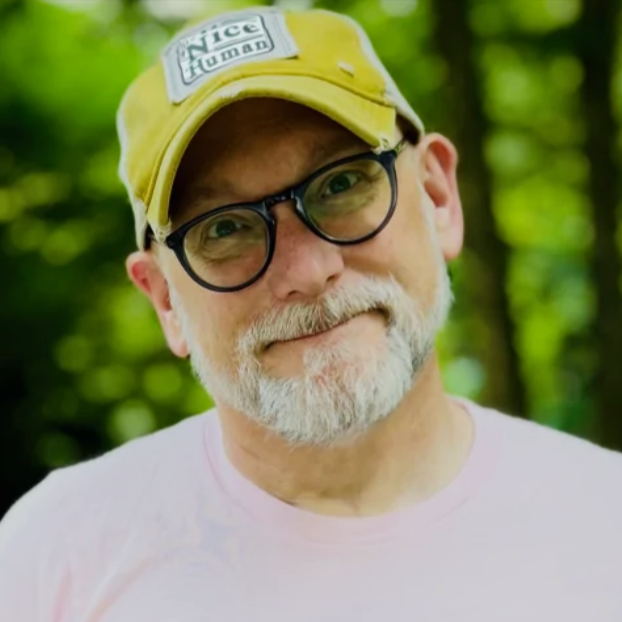
Jake Messier is a former Marine who worked in non-profit marketing for more than 30 years. He now has one of the largest TikTok accounts focused on metastatic breast cancer.
Your donation goes directly to what you read, hear, and see on Breastcancer.org.