Living Tissue Implants for Breast Reconstruction

Dr. Luba Perry is the founder and CEO of ReConstruct Bio, where she’s working to develop bioengineered living tissue implants made from a person’s own cells that then integrate with the body as living tissue. The first goal is to develop natural implants for breast reconstruction.
Listen to the episode to hear Dr. Perry explain:
- Sponsor Message
how human tissue can be created in the lab
- Sponsor Message
why she and her colleagues decided to focus on tissue for breast reconstruction
- Sponsor Message
how living tissue implants could address the limitations of the two existing options: implant reconstruction and flap reconstruction
- Sponsor Message
the status of research
Welcome to The Breastcancer.org Podcast, the podcast that brings you the latest information on breast cancer research, treatments, side effects, and survivorship issues through expert interviews, as well as personal stories from people affected by breast cancer. Here's your host, Breastcancer.org Senior Editor, Jamie DePolo.
Jamie DePolo: Hello, as always, thanks for listening. I’m joined by Dr. Luba Perry, a tissue and organ engineering scientist who is the founder and CEO of ReConstruct Bio, as well as a senior scientist at the Wyss Institute at Harvard. For more than a decade, Dr. Perry’s work has focused on building tissues and organs to better repair and restore the human body. At ReConstruct Bio, she’s working to develop bioengineered living tissue implants made from a person’s own cells that then integrate with the body as living tissue. The first goal is to develop better implants for breast reconstruction.
Dr. Perry, welcome to the podcast. This all sounds incredibly fascinating, and I’m really excited to talk to you.
Dr. Luba Perry: Hi, Jamie. Thank you so much for having me. I’m really excited to be here today and to share more about what we’re building.
Jamie DePolo: Yeah. So, for those of us who are not bioengineers, can you explain how human tissue gets created in the lab? How does that work?
Dr. Luba Perry: So basically, at the simplest, tissue engineering brings together three main components, the cells, a supportive structure, and the right environment. So the cells are the living parts of the tissue, and they can come directly from a patient or from a donor, or scientists can also start with stem cells and then guide them, basically differentiate them, to become a particular type of cell, such as liver cell, or heart cell, or fat cell.
And the second component is the scaffold, which gives the cells a place to attach, to grow, and to organize. A scaffold can be a solid, porous material or a soft, water-rich material, which is called a hydrogel.
And the third component is the environment. So cells need the right nutrients, oxygen, temperature, physical forces, and biological signals in order to behave as they would inside the body. So depending on the tissue we want to build, we may use specialized systems to provide flow, movement, stretching, or other conditions that really help the tissue develop its function. And one of the biggest challenges in tissue engineering, when we are trying to build a large tissue in the lab, is actually the blood vessels.
So every cell needs oxygen, needs nutrients, but those can travel only a very short distance throughout the tissue. So while it is relatively, let’s say, easy to grow a very thin, small tissue in the lab, it is much more difficult to build a thick, large-scale tissue, because you really need that network of blood vessels or channels that can become blood vessels that will keep the cells alive. And that challenge, creating those blood vessels within engineered tissue, has really been the main focus of my work for the last 15 years.
Jamie DePolo: Oh, wow. Okay, and I want to ask, too, because I thought I had read something that the tissue is 3D printed. So help me understand how that all fits together.
Dr. Luba Perry: Yes. So it’s partially 3D printed. So what we are developing is, basically, a personalized living tissue implant that is made from the patient’s own cells. We are not printing the fat cells, the fat tissue one cell at a time. And we’re not printing the entire breast tissue. One major advantage of our approach is that we begin with the patient’s own cells, with the patient’s own fat, which is already composed of living tissues, and it contains mature fat cells, blood vessel-associated cells, structural components, and many other biological elements, as well. So that means we also don’t need to start with stem cells.
We don’t need to grow enormous amounts of cells and then differentiate them into fat cells, which, that process can be extremely complex, time-consuming, and very expensive. And so, to create the bio-implant, we basically combine the patient’s own tissue with supportive hydrogel and place it into a personalized mold, basically. And the mold allows us to control the size and shape of the tissue based on the patient’s anatomy and desired reconstruction. Once the tissue is in the mold, then we use the 3D bio-printing to create a precise network of vascular channels throughout. So the implant’s overall shape comes from the personalized mold, while the 3D printing really creates those internal and network structures that will carry blood throughout the tissue.
Jamie DePolo: I see. So the 3D printing is how you’re solving that challenge of getting the blood vessel network into this tissue? Am I understanding that correctly?
Dr. Luba Perry: Exactly. The 3D printing is used to create these vascular-like structures within the patient’s own cells in order to get oxygen and nutrients and everything they would need to survive post-implantation. So this is the bioprinting part.
Jamie DePolo: Got you. Okay. Okay. Right now, as far as I understand, breast reconstruction is either done with a silicone or a saline implant, or autologous reconstruction, tissue taken from another part of the person’s body, usually the belly or the butt, and that then has to be tunneled up under the skin to the breast area. What you’re talking about, and excuse this if it’s too simplistic, it almost sounds like you’re combining the best parts of each, sort of the...not simplicity, because an implant reconstruction isn’t simple, but it is simple compared to the autologous or flap reconstruction of moving fat from one place in the body to the other. Am I sort of understanding? Is that sort of a good analogy, or can you help us understand that?
Dr. Luba Perry: Yes. Yeah, this is perfect. This is exactly what we’re trying to do, is kind of to combine the both, the best of both worlds. So today, as you mention, the standard options for breast reconstruction, either artificial implants filled with silicone or saline have been developed in the late ‘60s, have really seen minimal innovation in decades. Or the other solution is to take a flap, basically a really large, thick tissue with blood vessels from somewhere else in the patient’s own body.
So now you create a donor site in a completely healthy area of the patient’s body, but this is actually your own natural living tissue, as opposed to an artificial implant, which has an FDA black box warning. Not a lifetime device and have to be closely monitored, and many of them have to be removed and replaced, and some of them even being linked to other types of cancer, as well.
So kind of the simplest way to describe what we’re building is an engineered flap outside of the body. So we have all of the advantages of the flap reconstruction, without the biggest problem, is that you have to cut it out from yourself.
Many women don’t even have an adequate donor site, so even if they wanted to have this natural flap reconstruction, they couldn't. But for us, we are building this engineered flap outside of the body, starting with liposuction, in order to get the patient’s own cells so we can re-form the lipoaspirate into a living flap. And actually, originally, our technology was not developed for breast reconstruction, and we were developing a platform technology that could potentially be used to create many vascularized tissues and organs.
So we use it to build livers and hearts and kidneys. However, solid organs, like the ones that I mentioned, are incredibly complex, right? And they contain many specialized cell types that have to be organized very precisely in order to perform the organ function. And as we developed the platform, we decided to start with fat, just as a proof-of-concept, because it’s much easier to build a vascularized fat tissue and to keep it alive, versus a liver, a kidney, or an organ. And then, when we were discussing kind of with physicians and surgeons and trying to understand where should be...where should we start? Where is our first indication where we can actually make the most impact in the shortest amount of time?
We started hearing about the limitations of soft tissue reconstruction, and specifically, post-mastectomy breast reconstruction. So it really started from surgeons, and then I started talking with patients that had breast reconstruction, and when we learned how limited the current solutions are, really realized that we can address the biggest limitations of current solutions and really create a third option that does not exist today.
Today’s artificial implants, flap, or stay flat. But now we’re hoping to build a new generation of breast reconstruction, and it really addresses kind of the limitations of both existing options. So our bio-implant is really designed to provide a living natural tissue of a flap, without requiring the patient to sacrifice healthy tissue from another part of the body, and at the same time, it really avoids leaving the patient with a permanent synthetic implant. So instead of asking patients to choose between a foreign implant or a major donor site surgery, our goal is to offer that third option of their own living tissue, engineered outside of the body and designed to become a part of them. So this is why we believe this can truly transform breast reconstruction.
Jamie DePolo: Oh, yeah, it’s an amazing idea. So nobody’s had this yet, right? You’re still sort of refining everything, right?
Dr. Luba Perry: Yeah.
Jamie DePolo: But if somebody were to have it, could you tell us how the process might work? Like, you mentioned liposuction is how the fat cells would be removed from the person. Is that, like, a little...like, an outpatient kind of procedure, and then what happens after that? If you could just sort of walk us through how this might work?
Dr. Luba Perry: Yes. Absolutely. So as you mentioned, we’re still pre-clinical, so not in humans yet. Still developing it in animal models. But what we expect to happen is we are starting with minimally-invasive standard liposuction procedure in order to get the patient’s own fat tissue. And then the fat would be transported to our manufacturing facility, where we would prepare it, and using our 3D bio-printing technology, create that network of vascular channels throughout the tissue. And we would also add two small connectors to basically serve as a suturable vasculature that will allow us to suture it directly to the blood vessels of the patient, the same way you suture a flap today.
You suture one to the artery, one to the vein to get that immediate connection to the circulation. So this is all a part of our design that those suturable vasculature kind of integrate with the 3D-printed vascular tree. So everything, the entire tissue, can be immediately perfused before implantation. Once we form the bio-implant within our manufacturing facility, we are perfusing it, kind of putting it into specialized bioreactors and perfusing it for a number of days. It’s really important for the tissue to remodel and become like one cohesive tissue and not just, like, a bunch of cells that we put together.
That can take up to four to five days in order to have that tissue that then will be transported back to the hospital for the implantation. If I forgot to mention it, the tissue is fully personalized in size and shape from the start. So we already know and can design it using specialized molds to the exact size and shape that the patient desires. So then we transport it for the implantation, which will be standard microsurgical techniques that are currently being used for flap reconstruction, in order to get that immediate connection of the tissue to the circulation of the patient.
Jamie DePolo: Okay. Would somebody...you said it sounded like it would take four or five days for the tissue to grow and to become a cohesive thing, for lack of a better term. Would somebody need to have tissue expanders put in to sort of hold the space for this implant?
Dr. Luba Perry: Yeah, that’s a great question, and it really depends on the patient and the type of mastectomy they will have. If it’s skin-sparing, if it’s immediate reconstruction, if it’s delayed reconstruction. But yes, we believe some patients will need to have tissue expanders, as well, and then, instead of coming with an implant, we will come with our engineered bio-implant instead.
Jamie DePolo: So somebody could have — if they had talked to their surgeon ahead of time — immediate reconstruction because they would have, like, the liposuction and the implant being grown ahead of time, and then that would be sort of shipped to the hospital so it would be there at the time of mastectomy, and then it could be immediately implanted and sutured?
Dr. Luba Perry: Yeah. If we schedule it five days ahead of the planned reconstruction, it can definitely be immediate reconstruction if there’s enough skin to cover the implant.
Jamie DePolo: Oh, okay, cool. Now, a lot of times, flap reconstruction, people have to have then another, what they call, like, a touch-up surgery, because things aren’t as perfect or as symmetrical as maybe they would like. Is that something you anticipate with this, or does it depend?
Dr. Luba Perry: Yeah, so, one of the major advantages of our approach is the fact that the bio-implant can be personalized from the beginning, right? So we can immediately...one of the reasons for these with the flaps, at least, the revision surgeries, is because they need to form, and we need to keep correcting it structurally, but we are able to avoid all of that. We would design its size and shape specifically for the individual patient, with the goal of creating the desired breast contour from the initial reconstruction, so we would reduce the need for later revision surgeries. Of course, we are still in pre-clinical development, and any breast reconstruction may occasionally require an additional procedure for healing and symmetry and personal preference, but our goal is really to create that personalized reconstruction from the start that is designed to last, without routine replacements, major donor site surgery, or the expectation of multiple revisions.
Jamie DePolo: Wow, that’s pretty amazing. And are there any limitations that you know of so far...I realize, as you’ve said multiple times here, it’s pre-clinical. We don’t know exactly everything yet. Would there be any limitations on who might be able to have an implant like this? I know, as you mentioned, some people are told they’re too thin for flap reconstruction. They just don’t have a good donor site. Are there any limitations on this, or would it really be open to anybody who wanted it?
Dr. Luba Perry: Yeah, so, our hope is that our approach could make natural tissue reconstruction available to many patients who are currently not candidates for traditional flap, because for flap reconstruction, the surgeon really needs to find one area in the body, like you mentioned, usually lower abdomen or the back or the thigh, along with suitable blood vessels, to remove as one complete flap. And a patient may have some fat, but still not enough in order to take out an entire chunk of tissue for the reconstruction. And I, unfortunately, actually spoke with dozens of women that were not super thin. They had normal-range BMI, and they were all told they’re actually not candidates. So it’s not like you have to be BMI of 17 to not be a candidate. Even relatively normal BMI, you might not be able to have the flap reconstruction. And someone told me, yeah, my surgeon said I need to gain 80 pounds.
Jamie DePolo: They did not!
Dr. Luba Perry: Yeah. Exactly, and even then, because she was really, really thin, she said, and then, like, the scar would, basically, come around almost my entire torso. Not just, like, the front, because, obviously, that was not something that she wanted to do. So with us, because we are doing liposuction and we can take it from different areas, we are not...we don’t have to stick just to one, right? We can move from the abdomen, from, like, the love handles, from the side, the butt.
So there’s a lot of areas where you can take it, and we all have...even very, very thin patients, women, men, we all have enough sub-q fat in order to generate at least kind of on the smaller side of two bio-implants, right around 200 cc, let’s say.
So the only caveat here, when you ask if someone would be eligible, maybe someone who is really, really thin with a BMI of 17 and she wants to have really big bio-implants for reconstruction, that might not be doable, because we are...as I mentioned earlier, because we’re trying to avoid that extensive cell culture, where we are starting with a smaller amount of cells, and then we expand them and differentiate them. That will just make our product not commercially available if we are starting to enter that cell therapy space and really making extensive and expensive cell cultures. So by avoiding that and just using the lipoaspirate as is, just forming it into something different, that’s why we have that limitation of someone who is really thin might have just a small size of bio-implant.
Jamie DePolo: Okay. That makes sense. That makes sense. And I want to make sure I understood you correctly. If somebody is really thin, you can take the fat, the liposuction, from different areas? It doesn't...and then combine them all into one. It doesn't all have to come from one spot.
Dr. Luba Perry: Exactly, but that is for everyone. You don’t have to...
Jamie DePolo: Oh, okay.
Dr. Luba Perry: Yes. Exactly. You can take it from different areas, and of course, we’re not taking it from the area of the breast. I know someone, like, asked me at some point.
Jamie DePolo: Okay. So finally, where are you now? What stage is the research in? Do we have some idea of when this might be commercially available, and if you don’t know that, that’s totally fine, but it’s just so fascinating. I would love to know when somebody might be able to have this.
Dr. Luba Perry: Yeah, thank you. Thank you so much. I get a lot of patients reaching out and like, do you already have a clinical trial? Can we get in? So, people are definitely excited about having kind of a third option for standard of care. So yes, so, we are currently, as I mentioned, in pre-clinical stage, so basically in animal studies, but we’ve already achieved a really important proof-of-concept.
And we have created a small-scale bio-implant that is fabricated from human cells and implanting it into animal models and surgically connecting it directly to an artery and a vein similar in size that are being used for autologous reconstruction, and demonstrated, already, blood flow through the engineered vascular network and showed that the tissue remains perfused and viable kind of beyond the critical time point for flap survival in the clinic, which is around seven days. So our next major step is to scale the technology from that small proof-of-concept to a clinically-sized tissue.
So we need to demonstrate that we can consistently manufacture, transport, and implant a much larger bio-implant that would be clinically relevant and then maintain a blood flow over longer periods and achieve the safety and performance that is needed for clinical use.
So in order to move the technology forward as quickly as possible, we formed ReConstruct Bio. We licensed technology from Harvard, from the Wyss Institute, and are now actively fundraising in order to support our large animal studies and manufacturing development and regulatory work that is needed to bring the bio-implant into clinical trials.
And our goal is to begin clinical trials within three years. And this is an ambitious goal, and there is still a lot of careful work ahead of us, but women have been waiting for this for really too long, and there has been very minimal innovation in the space, really, for decades, and patients continue to face the same difficult choice between the permanent artificial implants versus major flap surgery. So we have been incredibly fortunate. Already received some initial early support from the American Cancer Society as a company specifically through BrightEdge, which is their impact investment and innovation arm program.
One of the earliest investors that we have is also a breast cancer survivor who, unfortunately, experienced really a devastating implant-based reconstruction herself. And she told me that, at some point, while she was really positive her breast cancer won’t kill her, she actually thought her implants might. So she had to take them out in order to feel like herself again, and unfortunately, I’ve been hearing more and more stories like that, of really very horrific reconstruction, sadly, that really become...reconstruction stories that really become kind of another source of fear and complication and repeated surgeries after women had already gone through so much with cancer treatment.
So we’re very lucky that she chose us as her first investment ever to support us as we take it to the next step. And for me personally, I really...I spent over 15 years developing kind of vascularized tissues and organs and working to solve some of the hardest challenges in tissue engineering, and now I really want to bring all that knowledge and experience to a problem that really affects so many women and create an option that is a living, natural, personalized design to us. So in order to get to the patients, in order to start clinical trials in three years, we’re currently looking for investors and partners and supporters who really believe in our mission and want to help us reach patients soon.
Jamie DePolo: Fascinating. So exciting, and I just have one more question. So would the clinical trial process for this be similar to, like, what a new drug goes through? There would be, like, a...you’re doing pre-clinical now. So then there might be, like, a phase I and that...you know, for safety and very small, and then, would the phase I be done in people? Or would that be done in animals still? I’m just curious.
Dr. Luba Perry: Yeah, great question. So now we have the small animal validation. The next step would be the large animal studies, and specifically, what’s called IND [investigational new drug]-enabling studies. Like you said, it is considered, like, a new drug. It’s basically a biologic device combination product. So once we complete the large-animal IND-enabling studies, that’s when we can submit the IND to the FDA in order to initiate clinical trials. So for something like this, like the bio-implant, it would be phase I/II together, like you mentioned. Usually smaller study, and then it will be phase III. So the phase I/II is mostly for safety, also, and then phase III for the efficacy, to really show that it works in a larger population of patients, and then, commercialization.
Jamie DePolo: Yeah, so exciting. Dr. Perry, thank you so much. I wish you so much success. I’m definitely going to be following this, and I hope to talk to you again, you know, when you’ve started your phase III trials to see how everything’s going. Thank you.
Dr. Luba Perry: I would love to come back. Thank you so much.
Thank you for listening to The Breastcancer.org Podcast. Please subscribe on Apple Podcasts, Amazon Music, Spotify, or wherever you listen to podcasts. To share your thoughts about this or any episode, email us at podcast@breastcancer.org, or leave feedback on the podcast episode landing page on our website. And remember, you could find out a lot more information about breast cancer at Breastcancer.org, and you can connect with thousands of people affected by breast cancer by joining our online community.
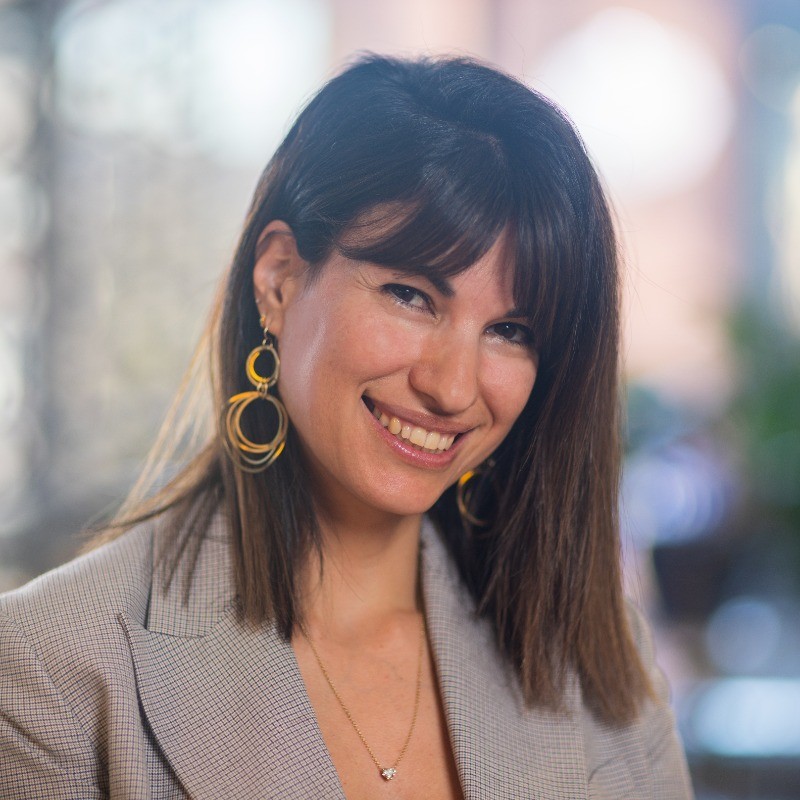
Luba Perry, PhD, is a tissue and organ engineering scientist who is the founder and CEO of ReConstruct Bio, as well as a senior scientist at the Wyss Institute at Harvard. For more than a decade, Dr. Perry’s work has focused on building tissues and organs to better repair and restore the human body. Her background is in molecular biology, pharmacology, and biomedical engineering.
Your donation goes directly to what you read, hear, and see on Breastcancer.org.