Losing Weight Boosts Quality of Life in Early-Stage Breast Cancer

At the 2026 American Society of Clinical Oncology Annual Meeting, Dr. Jennifer Ligibel, director of the Leonard P. Zakim Center for Integrative Therapies and Healthy Living at the Dana-Farber Cancer Institute, presented early results from the Breast Cancer Weight Loss (BWEL) study. The findings showed that among women with early-stage breast cancer, losing weight led to better physical and mental health, and also helped ease fatigue.
Listen to the episode to hear Dr. Ligibel explain:
- Sponsor Message
the design of the BWEL study
- Sponsor Message
why the women in the study had to have hormone receptor-positive, HER2-negative or triple-negative breast cancer
- Sponsor Message
the next steps for the study
This podcast episode is made possible in part by a grant from Lilly.
Welcome to The Breastcancer.org Podcast, the podcast that brings you the latest information on breast cancer research, treatments, side effects, and survivorship issues through expert interviews, as well as personal stories from people affected by breast cancer. Here's your host, Breastcancer.org Senior Editor, Jamie DePolo.
Jamie DePolo: Hi, I'm Jamie DePolo, senior editor at Breastcancer.org. I'm podcasting live from the 2026 American Society of Clinical Oncology Annual Meeting. I'm joined by Dr. Jennifer Ligibel, professor of medicine at Harvard Medical School, who is also a senior physician in the Breast Oncology Center and director of the Leonard P. Zakim Center for Integrative Therapies and Healthy Living at the Dana-Farber Cancer Institute.
Back in 2019, Dr. Ligibel was a podcast guest when the breast cancer weight loss, also called BWEL, study was just starting. At this annual meeting, she presented early results from the study, showing that in people with early-stage breast cancer and obesity, a phone-based weight loss program improved both their mental and physical health. Dr. Ligibel, welcome to the podcast. I'm excited to talk to you about the study results.
Dr. Jennifer Ligibel: Thank you so much for having me here.
Jamie DePolo: So, could you, just because I didn't really remember, and I'm sure our listeners don't really remember, could you summarize the design of the BWEL study for us?
Dr. Jennifer Ligibel: Sure. So, BWEL is a phase III randomized trial that was designed to evaluate the impact of a telephone-based weight loss program that focused on cutting calories and increasing physical activity, plus health education materials, versus just health education on invasive disease-free survival in women with early breast cancer. So, that outcome is a combination of breast cancer recurrence, new breast cancers, other cancers, or death from any cause. So, the study was designed to evaluate whether this weight loss program would improve these outcomes in women with early breast cancer.
Jamie DePolo: Okay, and what were the results?
Dr. Jennifer Ligibel: Well, we're still waiting to see whether the intervention leads to lower recurrence rates and better survival, but the results that we presented here looked at a sub-study of patients. The first 542 women who were enrolled in BWEL also took part in a mandatory health outcome sub-study that was designed to evaluate whether this weight loss intervention would improve physical functioning, which we know is lower in patients with obesity, and improve quality of life in BWEL study participants.
So, the results that we presented today actually showed that the intervention led to improvements in physical function at six months, which was our primary outcome, that were maintained through the whole two-year intervention period. And also improved global physical and mental health, social roles and activities, which is sort of how people function in their daily lives, and fatigue at six months. And all of the benefits other than fatigue were maintained through the two-year intervention period.
Jamie DePolo: Well, that's very exciting, and I have to ask you, because I've seen some other studies, and they talk about improved physical function, and I'm not sure everybody knows what that means. Does that mean less joint pain? Does that mean they were doing more exercise? What, in your study, what did that mean?
Dr. Jennifer Ligibel: So, physical function actually measures how well people function in their lives. Can they do all the things they need to do to get through their daily lives? Can they go up and down stairs? Can they walk a block? So, it's not structured exercise, per se, but it's more, are you able to do all the things you need to do for your job, for taking care of your family, for taking care of yourself?
Jamie DePolo: Thank you for that, and I'm curious, too, this was the structured program, the phone-based program. It focused on exercise and eating better, right? What kind of exercise were the people doing?
Dr. Jennifer Ligibel: So, this was a completely remotely delivered intervention, which was really different than a lot of the big lifestyle studies that went before this, where people had to come in to a centralized center. They would exercise with a coach or they would be part of a diet group. In this study, every patient was paired with a coach that worked with them on the phone.
And so, this was really a behavioral change study where we were teaching people how to incorporate exercise into their lives, how to cut their calories by eating smaller portions, picking less calorie-dense foods, and so, the exercise people were doing was all on their own. It was mostly aerobic. People were doing things like walking and biking, other things that kind of get your heart rate up.
Jamie DePolo: Okay, thank you, and so, this was, these were early results, the first group. What happens now? How long are you going to follow the people? When do you think you will have more results?
Dr. Jennifer Ligibel: So, we've also published a few other key results in the last few years. So, we did show that the weight loss intervention was very effective in helping people lose weight. So, we had a publication in JAMA Oncology last year showing that women randomized to the weight loss program lost almost 6% of their baseline body weight versus controls at a year.
We've also presented at the San Antonio Breast Breast Cancer Symposium early results looking at the impact of this intervention on insulin and other metabolic markers, inflammation, showing very positive results there, too. And we've also presented some data showing that people exercise more, that they did cut their calories if they were part of the intervention group. So, next step is we really are hoping to see whether all these things translate into lower rates of recurrence and better overall survival.
We hope to have those results in the next year or so, but it is driven by how often people have these events, which we hope doesn't happen very often. And in breast cancer, I think one of the things we've seen is that people are doing better, and it's taking longer to kind of get the results of studies like this. So, we think over the next few years, but we're continuing to follow people up to 10 years after diagnosis.
Jamie DePolo: Okay, and I'm assuming you're going to do this, but I have to ask the question. Are you going to look at the different subtypes? I mean, everybody in the study had early-stage, but I've also read some studies where hormone receptor positive disease takes longer to come back as opposed to, say, triple-negative or HER2-positive. So, I just have to ask.
Dr. Jennifer Ligibel: No, absolutely, and in this study, women had to have HER2-negative breast cancer because the data were not very clear when we started this study, now, a decade ago, in 2016, that there was a connection between obesity and cancer outcomes in HER2-positive cancers, whereas there were very clear data in both triple-negative and hormone receptor-positive HER2-negative cancers that women with obesity, when they're diagnosed, have a higher risk of recurrence and mortality.
And that's kind of why we're doing this study to see if you change weight, if you help people lose weight, will that actually improve their odds of surviving their cancer? So, the study looks at triple-negative, hormone receptor-positive, HER2-negative, and we will look at the whole group and then at the two subsets of patients.
Jamie DePolo: And I also have to ask, given that there have been several studies on GLP-1 medicines in cancer, so, how do we think about this study in light of GLP-1s? Are people in your study allowed to be taking a GLP-1? What is your take on all of that? Because everybody I talk to has a lot of questions.
Dr. Jennifer Ligibel: Absolutely, and I think there is no question that GLP-1s have really changed the landscape of weight loss. When we started this study in 2016, people were not using these drugs for weight loss, and in fact, we enrolled our last patient in 2021. The drugs were really not approved for use specifically for weight loss until after that. So, people were really not taking those drugs during the intervention period.
It was a two-year weight loss program or control program. But now, there are patients in the study that are taking them, and we're tracking that. We'll be looking at that as part of our analyses.
You know, I think that there's a lot that we don't know about weight loss and breast cancer. I think very promising, provocative results presented at this conference for GLP-1s and their link to lower risk of developing cancer, potentially to lower risk of recurrence. There's a lot of things that are complicated about those analyses, when we look at big databases, because there's reasons why somebody gets that prescription versus a different prescription, one that…
Some of the analyses kind of compare people who take GLPs to taking other drugs that are only used in diabetes, and so, then, the populations are a little different. So, I think that's very provocative, really interesting data. I would love to see some randomized trials in that area. But I think what our study will show is whether the amount of weight loss that you can achieve through like a lifestyle-based program will have an impact on cancer outcomes.
And our data that we presented now show that they help people feel better and function better. Sometimes the drugs don't make people feel that good. So, I think these are important lifestyle changes that people should make, whether they're taking a GLP-1 or not, because there are these very concrete benefits from them.
Jamie DePolo: And I think that's…I'm going to ask you for the sort of the takeaway from the study, but I think that's kind of it, that you said that people did lose a significant amount of weight, 6% of their body weight, but even if they didn't, being in this study and making these lifestyle changes, they still had very positive results as far as mental health, being able to get through their daily lives better.
Dr. Jennifer Ligibel: That's exactly true, and I think one of the things that we're really interested in looking at is the next step from this work, is kind of evaluating how the weight loss and the quality of life pieces go together. Like, is it just people who lose weight that experience these improvements in quality of life? Could it be that somebody is exercising, not losing a lot of weight, but they're still having these benefits? So, we're really trying to tease apart some of those relationships now.
Jamie DePolo: Dr. Ligibel, thank you so much. This has been very informative.
Dr. Jennifer Ligibel: Thank you, so much, for covering our work.
Thank you for listening to The Breastcancer.org Podcast. Please subscribe on Apple Podcasts, Amazon Music, Spotify, or wherever you listen to podcasts. To share your thoughts about this or any episode, email us at podcast@breastcancer.org or leave feedback on the podcast episode landing page on our website. And remember, you can find out a lot more information about breast cancer at Breastcancer.org and you can connect with thousands of people affected by breast cancer by joining our online community.
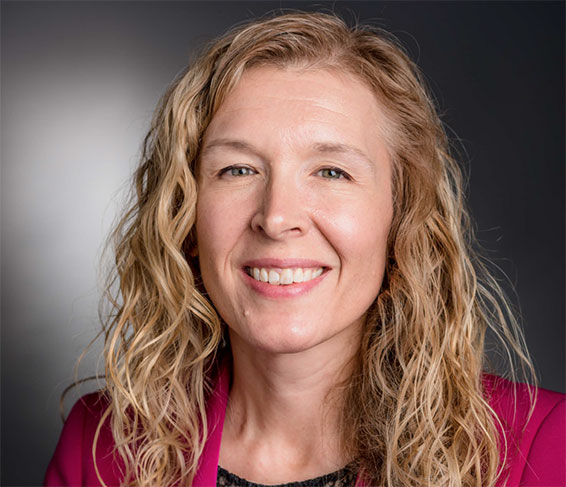
Jennifer Ligibel, MD, is professor of medicine at Harvard Medical School. She is also a senior physician in the Breast Oncology Center and director of the Leonard P. Zakim Center for Integrative Therapies and Healthy Living at the Dana-Farber Cancer Institute.

This podcast episode is made possible, in part, by a grant from Lilly.
Your donation goes directly to what you read, hear, and see on Breastcancer.org.