Cysts on a Mammogram
It can be stressful to discover a lump in your breast, whether it was found on a mammogram or by a physical exam.
The good news is that most lumps are not cancer — but it’s important to get them checked out promptly by a doctor just in case.
Cyst vs. cancerous tumor
Cysts are a very common type of breast lump. Unlike cancerous tumors, which are solid, cysts are filled with fluid. Some are so small that they can only be spotted on an imaging test, while others are large enough to be felt and may cause discomfort or pain. These larger cysts can sometimes feel firm, but more often they feel soft. It’s possible to have one cyst or multiple cysts and to have them in one or both breasts.
Most breast cysts aren’t cancer. But there’s a rare type called a complex cyst that has about a 20% chance of being cancerous.
Breast cysts sometimes develop or change when your hormones fluctuate. For example, some people who have breast cysts notice that they get bigger and become painful or tender in the days before they get their menstrual period. A cancerous breast lump typically doesn’t change with hormonal fluctuations.
If a lump is causing pain, it’s more likely to be a benign cyst than to be cancer. However, it’s important to know that cysts and cancerous tumors can sometimes cause similar symptoms.
Doctors typically use a combination of tests to find out whether a breast lump is a cyst. These might include a breast physical exam, imaging tests, and in some cases a biopsy.
How cysts look on a mammogram
If you had a mammogram and your doctor spotted a possible cyst, you’ll likely need other tests to find out what type of lump or abnormality it is.
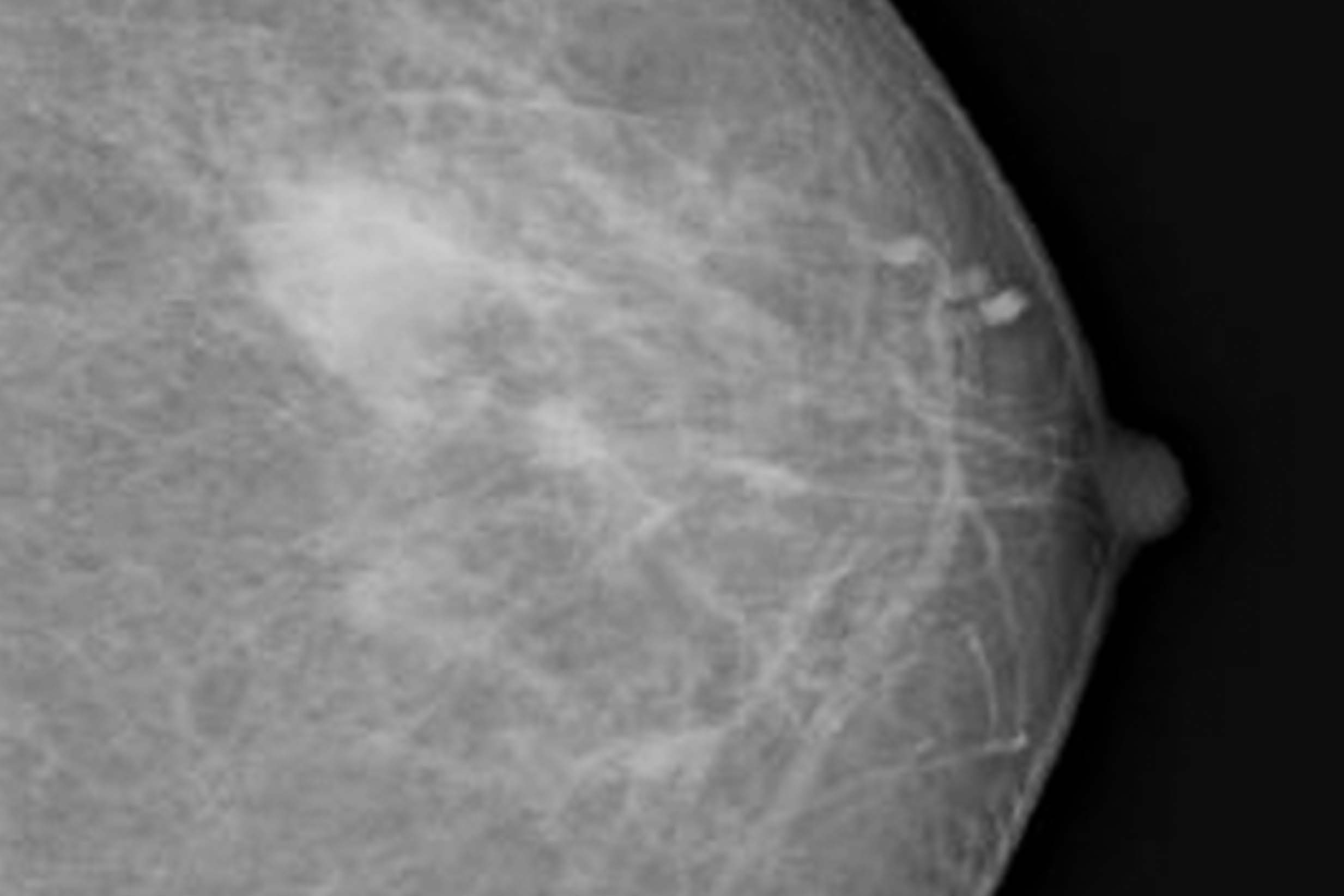
Most cysts show up on mammograms. On a mammogram image, a cyst may look like a smooth round or oval mass with distinct edges. A cancerous tumor is more likely to look like it has an irregular shape and less defined borders.
But mammograms alone usually can’t be used to diagnose a cyst. One of the reasons for this is that mammograms can’t definitively show if a mass is solid or filled with fluid.
Ultrasound and other tests
The main and often the first test doctors use to help tell if a lump is a cyst or something else is a breast ultrasound. It’s an imaging test that uses soundwaves to produce images of the inside of the breast. An ultrasound is the best way to tell if a lump is fluid-filled (such as a benign cyst) or solid (such as a benign fibroadenoma or cancer).
If a lump is solid, the soundwaves bounce back (producing a dark gray area on an ultrasound image). If a lump is filled with fluid, the soundwaves pass through it (producing a black area on an ultrasound image).
Breast MRI
A breast MRI uses magnets and radio waves to create detailed images of the breast tissue. Sometimes it’s used to examine a suspicious area seen on a mammogram or ultrasound and help decide if a biopsy is needed.
Biopsy
A biopsy involves removing a small sample of tissue, cells, or fluid from the breast using a hollow needle or surgery. The sample is then examined in a lab under a microscope. A biopsy is the only test that can tell for sure if an area of concern is cancer. If your doctor thinks an abnormal area in your breast is likely to be a cyst, they’ll probably recommend the type of biopsy called a fine needle aspiration.
What else will a mammogram show?
Besides cysts or cancer, mammograms and other imaging tests can show several other types of benign masses in the breast tissue, like calcifications or fibroadenomas.
Calcifications are tiny flecks of calcium — like grains of salt — in the soft tissue of the breast that can sometimes indicate the presence of an early breast cancer. Calcifications usually can't be felt. Depending on how they're clustered and their shape, size, and number, your doctor may want to do further tests.
Fibroadenomas are movable, solid, rounded lumps made up of normal breast cells. Fibroadenomas are the most common kind of breast mass, especially in young people. While not cancerous, these lumps may grow. And any solid lump that's getting bigger is usually removed to make sure that it's not a cancer.
If you’re diagnosed with a benign breast condition or change in the breast tissue, ask your doctor if they’d recommend any follow-up tests. Even if your doctor is sure that a lump is benign, they may still want to watch it. For example, if you have a cyst or fibroadenoma that doesn’t need to be removed or biopsied, they might suggest having an imaging test done again in 6 to 12 months to see if it grew or changed.
Also, if you’re diagnosed with a large benign cyst that’s painful, you can ask your doctor to drain the fluid from it with a needle to help relieve the discomfort.