How to Respond to Good Intentions That Fall Flat
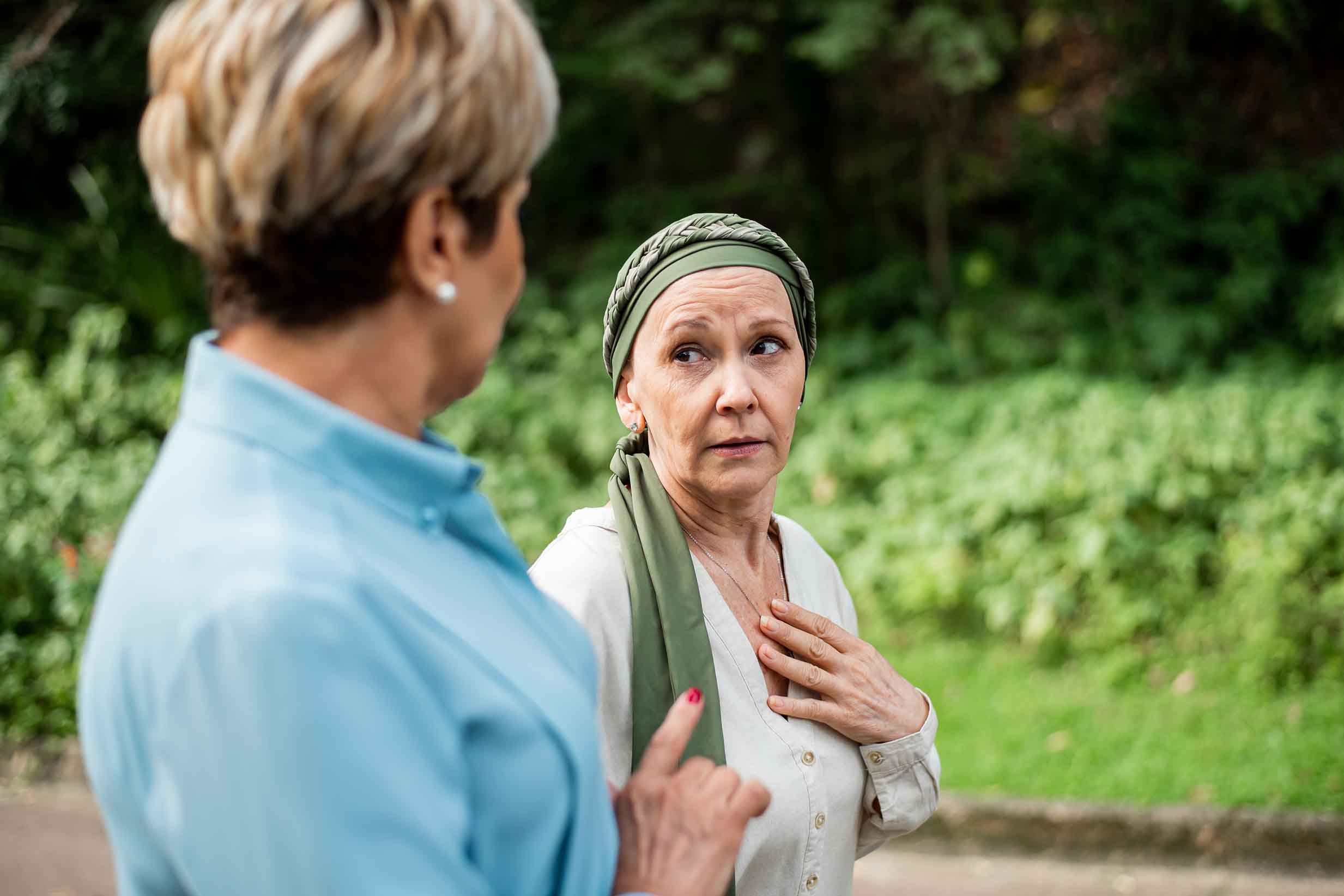
Based on conversations with our community members in our virtual support groups.
Some moments are instantly recognizable to those living with breast cancer.
Someone says something meant to help. To comfort. To fix. And instead, it lands wrong.
Sometimes it's "Stay positive." Or, "At least they caught it early." Or, "You're so strong." "Everything happens for a reason," "God only gives you what you can handle," "You're going to beat this."
Sometimes it's silence or a quick change of subject.
Most of the time, people mean well. They're trying. And still, it can hurt. It can feel dismissive. Or minimizing. Or like your experience isn’t being fully seen.
For those living with metastatic disease, some of these comments carry extra weight because they imply a finish line that may not exist, or assume that "getting through it" is simple when the reality is more complicated.
In our community, we hear this often. People describe feeling alone in moments when they weren't supposed to feel alone. Feeling like they have to manage other people's reactions, soften their own reality, or accept support that doesn't quite fit.
There can be a gap between intention and impact. That gap can be exhausting and alienating. What to say back, if anything at all, isn't always clear, and you may find yourself gently redirecting — saying something like, "I know you mean well, but that doesn't quite land for me," or "What I really need right now is someone to listen."
Other times, you may not have the energy to explain. You might let it pass. Change the subject. Or decide this isn't the moment to go deeper.
And sometimes, the response is internal. Recognizing that the comment may say more about the other person's discomfort than your reality. Reminding yourself that you don't have to take it in, even if it was offered with care.
There isn't one right way to handle these moments. It may depend on the person, the relationship, the day you're having, and how much energy you have.
You don't have to make the other person feel better. You don't have to explain yourself unless you want to.
Choosing not to engage is also a response.
Both things can be true. People can care deeply and still get it wrong. You’re not ungrateful for noticing the difference. It doesn't make you difficult for wanting something else.
Often, it's not perfect words that matter most. It may be space, presence, someone willing to listen without trying to fix or reframe. Sometimes the most helpful thing is as simple as, "I'm sorry you're going through this. I'm here with you."
If you've had moments where something didn't land the way it was meant to, you're not alone. Many people in our community have been there. They've also shared the words that helped them feel truly seen.
Join the conversation. What has someone said to you that felt helpful? And what hasn't? Please share here. Someone else may need to read exactly what you write.