Naomi's Story: Finding Hope Through Breast Cancer, Heart Failure, and Job Loss
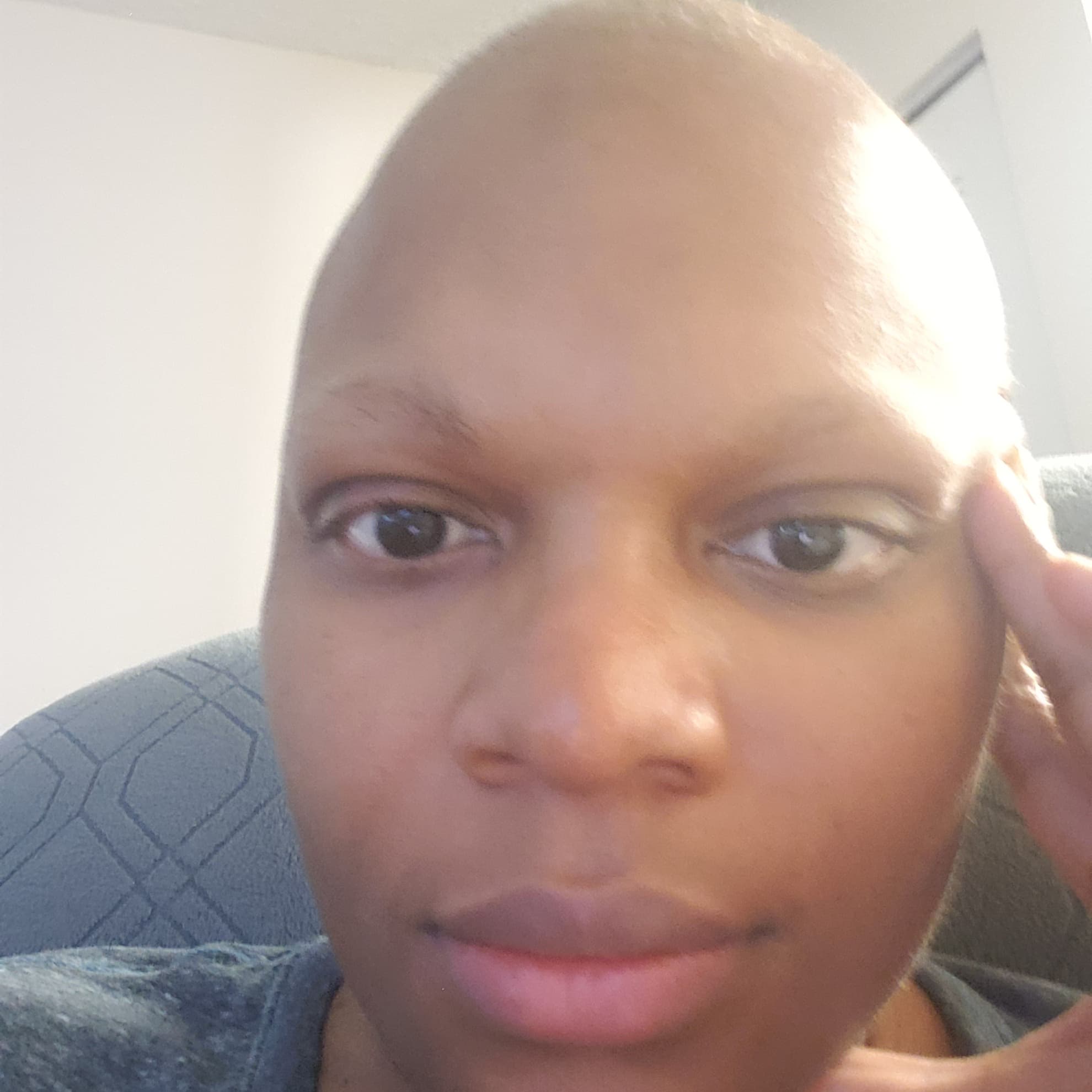
This is the story of the ground I’ve walked through diagnosis, treatment, fear, and hope. It is the story of what cancer took from me, what it could never take, and what I’ve learned about surviving when everything feels impossible.
I am writing this for the patient who just heard the words no one ever wants to hear. For the parent trying to keep life normal for their children while their own life is unraveling. For the caregivers and healthcare workers who want to understand what this fight feels like from the inside. And for the policymakers and advocates who need to see the human cost behind every decision. This is my footprint. I hope it helps someone find their way.
In March 2024, I was diagnosed with cancer. I was a mother to two young children, six and eight years old, and in that moment, my world cracked open. I was afraid for my own life, but even more afraid for how this would change theirs how it would shape the way they saw safety, love, and the future. After my first round of chemotherapy, my hair fell out. I lost so much weight that I barely recognized myself in the mirror. Even in those early weeks, I decided I would not let cancer steal my children’s sense of hope. I put on a smile every day, even when my body hurt too much to get out of bed. I wore a wig because my kids were scared to see me sick. I laughed when I wanted to cry.
The week after my mastectomy was one of the hardest weeks of my life not just because of the pain, but because I had to grieve the loss of part of my body. A part of me that had nourished my children and had been part of my identity as a woman was gone. I was grateful to be alive, but I still wished it hadn’t come to this. I thought I would be able to begin reconstructive surgery and start putting my life back together. But instead, I learned I would need another year of treatment. They removed some of the chemotherapy drugs, but I had to continue infusions and prepare for radiation.
Before Christmas, I completed sixteen rounds of radiation to my chest, underarm, and collarbone. On December 23, I rang the bell to mark the end of radiation, hoping this would be the beginning of recovery. But treatment didn’t end it just changed. I continued infusions that kept me tethered to the hospital and reminded me that cancer was still part of my life.
In January, while still receiving treatment, my manager began contacting me about returning to work. During one of my infusions, I developed chest pain. The nurse told me if it returned, I should go to the emergency room. Days later, I began bleeding first my nose, then my gums, then vaginal and rectal bleeding all at once. I was terrified. I went to the hospital and learned I had developed a serious blood disorder. During that hospital stay, I thought I might die. I kept my own clothes on because I needed to feel like myself, to hold onto my will to fight, and because I didn’t want to scare my children. I felt chest pains that felt like heart attacks. I didn’t say anything. I didn’t have the strength. My only strength was reserved for being present and reassuring to my kids.
When I was discharged, I read in my chart that the doctors had discussed metastatic cancer based on my scans. No one had told me this. When I followed up, my oncologist reassured me that it wasn’t true. But the fear had already taken hold. A week later, an echocardiogram showed I was in heart failure. I was prescribed heart-protective medications and referred to a cardiologist.
I decided that if I planned to survive, I needed to get the best care possible. I transferred to Sylvester Comprehensive Cancer Center, a hospital specializing in cancer treatment. It was one of the first decisions that felt like taking back a little control over my life.
Cancer treatment was not one moment or one procedure, it was an unending series of symptoms that changed my body and my mind in ways I couldn’t have imagined. During chemotherapy and after, I bled in ways that terrified me — nosebleeds that wouldn’t stop, bleeding gums that turned black, vaginal bleeding, and rectal bleeding all happening at once. There was pain everywhere, so deep and constant that sometimes I could not get out of bed. Even the smallest tasks sitting up, walking to the bathroom, lifting my arms felt impossible. I was exhausted all the time. Not tired, but a kind of fatigue that felt like it had hollowed out every cell in my body. Radiation brought its own agony. My throat burned so badly it was painful to swallow even water. My skin felt raw, and my chest and underarm ached constantly. I developed problems swallowing. My vision blurred. My balance became unpredictable. Sometimes I felt like I was looking at the world through glass. I experienced brain fog and forgetfulness that made me feel like a stranger to myself. I couldn’t remember words, appointments, or simple tasks. I lost my eyebrows and eyelashes. My hair was already gone. Looking in the mirror was a reminder of everything cancer had taken. After heart failure, diabetes and neuropathy in both hands and feet became part of my daily life. My fingers would tingle or go numb. My feet burned with pain. Severe hot flashes came in waves, drenching me in sweat and making my heart race. I was weak. I was short of breath. I was fighting to survive while still trying to look normal for the people I loved.
Ever since the medication that put me into heart failure, I have carried a fear toward it that I don’t always speak out loud. It is the drug meant to keep the cancer from coming back, the medicine that is supposed to protect me. But each time I sit in the chair and feel it flowing into my body, a quiet dread rises up in me. It’s a feeling I can’t fully explain a whisper of fear that lives under my skin. There is something hard to describe about needing to trust the very thing that once hurt you. About hoping that this time, it will help more than it harms. Getting through this part has required me to reach deeper into my faith and my spirituality than I ever have before. I have learned to close my eyes, to breathe, and to ask for strength from something greater than myself. To trust that I am being carried, even when I am afraid.
While I was still in treatment, I lost my job at a public health organization a place I had served faithfully despite having leave available in my absence bank. Being terminated when I was already fighting for my life forced me into another layer of grief and fear. I felt exposed and vulnerable. It was as if everything I had worked so hard to build was crashing down around me. I believed my civil rights were being violated under the Americans with Disabilities Act. I felt suffocated by the weight of it all trying to stay alive, trying to stay hopeful, and suddenly having to fight for my right to be treated with dignity and respect. I wondered if my employer had given up on me because I was sick because they believed I would never return. For a moment, I felt like I had lost this fight. But I know now that I didn’t. I survived. And in surviving, I proved that even when the world tries to count you out, you can still rise.
I am sharing this in honor of my spouse, who never left my side even when I was at my sickest, even when I was losing parts of myself I thought defined me. Who I found crying in silence, carrying a burden I couldn’t always see but always felt. And for my parents, friends, and family who showed up in every way that mattered. Who gave me strength when mine was gone. Who loved me when I didn’t feel whole.
If you are reading this because someone you love is fighting cancer, I want you to know this: Your presence matters more than you can ever measure. The quiet moments you sit beside them. The times you hold their hand during treatment. The way you carry their fear alongside your own — those things are love in its truest form. There will be days when you feel helpless. When you wish you could trade places. When your own grief and exhaustion feel like too much to bear. Please know that your love is enough. Even when you don’t have the right words. Even when you can’t fix it. Even when all you can do is just be there. To the spouses who hold the pieces together behind closed doors, your courage is seen. To the parents who show up again and again, and the friends who check in even when months have passed, your support is the net that keeps hope from falling through. I am grateful for the people who stood with me. And I believe that when we care for each other in these hardest moments, we prove that cancer can never take everything. If you are walking this path, I hope you remember: You are part of the healing. You are part of the strength. You are part of the story. And you are not alone.
If you are reading this and walking your own path through cancer, I want you to know something. You are stronger than you think. Even on the days when you feel broken. Even when your body refuses to cooperate. Even when your mind feels like it can’t hold another ounce of fear or grief. You are still here. You are still fighting. And that alone is an act of courage. Your worth does not depend on how much you can do. Your strength is not measured by whether you smile every day or never feel afraid. You are strong simply because you keep going because you get up again and again, even when every part of you wants to stop. If you are a caregiver, know that your love is a light in the darkest moments. Your presence matters more than you may ever hear in words. And if you are someone who shapes policies or makes decisions that affect people living with cancer, I hope my story helps you see what this journey really asks of us and why compassion, flexibility, and respect are not optional. They are life-saving. This is not the path I would have chosen. But it is the one I have walked, step by step. And in every footprint, there is proof that hope can survive anything.