Acupuncture Helps Ease Chemo Brain
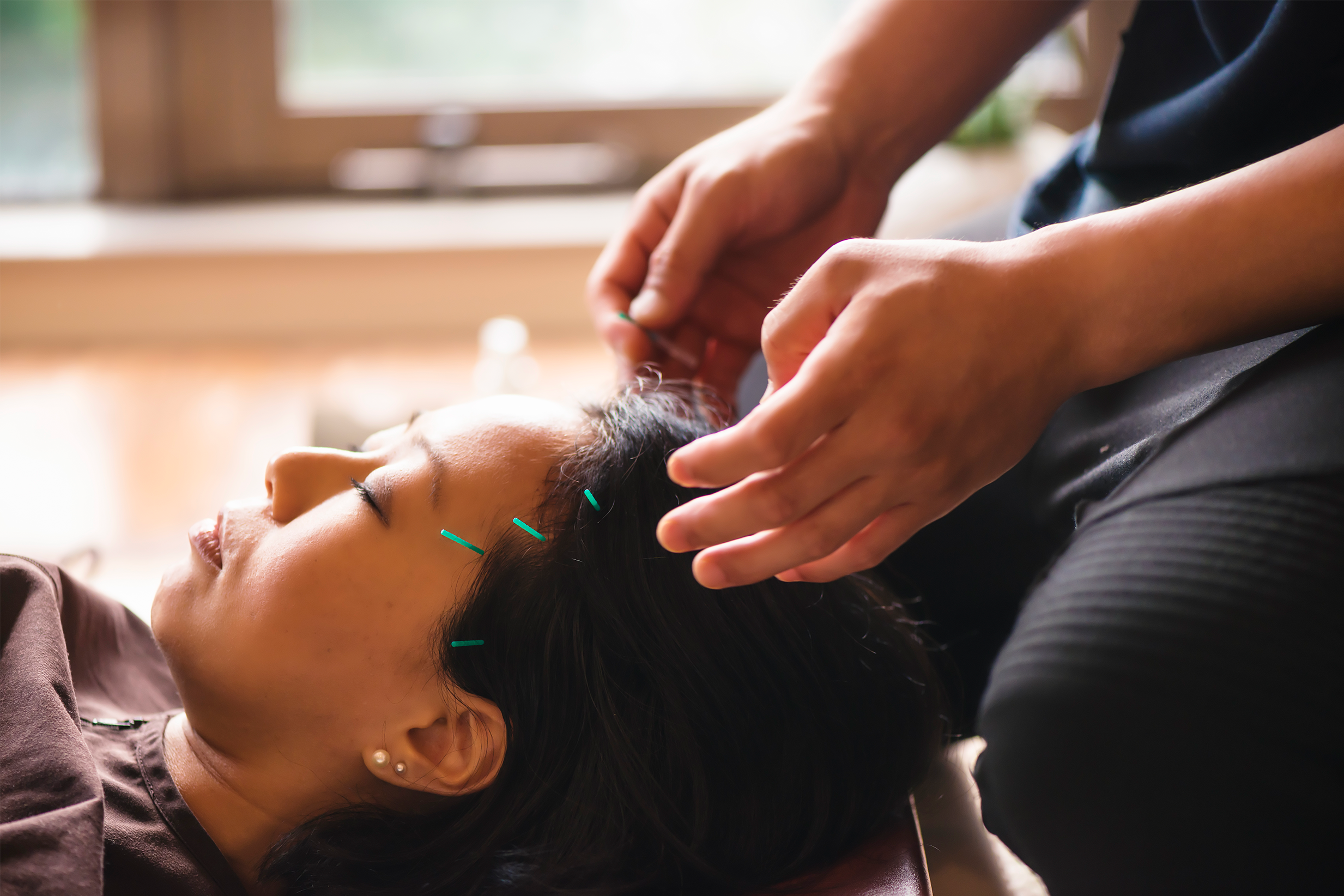
At the 2025 San Antonio Breast Cancer Symposium, Dr. Jun Mao, an integrative medicine specialist and licensed acupuncturist at Memorial Sloan Kettering Cancer Center, presented research showing that both real and sham acupuncture can help improve cognitive function in women treated for breast cancer. Sham acupuncture mimics real acupuncture, but no needles pierce the skin.
Listen to the episode to hear Dr. Mao explain:
- Sponsor Message
the complexities of chemo brain and why the causes are more than chemotherapy
- Sponsor Message
the results of the study
- Sponsor Message
his advice for people who would like to try acupuncture
This podcast episode is made possible by Lilly.
Welcome to The Breastcancer.org Podcast, the podcast that brings you the latest information on breast cancer research, treatments, side effects, and survivorship issues through expert interviews, as well as personal stories from people affected by breast cancer. Here’s your host, Breastcancer.org senior editor Jamie DePolo.
Jamie DePolo: Hi, I’m Jamie DePolo, senior editor at Breastcancer.org. I’m podcasting live from the 2025 San Antonio Breast Cancer Symposium. I’m joined by Dr. Jun Mao, the Laurance S. Rockefeller Chair in Integrative Medicine, and chief of Integrative Medicine and Wellness Service at Memorial Sloan Kettering Cancer Center. At the conference, he presented research results on how both acupuncture and sham acupuncture, a procedure that mimics acupuncture but doesn’t insert needles into the body, can help ease thinking and memory issues in people who have been treated for breast cancer. He is going to explain the research and the results to us.
Dr. Mao, thank you for being here.
Jun Mao, MD, MSCE: Thank you, Jamie, glad to be here.
Jamie DePolo: So to start, do we know how many people with breast cancer have brain fog or chemo brain, as a lot of people call these issues?
Jun Mao, MD, MSCE: Great question. So, in large research studies up to 40% of patients, i.e., four in 10 women with breast cancer, experience this type of difficulty with concentrating, focus, processing speed, and memory. And often women with breast cancer say, you know, I used to be thinking so quickly, now I’m having trouble. Or like I saw a friend and I couldn’t even remember her name. Like, simple things like that cause a lot of distress and also creates challenges for them with work and with you know caring for their families. So, it’s a very common and distressing symptom for women with breast cancer.
Jamie DePolo: Absolutely. Now, I know it’s called chemo brain, but I’ve read studies looking at how hormonal therapy or anti-estrogen therapy can also cause cognitive issues, meaning like tamoxifen and the aromatase inhibitors. Am I understanding that correctly?
Jun Mao, MD, MSCE: You’re absolutely right. So, chemotherapy definitely is one of the several key contributors to this. Researchers actually have demonstrated this is a much more complex problem than we originally thought. Often the chemotherapy, as well as hormonal therapy, kind of inducing hormonal changes in women with breast cancer and that hormonal change is actually really great at fighting cancer. But the challenge of that, that can create problems such as hot flashes, night sweats, sleep disruption, and certainly, as we all know, women with breast cancer experience a lot of heightened anxiety, depressive feelings. You know just the worry about their treatment or worry about how do they take care of their children and family, right? All those issues compounded creating this challenging issue we call cancer-related cognitive difficulties.
Jamie DePolo: Which is a very, very long term and it’s probably much easier to just say chemo brain.
Jun Mao, MD, MSCE: I think we still call it chemo brain or brain fog. It’s just so much easier, yeah.
Jamie DePolo: Exactly. So, could you summarize your study and the results for us? Because it sounded very promising.
Jun Mao, MD, MSCE: So, a while back we did a study that we found insomnia really drives some of the chemo brain. So, we also had a prior study of acupuncture for insomnia showing really promising benefit for cognitive changes that led us to design this phase II randomized clinical trial. So, we randomly assigned women with breast cancer who have finished treatment to either real acupuncture, sham acupuncture — it’s a procedure mimicking acupuncture without the needle’s insertion — or using the classic acupuncture.
Jamie DePolo: And they just kind of like touch the skin, right, they don’t go in?
Jun Mao, MD, MSCE: So, women will feel some sensation on the skin, but the needles do not go in.
And the third group is usual care, so women were told by their, you know, primary care doctors, oncologists do whatever treatments or activities as the usual care.
So, the treatment lasts for 10 weeks as a once-a-week treatment of acupuncture for 10 weeks. So at the end of 10-week treatment, we found that both real acupuncture and sham acupuncture improved the subjective, or patient-perceived, cognitive impairment compared to usual care group, and that improvement carried to week 26 without additional acupuncture treatment. But interestingly, only the real acupuncture improved objective cognition and sham acupuncture did not improve objective cognition.
Jamie DePolo: So, let me make sure I’m understanding that. So, both the real and the sham women said they felt like they were thinking and remembering better, but only the real acupuncture, when you sort of independently tested it with studies or tests, however you do that objectively, only the real acupuncture actually showed an improvement.
Jun Mao, MD, MSCE: Yes, very interestingly. So, we measure this chemo brain in two ways. One is by survey, patient’s perception, how they felt, right? The others we actually had a trained tester to give women cognitive tests, remembering a lot of difficult words and asking to repeat it, and repeat it, and then give a delay and ask them to memorize those words. So, that’s a very validated objective testing of cognitive function. And in that test the real beats sham hands down.
Jamie DePolo: And acupuncture doesn’t really have any side effects does it? Or, I mean, maybe a few, but nothing like anybody would stop?
Jun Mao, MD, MSCE: So, the needles in acupuncture a lot of women with breast cancer didn’t know it’s a very kind of thin and sterile needle. It’s very soft. The needles can actually fit into the regular blood draw needles, so it’s not like, oh, my gosh I’m getting vaccinated. That kind of needle. The procedure itself is mostly very relaxing and gives women an opportunity to rest. And there are some mild side effects as expected with needling, about 3% of patients have some bruising, mild bleeding, but nothing stopped anybody from continuing with their acupuncture treatment.
Jamie DePolo: And I know there are different acupuncture points on the body. Were there specific points that were targeted in your study or was it more general?
Jun Mao, MD, MSCE: So, our specific acupuncture protocol really draws from both clinical experience, as well as research literature, using core sets of points addressing sleep and cognition. But as we have demonstrated in our lab, that often other symptoms such as fatigue, anxiety, depression, and hot flash can also contribute to both sleep issues, as well as cognition. So, we also allow acupuncturists to tailor the treatment based on the symptoms the patient is experiencing. So, really I feel like I view acupuncture as an ancient form of precision medicine. It’s really tailored for the individual woman with breast cancer.
Jamie DePolo: Okay. And then finally, I’ve read other research on acupuncture and as your study has shown, it can help with other things, sleep, joint pain, I’ve read about that, nausea, as you said, fatigue. But my understanding also is it’s not commonly covered by insurance, even though it seems to have all these benefits, and if you’re paying out of pocket, again in my experience, it can be expensive. You know, if you’re having 10 weeks you’re going once a week. Do you think this research, I mean, obviously this study was small, but could this move the needle toward insurance covering it? And do you have any advice for people who would like to try acupuncture, but are worried about costs?
Jun Mao, MD, MSCE: Such a great question and that’s the reason we do research. I feel like if we can provide evidence base and over time acupuncture can be covered by insurance. The encouraging news is more and more private insurance are covering acupuncture. Even Medicare covers a course of acupuncture for chronic low back pain. As you know many women with aromatase inhibitors, they experience joint pain involving low back, so you know the joint pain can be in low back or knees. So, when you see an acupuncturist they can treat your low back and they can also treat your joint and other symptoms. Because as acupuncturists we don’t just say, oh, today I’m only doing a needle.
I see you as a whole person, you know, and try to help you. So, I do think we have a long way to go, but research like that helps to build evidence base that ultimately lead to sustained and more broad insurance coverage.
And for those women who are interested in giving acupuncture a try, I would really make sure finding acupuncturists in cancer center program who have experience working with women with breast cancer. And also, in general I’d say with any therapy you’ve got to be committed to a series of about maybe six weekly treatments. If it helps you, you continue for maybe a 10-treatment kind of course, if it didn’t help you maybe acupuncture is not the right solution for you.
Jamie DePolo: That makes good sense. Dr. Mao, thank you so much. I appreciate your insights.
Jun Mao, MD, MSCE: Great, thank you so much. Hopefully, with research like this we can help more and more women with breast cancer.
Jamie DePolo: Yes, I hope so.
Thank you for listening to The Breastcancer.org Podcast. Please subscribe on Apple Podcasts, Google Podcasts on Android, Spotify, or wherever you listen to podcasts. To share your thoughts about this or any episode, email us at podcast@breastcancer.org or leave feedback on the podcast episode landing page on our website. And remember, you can find out a lot more information about breast cancer at Breastcancer.org and you can connect with thousands of people affected by breast cancer by joining our online community.
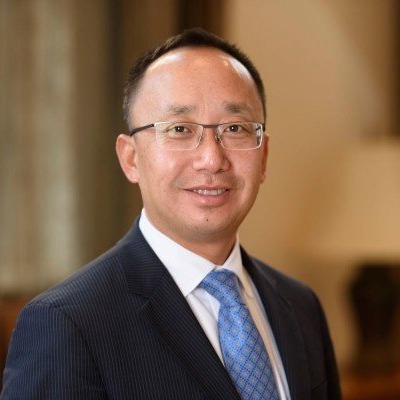
Jun Mao, MD, MSCE, holds the Laurance S. Rockefeller Chair in Integrative Medicine and serves as chief of Integrative Medicine and Wellness Service at the Memorial Sloan Kettering Cancer Center. He is an integrative medicine specialist, board-certified family physician, and licensed acupuncturist.

This podcast episode is made possible by Lilly.
Your donation goes directly to what you read, hear, and see on Breastcancer.org.