Antibody May Stop Growth of TNBC Cells
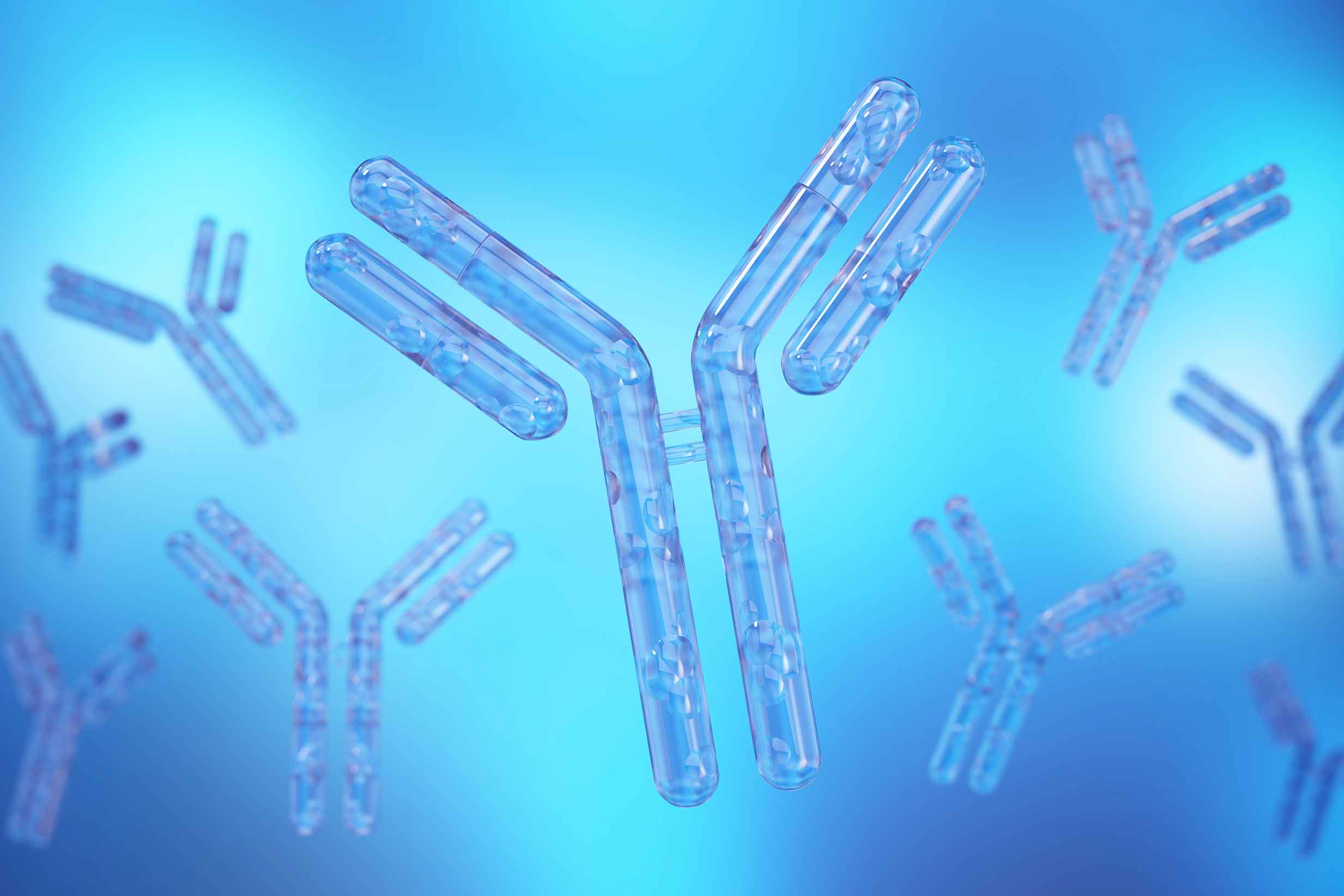
Secreted frizzled-related protein 2 is a protein that helps cancers grow by supporting the formation of new blood vessels, stopping cancer cells from dying, and weakening immune cells that should recognize and attack cancer cells. Dr. Nancy Klauber-DeMore is developing an antibody that blocks this protein. Early research suggests the antibody may halt the growth of triple-negative breast cancer.
Listen to the episode to hear Dr. Klauber-DeMore explain:
- Sponsor Message
what secreted frizzled-related protein 2 does and why she thought blocking it might help treat breast cancer
- Sponsor Message
why she’s focusing her work on triple-negative breast cancer
- Sponsor Message
the next steps for the antibody she and her team have developed
Welcome to The Breastcancer.org Podcast, the podcast that brings you the latest information on breast cancer research, treatments, side effects, and survivorship issues through expert interviews, as well as personal stories from people affected by breast cancer. Here's your host, Breastcancer.org Senior Editor Jamie DePolo.
Jamie DePolo: Hello, as always, thank you for listening. Because triple-negative breast cancer, commonly called TNBC, doesn't have receptors for estrogen, progesterone, or HER2, there are limited treatment options. Chemotherapy is a common treatment for TNBC, either before or after surgery.
I'm joined by Dr. Nancy Klauber-DeMore, professor of surgery at the Hollings Cancer Center at the Medical University of South Carolina. She and her team recently published research on an antibody that blocks the secreted frizzled-related protein 2, or SFRP2, a protein that helps cancers grow by supporting the formation of new blood vessels, stopping cancer cells from dying, and weakening immune cells that should recognize and attack cancer cells. She's going to help us understand what the results could mean for people with triple-negative breast cancer.
Dr. DeMore, welcome to the podcast.
Dr. Nancy Klauber-DeMore: Thank you so much for having me.
Jamie DePolo: So first I want to ask you about secreted frizzled-related protein 2. Why did you start to think that it could play a role in breast cancer?
Dr. Nancy Klauber-DeMore: Sure. So, back in the early 2000s, there was a new drug for breast cancer called Avastin. It was an antibody to a protein called VEGF, and what was known then is that for new tumors to grow, they need to attract a new blood supply. And so the tumors secrete factors that cause the blood vessels to converge upon them, and it gives oxygen so they can grow, and also the tumor cells can shed into the blood system. And so at that time, there was a new drug that had been shown to block blood vessel growth to tumors. And it did that by inactivating one of the proteins that was widely known to cause blood vessel growth to tumors, and that protein was called VEGF. And so Avastin had been FDA approved for multiple different cancers, but in breast cancer, it turned out that it didn't benefit patients in terms of survival. And that was really puzzling because if angiogenesis is so important, why is blocking VEGF not working?
So my thought was, the tumors must be secreting other proteins that stimulate blood vessel growth to tumors that we don't know about. And so if you're blocking VEGF, there's still an important factor that's stimulating blood vessel growth. So, I thought, how am I going to identify that?
So, first of all, I started with human tumors from patients that consented to let their tumors be used for research. And I think this is very important. It's very important to study our targets directly from human tissue. If we study them from animal tissue, it might not be the same. And so what I thought is, we knew that tumor vessels behaved very differently than normal vessels. They're twistier and leakier. And so I thought, if we could just isolate the tumor vessels and study them, we could maybe find differences from normal vessels. So the way that I did that, I developed a technique, it took three years to develop this technique, where we could take human tumors, and we could isolate just the blood vessels. And we could extract the genetic information, like RNA, and we could then take normal breast tissue from women who underwent breast reduction, and we could look at what is different in the genetic material in the RNA between the tumor blood vessels and the normal blood vessels.
And, again, that took three years to develop that technique. And what I found was, many genes were overexpressed. But what struck me about secretive frizzle-related protein 2, which I'm going to call SFRP2, is it had never been known to stimulate tumor growth, it had never been known to stimulate blood vessel growth. The other thing about it is that it's a secreted protein, and those are the type of proteins that are easy to develop drugs against.
And so that's why I started studying SFRP2. And I've studied it for over 15 years. And what we showed over the past 15 years, it is a very potent stimulator of blood vessel growth to tumors, and we did a lot of experiments figuring out in the cell how it caused the cell changes. What we found was not only did it work directly on the blood vessels, which is what we were initially going after, but it also had effects directly on the tumor cells, and what it did is it stopped the tumor cells from dying.
So we thought that this was very important. And because of that, we developed this drug, which is an antibody to SFRP2. And what an antibody is, is it binds to SFRP2 and it blocks SFRP2 from being able to bind to the blood vessels or the tumor. So it's really a blocker of SFRP2 action. And what we found was that it inhibited tumor growth in different types of tumors. The other thing that happened is that multiple investigators, nationally and internationally, were able to replicate our results. They found also that when SFRP2 was in high levels, it caused high levels of growth, and this has been shown in many different tumor types. So that's kind of the background on why we thought SFRP2 was so important.
Jamie DePolo: Okay, that's very interesting. That is sparking a couple other questions in me. If it's okay with you. I would compare it — the way that the drug you developed, how it blocks the protein or inhibits the protein — I'm sure many of our listeners are familiar with how Herceptin works, and it blocks the action of the HER2 protein. Is that a fair comparison to say that the drug you developed works a little bit like that, in a general sense?
Dr. Nancy Klauber-DeMore: Generally, yes. In a broad sense, yes.
Jamie DePolo: Okay, and all your research, I want to make sure I understand, was done in triple-negative breast cancer, or were you looking at a number of different subtypes?
Dr. Nancy Klauber-DeMore: That's a great question. So the initial discovery, we looked at all different subtypes. So it actually is important in estrogen receptor-positive and HER2-negative breast cancer. And we have shown that SFRP2 is expressed to the same level in all different subtypes of breast cancer. The reason why we are focusing on triple-negative breast cancer is because it is the hardest to treat cancer. So there are many different therapies for the estrogen receptor-positive breast cancers, and there's many different drugs for the HER2-negative — the HER2-positive, excuse me. But the triple-negative breast cancer, until recently, there were no other drugs other than chemotherapy. And it's been very exciting over the past several years where there actually are new drugs, like immunotherapy, but it still is the hardest to treat. And so that's why I've been focusing my research on triple-negative breast cancer, but I do think that in the future, it is certainly something that we could look at applying to other tumor types as well.
Jamie DePolo: Okay, that's very interesting. I guess, because I'm thinking the aromatase inhibitors and the tamoxifen effectively treat hormone receptor-positive breast cancer, but they also come with a lot of side effects. And so if there were an alternative, perhaps, to those hormonal therapies that maybe didn't have as many side effects, that would be very exciting for a lot of people. But I realize that's quite a bit down the road from where we are right now.
So, my next question is, if I understood the research paper correctly, the secreted frizzled protein 2, it was also in the immune system cells that were near the tumor. And so what does that mean?
Dr. Nancy Klauber-DeMore: So that was a really exciting finding that we had in this paper. So in this paper, some of the new things we showed that it inhibited the growth of metastatic triple-negative breast cancer. Our previous work had been on primary tumors, but this showed that it inhibited metastatic growth. And we did an experiment in human tumors, and we wanted to know, where in the tumor microenvironment is SFRP2 expressed? And we know it's expressed in tumors. We know it's expressed in blood vessels. We had a previous paper in a different type of cancer called osteosarcoma, where we actually found that it was important in the tumor-infiltrating lymphocytes. And we wanted to know in breast cancer, where is SFRP2 expressed? And so, we did a study, and we found that it was expressed in the tumor-infiltrating lymphocytes like it was in sarcoma, but it was also expressed in the tumor-associated macrophages.
Now I can tell you why this is important. So the immune system has the ability to attack the tumor and to eliminate the tumor. Tumors express certain factors that cause the lymphocytes to be exhausted so they don't function. And what immunotherapy can do is it can restore that by helping the lymphocytes go ahead and attack the tumors.
And so what we found was that SFRP2 is one of the factors that causes the lymphocytes to actually be exhausted. So it causes the immune system to not attack the tumor. And when we gave our drug, which is an antibody to SFRP2, it allowed the immune system to go ahead and attack the tumor. And we previously showed in sarcoma, one of the main immunotherapy treatments that didn't work in sarcoma, when we gave our antibody, it allowed that immunotherapy to actually work.
And so what we found in this paper was SFRP2 was also present in the tumor-infiltrating lymphocytes, and that's saying that SFRP2 is causing those lymphocytes to not work, to not attack the tumor.
But the newer finding is that it also was present in the macrophages. And the reason that that's important is that there are two types of macrophages. There are those called M1, and the M1 macrophages actually are what we call the good macrophages. They actually can attack the tumor. The bad macrophages are M2, and those are the ones that cause the tumors to grow.
So what we found was SFRP2 was present in the macrophages. So that led us to do additional experiments. One of the experiments that we did was we looked in the tumors that were treated with our drug. When we compared which was higher, the bad macrophages or the good, in the control tumors, the bad macrophages, the M2, were very high. But in the treated tumors, the good macrophages were much higher. And so what our antibody is doing, it's reprogramming the tumor immune system to the type of immunity that actually attacks the tumor.
Jamie DePolo: Okay, and just to make sure I understand, tumor-infiltrating lymphocytes, or TILs, they're immune system cells that are actually in the tumor. And it sounds like, in some cases, the tumor is creating things that makes them not work very well, in a very simplistic way.
Dr. Nancy Klauber-DeMore: Exactly. And SFRP2 is one of those factors that makes them not work well.
Jamie DePolo: Okay, and then, the macrophages, I want to make sure I understand. I thought that they were kind of outside the tumor cell and that they kind of, for lack of a better term, sort of ate up bad things. Am I understanding that right, or is that too simplistic?
Dr. Nancy Klauber-DeMore: So if you look at a whole tumor, the tumor is made up of the tumor cells and then what we call the microenvironment. So those are surrounding, and both the lymphocytes and the macrophages are surrounding the tumor. So they're interspersed with all the tumor cells.
Jamie DePolo: Okay. Okay. Oh, well, that's, that’s very interesting, too. So, this antibody, this drug, it's only been tested in tumors and in mice. Is that, am I understanding that correctly?
Dr. Nancy Klauber-DeMore: Only been tested in mice, right. So we would like to do a phase I clinical trial to test it in humans, and we are in the process of trying to raise the funding. You know, we have to manufacture the antibody, and we need to do safety studies. And then we need to go to the FDA to get approval to do the studies, and then we need to do the clinical trial. So we're actively working on raising the funding, and once we get the funding, we anticipate that the trial will probably start in about a year from then. So, still, the start date is unknown. We need to raise the funds first.
Jamie DePolo: But still very exciting. I have two questions. Again, if I read the paper correctly, you tested the antibody in mice with metastatic triple-negative disease and it stopped the metastatic cells from growing. Am I understanding that correctly?
Dr. Nancy Klauber-DeMore: That's correct.
Jamie DePolo: Okay. That's very exciting as well. Can you tell anything from mouse studies, and probably not, but I have to ask the question, can you tell anything about side effects from the work you've done so far?
Dr. Nancy Klauber-DeMore: So we have not seen any side effects. So we have treated mice for as long as 50 days without side effects. The dose that we use is about 4 to 8 milligrams per kilogram. We've gone up to 20 milligrams per kilogram, so, about five times past the dose that we use for treatment, and we treated for three weeks, and there were no signs of toxicity. And we took out the liver and the kidneys, and we had our pathologist look at it, and there were no pathologic changes. We haven't seen any weight loss, and the other thing is that we looked at when we gave a dose of the antibody, where in the mouse does it go to? So you could put on a fluorescent label, and so we could look and see where the antibody goes to, and it goes directly to the tumor with very little uptake in any of the normal tissue. So — and that's called a biodistribution study — and so far, we would think that our toxicity studies will be good.
The other thing is that we've looked at publicly available gene expression databases for the expression of this gene in the normal blood cells, normal hematopoietic cells, and it's a very low expression. So we have not seen in the mice signs of toxicity, and we've seen with our biodistribution studies really directly go into the tumor, very minimal uptake in normal tissue. And so the safety studies that are done will be done in accordance with what the FDA requires. That's when you make your clinical grade material, and then you need to do your toxicology studies. So we haven't done that yet. And then you go to the FDA and when they approve it for a clinical trial, you do what's called a phase I trial. And these are patients who have metastatic disease, who have tried everything, and it hasn't worked. And so they want to try a new agent, and that's where you give your drug, starting at a lower dose, and then you escalate it to see if there are signs of toxicity. So that's what a phase I trial is, and that's really the study that will tell you what the safety profile is in humans.
Jamie DePolo: Okay. Okay. That all sounds very good. With your biodistribution study looking at where the antibody went into the mice, into the body, does that mean that the secreted frizzled protein 2 isn't present in a lot of other cells, that it's mainly in cancer cells?
Dr. Nancy Klauber-DeMore: Right. Correct. In the cancer cells and in the cancer microenvironment. And if you go back to, how did we discover this? We discovered it by extracting tumor vessels and extracting normal vessels and looking at what genes were very high in the tumor vessels and not in the normal vessels. So that was how we discovered it, and it's really played out. So this is a protein that normally, it's expressed during embryonic growth. And so a lot of these genes that are expressed in embryonic growth then get turned off in the adult, and then they get turned on in cancers. And that's somewhat of a common feature. So, so far, we are very encouraged in what we're seeing in terms of safety, but again, you know, that's what the phase I clinical trial is for.
Jamie DePolo: Of course, very exciting. And then, one last question. How is this administered? I'm assuming it's an infusion?
Dr. Nancy Klauber-DeMore: Yes, it would be an infusion.
Jamie DePolo: Okay. Dr. DeMore, this is very, very exciting. I know you said you're working on raising money, don't have a date yet for the phase I trial, but it's very fascinating to me. And I guess I lied, I do have one more question. If this goes forward and becomes a reality, I guess I'm wondering, too, in addition to treating cancer itself, is it possible that it could be given along with an immunotherapy medicine to make immunotherapy more effective?
Dr. Nancy Klauber-DeMore: Absolutely. That is what we are looking towards. So the initial trials need to be safety trials with the drug alone, and then, you look at, you know, what is its effectiveness alone? But absolutely, we think that this may have potential, in combination with immunotherapy, to make immunotherapy more effective or make tumors that are unresponsive, potentially responsive. So those are the studies that we want to do.
Jamie DePolo: And it sounds like, too, this could have wider applications than strictly triple-negative breast cancer. I mean, I know that's what you're working on, but…
Dr. Nancy Klauber-DeMore: Well, so, we're actually working on three tumors. We have shown that in mice, the antibody inhibits the growth of metastatic osteosarcoma. Osteosarcoma is a tumor that's usually in children, adolescents, and there's been no new therapies in 30 years. And a scientist at Texas Children's showed that SFRP2 was overexpressed in metastatic osteosarcoma. So we collaborated with them, and we showed that SFRP2 not only inhibits osteosarcoma growth by itself, but is additive in effect to immunotherapy. And other sarcomas express SFRP2, and so this is a drug that we're looking at for the sarcomas. And we're also seeing very, very high expression in pancreatic cancer. And we published that if a patient has a high level of SFRP2, they have a very bad prognosis, but if they have a low level of SFRP2, they actually have a very good prognosis. And so pancreatic cancer is another cancer that we're focusing on. And so we're really focusing on the very hard to treat cancers to see if there's a benefit there. So those are the three that we're focusing on. In the future there certainly may be other tumors that may have benefit for this therapy.
Jamie DePolo: That's very exciting. Dr. DeMore, thank you so much for joining us and explaining this. I know things have to happen a little bit further down the road, but very exciting to hear about this research at this stage. So thank you so much for your time. I appreciate it.
Dr. Nancy Klauber-DeMore: Oh, thank you so much. I appreciate it as well.
Thank you for listening to The Breastcancer.org Podcast. Please subscribe on Apple Podcasts, Amazon Music, Spotify, or wherever you listen to podcasts. To share your thoughts about this or any episode, email us at podcast@breastcancer.org, or leave feedback on the podcast episode landing page on our website. And remember, you could find out a lot more information about breast cancer at Breastcancer.org, and you can connect with thousands of people affected by breast cancer by joining our online community.
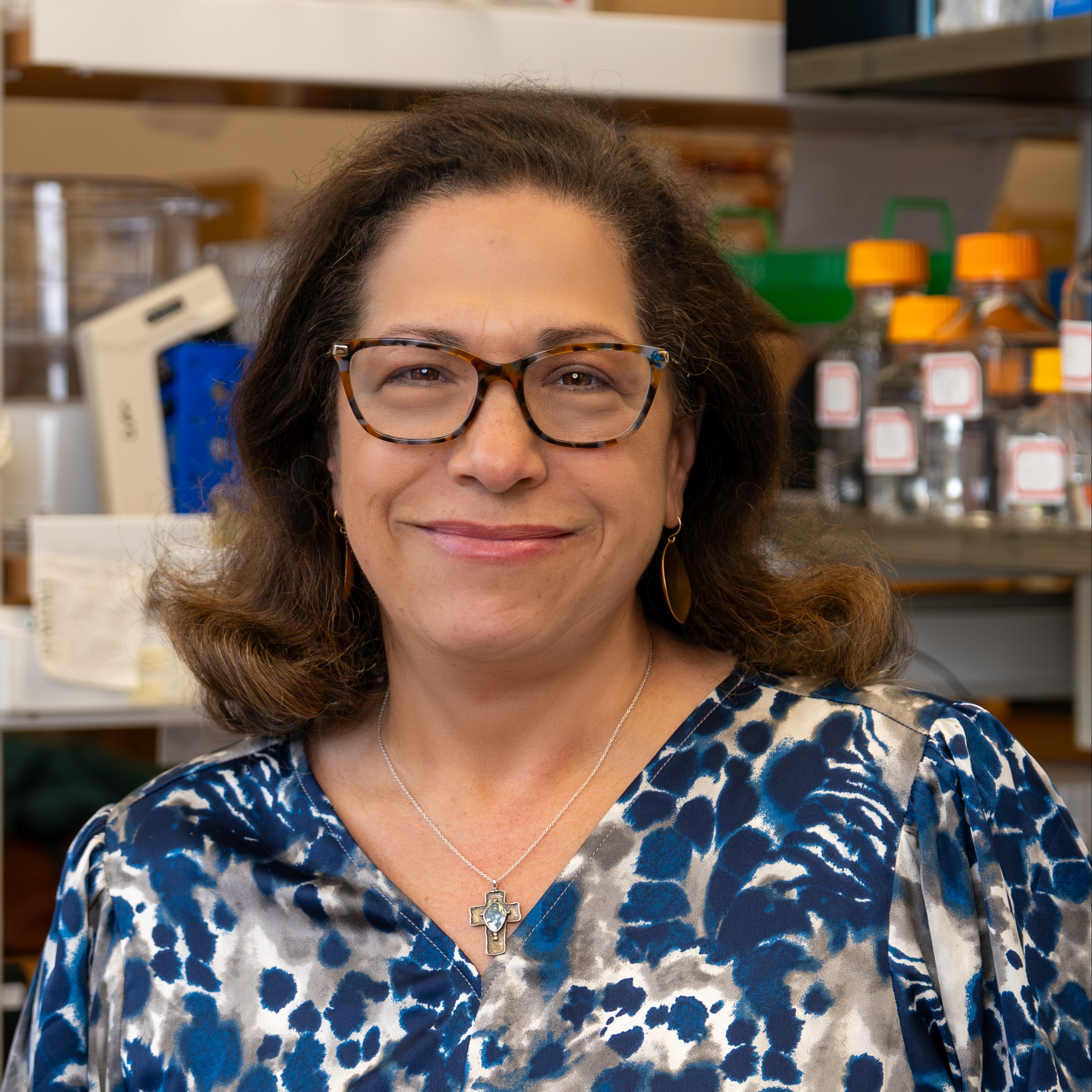
Dr. Nancy Klauber-DeMore is professor of surgery and the BMW Endowed Chair in Cancer Research at the Hollings Cancer Center at the Medical University of South Carolina, where she also serves as co-leader of the Developmental Cancer Therapeutics Program.

Your donation goes directly to what you read, hear, and see on Breastcancer.org.