Is Breast Cancer Linked to Certain Bacteria?
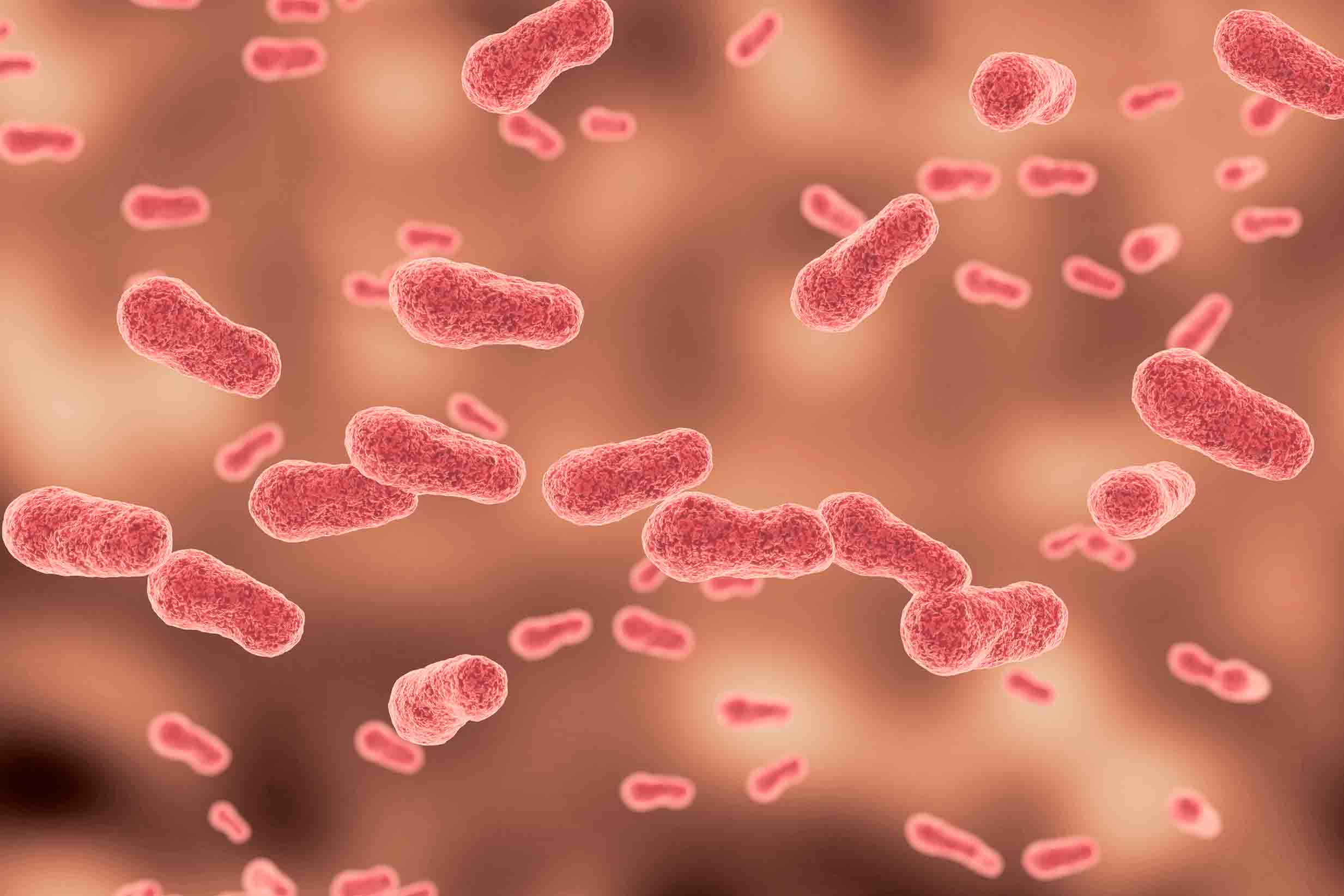
Dr. Dipali Sharma and her team published two papers that found links between bacteria, including F. nucleatum, the bacterium that causes periodontal disease, and the development of breast cancer.
Listen to the episode to hear Dr. Sharma explain:
- Sponsor Message
her work to figure out how bacteria travel from the gut or mouth to the breast
- Sponsor Message
the changes the bacteria cause in breast cells
- Sponsor Message
why breast cells with BRCA1 mutations were more likely to have higher levels of bacteria in them
- Sponsor Message
how research to inhibit a specific enzyme may one day lead to a new breast cancer treatment
Welcome to The Breastcancer.org Podcast, the podcast that brings you the latest information on breast cancer research, treatments, side effects, and survivorship issues through expert interviews, as well as personal stories from people affected by breast cancer. Here's your host, Breastcancer.org Senior Editor, Jamie DePolo.
Jamie DePolo: Hello, thanks for listening. Researchers are starting to tease out the important role gut bacteria play in nearly all bodily functions, including the development of breast cancer. I'm joined by Dr. Dipali Sharma, professor of oncology and a John Fetting Fund for Breast Cancer Prevention investigator at the Johns Hopkins Kimmel Cancer Center.
She and her team have recently published two papers on how certain gut bacteria, including the bacterium that causes periodontal disease, may cause breast cancer to develop and grow. Dr. Sharma, welcome to the podcast. I'm quite excited to talk to you about this research.
Dr. Dipali Sharma: Thank you. I'm so happy to be here.
Jamie DePolo: So first, can you help us just understand gut bacteria? How many different types are there? Does everybody have the same types? Some things I've read classify these bacteria as either "good" or "bad." And so, what does that mean?
Dr. Dipali Sharma: I think we can start with the bacteria first. So it's actually interesting that the human body can host about, you know, as many bacteria cells as — and when I'm saying bacteria, means the microbiome, like all the microbiota — that includes fungi, viruses, bacteria. So essentially, there can be like 30 trillion bacteria that are living in our body, in and on our body.
So there is this holobiont theory that how the human body is not alone. We're like, you know, half the cells are ours, and then half of them are contributed by these bacteria. And every person, I would say, can have like 500 to 1,000 different kinds of bacteria in them, you know, in different niches in the body.
And another interesting fact is that they're born with a certain kind of microbiota. So — and that microbiota changes over time. So since all of us experience these, you know, unique changes around, in our surroundings, environment, the food we eat, and our genetics, all that shapes the microbiota.
So in some sense, we can say that in each one of us has a…we have a unique microbiota. It's like our fingerprints. And then, of course, there are certain things that are more commonly present in, you know, multiple individuals. Now, talking about like good or bad bacteria, we always talk about good and bad bacteria.
Essentially, when we say that eubiosis, that means that we have different kinds of bacteria living in harmony in our body. So, that is called eubiosis. And when we say dysbiosis, that means that there may be, there is a like, reduced number of species of bacteria, or maybe the presence of a harmful bacteria.
And then, when we are saying harmful bacteria, that would be either a bacteria is, like, directly connected to a disease, like all these gastrointestinal diseases, many of them are connected to some bacteria that are releasing a toxin. So if we think about bacteria as a single cell, then this cell is making these bad chemicals, toxins, and they can release them in the body.
So what would happen is, that this toxin release can now, then you know, change somebody's immune system, and they can also change the circulating cytokines. So they can have very wide effects. And then sometimes, they are like, you know, they are the bosses when they are present, alpha bugs, and they can change who lives in their neighborhood.
So they can also change the neighborhood, shooing away the, you know, the good neighbors, the beneficial bacteria.
And then, they talk about good bacteria. That will be the bacteria that's helping us in terms of maintaining good digestive health, and producing these small chemicals that are called SCFAs, short chain fatty acids. So they produce those, and many of them are, you know, useful and beneficial for the body.
Jamie DePolo: Okay. So, we have these bacteria everywhere in/on us. Is it actually in the breast tissue? How does the bacteria, say, that causes periodontal disease, or the bacteria that's in your gut, how does that get into the breast tissue to affect it?
Dr. Dipali Sharma: That's a very important question that many of us are trying to answer. Essentially, like in our lab, we found that a bacteria that is related to the gut, like it lives in gut, usually, and the pathogenic form also lives in the gut, and it can cause the gastrointestinal symptoms, chronic diarrhea and such. We found the same bacteria in a mammary tissue, essentially. Let's get back to the patient study first.
So the patients, breast cancer patients with benign and malignant disease, in both the cases, we found that this bacteria was present there. And also the bacteria that is associated with periodontal disease, we found that in the breast tissue as well. Now, we wanted to find out how is this getting there? And we tried different, you know, methods to find that out, and I think the jury is still out there. You know, we don't know the concrete answer yet.
But some of our colleagues have shown that the bacteria can actually hide in the circulating cells, and one group has shown that how some of the bacteria can ride the immune cells, and now, since they are going everywhere, they can come out at, like, you know, they can then go and colonize our tissue.
So, we're not sure that how breast is actually getting these bacteria, because breast also has an orifice that's open to environment. It might actually get from there, or from the, you know, internally, by riding the cancer, circulating cancer cells, or in a healthy body, maybe circulating immune cells.
Jamie DePolo: Do you think it could be in the lymphatic system at all? Is that possible or…?
Dr. Dipali Sharma: Might be. Because, like I said, that many of us are trying to put together this piece that, how is this bacteria getting to breast? Because in our experiments, we had these mice models, and we gave them bacteria orally, and then, we looked at their mammary tissue, and we found live bacteria there.
Jamie DePolo: Wow.
Dr. Dipali Sharma: So it's getting there somehow.
Jamie DePolo: Right. Right.
Dr. Dipali Sharma: We are suspecting hepatic borderline, but again, you know, it's not solid yet. The answer needs more, more quest.
Jamie DePolo: Okay. Right. Okay. Well, it's still fascinating. So do we know what happens when the bacteria is in the breast? Has anybody figured that out? Or can you trace a line between the bacteria there and cancer? Or is that a hypothesis still?
Dr. Dipali Sharma: Let's think about like where breast cancer develops. So a breast has these, like, network of pipes, the ducts, and then it's a tree-like structure, which is ending in these lobules. So these ducts and lobules, that's where breast cancer starts.
Essentially, when I say breast cancer starts, that means the cells that are lining the pipe, they will start to divide and make more of themselves and fill the pipe, so, kind of clogging the pipe. Generally, they are just, you know, very law-abiding cells.
They'll just not divide and keep everything intact. If there is a bacteria there, and in this case, we can, you know, take B. fragilis as an example, which was the gut bacteria. So, when B. frag is there, and these normal cells see B. frag, which is secreting this toxin, these cells actually start dividing, and then, they become elongated, and they become more invasive. So a cancer cell has to, like, divide, of course, and then it also has to learn how to get out of these pipes.
That's when it becomes malignant. So it has to change its shape, and then it has to learn how to go through the basement membrane, which is essentially the wall of the pipe. So with the toxin, toxin, you know, sets off this…I can say snowball effect, that these cells will start dividing more, clogging the pipe.
And then, it will also help them to change the shape and get out of the pipe's wall. Now it's in the outside, in the breast, and then, from there, it can ride a circulating system, and then they can metastasize somewhere.
So this was actually a pretty interesting study, because these cells were exposed to the toxin for just 72 hours, not more than that.
Jamie DePolo: Oh, so, not very long.
Dr. Dipali Sharma: Yeah, it's not very long, and we put them in mice, they grow tumors, and we take those tumors out and take, you know, get cells from there, and then put them in mice again, and the tumor still grows. So one exposure, one short exposure to the toxin, and these cells get this molecular memory, and then, they can form tumors. We check them up to 12 weeks. It's pretty rapid growth.
Jamie DePolo: Wow. Wow.
Dr. Dipali Sharma: So I think other bacteria also produce different other toxins, and I mean, this was just one example that I shared.
Jamie DePolo: Right. Right. When you did this research, was there any idea beforehand that the particular toxin was linked to cancer at all? Or is this plus the bacterium all, you know, relatively new?
Dr. Dipali Sharma: So these bacteria have been studied in different contexts. For example, we knew that this is a pathogenic strain, because it was associated with this gastrointestinal symptoms, and some of the studies had also shown the presence of this bacteria or an association of this bacteria with the colon polyps, and that will go on to develop colon cancer.
Now, the association of this bacteria with the breast cancer, that's what we found, and our first finding wasn't in just looking at the human tissue and seeing, and that's where we found. We were looking at the whole metagenome, and we found that how women who don't have cancer, comparing to the tissue from, or sometimes the nipple aspirate fluid, from people who have cancer versus not, benign and malignant samples, that's where we found the presence of this particular bacteria. So that was not known before.
Jamie DePolo: Okay. Okay. And I think if I'm remembering right from your study, breast cancers that had a BRCA1 mutation were more likely to be affected by certain bacteria. Am I right with that? And do we know why?
Dr. Dipali Sharma: So, when we talk about like any mutation, right? So cancer is disease that is not caused by one factor. It's a multifactorial disease, and we look at a couple of risk factors when we are…even when we are talking about breast cancer, in assessing somebody's risk. In this particular case, we found that how these epithelial cells, your normal epithelial cells, and the only change we kind of induced in them is BRCA1 positivity, and then, we had these breast cancer cells that inherently have these BRCA1 mutations.
And we found that these cells have these proteins, particular proteins on the surface, which helps F. nucleatum enter the cell. So what was happening is, if we were comparing the cells that had BRCA1 mutation versus not, these cells had higher level of this particular protein that helps the bacteria get in. Now this bacteria, F. nucleatum, gets inside the cell. So in our article, we have these beautiful images to show that how bacteria gets into the cell. It actually divides there.
Jamie DePolo: Oh, wow.
Dr. Dipali Sharma: And I would say that, now, BRCA, having a BRCA1 mutation is one hit. Now, if there is F. nucleatum or B. frag, then that is the second hit. That may cause cancer initiation or may wait for another hit.
Jamie DePolo: I see. Okay. So, it's something in the BRCA1 mutation. It's causing these particular proteins to be more abundant on the surface of the cell that kind of invites the bacteria in. Am I sort of understanding that correctly?
Dr. Dipali Sharma: So I think that we don't know the direct connection between how BRCA1 mutation is causing the excess of this surface protein. So, we are still looking into the mechanistic aspect of it, but so far, we can say that cells who have BRCA1 mutation, they have higher level of surface…kind of association, at this point. We don't know…
Jamie DePolo: Okay. Not a direct cause.
Dr. Dipali Sharma: Yeah.
Jamie DePolo: Okay. Now, you mentioned colon polyps that could turn and potentially become cancerous. Are people studying how these gut bacteria, or bacteria in general, can cause cancer in other parts of the body? I mean, is this kind of a whole new risk factor, for lack of a better term?
Dr. Dipali Sharma: Yeah, I think. So the impact of bacteria has been studied in various cancers. So, initially, I would say initially, like maybe 10 years back or so, or 15 years back, we thought that, like — when I say, we, scientific community — we all thought that there are certain organs that are sterile organs, and you know, they don't have bacteria. Because then the initial human genome project was completed.
It was only done for the skin, and for oral cavity, and you know, a few places, gut, of course, vaginal microbiome, and then, it was thought that, okay, some of the organs that are inside are sterile, but then, as the studies came out and multiple groups were asking different questions, so, now, we know that, actually, bacterial dysbiosis, which is the imbalance in these microbes, can impact pancreatic cancer, prostate cancer, stomach, multiple cancers, beyond the gut, also.
Jamie DePolo: Oh, wow. Okay. Okay. Now, one of the bacteria you studied, I believe it's the bacterium that causes periodontal disease. So, I was wondering, if somebody has periodontal disease, are they at higher risk for breast cancer? And should we start considering oral health as a risk factor for breast cancer?
Dr. Dipali Sharma: So periodontal disease has been associated with breast cancer. So several epidemiological studies have shown this association. Again, this is association. So we're taking a number of people who have periodontal disease and not, and looking at if they have breast cancer also. So there are a few studies that found no association. There are multiple studies that found an association.
So going from there, in our study, we found out that these four bacteria, that one is, I would say, the leader, F. nucleatum, and three of its friends. So these four bacteria form a biofilm in the oral cavity. So these are the cells, they can ride to other organs. There is a…our paper also showed that, and there is another group that showed that, that how this can actually ride in the circulating system and get to other places, and it doesn't stay out in the vicinity of the cells. It actually enters the cell.
Whichever cells give, you know, that green signal, it can actually enter there, and then release whatever that it releases, and you know, impact the cells, healthy cells, and make them learn the tricks of growing and invading.
We should definitely consider if somebody has gut problems or, like persistent gut problems. I would not say that patients that are coming in a clinic, but patient advocates that I interact with, many of them have heard in their community that how people had these gut-related problems for years, and then they were diagnosed with cancer.
So we sometimes talk about if there is an association or not, but that needs a larger clinical study, and you know, looking at all the other variables that a person might be experiencing. Having said that, periodontal disease is associated with multiple other diseases, and I would say the knowledge that we have now about these four bacteria and the functional impact that they can have on these normal cells, especially, you know, breast, breast cancer, which we study.
I think we should all be more aware of that association and take care of the oral health if someone has periodontal disease. You know, it's better to take care of that rather than kind of leave it, because, mostly, we'll go to our dentist six months, for our six months' appointments, right? For cleaning. We're not paying, sometimes, a lot of attention that is needed.
Jamie DePolo: Right. Okay. Okay. Thank you, and I want to ask you, I think one of the bacteria, I don't know if it was the leader, the alpha bacteria, it caused an enzyme, spermine oxidase, if I'm pronouncing that correctly, also called SMOX, or I'm just going to say SMOX, to become overactive. And I couldn't understand everything in the paper. It was kind of technical, but it sounded like this overactivity was somehow associated with cancer. Is that correct? And if it is, can you explain what was going on there?
Dr. Dipali Sharma: Yeah, sure. So, we found out that how F. nucleatum and B. fragilis, one gut bacteria and one oral bacteria, both of them cause this upregulation of spermine oxidase. Now, spermine oxidase, or SMOX, is an important enzyme that will change the level of polyamines.
Polyamines we can understand maybe as small chemicals that are roaming around, and they are important for maintaining the healthy cells, maintaining the metabolism and all. So, we need a certain level of polyamines, and SMOX is the enzyme that regulates that. But on the other flip side, SMOX, higher level of SMOX, is also associated with breast cancer.
So what is happening is, that is these bacteria that we are studying, they are changing the level of inflammatory cytokines in the…again, inflammatory cytokines are the small chemicals that are running through our body, and they can cause inflammation, and also, they're important for activation of certain immune cells.
So that's the interconnectivity. So bacteria is producing toxin, and then that is changing the inflammatory cytokine level, and that is now impacting this enzyme, SMOX enzyme. So in our study, when we knock out this SMOX, knockout means just, you know, get rid of it, stop it.
Jamie DePolo: Right.
Dr. Dipali Sharma: So we use these SMOX inhibitor, and that could actually block the bacteria-induced growth on tumor growth. Now having said that, it needs a lot of calibration. This is not done daily yet, because the SMOX inhibitor that we are using in the lab is not being tested in clinic yet.
And to get to that place, we have to do more experiments, and then only we can say for sure that this would be a drug in some time. And there are other things that we are trying because cells are making their own polyamines, and also, they are taking polyamines from outside. So, we are trying new combinations to inhibit this whole process, but we'll know in time whether this inhibitor actually, you know, works in humans.
Jamie DePolo: Well, it's fascinating stuff. I mean, this is how, at least my understanding, this is how all drug development starts. You have this idea that seems to work in mice or cells, and then it keeps sort of, the ripples keep expanding outward as you do more research. I don't know if you know this yet, but if SMOX is inhibited, does it cause any potentially dangerous side effects?
Dr. Dipali Sharma: That's what we have to look for because, as I said, polyamines are important for normal functioning. So how do we kind of shave off what we don't need but still keep the balance so that we have that polyamine level, because polyamine, again, is associated with even anti-aging, polyamine-containing foods.
So, you know, taking those natural polyamines is being studied for overall health, anti-aging, and stuff like that. So I think we have to be careful here that how we maintain and just maybe inhibit that upregulation and not just getting rid of it. So that's why I said that, you know, we might have to fine-tune this approach also.
Jamie DePolo: Sure, but very interesting. And then, I guess, finally, if you could kind of help me put all of this into context, say, for somebody who's been diagnosed with breast cancer. So right now, we have four basic subtypes of breast cancer, hormone receptor positive and HER2 negative, hormone receptor positive and HER2 positive, or triple positive. We have hormone receptor negative, and HER2 positive, and then we have triple negative.
So do we know, are the bacteria, are they linked more commonly to a certain subtype? And do you think that...this is a two-part question. Sorry, it's a long question, and do you think that bacteria could be potentially involved in all breast cancer, in some way?
Dr. Dipali Sharma: We test all these questions in different cell lines. So as you mentioned, the breast cancer is also, you know, different subtypes of breast cancer are known. So, I would say, again, it's a multifactorial disease. So this was like our question, too. So we took different cancer cell lines belonging to different subtypes, and then we exposed them to the toxin or the live bacteria, and we found that it had similar impact on all subtypes of breast cancer.
Jamie DePolo: So, do you think that bacteria could be involved in all breast cancers or is it...I know you said it's a multi...there are multiple reasons why cancer develops, but do you think bacteria always plays a role, or not?
Dr. Dipali Sharma: I cannot say that bacteria always plays a role because we have not…like, none of the research group has had a very large study in, you know, using the human samples, but we can say that, looking at our modeling in the lab, we can say that it can cause breast cancer, like it can initiate breast cancer in a healthy mice, I can say. So when we expose these healthy mice to these bacteria, shortly afterwards, like within three weeks, they develop these lesions, mammary lesions.
And if we leave them untreated, they have the potential to develop into a full-blown tumor. So, we don't know exactly if every breast cancer is associated with bacterial exposure, but I would say that definitely bacterial exposure, especially to this pathogenic bacteria, is one of the factors.
Jamie DePolo: Okay. Okay. That's all very, very fascinating, and then, I guess one more question. Is there anything, and I'm thinking for people who, you know, want to do everything they can, either to prevent breast cancer or prevent a recurrence, is it helpful to promote the growth of "good" bacteria in the body, and are there things that people can do to do that?
Dr. Dipali Sharma: So, so far, we can all…general advice, maintain a healthy body weight, and to achieve that, you know, exercise and healthy diet is, of course, necessary. And I think, beyond that, there are some studies that have shown that probiotics have been associated with reduced risk, or you know, people have studied them for prevention, sometimes. And many of the probiotics are available.
But we also have to understand that there are certain studies that have shown that some probiotics are associated with reduced efficacy to some of the treatment regimens that are used in clinic. So we have to be a bit cautious about when we are using the postbiotics, but I would say…sorry, probiotics, and I wanted to clarify three terms here.
Jamie DePolo: Right. Right.
Dr. Dipali Sharma: So say probiotics are live bacteria. Now live bacteria, to grow and divide, it needs some food. So that is prebiotic, because I think when people look, they'll see all these terms. So prebiotic will be the inert food that the bacteria will eat, that is probiotic, and this bacteria, now, will produce something good that we want, or bad also.
But in this case, beneficial bacteria is producing these good chemicals that will help us, and those are called postbiotics. So there are many research groups who are actively looking for, you know, synthesizing these, or like prebiotic and postbiotic and the probiotic. So probiotic is, you know, taking live bacteria. Live bacteria will produce multiple things, but to clean up, we can look at just the postbiotic, which this bacteria is producing and we want.
So bacteria might be producing 10 chemicals, but we are only interested in two. So how about we synthesize them in the lab, and then people can take that? So that is kind of futuristic discussion, but for now, definitely, everybody, you know, they can look for the oral health, the gut health. If there is any gut-related or oral-related problem, then, you know, that can be taken care of as soon as possible. They can maintain their BMI, and not with drugs, with the diet and exercise.
Jamie DePolo: Right. Right. Dr. Sharma, thank you so much. This is so fascinating, and I hope that I can talk to you in, say, five years, and we'll know a little bit more, and maybe you'll be further down the road with the SMOX inhibitor. So, thank you so much. I appreciate your time.
Dr. Dipali Sharma: Thank you so much.
Thank you for listening to The Breastcancer.org Podcast. Please subscribe on Apple Podcasts, Google Podcasts on Android, Spotify, or wherever you listen to podcasts. To share your thoughts about this or any episode, email us at podcast@breastcancer.org or leave feedback on the podcast episode landing page on our website. And remember, you can find out a lot more information about breast cancer at Breastcancer.org and you can connect with thousands of people affected by breast cancer by joining our online community.

Dipali Sharma, MS, PhD, is professor of oncology and a John Fetting Fund for Breast Cancer Prevention investigator at the Johns Hopkins Kimmel Cancer Center. Her research focuses on the molecular mechanisms underlying breast cancer development and growth.
Your donation goes directly to what you read, hear, and see on Breastcancer.org.