Can GLP-1s Treat Lymphedema?
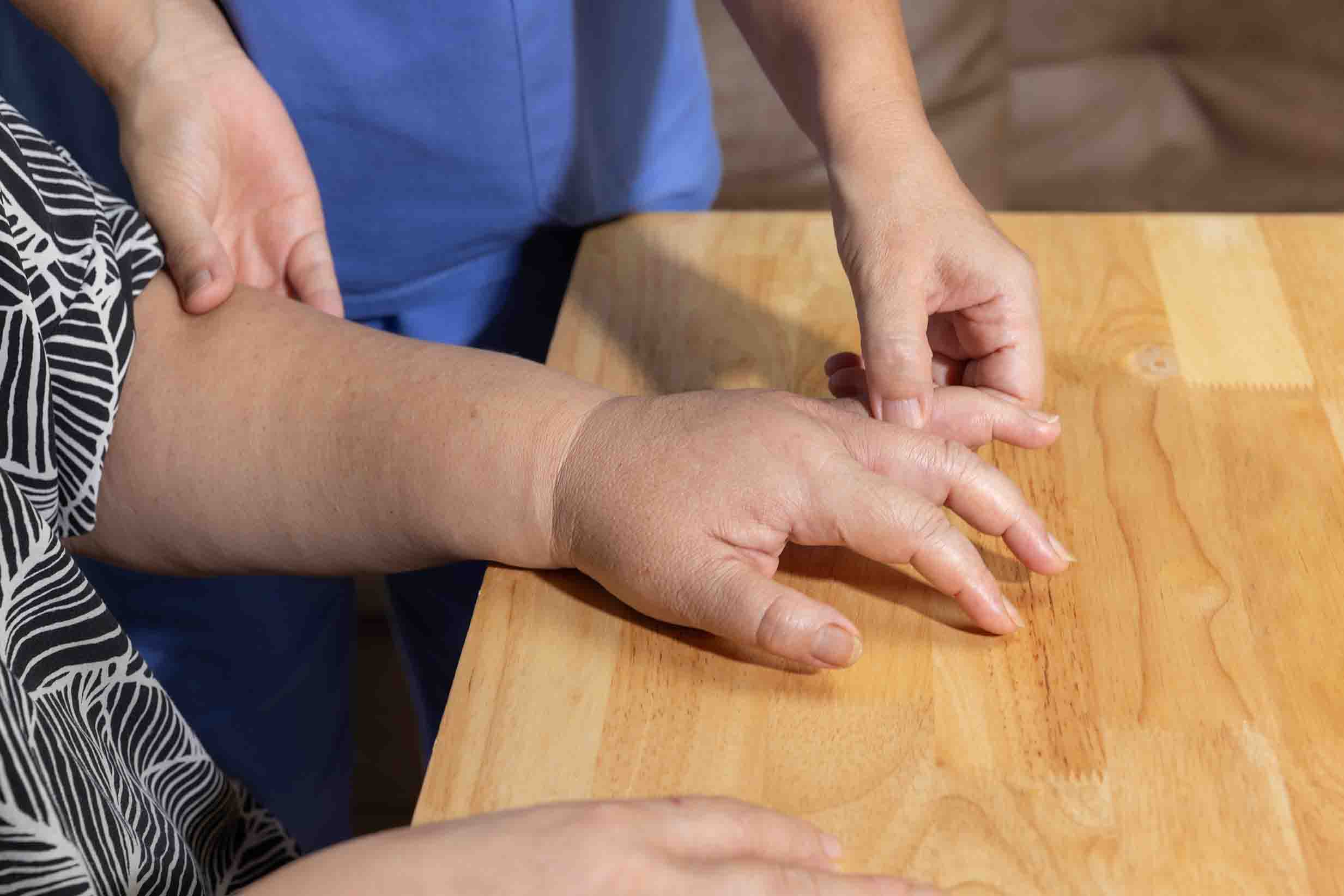
Dr. Michael Stubblefield is a cancer rehabilitation expert and Dr. Joseph Dayan is a plastic and reconstructive surgeon who has pioneered techniques to ease lymphedema with surgery. They’re both very interested in how the GLP-1 medicines, like Ozempic, Wegovey, Zepbound, Mounjaro, Victoza, and Trulicity — just to name a few — could be used to manage lymphedema.
Listen to the episode to hear Drs. Stubblefield and Dayan explain:
- Sponsor Message
how common lymphedema is among people with breast cancer
- Sponsor Message
current lymphedema treatments
- Sponsor Message
how the new study using a GLP-1 medicine to treat lymphedema came about
- Sponsor Message
what we know right now about GLP-1 medicines and breast cancer treatments
Welcome to The Breastcancer.org Podcast, the podcast that brings you the latest information on breast cancer research, treatments, side effects, and survivorship issues through expert interviews, as well as personal stories from people affected by breast cancer. Here's your host, Breastcancer.org Senior Editor, Jamie DePolo.
Jamie DePolo: Hello, as always, thanks for listening. One of the possible side effects of breast cancer treatments is lymphedema. Lymphedema is abnormal swelling that happens when the lymphatic system is damaged and can't clear lymph fluid fast enough, causing it to build up.
Lymph is a thin, clear fluid that circulates through the lymphatic system, removing waste, bacteria, and other substances from the body's tissues. Edema is the buildup of excess fluid. So swelling caused by lymph is lymphedema.
I'm honored to be joined today by two guests who are internationally known for their expertise and research. Dr. Michael Stubblefield is the director of cancer rehabilitation for the Kessler Institute and the national medical director for the ReVital Cancer Rehabilitation Program.
Dr. Joseph Dayan is a board-certified plastic and reconstructive surgeon with a focus on lymphedema surgery, breast reconstruction, and facial reanimation. They're joining us to discuss how the GLP-1 medicines like Ozempic, Wegovy, Zepbound, Mounjaro, Victoza, and Trulicity, just to name a few, could be used to manage lymphedema. Dr. Stubblefield, Dr. Dayan, welcome to the podcast.
Dr. Joseph Dayan: Thank you so much.
Dr. Michael Stubblefield: Thank you, Jamie.
Jamie DePolo: Great. So, Dr. Stubblefield, I'm going to start with you. What is lymphedema? I gave a brief description of it. So, really, what is it and how common is it, especially in people who've been treated for breast cancer?
Dr. Michael Stubblefield: Yeah. Again, thank you, Jamie, for having us. It's an honor to be here and appreciate it. And yeah, you did a beautiful job of explaining what lymphedema is, but I'm going to kind of double down on a couple of points that people may not think about, and that also kind of gets to how common it is.
So yeah, it is the abnormal buildup of lymph fluid, but the real question is what is lymph fluid? So in your circulation, you're pumping blood out from your heart, it goes through the capillaries, and some of that fluid and nutrients have to get out into the cellular tissue outside of the blood vessels and then be reabsorbed, usually, most of it will go back through the venous system.
But that stuff that's out in the tissues has to get back into the bloodstream. So those lymphatic vessels collect it, and get bigger and bigger channels, and then finally dump it back into something called the thoracic duct, where it just joins the rest of the blood.
What is different from that kind of fluid and regular peripheral edema that people would get from, say, a medication, or because they have a little heart failure or renal failure, their legs swell up, is protein, and that protein is critical. The protein, because it's not being reabsorbed back through the lymphatic channels, is inflammatory. It causes an inflammatory response that the body has to go and try to clear out.
That inflammation is damaging, and it damages all the tissues around it. Over time, that lymphedema causes more lymphedema because it's gumming up the works. So how common it is really depends on the kind of cancer we're talking about and the treatment. I know today's talk is about breast cancer, but in head and neck cancer, all the studies say that about 90-plus%, I just assume everybody has it, in their face and neck.
And it's not just external, to make you not look as pretty as you used to. It's also internal, and that affects your swallowing, your neck range of motion, and all these other things. Lower extremities, if you've had a gynecologic cancer, prostate cancer, the lymph nodes have been affected, also very common. In breast cancer, the incidence ranges from very little to everybody. So you know, we can say 40, 60%, and it also depends on how you measure it, what you use to measure it.
There's an epidemic of breast lymphedema now, where the arm may clinically seem perfectly fine, but the breast is affected because of all our breast conserving therapies. We're doing lumpectomies and partial mastectomies, taking one sentinel lymph node or whatever the little cluster is, and then radiating the breast.
So radiation is a risk factor. How big your primary tumor was, how extensive your axillary lymph node dissection was, is a risk factor. And one of the big things we're going to talk about, being heavy. So not that inflammatory response, also deposits adipose tissue in those connections. So if you already have a lot of adipose, you're really, basically, that's our medical word for fat. If you're heavy, that really puts a challenge on those lymphatic vessels.
Jamie DePolo: And you mentioned radiation. Are there other treatments? I know surgery can damage some of the lymph channels. I'm wondering, too, chemotherapy or any targeted therapies, immunotherapy, can those cause lymphedema as well?
Dr. Michael Stubblefield: Absolutely. The taxanes seem to be associated. They're not like the all big caps risk factor that the lymph node dissection or radiation is, but sure, they contribute to lymphatic dysfunction and breast lymphedema.
Jamie DePolo: Okay, and then, one more question for you, and then we're going to move on to Dr. Dayan. Could you briefly go over some of the current treatments and talk about how effective they are?
Dr. Michael Stubblefield: Yeah, of course. So one of the critical things about lymphedema is finding it early. Because as I said, because of that inflammation, lymphedema begets or causes lymphedema. So, we want to identify it as early as possible. And we stage it. So early-stage lymphedema, wrapping, resistive exercises. We used to say that, oh my god, if you lift more than 20 pounds, you're going to explode and die, right?
Jamie DePolo: Right. Yes. I remember those days.
Dr. Michael Stubblefield: Exactly, and up in Canada, there was a physician there who actually put together a dragon boat team, which if you don't know what that is, it's like, think a gigantic Asian canoe, and it's very upper extremity heavy, and these patients were lifting and doing stuff, and they did not drop dead of lymphedema.
They actually got better from their lymphedema. And so there's some studies showing that resistive exercises, lifting weights, actually may be protective for lymphedema.
So our treatment involves really what we call comprehensive or complete decongestive therapy, which is education, skincare, manual lymphatic drainage, where we're actually doing this butterfly light massage therapy, starting proximately, meaning in your midline, and working out.
Think if you're trying to put a bunch of cars onto the highway without clearing up the other cars, bad things happen. So you really want to decongest near what we call the meridians, where the lymph fluid can get back and get to that thoracic duct, and then work our way out the arm using very light…it's not like we're squeezing hard. We're just really tickling and massaging them to get them to clear, and then we use wrapping.
So we use these progressive types of wraps that are thicker down at the end of your arm. So, you use your muscle pump when you're moving your arm, that helps clear out the lymphedema. The problem with that is that's a huge pain in the tuchus to apply.
Not everybody can do it. You can't always get them on your legs. Some patients have other neuromusculoskeletal issues, right? Or if you have weakness of the arm, you don't have a good muscle pump. So there's a lot of barriers, and there's new tools. There's like ready wraps, things that you kind of put on with Velcro, but even that, you can imagine having 40 Velcro straps that you have to tighten up in sequence could actually be a little hard for some people.
Jamie DePolo: Sure.
Dr. Michael Stubblefield: But the usual thing is you go to a lymphedema therapist, the therapist evaluates you, they educate you, they do lymphatic massage to get you started, teach you how to do it, get you wrapping that you can use at home, or get you one of these garments that you can put on with Velcro, and then, ultimately, get you into a compression sleeve that you wear most of the time. And that's kind of lymphedema managed 101. How effective is it?
Early on, very effective, right? So if we can get somebody who just has early-stage lymphedema, often those patients do very well. But when it starts getting to the later-stage lymphedema, and it's fixed, and there's a lot of fibrotic tissue, it doesn't work very well at all, and very few things do. And I purposely not mention all of the amazing surgeries that Dr. Dayan and his colleagues are able to do, which are relatively newer sort of interventions compared to our old school wrapping and massage.
Jamie DePolo: Okay, well, that is the perfect segue. Dr. Dayan, I understand you're currently recruiting people for the first study of GLP-1 medicines and lymphedema. So I had never heard of this. This is fascinating to me. So how did you become interested in studying GLP-1s for lymphedema, and do we know the mechanism? Is it strictly inflammation or how, what? Tell me all about it.
Dr. Joseph Dayan: Sure. So my interest in GLP-1 for lymphedema is really a natural outgrowth of my entire career helping patients with breast cancer and lymphedema. I've been practicing for over 17 years and have been doing lymphedema surgery for 17 years. Some techniques I've pioneered and have traveled the world to learn, teach, and share, to try to help patients we see every day on the front line that have been doing everything right. They've been wrapping, they're best friends with their lymphedema therapists, but like chronic incurable diseases tend to be, they get worse over time.
So you can do everything right and the lymphedema can still progress. And when Dr. Stubblefield was talking about the fat growth in the actual arm, no amount of wrapping or compression will help that. The only way to get rid of that is to suction it out.
Just to give context to GLP-1, when a woman has lymph nodes removed for breast cancer treatment, and radiated often, you're physically removing that pathway that's carrying the fluid out of the arm. And while that creates a blockage, no drug, as far as we know, or no amount of therapy is going to reconstruct that. So the role of surgery is to reconstruct the lymphatic system and restore the exits that were there for the fluid in your arm, much like you would reconstruct a breast after breast cancer treatment.
So this is something we've been doing for over 17 years. But the gap is, is that it's not just fixing the bridge that was broken, it's the chronic inflammation that Dr. Stubblefield was talking about. And we need a drug that could treat that progressive inflammation in the background. And GLP-1 is very effective at reducing weight. It's got an FDA indication for treating obesity and very effective at treating insulin resistance and those two things worsen lymphedema.
So the thought was, well, if we give GLP-1 and treat the weight and in patients with insulin resistance, would their lymphedema get better? And that was the initial kind of rationale.
I'll take a step back. In the first case we ever published, a case report treating the first patient who had, initially, early-stage lymphedema, breast cancer-related lymphedema. And like many women with breast cancer, her tumor was estrogen receptor-sensitive, and the treatment, as we all know, is to then block estrogen. And when you do that, a very high percentage of women, about 40 or 50%, it will kind of mess up their metabolism, and they'll put on a lot of weight. So many of our patients that we're doing breast reconstruction on, once they get into treatment, they gain 20, 30 pounds. And with that, in this particular patient, her lymphedema went from mild to not so mild anymore. She gained weight. She was in 24-7 compression. She did everything right.
So, I worked with her endocrinologist, very brilliant endocrinologist, Emily Gallagher at Mount Sinai, and while she is a GLP-1 expert, I'm a lymphedema expert. We kind of had to put our heads together, and we worked together, and with her, put her on a GLP-1.
She lost the weight she had gained back to baseline, and with it, her lymphedema essentially evaporated, and I would say that she's no longer in 24-7 compression. While her lymphatic system is not totally normal, her limb volume did normalize, and I did not operate on her, and I have no financial disclosure or relationship with any of the drug companies that produce the drug.
So I don't have any ulterior incentive here, only to help the patients that complain. Surgery works very well for the right patient, but it's not for everybody. Not everyone's a candidate. And that was the very first real case that we published, and that kind of led us to say, that's not scientific to publish just one case. It could have been a fluke. It could have been something else. So that's when you set up a higher level study where you observe something, you have a legitimate question that might help people, and that's kind of where we started.
Jamie DePolo: That's fascinating. So for this study, are you planning to use one particular GLP-1? Because there are so many now. We now have oral pills that were just approved. Do you think that makes a difference, which one somebody would use in your study? Are you planning to control for that?
Dr. Joseph Dayan: That's a very good question, but it's harder to answer than you may think, because not everybody is the same. So if you apply, it's like if you apply the same intervention to a group of people, some have a lot of excess weight, some don't. Some do have pre-diabetes or diabetes, some don't. And so, I think the most ethical thing to do is have that patient's own primary doctor figure out, in the context of their specific overall health, which GLP-1 is right for them. For example, somebody may not want to lose a whole lot of weight, they don't have a lot of extra weight to lose.
We do have a minimum BMI of 23, because we don't want to make somebody unhealthy, too skinny, but that person might be on sort of semaglutide, which will drop your body weight a bit, but won't drop it as much as tirzepatide or the newer generations, which may be appropriate for somebody who has insulin resistance and pre-diabetes or diabetes, as related to excess weight, that might benefit from that drug. So the goal of this study is very basic.
It's to test, does any GLP-1 really help lymphedema? And this was just the first of many more studies that will come and answer your much higher-resolution question, which type, which dose in which patient? That's a much larger study, but for a guy that's on the front lines, seeing patients every day, patients want to know, now, as soon as possible, can you give me quality data that's high-enough level that tells me, may I benefit from this? But this is just the beginning.
Jamie DePolo: Okay, and I realize this is just the beginning, and you may not be able to answer this, but I'm wondering, from what I've read, when people take a GLP-1, either for diabetes or to lose weight, they're pretty much on it indefinitely because when they stop, they tend to gain some or all of the weight back.
Do you have any idea, for lymphedema, would somebody need to be on a GLP-1 for a long time? I believe in your study that people necessarily are going to take it for six months, and then you're going to evaluate. Is that something we know or that you have sort of a hypothesis about yet?
Dr. Joseph Dayan: I could speculate, but I really don't know. I would presume until proven otherwise, that as in any chronic disease, you're going to be probably on it chronically. So I'm actually on a GLP-1, I take semaglutide for diabetes. Until diabetes gets cured or until there's a better drug for me, I presume I'm going to be on it indefinitely. As far as we know, lymphedema is not yet curable.
So I would presume, but I hope I'm wrong, that once you stop the GLP-1, the symptoms that got better would come back, but we are going to look at this. So for example, in this study, while the treatment period is for six months, we're going to just sort of let people do whatever they're going to do. Some will continue it, some will discontinue it, and we're going to continue following them longitudinally to see how that plays out.
Some interesting things happen when you think you're conducting a high-level study, is even participating in a study can change behavior. So for example, when somebody gets on Ozempic, some of them will adopt a healthier lifestyle to the point where the Ozempic may not be needed as much.
I've noticed that in myself because I had to bulk up on more protein in my diet, for example, do some resistance training, so I wouldn't lose, you know, some muscle mass. And that changed my diet. So you know, in the real world, these studies are exposed to the real messy world. People change habits and things, but time will tell. It's a very, very good question.
Jamie DePolo: Okay, very interesting. For this next question, I would like both of you to answer it, so we can have both perspectives. So if the results of the study are promising, is it possible that somebody would be given a GLP-1 before breast cancer treatment to help prevent lymphedema? And Dr. Stubblefield, I'll ask you to answer first.
Dr. Michael Stubblefield: Thank you. Yeah, that's also a great question. So, the answer is I don't know.
Jamie DePolo: Of course.
Dr. Michael Stubblefield: But again, like Dr. Dayan said very nicely, I can speculate. So I'm worried about their lymphedema, but there's a lot of other issues surrounding breast cancer treatment, in general, that would benefit from having better glucose control and a lower body weight. So, we don't have, you know, we talk about prospective. People have heard about pre-hab, like that time from when you're diagnosed to when you go to surgery. I like the term prospective rehab or pro-hab, meaning that we start you before surgery on a rehabilitation program. We treat you through surgery and chemo and radiation, and on into survivorship as you need, and I think that's a much more robust way of ensuring patients live their best lives. So I can see a situation where you're diagnosed with breast cancer and you go on a GLP-1, but here's the problem.
It's going to take you a while to ramp up on that GLP-1 to where it's really starting to be effective for weight loss and everything else. And at that same time, you're getting all the GI side effects that you may be getting right as you're going through your cancer treatment. So maybe, but I think it would be in very narrow windows, and it's never the situation that we have six months to wait before we start treating your breast cancer.
So I think what is better is to start that healthy lifestyle, the exercises and the other prospective rehabilitation, things that we can do to let that patient have a better transit through their cancer treatment journey, and then add that on at some point when appropriate to help minimize the lymphedema and keep their sugar down, and just roll over their cardiovascular risk as they're going on anthracyclines, and they're going on Herceptin, trastuzumab. So I think there's a tremendous amount of benefit for these survivors. I just don't know that it's going to be right at the time of diagnosis.
Jamie DePolo: Okay, and Dr. Dayan, I'm going to throw one other aspect of the question in there for you to answer. Do we know yet, and I don't know that we do, so it's fine if we don't, do GLP-1s interact with any of the common medicines used to treat breast cancer? Because I feel like that's a big question that comes up with a lot of folks in our community that, well, I'm on active treatment, or I've got metastatic disease, and I'm going to be in treatment forever. Is it safe for me to take a GLP-1?
Dr. Joseph Dayan: That's a very good question. We don't prescribe the GLP-1. If somebody's getting active cancer treatment, we always refer them to their oncologist, and so, I haven't had a patient yet that I was told by the oncologist there was an interaction. However, there are some studies that — they're not in human studies — these are in a dish, in vitro, or in a rodent, showing that looking at what GLP-1 does to breast cancer cells. And what it does to estrogen receptor-positive cells, in a couple of publications, is it induced suicide in those cells, which is a good thing if your cancer commits suicide.
Now, that doesn't necessarily mean that that's what happens in a human. But in triple-negative disease, when they looked at triple-negative human breast cancer cells, these are just two studies. So the truth is, we really don't know. It's not in human, but it seemed to promote growth, potentially, in triple-negative breast cancers.
So for that reason, just as an overabundance of caution, we exclude patients with active treatment for triple-negative. If they had triple-negative breast cancer a long time ago, and they have no disease and cancer sort of in the past, we would potentially consider them as…if they're cleared by their oncologist.
But until there's more data there, as far as looking at large populations and cancer incidence, like breast cancer, there is no increased incidence of breast cancer in patients taking GLP-1, and in fact, there seems to be a reduction in obesity-related cancers in those groups taking GLP-1. For the first part of the question — we actually published — our second publication was exactly what you're asking.
It was when I was at…I started the lymphatic surgery program at Memorial Sloan Kettering. Now, I'm in a large group at the Institute for Advanced Reconstruction in New Jersey, but while I was at Sloan Kettering, we had looked at everybody who had lymph nodes removed and looked at the patients who were taking GLP-1 at the time, or after the lymph node removal, versus those who didn't.
Now this is not a good high-level scientific study, and I would not hang my hat on it and call it high-level science, because it's looking backwards. It's a retrospective registry study. It's not, you know, the measurements aren't done in the same way, and so forth, but there was a very big difference in the patients on GLP-1 in terms of a much lower incidence of lymphedema.
So this is the kind of study that raises the question, okay, maybe there's something here, maybe not, but we have to do a higher-level study. The thing about lymphedema is that not all of it happens immediately. Most lymphedema actually takes months, if not years, to present. So it may not be that you have to be on the GLP-1, right then and there, and in a very narrow time window. We really don't know.
I would say that as far as it doesn't interfere with their oncologic treatment, about 5% of patients will not tolerate the GLP-1s because of nausea or vomiting, but most people tolerate it. It's a very well-studied drug. There is some risk for pancreatitis, in rare cases, but we have not yet had adverse events in our study, and the outcomes are very promising.
I wouldn't make a claim to say GLP-1 definitely improves lymphedema, but I can tell you that at the six-month mark, 10 out of the 12 patients that we do have prospective data on all have a significant reduction in limb volume and improvement in quality of life. Not a mild one, but fairly significant. There are a couple of non-responders, and none of these patients are exactly the same. So you know, some type of lymphedema might respond better. Some might not respond at all, or as much. And we see this as an adjunct to reconstructing the actual lymphatic system.
Like, if somebody has cardiovascular disease and has a narrowed coronary artery, you can put a stent in to open that artery and restore circulation, but you also have to treat the underlying disease that's marching in the background, the high cholesterol, the inflammation, with the drug, and you also need cardiovascular therapy. You need an exercise program. So lymphedema therapy, surgical reconstruction when appropriate, and possibly GLP-1, or the next best drug as it comes to light, is really, they're complementary and sort of the ideal approach.
Jamie DePolo: Okay. Thank you. Now, I'm going to ask you this question, too, Dr. Dayan, but of course, Dr. Stubblefield, if you have opinions, feel free to jump in after he answers. You kind of hinted at this. People talk about GLP-1s as they're these wonder drugs, they're miracles, is there anything they can't do? It seems like they can do everything, but they do have side effects.
And people do stop taking them because of these side effects, nausea, diarrhea, constipation, vomiting. As you kind of hinted at with yourself, people lose muscle mass if they're not working out and doing resistance training. I've read one study, this was recently, talked about, GLP-1s may delay wound healing after surgery. They may have the potential to cause bone loss. You mentioned the pancreatitis. So I mean, they seem safe. But I'm just wondering if somebody, you know, is…we talked about during treatment, but even if somebody, say, is on an aromatase inhibitor, tamoxifen, for five or 10 years after surgery, and they maybe are having some nausea or some other things from that, how do you work a GLP-1 into that?
Dr. Michael Stubblefield: All of this is a risk-benefit analysis, right? So, water will kill you if you take enough of it. So everything that we put in our body has a potential downside. The nice thing about the GLP-1s is we're starting to get a pretty good comprehensive sense of what the risk factors are.
And that's all the headlines are the risk factors and the issues that you see coming up. But their protective, cardioprotective effects, their renal protective effects, the fact that people feel better, probably going to end up living longer, in general, there's going to be some people have horrible complications, like pancreatitis, which is awful, but that is a relatively small cohort.
But for people who, you know, were weighing 300 pounds and now are down to 170 pounds, these things are life-altering, and the GI side effects usually go away in the first months, if you nurse through them. I've managed a lot of those. As a rehab doctor, we manage diarrhea, constipation, all that, in our patients, and they generally do pretty well.
So I think it's important for us to know these complications, to get better at managing the complications, but you know, obesity in this country, and really almost globally, is an epidemic. And having people be healthier in terms of their eating, and it's not, you know, heavy people aren't at fault, right? They're just programmed to eat, right? They're never quite satisfied, and having that glucose intolerance is just a real strike against you.
So turning off that signal to whether you're satisfied at a smaller amount really is worth its weight. And if you add on top of that, resistive exercises, cardiovascular exercises, healthy eating, high protein, and the other things that it kind of makes it easier for you to do, because, you know, you're seeing those pounds come off. I think, overall, these are a good thing for society. But yeah, we have to keep our eyes out for the complications that are there.
Jamie DePolo: Right. Okay, and then, finally, last question, this is for you, Dr. Dayan. If somebody is interested in participating in your study or joining your study, is that possible? I thought that I saw in clinicaltrials.gov that you're recruiting, right now. Is it just local to North Jersey and New York, or can anyone join and do this remotely?
Editor’s note: The study is called Efficacy of GLP-1 Receptor Agonists in Treating Upper and Lower Extremity Lymphedema.
Dr. Joseph Dayan: Yes, we're actively enrolling patients, and we really appreciate everybody's effort to enroll. It requires three measurements, a baseline measurement, in-person measurements, and they would have to be taken in either — we have two locations, one in Northern New Jersey, one in Central New Jersey.
So we do have patients that actually fly out to participate in the study. But the reason why we're not doing this remotely is because the quality of the data collection, the integrity of that data is so important. Because if there's a lot of variability in how patients are being measured from one state, or one site to another, we'll never answer the question. We'll come up with the wrong data.
So we take this prospective study very seriously. Any veering off of the dates and follow-up, basically, we eliminate that patient from the study. So we know that all the data we have, our responsibility is to get the right answer to the patient so they can make their own informed decision about the risk and the benefit. So that's why we do all of the measurements in New Jersey. If you're interested, we have both a number and an email.
It's 551-223-1023. We're happy to explain everything, and we're just very grateful and want to thank you, Jamie, and thank you, Dr. Stubblefield, for giving lymphedema this visibility. Because many of the patients we see, day in and day out, they've gone everywhere. They often fall through the cracks. So thank you, so much, and wishing everybody good health.
Our team is extremely responsive. So, we have a whole team. We have two full-time lymphedema nurse practitioners, two full-time lymphedema nurses, and PA, and of course, myself, and a whole research team behind us, of about five people, just dedicated to this. We would welcome and love to have anybody participate because the sooner we enroll, the sooner we get the answer out to everybody.
Jamie DePolo: Sure. Dr. Stubblefield, Dr. Dayan, thank you so much, for this, for your time. I appreciate it. I'm fascinated by this topic. I'm going to be following it, and I hope to invite both of you back, perhaps in three, four, five years, so when we have more information, and we can answer some of these questions more definitively. Thank you both so much.
Thank you for listening to The Breastcancer.org Podcast. Please subscribe on Apple Podcasts, Amazon Music, Spotify, or wherever you listen to podcasts. To share your thoughts about this or any episode, email us at podcast@breastcancer.org or leave feedback on the podcast episode landing page on our website. And remember, you can find out a lot more information about breast cancer at Breastcancer.org and you can connect with thousands of people affected by breast cancer by joining our online community.

Dr. Michael Stubblefield is medical director of cancer rehabilitation at the Kessler Institute for Rehabilitation in New Jersey and the national medical director for Select Medical’s ReVital Cancer Rehabilitation program. He is also clinical professor of physical medicine and rehabilitation at the Rutgers New Jersey Medical School. He is board certified in physical medicine and rehabilitation, internal medicine, and electrodiagnostic medicine. He is known around the world for his expertise in the identification, evaluation, and rehabilitation of pain and functional disorders caused by cancer and cancer treatments, particularly problems caused by radiation and chemotherapy. Dr. Stubblefield is an accomplished researcher and has published extensively on medical rehabilitation, oncology, pain management, palliative care, and neurophysiology.
Joseph Dayan, MD, MBA, is a board-certified plastic and reconstructive surgeon with a focus on lymphedema surgery, breast reconstruction, and facial reanimation. In 2024, he established The Institute for Lymphatic Surgery and Innovation within the Institute for Advanced Reconstruction. He is internationally recognized for his contributions to lymphedema surgery, breast reconstruction, and facial reanimation.
Your donation goes directly to what you read, hear, and see on Breastcancer.org.