Addressing the Skin Side Effects of Breast Cancer Treatment
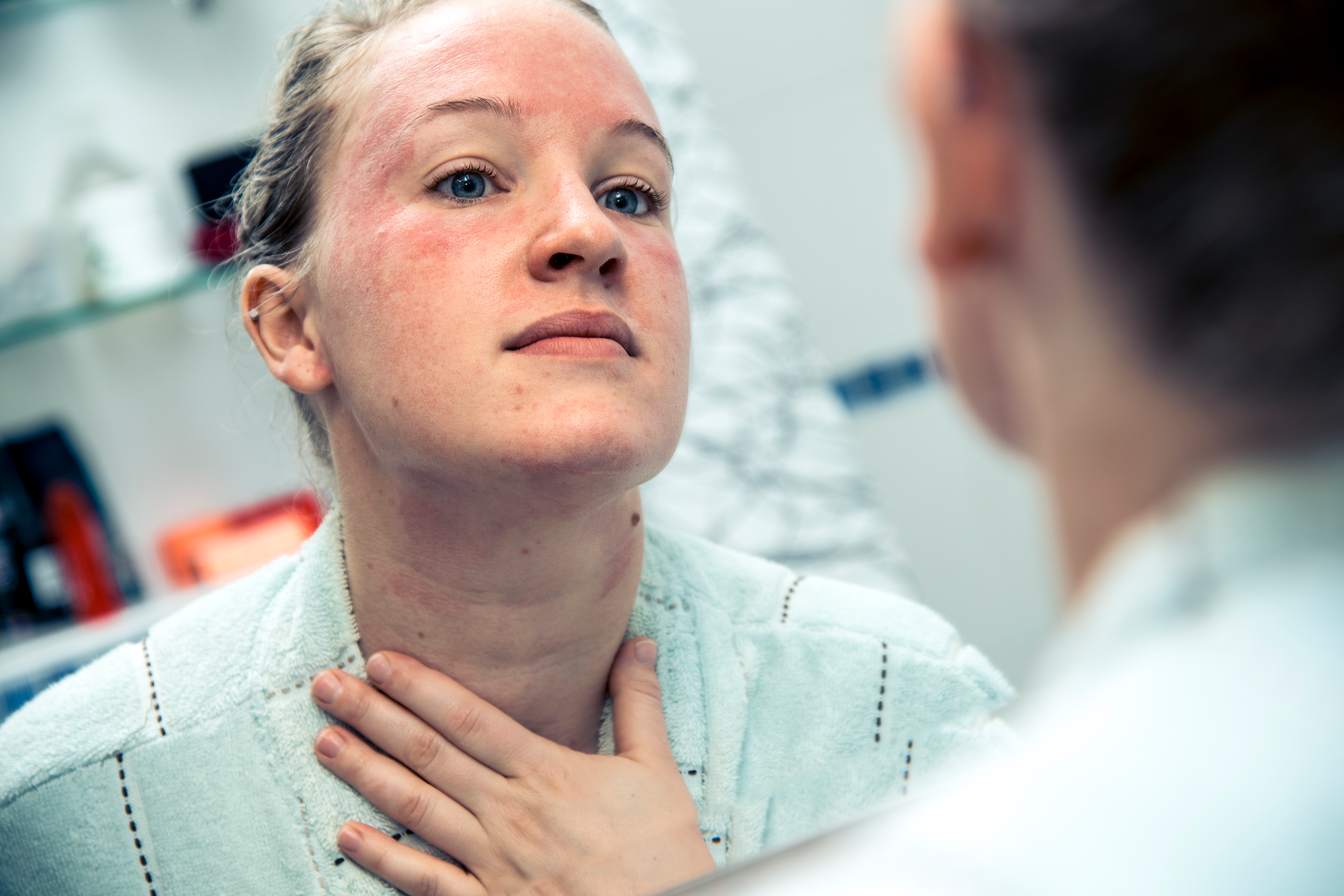
At the 2025 San Antonio Breast Cancer Symposium, Dr. Ian Tattersall, an oncodermatologist, was part of a panel focusing on body image, hair loss, and skin health after breast cancer treatment.
Listen to the episode to hear Dr. Tattersall explain:
- Sponsor Message
some of the most common skin issues
- Sponsor Message
who is a highest risk for skin issues
- Sponsor Message
his advice for people who are experiencing skin issues
This podcast episode is made possible by Lilly.
Welcome to The Breastcancer.org Podcast. The podcast that brings you the latest information on breast cancer research, treatments, side effects, and survivorship issues through expert interviews, as well as personal stories from people affected by breast cancer. Here’s your host, Breastcancer.org Senior Editor, Jamie DePolo.
Jamie DePolo: Hi, I'm Jamie DePolo, senior editor at Breastcancer.org. I'm podcasting live from the 2025 San Antonio Breast Cancer Symposium. I'm joined by Dr. Ian Tattersall, an oncodermatologist at the NYU Langone Perlmutter Cancer Center. At the conference, he was part of a panel addressing body image, hair loss, and skin health after treatment. He’s going to discuss his talk on skin toxicities with us. Dr. Tattersall, thanks for joining us.
Dr. Ian Tattersall: Thank you so much, Jamie. Pleasure to be here.
Jamie DePolo: So, you're an oncodermatologist, not a common phrase. Can you explain to us what exactly is an oncodermatologist is and what do you do?
Dr. Ian Tattersall: Sure. So, you know, I am a dermatologist first and foremost. I did my training in dermatology, but oncodermatology is a word that’s increasingly being used to describe a subspeciality of our field that is focused just on the skin toxicities and the skin issues affecting cancer patients and people undergoing treatment for cancer, or people who did undergo treatment for cancer.
Jamie DePolo: Okay. Thank you. So, I know radiation causes a lot of skin issues but are there other treatments that affect the skin?
Dr. Ian Tattersall: Sure, absolutely, and essentially the people who treat breast cancer, the oncologists and the nurse practitioners, they use really powerful medications these days. That list of medications is ever expanding, and almost all of these things have the potential to affect not just the cancer cells, but the normal tissue as well. And you know, the skin is the largest organ in the body. It is affected by almost everything that we do to treat cancer in some capacity. Of course, the nature and the degree of the disturbance varies a great deal between different kinds of treatments, different kinds of regimens, but it’s very common for people to have skin issues when they’re undergoing treatment and it can absolutely be, you know, something that looms large in the sort of fear that accompanies these treatments.
Jamie DePolo: Oh, absolutely. Could you go over some of the most common skin problems you see or that you’ve seen in your patients, in people with breast cancer, and then sort of talk about how they’re treated?
Dr. Ian Tattersall: Sure, absolutely. So, again it depends a lot on the specific kind of regimen that you're undergoing, but I would say something that’s extremely common is just plain dryness, eczema, and skin aging.
So, people can see this really disturbing kind of rapid acceleration of the classic signs of aging, wrinkling, dyspigmentation, looking like you’ve just been spending a long time out in the sun. That can happen very rapidly over the course of certain kinds of treatments. And in addition, if that dryness progresses to past a certain point you can start getting rashes, things that resemble eczema for instance, that can be very itchy and symptomatic.
And there’s a lot we can do to treat all of these. You know, matching the intensity of the treatment to the grade and severity of what’s going on. Starting out with just moisturizer, good sun protection always really important. But moving on to, you know, topical prescription medications and in some cases more advanced systemic or even biologic treatments that really use some state-of-the-art technology to specifically address the toxicity while trying not to cause other problems. The tale of the woman who swallowed a spider to catch a fly is a really common comparison that comes up in my clinic. We don’t want to do more harm with the treatment of the toxicity than the toxicity itself was causing. But there are a lot of tools we have these days that allow us to do that.
Jamie DePolo: Okay. And then, what about acne. I've seen this in a couple friends who had HER2-positive disease and then went on the chemotherapy, Herceptin-Perjeta regimen, continued on it after surgery and they both reported like…I don’t even know what to call it. They called it chemo acne. I'm assuming that’s not the correct term.
Dr. Ian Tattersall: Yeah, no, absolutely. So, the HER2 inhibitors can cause…we call it an acneiform dermatitis, but chemo acne is a reasonable way to put it. And that just comes from the fact that these medications target a pathway in the cancer cells that has become overexpressed, overstimulated. It’s activated out of control and that’s why they are so good at treating those cancers that are driven by activations in that pathway.
However, you have to realize that the only reason that pathway exists in the first place is that it is important for the normal function of a lot of cells in the body and skin cells are a part of that. And especially the hair follicle and the hair follicle unit is a part of that.
So, when you disrupt HER2 signaling in the whole body, yes, you treat it in the cancer cells, and you downregulate that signaling. But you also disrupt HER2 signaling and normal tissue and that can cause inflammation in the hair follicle. It can cause decrease and inability for the immune system to fight off bacteria. And the net result of that is that you get inflammation. You get the classic pus bumps of acne. And we do treat that with a lot of the same things that are used to treat normal acne, but it is taken through a slightly different lens because it is both acne to some degree. It has similar underlying pathology to acne, but it’s also not acne because it’s fundamentally an inflammatory reaction to a medication. So, there are some things that you wouldn’t commonly see used to treat acne that are used to treat this kind of acneiform eruption. And even the medications that we use to treat acne, when they’re used to treat the drug toxicity you may see them used in a slightly different way.
Jamie DePolo: Okay. And then, what about things like mouth sores. Does that, I guess, I consider the inside of your mouth skin, or does that fall under your purview? Is that more dental? How does that work?
Dr. Ian Tattersall: Sure. You know, mouth sores, mucositis, that’s something we certainly deal with. There are a few different specialties who sort of lay claim to that. So, certainly I treat that in my patients when we see it. It can certainly be very challenging to do. Good dental care is absolutely essential for patients undergoing treatment for cancer because it’s sort of the foundation on which everything gets built. If you have good dental care, you have less toxicity in the mouth from other treatments. But there are also, you know, disease specific and toxicity specific things we can do to address it.
Jamie DePolo: Okay. And then, what about finger and toenails? Do those count as skin? Are those part of your purview as well?
Dr. Ian Tattersall: Yes. So, yeah, hair, skin, nails, mucous membranes, they’re kind of all of the systems that we deal with. And the fingernail and toenail disruption is quite common on chemotherapy. Less common but does happen with the HER2 inhibitors and to a lesser degree with the other modalities. And a lot of the treatment for that is really just supportive. There’s not a lot you can do once a nail starts having toxicity. Though there are some things we can use to kind of keep things in check, but there are also some preventive strategies that we can use with certain medication regimens to minimize the impact of those nail toxicities.
Jamie DePolo: Yeah, because I had a friend who lost all her fingernails and toenails when she was on chemo. And she was told basically, well, we can't really help you now. And I'm wondering…this was probably 10 or 15 years ago. Has treatment of that come forward at all? Are there any different things we can do now or is it still pretty much supportive?
Dr. Ian Tattersall: It’s a mix. So, we know that there’s data showing that certain kinds of preventive strategies, such as like nail cooling, can reduce the risk of that happening much like scalp cooling can reduce the risk of hair loss. Along the same principle basically, like limiting the access of the toxic therapy to that area to try to reduce the impact of it. But we also have good measures to kind of support people through that as well if it does happen. And I think also, it’s one of the great benefits of having a specialist and having someone you can see for this is that that’s what we’re here for and we have time to discuss it, and time to talk about exactly what our care of this is going to look like, and you have a point person that you can contact if you have specific concerns about that. You don’t have to feel like, well, you know, is this important enough to bother the oncologist about? Is this something that they’re going to have time for? That’s what we’re here for.
Jamie DePolo: Okay. Are certain people at higher risk for specific skin toxicities and if they are, is there anything they can do to sort of lower that risk?
Dr. Ian Tattersall: So, the number one thing I would say is that a lot of skin toxicities are made worse by the sun. So, fair people, people with more sun exposure who spend more time outside, who maybe are using less sunscreen or not covering up as much, that can certainly make a lot of this toxicity worse. The number one thing you can do to prevent or to limit toxicity from cancer therapy is to build a good foundation on your skin. Be it moisturizing, be it kind of taking care of your skin, avoiding harsh skin practices like no heavy exfoliation, trying not to take really hot scalding showers, using mild soaps and mild detergents, and protecting yourself from the sun as much as possible.
So, that’s you know, wearing sunscreen, wearing a hat with a broad rim that goes all the way around, wearing clothing that covers your skin when you can, and just avoiding the sun during the peak hours of the day, you know, 10 to 4 p.m. Obviously, it’s not possible to avoid the sun completely and depending on where you live sometimes you just can’t, but it certainly can make things a lot easier.
Jamie DePolo: You mentioned using a mild detergent. Does fragrance-free…does that make a difference? Are fragrances irritating to the skin?
Dr. Ian Tattersall: It certainly can. You know, this is the kind of thing where I tell someone, if what you're using is fine and you're not having any skin problems don’t feel like you have to change things, but if you're looking to optimize your skin regimen or if you are having problems, if you are drying out or getting rashes, itching, that’s somewhere to look that you can maybe change to something that might be less irritating that you might either be developing an irritant contact reaction or even an allergic contact reaction to something that’s in those. So, better to use if you can, a detergent or a soap that’s been formulated to have as few of those as possible.
Jamie DePolo: Do you see that a lot in your practice where say somebody doesn’t have many allergies, but then they start treatment either with chemo or maybe like anti-HER2 medication, radiation, and then they develop sensitivities to things that they’ve been using for a while? Is that common, or no?
Dr. Ian Tattersall: It can certainly be common to be just generally more sensitive to things. It’s not so common that you develop a whole distinct new allergy. But it is certainly true that skin care practices that were maybe a little bit on the harsher side, but you could sort of get away with before, when you're on treatment, when your body’s already dealing with the stress of that, it’s just not as able to tolerate that and you can dry out much faster. You can get rashes. And you know, that’s great, because it’s an easy fix when we can identify it.
Jamie DePolo: Okay. Perfect. And then, finally, if somebody is having skin issues who’s listening, how would you advise them? Is it best to start with their oncologist, a dermatologist, should they seek out, if available, an oncodermatologist like yourself? I'm assuming that most folks like that would be at a larger teaching hospital, not so much at like a rural community hospital.
Dr. Ian Tattersall: That’s absolutely true. There are not too many of us, it is a growing field, and we are mostly connected to major academic centers. That said, even if we are only mainly seeing patients from…I, for instance, see patients from NYU in our Manhattan clinics. I certainly see patients from outside NYU if they’re having problems related to their cancer treatment. I think the first place to stop is with your oncologist, share concerns with them. Don’t feel like your skin is not a big deal or that they are not going to be interested in hearing it because we see over and over again that sometimes for patients the skin is the most distressing part of the treatment.
These changes that you're seeing with your eyes, not just feeling, can really affect how you proceed and how you tolerate your journey through cancer therapy. Different oncologists will, of course, have different familiarities with dermatology. They may have a dermatologist that they like to refer to. They may want to take care of things themselves. But it’s worth starting the conversation with them and the team, seeing what happens.
It is definitely important to recognize you can go to a general dermatologist and certainly many, many, many dermatologists have patients in their care who are undergoing cancer therapy.
At its best, oncodermatology and dermatologic support of cancer patients is a conversation between the oncologist and the dermatologist. So, it’s ideal when the dermatologist has a working relationship with the oncologist and can discuss things with them. Whether that’s a new treatment that you want to start and just making sure that the oncologist is okay with starting those things, or whether it’s a discussion about the dosing and frequency of therapy and whether you're tolerating something from a skin perspective. It’s always better to make sure that at major milestones or at major decision points that your dermatologist is in contact with your oncologist and those decisions are being made as a team.
Jamie DePolo: Okay. Thank you. And actually, I do have one more question. Sorry, I lied. Are there any treatments for some of these skin issues, I'm specifically thinking about steroids, that could conflict with some cancer treatments and that’s also why it’s important to make sure that the dermatologist and the oncologist are talking?
Dr. Ian Tattersall: Yeah. Absolutely, and you know, I think most dermatologists take a fairly risk-adverse approach to treating cancer patients. I don’t think that many people are likely to, you know, unwittingly or without consulting, prescribe something that’s going to really mess things up, but you know, for instance, there may be even things that they're not aware of.
For instance, as an oncodermatologist, I am acutely aware that patients on immunotherapy probably should not get antibiotics…systemic antibiotics, unless they really need them. That awareness may not be present in the sort of general dermatology community. So, you know, I think it’s always better to check. If you're just doing minor things like topical medications and things like that, much less likely to be an issue. But when you start dealing with anything that goes inside the body, I think it’s always good to check in.
Jamie DePolo: Dr. Tattersall, thank you so much. This has been very helpful. I appreciate your time.
Dr. Ian Tattersall: No problem. Pleasure to be here. Thanks for having me.
Thank you for listening to The Breastcancer.org Podcast. Please subscribe on Apple Podcasts, Google Podcasts on Android, Spotify, or wherever you listen to podcasts. To share your thoughts about this or any episode, email us at podcast@breastcancer.org or leave feedback on the podcast episode landing page on our website. And remember, you can find out a lot more information about breast cancer at Breastcancer.org and you can connect with thousands of people affected by breast cancer by joining our online community.

Ian Tattersall, MD, PhD, is an oncodermatologist at NYU Langone’s Perlmutter Cancer Center. He treats people who develop skin, nail, or hair side effects during cancer treatment.

This podcast episode is made possible by Lilly.
Your donation goes directly to what you read, hear, and see on Breastcancer.org.