Miranda McKeon: Diagnosed at 19
Actress Miranda McKeon was diagnosed with stage III breast cancer at age 19, just as she was starting her sophomore year of college. She talks about her experiences with diagnosis and treatment, as well as how she balanced presenting herself to her peers in a way that felt authentic when she was living an experience that was completely foreign to her.
Listen to the episode to hear Miranda explain:
- Sponsor Message
how she found community and support
- Sponsor Message
the trickiness of navigating menopause, sexuality, and sexual wellness symptoms
- Sponsor Message
why she decided to share her experiences
- Sponsor Message
why and how the Pink 365 podcast came to be
Welcome to The Breastcancer.org Podcast, the podcast that brings you the latest information on breast cancer research, treatments, side effects, and survivorship issues through expert interviews, as well as personal stories from people affected by breast cancer. Here's your host, Breastcancer.org Senior Science Reporter, Jamie DePolo.
Jamie DePolo: Hello, thanks for tuning in. Today, I’m joined by Miranda McKeon, an actress you may know from her roles in Little Boxes and Anne with an E. She also hosts the Pink 365 Podcast. At age 19, Miranda was diagnosed with stage III breast cancer. She joins us to talk about her experience with the disease and navigating the long-term realities of being a young cancer survivor. Miranda, welcome to the podcast. It’s so nice to talk to you.
Miranda McKeon: Thank you for having me on. I’m so excited for today’s episode.
Jamie DePolo: So, if you’re comfortable, could you talk a little bit about your diagnosis and treatment? And I’m really curious about a couple things. Whether the first doctor you saw took your concern seriously, because I’ve talked to several people who have been diagnosed, say, in their teens or their 20s, and they really had to advocate hard to get a mammogram or other screening. So, what were your experiences?
Miranda McKeon: Yeah, so, I was diagnosed with stage III hormone-positive breast cancer when I was 19. I discovered a lump myself, and immediately called the doctor’s office and wanted to get some screening. When I got an ultrasound, I could kind of tell she was like, this is weird vibes, but like, told me it was nothing. And I believe she said it was, like, nuisance nodules, which, obviously, you can’t diagnose something based off of just an ultrasound. She did recommend further screening, but my mind was put at ease for those few weeks as I was waiting for further test results. So, honestly, I am very grateful, and I think speaks to my privilege that I was able to kind of like get serviced from the get-go, and I did feel like people took it seriously, although everyone thought it was nothing.
Jamie DePolo: Did you have any family history at all?
Miranda McKeon: No, I didn't.
Jamie DePolo: No? Okay, and then what about your treatments, if you’re comfortable talking about that?
Miranda McKeon: Yeah, so, after I was diagnosed, I froze my eggs, and then I did eight rounds of ACT chemotherapy and a double mastectomy, revision surgery, full lymph node dissection, and 25 rounds of radiation.
Jamie DePolo: That’s a lot. That’s a lot.
Miranda McKeon: Yeah, full monty.
Jamie DePolo: The full monty, yes.
Now, being diagnosed with cancer at any age is frightening, upends your world, but being diagnosed young has its own, I guess, set of baggage, for lack of a better term. What are some of the most difficult things you had to deal with, if you don’t mind talking about it? I know you said you froze your eggs, which was amazing, because not everybody even has that conversation with their oncologist. Sometimes it’s just like, no, we’ve got to get you right into treatment, and then it’s like, oh, wait a minute. I need to think about all these other things.
Miranda McKeon: Yeah. I mean, that’s definitely something that I was lucky that was even, like, presented to me on the table. A lot of women aren’t told that chemotherapy affects fertility or that, you know, removing all of these hormones for an extended period of time does, and they kind of find out on the other side, which I personally think there would be legislation around. And yeah, and then, on top of that, freezing your eggs is not accessible in the slightest. It’s super, super expensive, and insurance can be a really difficult thing to go through.
So, I was super lucky to be able to do that. But having gone through that experience when I was just beginning my sophomore year of college, there was definitely a lot of identity questions that I faced, and as I was meeting new students and you know, trying to acclimate to a college environment, I was also going through major physical transformation. So, balancing how do I present myself in a way that feels true to me when I’m meeting my peers and also living in a state that was completely not me? I didn't physically look like myself. I didn't feel like myself. My mental health was suffering. So, it was a challenge, for sure, and definitely impacted my mental health at the time.
Jamie DePolo: Yeah. What kind of support did you get? I know they’re...I’m assuming, anyway, that your university or your oncology center might’ve had some counseling or some other services available. How did you use those options?
Miranda McKeon: Okay, so, I was a little untraditional, in that I was offered support groups through my local hospital and at MSK, too, where I was treated, and I believe there was, like, a cohort of young women with breast cancer. I truly felt like such an outlier in the community at the time, though, and like, as much as there was groups for women under 40, of course, it’s skewing more towards late 30s, 30s, and then, like, 20s start dwindling, and then, like, the stats for the diagnosis at my age were just really unheard of.
So, I found community and support, truly, through other girls online who were losing their hair. That’s what I was struggling most with, and it didn't matter if they had lymphoma or even alopecia. I was, like, just looking at all of these bald girls as models, and that’s why I say today, representation is so important, because before I saw myself in someone else online, I felt so hopeless and helpless and like this is not going to be possible to be bald in college. Like, it’s just, this is not happening.
And it was when I started seeing girls like me with shaved heads, where I was like, okay, they look great. Like, we’re going to be able to get through this. So it was people outside of my community, and then, of course, my family and friends really showed up. I feel so lucky, and I’m privileged enough to go to therapy. So, had a great therapist on board. It took me a few to find my girl, but that was a huge lifesaver, as well. Kind of when I felt like none of my friends or family could even, like, understand what I was going through, it was nice to have my journal and a therapist.
Jamie DePolo: Sure. Now, I did want to ask you, too, you said you had hormone receptor-positive disease, so, I’m assuming part of your treatment was some sort of anti-estrogen therapy, tamoxifen or something else?
Miranda McKeon: Yeah.
Jamie DePolo: Which can put you into menopause, and not very many people, at age 19, are going through menopause. So, was that...I mean, I know it was difficult, but how did you deal with that? Did people talk to you about that?
Miranda McKeon: I don’t even think people know. Still, people are, like, kind of confused on my status, and I feel like the most common question is, like, can you have kids? And then that’s where I tell them I’m in medically-induced menopause, so not at the moment. But that’s been tricky, and I was literally going through medically-induced menopause at the same time as my mom was going through regular menopause.
And like, she would be like, oh my god, this is so funny sometimes. Like, hot flash twins, and I’d be like, stop. Like, this is not the same. Very different circumstances. So, like, with all these people in my life, I’ve learned to, like, navigate conversations around it, and like, holding space for, like, natural menopause can be very, very difficult, and medically-induced menopause in the middle of college is difficult in just a different way. Like, it’s just a different experience. I don't know if any is, like, harder than the other. I definitely, like...there’s a lot to navigate, especially just being a young person.
Like, with sexuality and sexual wellness symptoms, like, trying to figure out those with my doctor when, still, I’m trying to break out of, like, the stigma of being a young woman who’s raised in a society where we’re taught that, like, pleasure and sexuality and all of these things are bad and terrible and like, so shameful. So, that’s where I feel like I grew up a lot, in advocating for myself in those areas, and I try and tell women everywhere, like, your sex life should be amazing, and you should not be in pain, and there are lots of solutions to sexual wellness problems.
Jamie DePolo: Absolutely. Well, and it’s got to be difficult, too, just even thinking about dating, or you said, and I’ve seen online you’ve talked about struggling with body image and feeling attractive and you know, making yourself appealing sexually. All that is all wrapped up in how you feel about yourself and how you look. And I have to imagine that was a little bit difficult right after your diagnosis and during treatment.
Miranda McKeon: Oh my gosh, definitely. I was, like, so certain that I would never, ever date anyone ever again. Also, just because of the emotional baggage that I felt I was carrying, I was like, who would ever want to come on board to this, like, hot mess? And then I did a lot of work just around self-confidence and time...oh, it’s so frustrating, but like, time really does heal a lot. And I was actually still, like, dating throughout the process of having cancer, and then I would go on dates. And I was, like, kissing boys, and that was all fun, but I didn't think a relationship would be possible.
So, I’d just like to put that out there, because I think people think that they have to, like, pause everything in their life, and actually, what kept me so stable and okay during treatment, was that I kept my life moving. Like, I was still kissing boys. I was still, you know, taking classes, going to parties. It’s not like everything in your life just, like, ends all at once. There are beautiful things that can continue through the darkest of times.
Jamie DePolo: Sure. So, I am curious, too. You’ve been very open about your diagnosis and treatment. You have your podcast. You’re very active on social media. Was that a conscious decision to talk about it, or was it just a natural thing?
Miranda McKeon: I think it was just, like, a kneejerk reaction. It felt...like, my diagnosis felt so big at the time, and I felt so isolated by it, in a way, where there was not really any question if I was going to share it. Also, like, blessed to grow up in a very, like, open household. We talk about everything. There’s not a lot of, like, whispering about, like, emotions or breakups or cancer or health or like...everything’s just kind of out there in my family. So, I didn't grow up in an environment where it would be like, should we tell people about this? Like, they were following my lead, and I was like, here I am, world. Everyone should know that this can happen and whatever. I was just, like, inclined to share my journey.
And since then, it’s just gotten progressively more open and open, which just took time, like, of realizing what I did want to share, what I didn’t. Turns out I like to share mostly everything, especially around topics that I don’t feel get enough attention, and that I feel people are scared to talk about. Like, I feel like those are the points that need the most help, that need the most voicing around them. So, I kind of find, like, taboo or, like, stigmatized issues attractive in that way.
Jamie DePolo: Sure, that makes sense. Have you heard...I’m assuming you have, but I’ll ask the question. Have you heard from other young people who’ve been diagnosed with cancer just feeling seen because of you being so open?
Miranda McKeon: Yeah, I mean, absolutely. Again, whether it’s a different kind of cancer or...young women are, unfortunately, being diagnosed with breast cancer at higher rates than ever that just continue to climb, especially in women under 40, which is horrible and is just going to continue to happen until we kind of figure out whether it’s environmental factors, or you know, I try and make everyone aware around risk, assessing their own personal risk, prevention, lifestyle shifts we can make without getting too crazy around it all. But I do get messages from more and more women who are, I don't know, finding some sort of solace in my content, which is really nice.
I actually got a message this morning from someone I used to go to, like, theatre studies class with, and she was saying her...she has a BRCA gene [mutation], so she’s going to have a preventative double mastectomy in the future. I get a lot of those messages, of people who are now aware of their risk and planning on having preventative mastectomies, and are asking questions or just saying, like, I didn't look into this until I saw your page. I’m like, what is going on here? That is so kind. That’s better than any message I could ever get or any comment, like, saying you’re beautiful on Instagram. Like, thanks, I guess, but like, those DMs, I’m like, whoa, it’s so much bigger than me, you know?
Jamie DePolo: Absolutely. I mean, you could, potentially, have saved some people’s lives because they decided to figure out their own personal risk and then take some steps to reduce that risk.
Miranda McKeon: Yeah, incomprehensible, but that’s the goal, I guess, right?
Jamie DePolo: Yeah. Yeah. Every little bit helps. So, what made you decide to start the Pink 365 Podcast?
Miranda McKeon: I started Pink 365 because, last October, I was seeing all these breast cancer awareness campaigns come through, and content creation is my full-time job now, and it’s amazing to see all of the support in October and how many brands scramble to throw something together, whether they planned it ahead of time or not. And I was like, this is amazing, and we’re raising, you know, hundreds of thousands, millions of dollars, by selling pink sweatshirts and pink slippers and all of these things, but like, where is the support year-round?
This is something that is on my heart every single day. I’m not in menopause for only the month of October. It is 365 days a year, and I wanted to have those conversations outside the month of October and not limit myself to sharing just during an awareness month. So, like I was kind of saying before, I found myself being super attracted to these issues, like confidence. Where does that actually come from? How do we actually foster it? Sexual wellness. What does sexual wellness mean? Like, we know about wellness. We know about health and wellness. Why is there not a sexual component of that, when that’s one of the main ways that we find pleasure and reproduce in this lifetime?
Like, there are just so many things that I think, as women, we’re told to just have, like, girl-to-girl chats. And I wanted to have those conversations and then blast them online so that everyone has access to the amazing resources that I’ve found throughout the years. So, that’s my long-winded spiel. If you can’t tell, I’m so excited about it, and it’s, like, my favorite thing ever. I actually just came back from recording an episode this morning about dating, which is kind of branching out of the realm of even cancer land. Like, it’s really for all people, not just women. Everyone knows women. People date women. People marry. People have moms, and so, I hope it’s a valuable resource. I know it is to a lot of the audience that follows it already.
Jamie DePolo: That’s great. I will say one thing about October. I had a friend who actually died from metastatic breast cancer, and I was talking to her about her feelings about October, and she said, well, you know, I’m very aware of breast cancer. What I would really like now is a cure, and that has always stuck with me. Every October, I think about that. That there are lots of people who are aware of breast cancer, but we really need a little bit more.
Miranda McKeon: Yeah, it’s flipping, like, the pink into, like, action. How do we use all of that awareness and stop people’s routines and actually flip, interrupt their behavior about how they’re constantly going about life being aware, but not actually knowing what to do, what to look for, how to intervene, and it’s difficult. You know, if it was easy, we would all be doing self-breast exams every month, and that’s not what’s happening now.
Jamie DePolo: Right. Or men would know that they could get breast cancer, too, which is...
Miranda McKeon: So much.
Jamie DePolo: I can’t tell you the number of folks, men, that I’ve talked to, like, oh, no, men can’t get breast cancer. I’m like, no, men can get breast cancer. I’ve known several men who have breast cancer. So, yeah, adding that, too.
So, you said creating content is your full-time job, but I did want to ask you, you have this card game called Fill Your Tank, which looks very intriguing. Can you tell us a little bit about it?
Miranda McKeon: Yeah, so, part of my content creation is being a small business owner, and I have a card game called Fill Your Tank. It’s a question deck to create connection. So, it’s as simple as 52 questions in a deck. We have five different games for five different themes. And it, honestly, inspired a lot of what happened when I had breast cancer, and all these amazing relationships came into my life, and I was having so many deep conversations with the people that I love, and that’s one of the most beautiful things that came out of that horrific experience. And I just noticed, like, I mean, all of the headlines talking about my generation being the least connected, having the least sex, dating the least, feeling lonelier than ever, suicide rates in young men especially. Like, we, again, are aware of the problems here, but how do we change that behavior?
So, I wanted to create a tool where everyone could find access to deepening their relationships, connecting with the people that they already love in their lives, but maybe don't take intentional time to really pause and sit with and converse with. So, that’s where it was born from, and it’s certainly my baby, and being a small business owner is challenging as ever. I’m the only one who works on it. So, I do customer service. I manage the shipping. I place orders for people from time to time. I do the wholesale. Like, it’s a whole thing that goes on behind the scenes, and honestly, I wish I talked about it more online.
Jamie DePolo: So, I’m wondering, have you ever done an episode of your podcast using some of the questions from a deck?
Miranda McKeon: Okay, so, I haven't, but I’ve been meaning to do rapid fire at the end. Like, wouldn't that be such easy, like, cross-promo? I don't know why I haven't integrated it, but coming soon to Pink 365.
Jamie DePolo: Okay. And then, finally, if you just met somebody who was your age, younger, who had just been diagnosed with breast cancer, do you have a couple pieces of advice that you would give to them? What would you say?
Miranda McKeon: I would definitely say you do not need to tackle this entire thing right now. Sit, take a few deep breaths, feel everything you’re feeling, and if you can’t even take on the day, just take it one deep breath at a time. That was really helpful for me, just mentally breaking up what laid ahead of me into chunks and not looking too far ahead. Either way, it’ll come out. It’s just whether it’s going to be now or later. Everything always lives in our body, and I found it helpful to find spaces and people in which I could be super, super messy and completely fall apart and that be okay. And having some of those tantrums, for lack of a better term, or just, like, earth-shattering breakdowns were really healthy, as uncomfortable as they were. So, that’s normal, and everything flies. Like, you could do whatever you want. Everything flies. You could be happier. You could feel empowered. You could be like, yes, I want to shave my head. You could be like, no, this is the worst thing that’s happening to me.
Jamie DePolo: And you could feel all that all at the same time.
Miranda McKeon: Oh, yes. Letting two emotions...multiple emotions live at once. Yeah.
Jamie DePolo: Miranda, thank you so much. This has been so great. Thank you for being so open. I just have a feeling this is going to be so helpful for a lot of younger people.
Miranda McKeon: Well, thank you so much for having me, and I loved our conversation today. So, I truly appreciate it.
Thank you for listening to The Breastcancer.org Podcast. Please subscribe on Apple Podcasts, Amazon Music, Spotify, or wherever you listen to podcasts. To share your thoughts about this or any episode, email us at podcast@breastcancer.org, or leave feedback on the podcast episode landing page on our website. And remember, you could find out a lot more information about breast cancer at Breastcancer.org, and you can connect with thousands of people affected by breast cancer by joining our online community.
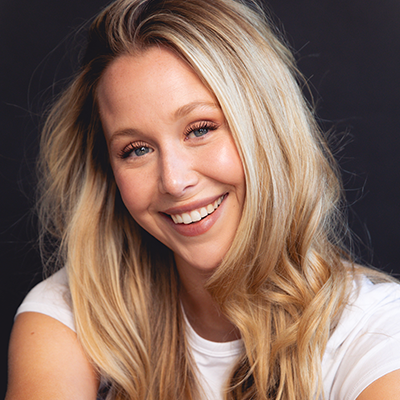
Miranda McKeon is an actress who had roles in Little Boxes and Anne with an E. She also hosts the Pink 365 Podcast. At age 19, Miranda was diagnosed with stage III breast cancer.
Your donation goes directly to what you read, hear, and see on Breastcancer.org.