Sharing Hope and Resources
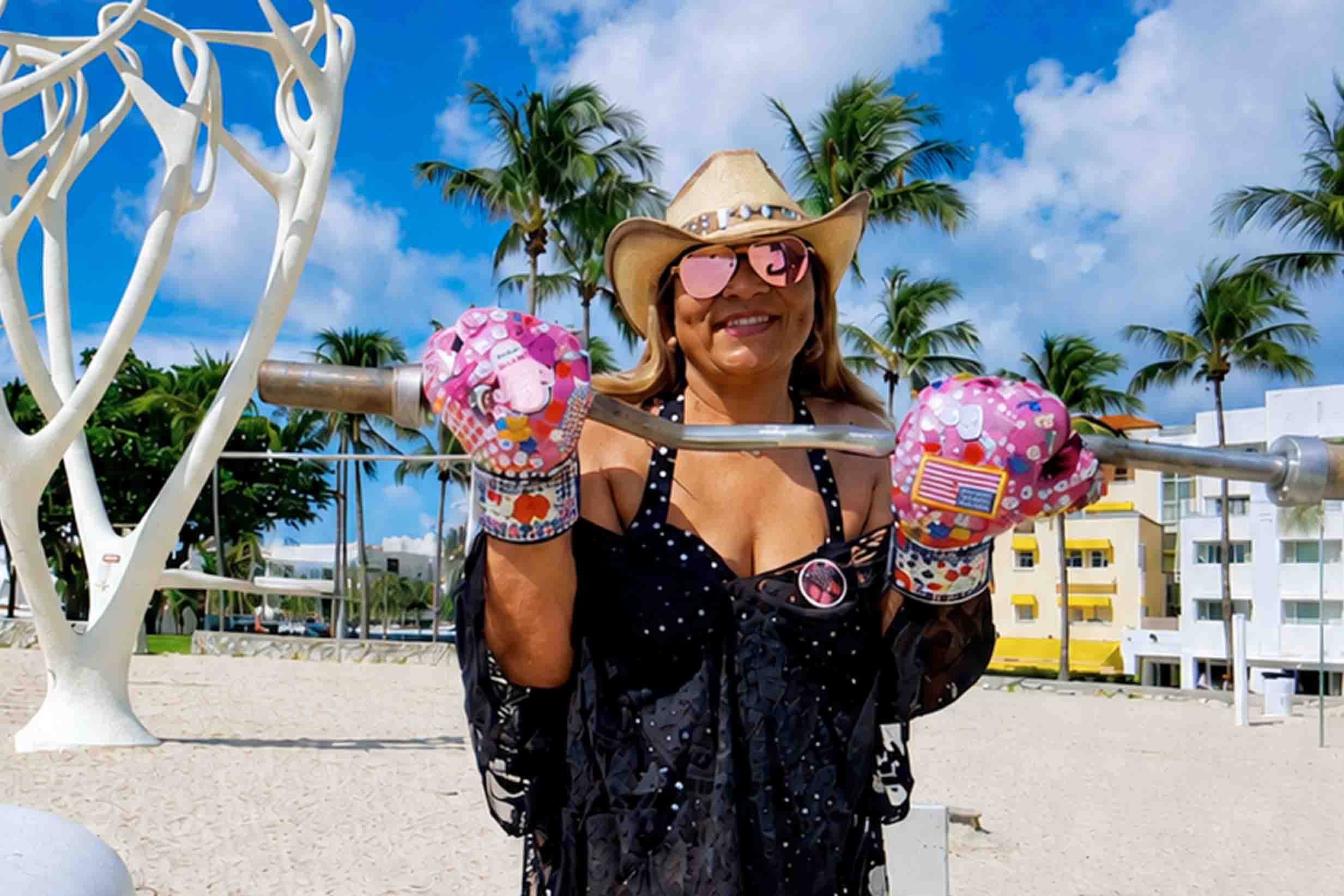
Barbara Edwards was diagnosed with triple-negative breast cancer in 2013. In 2017, she started the Rose M. Turknett Cancer Network to honor her youngest sister, who died from breast cancer in 2009 at age 43. Today, she travels around the country with her bedazzled pink boxing gloves, helping people with cancer, especially people living in underserved areas, find the resources and information they need to navigate treatment and survivorship.
Listen to the episode to hear Barbara explain:
- Sponsor Message
why she had to advocate for herself to get a diagnosis
- Sponsor Message
how exercise, yoga, and meditation helped her through treatment
- Sponsor Message
her advice to people newly diagnosed with breast cancer
Welcome to The Breastcancer.org Podcast, the podcast that brings you the latest information on breast cancer research, treatments, side effects, and survivorship issues through expert interviews, as well as personal stories from people affected by breast cancer. Here's your host, Breastcancer.org Senior Editor, Jamie DePolo.
Jamie DePolo: Hello, thanks for listening. Today, I’m very excited to be joined by Barbara Edwards, the founder and executive director of the Rose M. Turknett Cancer Network. Barbara is going to share her experiences with breast cancer, as well as the work her organization does.
Barbara, welcome to the podcast.
Barbara Edwards: Hey, Jamie, thank you. Thank you for the invite. I am so excited.
Jamie DePolo: So, before we dive into all the wonderful things your organization does, I want to ask you about your experiences with breast cancer, being diagnosed and treated. I believe, from what I read, you really had to advocate for yourself to get a diagnosis, is that right?
Barbara Edwards: Correct. Correct. Thirteen years ago I was actually visiting Dallas. I live in Dallas, born and raised in Dallas, but came home for something and just kind of stayed. So, when I set it up for my regular mammogram, like I had been doing since I was 40, my doctor referred me for a — because I had lost my sister in 2009 to breast cancer, she had just, Rose had just turned 43. So, he ordered a diagnostic mammogram. When I went, no one told me, they just kind of called me, I’m dressing and waiting, I’m undressed, waiting to go into the exam room and they come out and called me into a private room and asked me if I’m having any problems. I tell them no I’m here for my regular mammogram.
They said, well, we’re not going to be able to do it. Don’t tell me why. And I was like, no, we’re going to do it, I have a referral, and so get me your top person. So, they sent the manager of the mammogram department center to me and the same question: are you having any problems? And I said no. She said, well, do you have any lumps? And I said, well, yeah, and she didn’t even let me finish. I had lumps prior, I had been biopsied, they didn’t tell me that they, my insurance, would not pay for a diagnostic unless you were having problems. So, that was the problem.
Jamie DePolo: Okay.
Barbara Edwards: So, if I had not, if I had just listened to them and went away, and this was… we’re in Dallas and really crowded, you probably wouldn’t be meeting me now, because that was just how aggressive it was. They took me into the room, there it was, she got on the phone and asked, and a doctor said, take her into the ultrasound. They did an ultrasound and took me back and did some more mammogram pictures. It was stage I, right at stage I, and in 30 days it was stage II. I was diagnosed with triple-negative breast cancer.
So, my sister was dead within six to eight months. So if I, I feel like if I had not advocated for myself, the same thing would’ve happened to me. Because it may have been three or four months before, if I had not gotten my mammogram that day, before I could get in there.
Jamie DePolo: Yeah. Wow. And I’m so sorry about your sister; and we’re going to talk a little bit about her in a minute, a little bit more. So, do you mind talking a little bit about your treatment? So, you got the mammogram. How soon after that did you start treatment? Did you have surgery? What did you do?
Barbara Edwards: Yes, they did the mammogram and ultrasound that day and 30 days later they did a biopsy. And they called me on the phone, I don’t even know who it was, I think it was the pathologist, and told me I had triple-negative breast cancer and I will have to see a surgeon. So, about 30 days or something after that. Because I actually lived in Florida and was dealing with new doctors here in Dallas, because I came home for a visit and winded up staying to help my son, so, you know. So, yes, I had surgery, she removed the lump, and when they did the biopsy, the pathology report, it showed some cancer right around the edges.
So, this is why I really tell people to advocate for yourself, Jamie, because the first surgeon they sent me to was a male and he said, “Oh, there’s some cancer right around the edges.” This is after I’ve had the first surgery, and she MAY want to do another surgery. You understand, it was like, well, but if you have cancer showing, you know you need some more surgery. So, by the time I met her, it was a lady, she was like I want to go back in. And I said, no problem, because the cancer was showing around the edges.
And so, she removed some more tissue, checked off into my lymph nodes and it had not spread into the lymph nodes, but it had gotten to stage II by then, okay? So, I took chemo, I was very allergic to the chemo, and it was going to kill me. The cancer was not going to kill me.
Jamie DePolo: Yikes.
Barbara Edwards: It burnt me. I was allergic to it, so I was itching from the inside out, uncontrollably itching. I had blisters all, my hair was coming out, but I had cut my own hair off because I had blisters in my scalp, all over my face, my neck. I was blistered and burned everywhere except the palm of my hands and the sole of my feet. It just constantly itched and I don’t know how, you know, and she had to stop it. She had nothing, you understand 13, 12 years ago, they didn’t have what they have now, especially for triple-negative.
Jamie DePolo: Right, right.
Barbara Edwards: So, there was nothing else and I did radiation, I did 33 treatments of radiation. But let me tell you what I was introduced to that helped me. And this is what I share, I was in a research, medical research, the benefits of exercise before and after cancer. So, before I went to the chemo chair, I worked out with a trainer that was here in Dallas. It’s called Courage now, but they used to call it Fit Steps. So, 30 minutes before I hit the chemo chair I exercised for 30 minutes, but after I got out of the chemo chair I worked out. So, 33 treatments, I mean, I went straight to the gym. It was all in the same building, which made it very convenient. Thirty-three treatments of radiation, I left the radiation bed and went straight up to the gym and worked out.
Now, doing that, Jamie, I didn’t have a lot of the side effects that a lot of the people had. They was like how are you able to leave? Go off the bed from radiation and go to the gym, chemo? But I didn’t, you know, I had some, you know, because I had, they also had me on a chemo pill, which was like I was just floating on cloud nine. They made me not want to eat, but I forced myself to eat, but the food was like it was half stuck in the throat and it just wouldn’t go down and things like that. Fatigue, but the exercising truly helped the fatigue. And I try to tell people that if you would get you some movement in, I don’t care how, lie in your bed and get you some movement in.
Because I am a living example, and I was 58 years old, you know? And so those are some of the things I was introduced to. I was introduced to meditation. I did my first yoga session. My second round of chemo was to cause my whole body to pain… Well, it didn’t cause the top, from, like, the waist down, I was in pain and I did a 12 noon specialized class and went on the floor in pain and when I come up. So, she did a lot of yoga stretching. So, I still do yoga right to today. If my back hurts, I do not take a pain pill, I stretch it out. So, those are the things.
I was introduced to art therapy, music therapy, which I still do. As a matter of fact, I just received a check from the City of Dallas. April was Arts Month and they took from the arts and met, we’ve got a full-blown art studio at the cancer center where I go. So, I’m generally there every Thursday, and they took some of our art and put it on — eight of us artists — put it on display at the City Hall all the month of April. And so, they gave a certificate. We was like, oh, wow. Everybody, hundreds and hundreds of people. Then they said they were going to give us a stipend. I was like, oh, my God, for just using art. So, I was introduced to art, while I was going through treatment, so that is how I raise funds for my non-profit now.
Jamie DePolo: Oh, that’s very cool. That’s very cool.
Barbara Edwards: Yes. Yes.
Jamie DePolo: Right. Well, I’m so glad that your treatment went well and that you’re here and that you were introduced to all those things that helped you so much, which is amazing. So, tell me about the Rose M. Turknett Cancer Network, named in honor of your sister. Tell me a little bit about her and why you decided to start the organization.
Barbara Edwards: Well, she was my youngest sister. I had seven sisters, she was the youngest, and she had turned 43 in December and she was dead in May. Now, I lived in South Florida, so I wasn’t here when she started treatment. I just know everything was rapid and they had misdiagnosed her, a lot of things like that. So, like I said, I stayed home and what happened is me going through treatment, I found out a whole lot of things. No one ever told me about any resources to assist me, none whatsoever. The Fit Steps, which was at the cancer center, and because I didn’t live in Dallas, Texas, I lived over a thousand miles from Dallas, they helped me with some housing where a church had some apartments set up that I didn’t have to pay full rent for while I was in treatment. It was only while you were in treatment and things like that.
So, people would ask me questions, people find me very easy to speak to. And I would go find the research, you know, if they said, and I would just make calls. So, Rose M. Turknett Cancer Network was birthed out of people asking me questions and me researching and answering them.
Now, we don’t just do breast cancer, we help people with all kinds of cancer all over the United States. Because if someone, I didn’t start it like that, but people will meet me at the airport and say, oh, she has cancer and they call me. And someone called me and I assist them. And what it takes is me making the calls and there’s resources.
And what I found in a lot of our underserved areas, Jamie, those are the main people that don’t know anything about the resources, local or nationally. And so, what Rose M. Turknett Cancer Network does, we navigate those lifesaving resources to people. So, Jamie, I did 27 events last year, that means I went out.
Jamie DePolo: That’s like every other week.
Barbara Edwards: Yeah. Yeah, you know, sometimes I would leave one and go to another one or whatever, but some of mine is research. I go out with the gloves and the gloves, there’s a lot of questions about the gloves, so I’m able to share, and so I did a lot of market research. That’s where they come up with the numbers, so, we need to do something with the male breast cancer. But that’s what we do, we go out. I am an ambassador with one of the largest county hospitals here, Parkland Memorial. I’m a breast ambassador, I go out with them, I go out on my own with my organization just sharing information.
But we also incorporate information on chronic diseases, you know, diabetes and things like that, on donorship, living donorship. And you know a lot of people in our underserved areas, they don’t donate blood. They don’t understand donating organs. Organs you’re putting in the ground could save someone. So, we do that, we share that information also.
Jamie DePolo: Okay. Well, that’s wonderful. I do want to ask you a little bit, you said you share resources, it sounds like it’s all kinds of resources, so financial, information, housing, just whatever anybody needs you research it and give them the info?
Barbara Edwards: That’s exactly what we do. Each person who comes to me needs something different. I’ve had to house one foreigner that was here from Venezuela and she was put out because I think whoever she was staying with thought she was going to die on them, and we found her housing. But that’s what it is. You’ve got local agencies, but we’ve got national, and most people don’t know about your national, our national agencies, you know, and so that’s what I do. Also, which I’ve slowed down this last, because I’m recovering from surgery to be truthful, I coach them as they’re in their treatment.
My oncologist said, Ms. Edwards, those people that talk to you will talk to you and tell you things that they won’t tell me. And it has proven to be true. You wouldn’t imagine, believe some of the questions and things they have asked me to assist with. But we have fed people, we do healthy, informational healthy cooking and healthy eating. I was also introduced to Chef Zoe. She just did her last class after 15 or 16 years at the cancer center two weeks ago, been doing a healthy cooking class not diet. Teach you how to cook the same foods that are healthier using more herbs and spices.
So, that’s what I do, you know, RMT coach and you know I generally talk to them before they go to the chemo treatment afterwards or whatever. I actually hold their hands sometimes. I actually, I personally, because I am the survivor, I have went to them, with them, for their mammograms. I had one just ring the bell last Friday, and when she went to her doctor, I went to her doctor, her oncologist appointment in the room with her, to make her comfortable. So, I personally do that myself because I am the survivor.
Jamie DePolo: Well, that is so wonderful. So, you brought them up, I have to ask you, the pink boxing gloves. When I met you at the Living Beyond Breast Cancer Metastatic Conference this past April, you had this amazing pair of pink boxing gloves. They are — I think bedazzled doesn’t really do them justice — they are doubly bedazzled. So, where did they come from? I know people recognize you now by those, but how did you come up with that idea? And who did the bedazzling?
Barbara Edwards: Oh, I do the bedazzling. I am an artist. Jamie, they told me I was an artist, I believe them, and when people pay you for your art, you’re an artist. So, I tell, but I do it and it’s hand-done, hours and people want to buy them. Y’all have no idea how long this takes, but the pink boxing gloves is RMT Cancer Network Mission of Hope, 50-state mission of hope. We started it before the pandemic, traveling the United States just sharing hope because what I found out when I was going through cancer, Jamie, most people wouldn’t give you hope.
They would tell you every bad thing that has happened in their cancer treatment, but no one would give you any kind of hope. When I started to take radiation, the lady tried to put the fear of God in me from her burns and I had to just say that was her, that was not me, because I would’ve, I’ve had people who will not take treatment because someone has put fear in them. You know, I have women, I’m out in the community constantly, that won’t get a mammogram because someone has told them that their mammogram is going to cause them cancer. They don’t want to get a biopsy because someone has told them if you do a biopsy, it spreads the cancer. This is what I deal with.
So, the gloves are just to share hope. So, you see yourself, you asked about, people see the gloves, and I have several pair, I have a navy pair and it has 50 states and a bling out for men, but most men they’ll take the blue, and I just travel. We’ve been to New York. I went to New York just sharing hope, for a week. I was on the subway. I’ve been to Maine, Miami, Fort Lauderdale, Hollywood, Florida, Alabama, Mississippi, Georgia, Nevada. I’ve been to so many places, Vegas, outside of Vegas, little ole bitty towns that’s three and four thousand people, sharing hope. Because they were like, you know, I’ve had people to just put $20 in my hand, you’re literally going around telling people that everyone, you know, just? Yes, because most people don’t.
I’ve been at the airport in New York and the people are trying to get on the plane and saying, no, we want to know what this woman is talking about. Things like that, so, because you don’t find people sharing hope. You hear all of the bad stories. You know, oh, my friend had this and it spread and here it spread and then she died. That’s what I had to, those are the kinds of stories that I had to listen to when I was in treatment. So, that’s where the gloves was birthed. I had a plain pair of gloves, just because I’m very girly, and I love, and then people started asking and then I just blinging them out and it’s a story on the gloves.
You know, each one of them, I have a personal pair that no one share. I create something every survivorship year, usually a cap, glove, hat or whatever. When you see me, you’re going to know I have something to do with breast cancer, cancer, or whatever because of something I’m wearing, things like that. So, that’s where the gloves, the gloves have saved some people’s lives, literally. People at the airport will tell you their story, but literally in my book I have a couple of people, the gloves, I believe, have saved their lives.
Jamie DePolo: That’s amazing. Well, why boxing gloves? Did you just happen to have a pair? Or was it that you’re fighting cancer? Or why did you settle on those as opposed to, like, a hat or something else?
Barbara Edwards: To knock out all cancers.
Jamie DePolo: Gotcha.
Barbara Edwards: That’s what it is, RMT’s Mission of Hope to knock out all cancers, yes.
Jamie DePolo: Okay. And when we were talking, you said that one of your new foci this year is male breast cancer, so tell me a little bit about that.
Barbara Edwards: Yes, we don’t hear anything about it. All of our major, American Cancer Society, Susan G. Komen, you don’t hear them talking about male breast cancer. But Jamie, I can go in my phone right now and hook you up to five male breast cancer survivors.
Jamie DePolo: Sure.
Barbara Edwards: I’m doing an interview on July the 5th with a 22-year male breast cancer survivor, he’s 22 years out. And we preach early detection saves lives on all of it and that’s what, you know, men, I tell men we don’t have any guidelines, but we tell them kind of the things to look for. I have a 71-year-old in upstate Washington, he just had a mole and if he, you know, good it wasn’t aggressive because he probably would already be dead, but his primary care doctor, long story short, was telling him it wasn’t nothing. When he went to the dermatologist, it was something. So, I’ve went out and talked to men.
Eighty percent of the men, Jamie, don’t even know that they can get breast cancer. And so, you may be dying, about to get everything cut off, and you don’t even know it. And so, that’s where the male breast cancer awareness comes in. We must let the men know they need to look for changes. I have a 76-year-old, he just had a pain, they kind of let it go, and when it got worse, when they did the test, it was behind his nipple. So, now he is the first triple-negative male breast cancer survivor I’ve met and it was caught at three, stage III and he’s 70, no, he’s 77 now.
Jamie DePolo: Okay.
Barbara Edwards: So, I just saw the need and so I just, you know, I talk to people and I’m not shy at all. So, I just started, I ask men, are you aware? And their answer, I was with a medical, someone who works at a hospital, I Ubered home Sunday, he works at a hospital and he didn’t even know that males could be diagnosed with male breast cancer. So, that’s why that was birthed.
Jamie DePolo: Yeah. You’re right, it’s very necessary. I’ve talked to, on this podcast, several male breast cancer survivors and one of them was diagnosed when he was in his 20s. He was in college and he went back to his doctor and said can we get some sort of check of male breast tissue during the annual exam? And the doctor said it’s not worth it, it takes too much time. The number of men that get diagnosed is so small it’s not worth it. And he was extremely frustrated because, as you say, there is the lack of knowledge out there. Men don’t know what to look for, they don’t, many of them, as you said, don’t know they can even get breast cancer. So, kudos to you for having this initiative because you’re right, it’s very, very needed.
Barbara Edwards: Yes, thank you.
Jamie DePolo: So, I want to ask you, I would call you an advocate, and I know that being an advocate isn’t for everyone. Some people do not want to be out there and sharing your story, so what made you want to be so open and out there and helping people?
Barbara Edwards: Well, to be truthful, pretty well all my life I’ve been what we call a servant helping people.
Jamie DePolo: Okay.
Barbara Edwards: When I was a teenager, I would go mop a senior’s floor or help a senior, or something like that. And I enjoyed, I’m clergy also, Jamie. So I’m a chaplain. I went to school to be a chaplain, a minister, and a pastor, I’m ordained internationally, so I’m used to helping people and I enjoy helping people. And when you help people, you have to make them feel comfortable. If they feel comfortable, they will share what they, what their fear is and doubts and everything. And so, to me, I’ve been blessed to be that type of a person. A person they will share things with me that they won’t share with other people. And so, that’s kind of, I love helping people.
I have to pull back. I had to pull back because I’m so used to going. This surgery I had, you know, and I’m like, okay, Barbara you have to see about you because I was a little bit fatigued. You know, I had a full hysterectomy on May the 7th and so I’m used to, you know, going and I was like, oh, okay. Because when I met you, I had already did four events for the year, four. I’ve been to Montego Bay sharing the male, breaking the silence on male breast cancer. We was there seven days because their numbers are very high. Their number is 3-, 2-3 percent male breast cancer caught at late stage, so that means a lot of their men are dying.
Jamie DePolo: Yeah.
Barbara Edwards: So, yeah, I love to help people. Yes, I’m very comfortable. I’m used to outreach. I’m used to going out into the community. I’m used to going out to feed homeless. I volunteer so many hours with other non-profits during the year to go out and do things like that. So, very comfortable with it.
Jamie DePolo: That’s wonderful. I admire all that you do. I’m going to ask you, for the last question.
Barbara Edwards: Okay.
Jamie DePolo: If you had one or two pieces of advice for somebody who was just diagnosed with breast cancer, what would you say?
Barbara Edwards: The first advice is not to listen just to everyone who has been in treatment and take it to heart. Because they’re not, most of them aren’t going to give you hope. You know, I see things, you know, I’m part of three or four survivor groups and oh, you’re never the same, and you’re this and you’re that. That’s not true, because none of that was true with me. I’ll be 70 next, in August, and I get around like I’m 30 or 40, box and all of those things. I actually box and people be saying, and then you have to stay positive.
No matter what the diagnosis is you must stay positive. Because if you stress out it’s not going to help you. You have to believe that, you know, you’re here for, you’re here for a purpose. And I believe in God, and prayer, and live your life. Don’t just, you know, Jamie, one of my hardest seasons of the year is the holidays. You know, I have them, they’re suicidal. I done had one had the pills, about to take them, but I do have some special training to deal with that, also. And I was a victim, I was trained as a victim practitioner in the State of Florida through the general, attorney general’s office years ago. So, I just tell people you must trust in something and you must stay positive. You must stay positive, no matter what the diagnosis is.
Jamie DePolo: Okay. Two very good pieces of advice. Barbara, I thank you so much for sharing your story. I am in awe of all the things that you do and full of admiration and I wish you much success in the coming year. Thank you so much.
Barbara Edwards: Thank you, Jamie, I appreciate you.
Thank you for listening to The Breastcancer.org Podcast. Please subscribe on Apple Podcasts, Google Podcasts on Android, Spotify, or wherever you listen to podcasts. To share your thoughts about this or any episode, email us at podcast@breastcancer.org or leave feedback on the podcast episode landing page on our website. And remember, you can find out a lot more information about breast cancer at Breastcancer.org and you can connect with thousands of people affected by breast cancer by joining our online community.
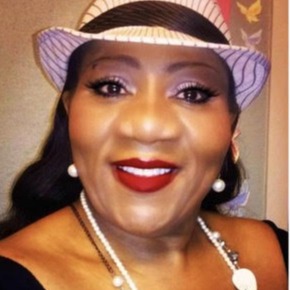
Barbara Edwards is the founder and executive director of the Rose M. Turknett Cancer Network, which offers comprehensive resources, emotional support, and practical assistance to enhance the quality of life for people with a history of cancer and their loved ones.
Your donation goes directly to what you read, hear, and see on Breastcancer.org.