Supercharging Cancer Vaccines
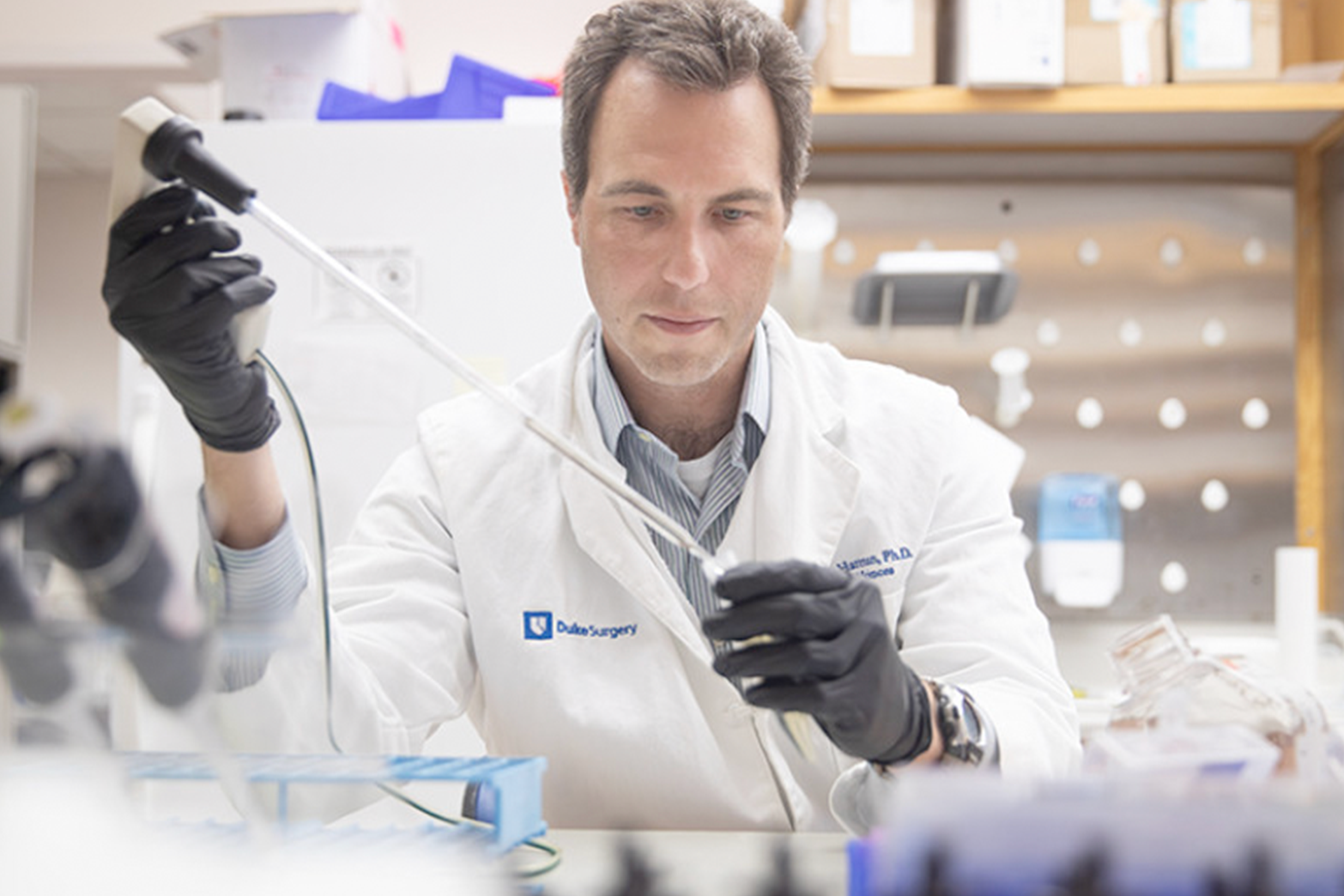
Twenty years ago, seven people diagnosed with metastatic HER2-positive breast cancer received a cancer vaccine as part of a clinical trial. Today, they’re all still alive. This prompted Zachary Hartman to study the immune systems of the people in the trial to see what was happening. He found that the women had immune cells that continue to recognize the cancer and keep it under control. Now his goal is to make that vaccine even more effective and make it work on other types of breast cancer.
Listen to the episode to hear Dr. Hartman explain:
- Sponsor Message
how the original study was done
- Sponsor Message
how he’s working to make the vaccine even more effective
- Sponsor Message
how the vaccine might be modified to work on hormone receptor-positive and triple-negative breast cancer
Welcome to The Breastcancer.org Podcast, the podcast that brings you the latest information on breast cancer research, treatments, side effects, and survivorship issues through expert interviews, as well as personal stories from people affected by breast cancer. Here’s your host, Breastcancer.org Senior Editor, Jamie DePolo.
Jamie DePolo: Hello, thanks for listening. Twenty years ago, seven people diagnosed with metastatic HER- positive breast cancer received a cancer vaccine as part of a clinical trial. Today, they’re all still alive. This prompted researchers to study the immune systems of the people in the trial to see what was happening. They found that the women had immune cells that continue to recognize the cancer and keep it under control.
I’m joined by Dr. Zachary Hartman, associate professor of surgery, integrative immunology, and pathology at the Duke University School of Medicine, who led this current research. He’s going to help us understand what the vaccine did and how the results of his new study could improve the effectiveness of cancer vaccines in development.
Dr. Hartman, welcome to the podcast.
Dr. Zachary Hartman: Thanks, Jamie. Thanks for having me.
Jamie DePolo: So to start, could you sort of briefly explain the original vaccine study to us with the seven women, so we kind of understand, then where you sort of stepped forward from?
Dr. Zachary Hartman: Sure. So this is a study that occurred back in 2000, 2001 timeframe, so a long, long time ago. And at the time, vaccines were still sort of an up and coming modality, and the approach that was taken was to vaccinate against this protein that’s expressed in a lot of breast cancers, about 15-20%, called HER2. So in these cancers, this protein gets amplified like a hundred times, so it’s very obvious, and there’s been a bunch of great therapies that have been developed targeting this that are kind of antibody-based, but at the time, those were still kind of in their very early, nascent early stages, and so this protein was really targeted in this vaccine.
And what this vaccine was, it was patients coming in, getting their blood drawn, getting apheresis, and then immune cells taken out of that, and then those immune cells were sort of educated to go after this HER2 protein with peptides and proteins, and kind of adjuvant-based strategies, and then give it back to those patients. So it was not a large number of patients, but it was a very safe trial and responses looked pretty good. And there was a follow-up that occurred in like about 2006, and at that time all the patients were doing well, and they still had these HER2-specific types of immune responses. And so we’ve actually done some trials since then with other modalities, with viral modalities, RNA-based modalities, looking for the same kinds of things and actually targeting HER2.
And those have gone, you know, relatively well, but we wanted to check in and see like, well, obviously we, you know, these aren’t panacea, we want to make them better, so, you know, we reached out to those initial patients, back, I think, starting in like 2018, you know? Trying to find out, like, how are you doing? And then, like, if you’re doing well, like, would you mind if we sent you a kit to collect blood, and you have that done and send it back to us? So we could examine, like, what your immune response looks like right now? So all the women we contacted, you know, seemed like they were doing fine. We had five of them to send us back samples, which was great, and then we assessed those samples.
And we found that they all still had like over, you know, 20 years later, these HER2-specific responses that was like somewhat surprising to us that it was still as robust as it was. And the types of responses were really, the kind of interesting thing is, they were marked by this CD27 protein.
So this is something that like when you get a vaccine you get antibody responses, which are, you know, those occur through B cells, and then you get these cytotoxic cell responses that are T cells. And there’s a lot of different kinds of T cells. And if you talk to immunologists, like they’ve all got their favorite and there’s all these different markers, but the ones that I think in cancer most people study are CD8, and those are the cytotoxic, they’re the killers, they’re the soldiers that go in there and do the, you know, dirty work.
And there’s another class called CD4, which sort of facilitate them, and they kind of do sometimes their own dirty work, but that’s still kind of a, we’re still trying to learn more about it, and then they kind of educate and stimulate CD8 cells, they can also activate B-cells, they’re helper cells. So they’re CD4 helper cells and [in people with] HIV, that’s the cell population that gets infected and taken out, and it’s like critical for immunity. And we found that those patients still had, you know, HER2-specific CD4 populations that had this CD27 marker that was highly upregulated, and that’s a marker for immune memory.
And so then we started some studies with a compound, the CD27 agonist, and that turned on immune responses way better with our vaccines. And we’re like, oh, geez this is what we, this is what we’re trying to do. So, that’s what we’re, that’s what we’re kind of working on right now.
Jamie DePolo: Okay, and just to make sure I understand, in the original study, blood was taken from the women, from the seven people in the study, and then you kind of, for lack of a better term, sort of supercharged the immune system cells in there, sort of trained them to recognize the HER2 proteins?
Dr. Zachary Hartman: Yeah, you can feed them the proteins and peptides specifically for it, so then they’re eating it up and then they’re displaying it and then they can activate immune cells. And then there’s other things that you can give them, you know? Like different cytokines and chemokines that act as adjuvants to stimulate them. And we found out we turned on this program that activates CD27 probably, and that was really important for the response, is kind of what the basis of the study that we did.
Jamie DePolo: Okay. And again, just to make sure I’m understanding right, the CD27, you said they’re kind of like the memory, for lack of a better term, of the immune cells? They allow the immune cells to like, hey, I remember the HER2 protein was not good, so I’m going to go out.
Dr. Zachary Hartman: Yeah, it’s a marker for immune memory in these populations. And we knew it was. like, just kind of a marker like a flag, or does it do anything? So then we contacted a company that has an agonist antibody for it, so basically it can turn it on. And so then we gave this in addition to a vaccine in our preclinical studies and it worked great. So, then we got really excited about it and you know we had these responses in mice that went out 300 days, which is like the equivalent in humans of 33 years. You know, like, wow, like that’s pretty good if these things kind of hang on. And we saw the memory responses, and so really it’s that immune memory, kind of really, you know, a robust immune cell that can survive for a long time.
So immune cells, they expand when you get an infection, when you get a cold, when you get a bunch of different kinds of T and B cells that expand. But then, you know, you can’t do that forever, so then they have to contract and then you’ll have a smaller population that’s like really, you know, supercharged cells that are ready to go at a moment’s notice. And those are the memory cells. And then if you get that disease again, you know, that’s really the basis for vaccinations, we’re just training them, you know, this population to exist. So we think we kind of have found another means to enhance that population, which we think is going to be critical for really long-term tumor control and elimination.
Jamie DePolo: Okay, perfect. And I don’t mean to harp on the original study, but I am curious, this was before things like Herceptin, Perjeta, those kinds of targeted therapies for HER2-positive cancer were around, correct?
Dr. Zachary Hartman: Right. Well, I think Herceptin was first approved clinically for use in 1998, so Herceptin had just been developed. Perjeta had not come out yet. Now with HER2-positive breast cancer, typically standard of care therapy is Herceptin, Perjeta with chemo, now there’s some new antibody-drug conjugates that seem like they’re working very well, and like we’re also looking at that. So we think the vaccines play this key role, but antibodies definitely are important as well.
mie DePolo: Well, I’m just curious, given that the people in the original study had metastatic disease, would they have gotten something like Herceptin in addition to the vaccine? I guess I’m wondering did that play a role at all in the response?
Dr. Zachary Hartman: Yeah, I think we’ve, I mean, I think in the trials that we’ve done subsequently, like as these therapies have emerged as standard of care, what we’ve tried to do is have it be the vaccine in addition to all the things that you would normally get. These drugs are very impactful, especially in early-stage cancers. Once you get to an advanced-stage there’s a lot of response, but it doesn’t completely go away. The cat’s really out of the bag, so to speak. So what we’ve done with our vaccine trials, is we’ve pretty much engineered them and what we’ve tried to do as a protocol is allow for antibodies to also be given at the same time in addition to the vaccine.
And then usually there’s a window of chemotherapy and it’s still kind of unclear whether a vaccine in combination with chemo is a good thing or a bad thing, we’re not really sure. But a lot of times, just kind of for safety, you know, especially in a phase I or something like that, you just want to make sure it’s safe, you can kind of do that afterwards. So I think antibodies can help educate the immune system, too, so they’re certainly not a bad thing to have around. And really if you’re vaccinating against something like HER2 you can get B cell responses, so you’ll make your own antibodies again, even. So you’re kind of making your own Herceptin or Perjeta against HER2 and I think that’s an important part of the process as well.
Jamie DePolo: Okay, okay. So in your studies, they were preclinical, so you were looking at cells and you were looking at mice, is that right?
Dr. Zachary Hartman: Yeah. So I mean, we took kind of the clinical samples that we could obtain from these patients that were enrolled in this clinical trial. We did assessments of those by stimulating them, looking at the T cells and seeing if they were activated, seeing if they were responding, trying to identify what markers would denote those responsive populations. And then kind of going back into the mice and like, okay, here’s our hypothesis, CD27, these cells are essential, why don’t we stimulate them with a vaccine? Would that supercharge our response? And we found that it really did.
And so when we started giving a couple of these, this innate immune agonist, the CD27, with our vaccine, we got a big bump in the response. And then we could even add some other immune checkpoint inhibitors, which are kind of emerging clinically in lots of different cancers, that helped it, too. So then I think what we’re trying to do now, is take what we’ve learned from this trial and do new trials that would employ those kinds of mechanisms to enhance that kind of response. And I think when we did this trial, it was in late-stage, advanced cancer, metastatic cancer patients, and actually, you know, it’s a small number, so you don’t want to, you don’t want to say too much, but, like, it looked very promising.
And so if we can expand this to more women in this late stage, I think that would be fantastic. And then if we can move it up even earlier, like if we could give you a shot of something, oh, you’ve got stage I HER2-positive breast cancer, your outcome should be pretty good with these antibodies that we can give you with chemo. But like if we can give you a vaccine in addition to that to help out, I think that would be a great thing. The safety profile for vaccines is very good, so that’s a real key strength I think.
Jamie DePolo: Yeah, you must’ve read my mind. That’s what I was thinking because all your work so far has been done in metastatic, advanced-stage.
Dr. Zachary Hartman: Yeah, you want to make sure it’s safe, right.
Jamie DePolo: Right.
Dr. Zachary Hartman: And then usually, you know, there’s a standard of care and you can’t really supplant that. I mean, that’s not going to work. So, typically most clinical trials, early phase I, phase II, they’re in patients with very advanced cancer that have gone through so many different types of therapies, and the bar is really high there because they have all these cancers that are resistant to all kinds of chemo and all kinds of agents. And then you’re coming in with your vaccine like a slingshot, like, I’m going to, this is going to work, you know? And that’s what we want to have happen, but I think the vaccine needs some help, right? So, that’s why if we’re able to generate some of these tools to stimulate that vaccine response, that’s going to be really critical in achieving efficacy clinically.
Jamie DePolo: Okay. And then so, I also am wondering, so this is strictly for HER2-positive disease?
Dr. Zachary Hartman: Yep.
Jamie DePolo: Have you seen anything in your work that would suggest something that could be done, say, for hormone receptor-positive disease? Or are there other markers or proteins that you think could be targeted that could work on HER2-negative disease?
Dr. Zachary Hartman: Yeah, no that’s a fantastic question. I mean, HER2 is like a minority population of breast cancer patients, so we’ve been looking at other kinds of targets. There’s a couple that we’re pretty interested in, and so ER-positive, or hormone receptor-positive, those are, that’s the majority and it’s driven by estrogen. Well, what do we do now? We basically give these kind of anti-estrogen, endocrine-based therapies, and we’ll do it and then maybe the cancer becomes resistant, we give them a different one, we give them a different one, we give them a different one, and like that’s kind of what you do.
It’s the same thing in prostate cancer with an androgen receptor. We give these anti-androgen drugs and then there’s like second, third generations of those things. But you know really, the tumor can kind of get out of it, it can mutate a little bit, and so one of the things that we’re really interested in is, can we target the estrogen receptor? And so we’ve had a couple of vaccine trials that have targeted estrogen receptor peptides. And one of the kind of interesting things, another approach really with vaccination, the estrogen receptor protein can mutate over time to avoid and get around some of these therapies.
And you know, we know, we’ve known this, there’s been many, many patients who have had their tumor sequenced that have become resistant, we know exactly where those mutations can occur. Could we make a vaccine to, you know, target those mutations before they exist? And give that to patients, so that if a patient evolved that, you know, some tumor cell that got that mutation would be eliminated by the immune system. And then that therapy would continue to work longer? So a colleague of mine, Kim Lyerly, who actually led this initial study, he’s the clinician, he and I work with a company we co-founded, Replicate, and we were very interested in a vaccine targeting all these resistance pathways that were evident in ER-positive, hormone receptor-positive cancer.
So that company has been founded. We did a first phase I study with a rabies vaccine, just to kind of really validate the platform. And now what we’d love to do is be able to go into patients and develop a vaccine for these different mutations. And we’ve done some preclinical work on that front, I think we’re pushing out a paper right now, so that hasn’t been published yet.
Jamie DePolo: Stay tuned, right?
Dr. Zachary Hartman: So, you know, HER2 great target, you know, a lot of us have been doing this for a while, we’re all kind of going after it, and there’s lots of different drugs, but there are things like estrogen receptor, mutations and estrogen receptor, other kinds of proteins that are really important for cancer that we’re kind of exploring right now. Another one that an ADC has been developed for is Trop-2, and that’s, it was named from this trophoblast protein that was expressed in these trophoblast cells. But it’s actually expressed in lots of different places in the body, and there’s an antibody with a chemotherapy glued to it that’s actually in clinic right now that’s being used for lots of breast cancer patients.
And so we’re kind of like, well, you know, like, that’s interesting, too. So we’re exploring that as well with antibodies and vaccines. So I don’t think it’s going to be a one-size, there’s not like a universal vaccine that will work for everybody. But I think what breast cancer has kind of really shown us is like within breast cancer, you know, there’s a couple of major flavors of it. And like depending on the flavor of it, there might be really good targets that apply to a lot of women that you can develop a good drug for, or therapy, or vaccine. And you know there would be a system to give it to them and it wouldn’t be completely personalized.
I think one of the things with the early phase I trial is, it was with Drake cells, it was with a patient’s own cells that had to be taken out, and cultured and grown, and stimulated, and then given back to them. That’s very complicated, right? So, that’s why it’s very difficult to expand on that and make that into a product that could be used, you know, like anywhere like in North Carolina. You know, of course, some of my family is from like Bakersville, which is a very small town in the mountains, like that’s not terribly feasible. So, I think any kind of approach that could give you kind of an antibody or a vaccine that, you know, could just be given in a simple clinic that would target something that makes a lot of sense for that cancer, I think that’s eventually where we’re going to go.
Jamie DePolo: Okay. And you know speaking of the flavors of breast cancer, so we’ve talked about kind of the two biggies: HER2-positive, hormone receptor-positive. Now what about triple-negative? And I know that’s always an issue because there aren’t really good targets yet. Are you looking at any sort of markers for that, that could be targeted with a vaccine?
Dr. Zachary Hartman: Yeah. So, like, so Trop-2 is expressed pretty highly in triple-negative.
Jamie DePolo: Okay.
Dr. Zachary Hartman: So the way I usually, I’ll describe breast cancer, it’s a Neapolitan ice cream. There’s strawberry, chocolate, and vanilla. I think vanilla is ER-positive, it’s like the main, you know, the largest one, you know? Strawberry might be like HER2, and chocolate is triple-negative. And it’s been a tough one to go after because there haven’t been as many great targets and they tend to be a little bit more responsive to chemotherapy. But you know there’s not something that’s… we can, we’ve developed successful, making monoclonal antibodies for. Those tend to be a little more responsive to immune checkpoint inhibitors, though, they tend to be a little more immune involved.
So we have high hopes that we could use some of these kinds of modalities to stimulate that kind of response. Another thing that we’re kind of excited about is, you know, some of the therapies that exist now, these antibody-drug conjugates, if we could turn on CD27 with those, could we get the same kind of vaccine effect? Because antibodies can work that way, if cells die they can stimulate the immune system, and like some of our other research has been, you know, looking into this. So I think there’s lots of different ways, and lots of different approaches that we could potentially take in those kinds of settings. P53 is typically very highly mutated, BRCA is mutated. Another thing that we’re kind of looking at are mutational patterns.
So, if those cancers have these kind of standard mutational patterns, you know a lot of things, either proteins or proteins get mutated or expressed in these weird ways, would that be a way of identifying those kinds of cancers? And can we develop vaccines and incorporate those targets? So, that’s still a little ways away, but I mean there’s a lot of patients that have BRCA mutations that, you know, basically it’s like, well, you can get a mastectomy and salpingoctomy, and like that’s your option, is major surgery, and you might be like 33. And like do you really want to do that? And like if we had a vaccine that we could give to patients that would prevent the development of cancer for, like, a longer time, or completely maybe, that would be great.
And I think another thing that we’ve learned is, like infectious disease, vaccines work way better in a preventative setting, if you can predict it. With cancer, very difficult to predict. But then there are some populations where like there’s a heavy predisposition and make a lot of sense. So, there’s a trial for a type of genetically inherited cancer, I think the name of the vaccine is Nous-209, and it’s basically using that same kind of approach. A lot of different things, 209 different proteins and mutated proteins, could we vaccinate against this and could we prevent these patients from developing these kinds of cancers that have like Lynch syndrome or something?
Jamie DePolo: Okay. Well, that could be pertinent to breast cancer because I believe it’s a BRCA mutation.
Dr. Zachary Hartman: BRCA1 and 2 mutations typically predispose for ovarian and breast cancer. And they tend to be like high-grade serous ovarian or triple-negative breast, which are not, they’re not, they’re very tough ones to combat. So if we could develop something for that. It’s another area of research. It wasn’t really this paper, but I think this paper is like a means to understand how vaccines work more effectively, are there tools we could bring to bear? Because I think a lot of cancer vaccines haven’t, cancer vaccines aren’t really an approved therapy. It’s not like chemotherapy or some of these small molecules or that kind of thing. They haven’t really achieved that level of commercial success, and I think one of the reasons is they’re always kind of coming in at this late stage and they’re not particularly great, but there’s a lot of promise there.
Jamie DePolo: Right. Well, and the trials so far, at least the ones I know about, I’m not going to pretend to know about them all, they are usually pretty small.
Dr. Zachary Hartman: Yes.
Jamie DePolo: And so, you know, trying to extrapolate that out to large numbers of people gets difficult.
Dr. Zachary Hartman: Yeah, that’s true. So it’s sort of you don’t want to make too much out of like a dozen patients or something like that because a lot of our trials are anywhere from, like, less than 10 to less than to 30 or so. It’s that kind of early intervention, but I mean even then sometimes it’s difficult to recruit, like because there’s so many different options. So for some of these HER2 trials we had to, we had one that closed more recently and we really had difficulty recruiting because there were so many other HER2 therapies out there. So, you know, you didn’t really see as many patients and then if you tried to enroll at multiple site, that costs.
Jamie DePolo: Right. And I want to ask too, you mentioned the safety and that the vaccine was safe, but I’m wondering about side effects. Because I know, like, when the first checkpoint inhibitor came out for breast cancer, I talked to a woman who was one of the first people to get it, and while it did put her in NED — no evidence of disease — she had thyroid problems, she had all sorts of other problems.
Dr. Zachary Hartman: Sure.
Jamie DePolo: So and I know that HER2 proteins are on other cells, probably not as high amount as they are on HER2-positive breast cancer, but I’m just wondering are there any side effects that people would need to be aware of?
Dr. Zachary Hartman: It’s a great question. It’s one I get a lot from patients, and advocates, and other scientists. I think what we’ve seen is, is they tend to be pretty safe. So, clinically when we’ve done a lot of these phase I and phase II trials, I mean, the side effect profile is pretty… and we’re targeting a self protein, HER2 is a self protein, so we’re trying to elicit a response against it. And like in these patients that were vaccinated back, you know, in 2000, 2001, they’re okay and they still have these T cells that are memory T cells for HER2 and so far, like, really no real issues.
So I think they’re a pretty safe modality. That said, if we start giving immune checkpoint inhibitors like your friend got, and I’ve known people who have gotten immune checkpoint inhibitors, yeah, they are far from benign. So if we start giving these things to make the vaccines more effective, could that be an issue? And certainly that would be an important thing to look at in phase I. I think what we’re trying to do with some of these vaccines is educate the body to go after these kinds of cancers. We’re provoking a very specific type of autoimmunity.
So it’s not that there will not be side effects, you know, if we continue down this path, I think there are likely to be some. But I think the promise, at least in my opinion, is that when you have something like immune checkpoint inhibitors, this antibody that’s given that blocks the brake system of the immune response, and that’s given a lot. And those toxicities mount, with a vaccine it would be a much more limited intervention. You would get a shot, and you, you know you might get a series of a few shots over the span of a month or something, and that would be it, like you would be, you would be kind of done with it.
In our mouse studies that we did, we gave them a single vaccine with a single dose of CD27 and that was it, and then we just kind of let it go, right? And we found that if we gave that CD27 agonism in addition to the vaccine, at that same time, that worked really well. If we gave it later it didn’t work as well, if we gave it throughout, it worked the same. So why wouldn’t you just give it once? If we could kind of take that window of time and employ those therapies like a vaccine with other kinds of things and really get that immune response going, then I think we could back off, and then it wouldn’t be like this prolonged thing. A lot of patients who were getting chemotherapy, I mean, yeah how many cycles can you take, right? These are not, they are not benign therapies.
The same thing with a lot of the immune checkpoint inhibitors. Even the antibody-drug conjugates, while I think the side effect profile is better, it’s kind of like chemotherapy-light some days. So I think those prolonged exposures — and both my parents had cancer, so I’ve seen that and it’s not, it is not something you want anyone to have to go through. So there’s ways we could ameliorate that and really kind of target a specific time and give some therapies that would actually take off and teach the body to go after it. I mean, I think that’s kind of the ultimate.
Jamie DePolo: Sure. Well, that’s all fascinating. So where do you go from here? Like, what are your sort of immediate next steps now that, you know, you’ve got this paper? Are you moving into people? Are there more, you know, sort of mouse studies, preclinical studies that need to be done?
Dr. Zachary Hartman: It’s really kind of D, all of the above, right? So, I think we definitely want clinically to advance things. And I was just talking to my colleague, Kim Lyerly, about this, about starting some new trials where we would kind of take what we’ve learned and apply it in new trials against, we could, you know, do HER2, or you know there are other things that we could do as well, other kinds of targets. So I think, like, getting that kind of clinical momentum. Clinical trials are not cheap and so I think our granting mechanisms that allow for clinical trials have kind of taken a hit as of late, so it’s been more and more difficult to launch these kinds of things, but I think we are interested in exploring that and seeing if there are ways we can raise money to do these kinds of things.
At the same time, can we take some of the things that we learned and apply them to strategies that could elicit a vaccine response that are not necessarily vaccines? So, like, these antibody-drug conjugates, could we make them better? Those are already clinically approved, we’re kind of marching those forward in the pipeline, which is great, I think. Is there something else we can give those patients to really stimulate their immune responses? And then are there other targets we could potentially go after or try to develop vaccines that would prevent the development of resistance? So it’s a diversified approach. I feel like I’m spread pretty thin most days, but that’s okay.
It’s exciting and it’s fun, and I think it’s meaningful. So I think all of those different approaches could potentially bear a lot of fruit in the future. And so my hope is that, you know, within the next 10 or so years we, and I think we’ve made real progress in breast cancer over the past couple of decades, I would love to see that progress continue and then expand that to other cancers. I think breast can really teach us a lot about how to effectively target specific things in cancer and if we can apply those sorts of lessons to other kinds of cancer I think we would be much better off.
Jamie DePolo: Excellent. Dr. Hartman, thank you so much. This has been so interesting. I’m definitely going to keep tabs on this research because it’s fascinating and I just think it holds so much promise. So, thank you so much for your time.
Dr. Zachary Hartman: Well thank you for having me and yeah always a, always feel free to reach out, I’d be happy to come back.
Thank you for listening to The Breastcancer.org Podcast. Please subscribe on Apple Podcasts, Google Podcasts on Android, Spotify, or wherever you listen to podcasts. To share your thoughts about this or any episode, email us at podcast@breastcancer.org, or leave feedback on the podcast episode landing page on our website. And remember, you could find out a lot more information about breast cancer at Breastcancer.org, and you can connect with thousands of people affected by breast cancer by joining our online community.

Zachary Hartman, PhD, is associate professor of surgery, integrative immunology, and pathology at the Duke University School of Medicine. He is also a member of the Duke Cancer Institute. His research focuses on non-viral and viral vaccines, immune checkpoint inhibitors, immune agonists, anti-tumor antibodies, antibody-drug conjugates, and strategies to stimulate innate and adaptive immune responses in tumors.
Your donation goes directly to what you read, hear, and see on Breastcancer.org.