Welcome to The Breastcancer.org Podcast, the podcast that brings you the latest information on breast cancer research, treatments, side effects, and survivorship issues through expert interviews, as well as personal stories from people affected by breast cancer. Here's your host, Breastcancer.org Senior Editor, Jamie DePolo.
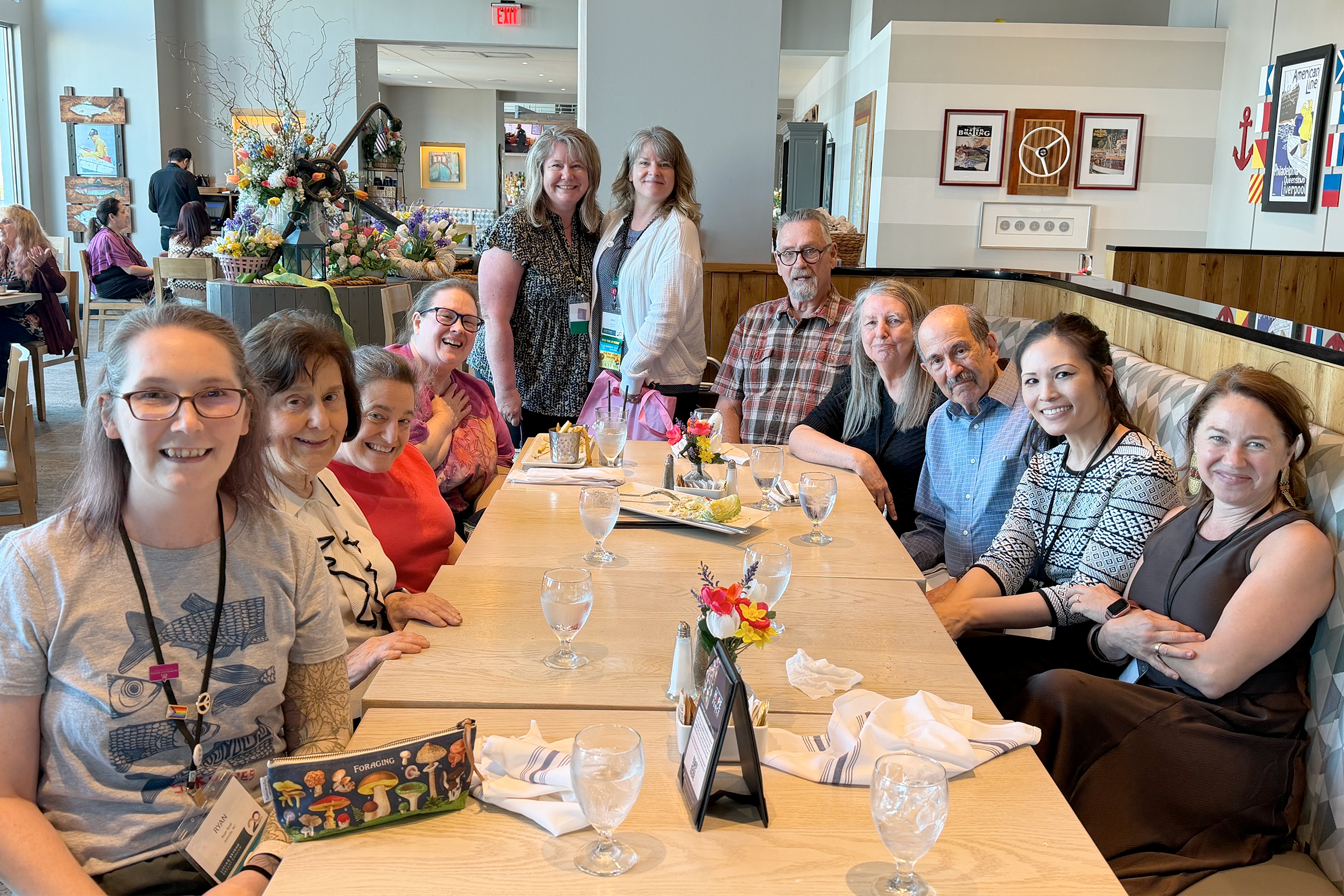
Jamie DePolo: At the Living Beyond Breast Cancer Metastatic Conference in April 2026, I had the honor of talking to several people who participate in the Breastcancer.org metastatic virtual support groups. They shared what they would tell someone who’s just been diagnosed with metastatic breast cancer.
Amy Grosch: My name is Amy Grosch. I have metastatic breast cancer. I’m from Montana. What’s an important message that I have for the newly-diagnosed person with breast cancer is that you still have a future. You still can dream about your future. It's not lost, and take time for yourself. Take care of yourself. Learn how to advocate for yourself, and then, please dream a big dream for yourself.
Allison Ko: Hi, my name is Allison Ko, and I go to the Wednesday metastatic support group with Breastcancer.org. This year, I also am part of the Hear My Voice advocacy training program with Living Beyond Breast Cancer, and I got the chance to come in person to this conference, and it has been life changing. This is my first time attending in person. I only attended virtually in the past, and the first conference I went to, Dr. Virginia Borges said that her very first patient was a metastatic patient, and she’s still alive today, 20 years later. And also, that the longer somebody with metastatic disease lives, the less the statistics apply.
This conference gives me so much hope and inspiration. Today, at the keynote speech, they had people stand up, like, according to how long you’ve been living with metastatic breast cancer, and there was one person that was living for 30 years, and to hear that was just so amazing. My advice would be to find your support systems, and find a support group, a metastatic support group, such as Breastcancer.org.
Mary Gallagher: Hi, I’m Mary Gallagher, and I am part of the support group for Monday afternoon around 2, and then the Wednesday group at 4 with Melissa. And we have a great support group in both of those, communities I call them, because there are so many ways that I have been able to kind of cope with the reality of what my diagnosis is, which is metastatic breast cancer that is ER-positive, PR-negative, and HER2-positive.
I just remember when my doctor said you have very advanced disease, I remember thinking I did not want to be a burden on anyone in my family or in my life. And I was really concerned about how my life could go on. I kind of envisioned a life of pain and then death. And I didn't experience any kind of hope from that point, but in the roller coaster of dealing with this, my doctor reassured me and said, although you have advanced disease, we have treatments for this. And my first question, of course, was, well, what if I don’t do anything? What if I don’t go through radiation or chemo?
I originally had to go through a surgery on my leg. So, that left me with some mobility issues, but I was able to manage that part of it pretty well, except I didn't know where I was going to go from there. And when they said chemo, then, gradually, I started realizing that the chemo was going to knock out what cancer was advanced in me, and that is what happened. Within three months of doing advanced chemo, I was able to then go on just Herceptin and Perjeta as a maintenance, with anastrozole as a pill to take every day, and it was manageable. And then my six-month scans, each time after that initial year, say, of treatment, allowed me to manage my life in a way that was just great, you know? Really good.
And after about six months of just going through all of the motions and understanding that my doctor knew what was best for me, and I was following things, I ran into, or I kept hearing about, support groups that were around. And that’s when I was introduced to the support groups that I’m now in. And it has just opened a world of joy to me, of love to me. Because these women that share each week and that I can share with are so life-giving. That even in the passing of many of the women I love in the group, I have them always in my heart.
So, with that, I just would encourage anyone who has a new diagnosis of metastatic breast cancer to really allow yourself the grief that you need to go through. Allow yourself the treatment that you need, and allow the love of other people that are in situations like yours to be your support.
Ryan: My name is Ryan, and I was diagnosed metastatic in September of 2022. I attend the Breastcancer.org Tuesday night support groups, and I think if there was something that I would've liked to hear whenever I was first diagnosed, it would be that you’re not in this alone, and there are people there to support you. Seek them out. They have information to share, and the other thing I that would say is that you’re not a statistic. Breast cancer is not one disease. There’s so much to learn, but there are people there to guide you through those learning processes and to give you good information, to support you in the decision-making process.
Kim: Hi, my name is Kim. I’m from St. Louis, and I just love LBBC and Breastcancer.org. And what I would say to a newly-diagnosed person is to reach out to groups like this. Go to their websites, because there’s a plethora of information, of support groups, of people that know things that you don’t know and who want to share with you. You don’t have to figure it out all by yourself. There’s a lot of hope. There’s a lot of resources. There’s tons of support, from patients, from the caring community, from the professionals. They're there to help, so don’t be afraid. Don’t be afraid.
Thank you for listening to The Breastcancer.org Podcast. Please subscribe on Apple Podcasts, Google Podcasts on Android, Spotify, or wherever you listen to podcasts. To share your thoughts about this or any episode, email us at podcast@breastcancer.org or leave feedback on the podcast episode landing page on our website. And remember, you can find out a lot more information about breast cancer at Breastcancer.org and you can connect with thousands of people affected by breast cancer by joining our online community.