Be Your Own Best Advocate
After three silver and two bronze medals at the previous four Olympic Games, Elana Meyers Taylor won her first gold medal at the 2026 Winter Olympics at age 41. She’s joining Breastcancer.org as an ambassador for the Ultimate Teammate campaign, helping people understand how to lower their breast cancer risk and take charge of their breast health.
Listen to the episode to hear Elana talk about:
- Sponsor Message
how her grandmother’s breast cancer diagnosis affected her and her family
- Sponsor Message
steps she takes to keep her risk as low as it can be
- Sponsor Message
why having a team and teammates around you is important and how her team helps her
Welcome to The Breastcancer.org Podcast, the podcast that brings you the latest information on breast cancer research, treatments, side effects, and survivorship issues through expert interviews, as well as personal stories from people affected by breast cancer. Here's your host, Breastcancer.org Senior Editor, Jamie DePolo.
Jamie DePolo: Hi, thanks for tuning in.
I’m honored to be joined by Elana Meyers Taylor, a highly decorated bobsledder and Breastcancer.org ambassador. After three silver and two bronze medals at the previous four Olympic Games, Elana won her first gold at the 2026 Winter Olympics at age 41. She’s also a four-time world champion, winning two gold medals each in the two-woman and mixed team events. This year Elana is joining Breastcancer.org as an ambassador for the Ultimate Teammate campaign, helping people understand how to lower their risk and take charge of their breast health.
Elana, welcome to the podcast.
Elana Meyers Taylor: Thanks for having me. Excited to be here.
Jamie DePolo: So, your dad was a professional football player and you’ve said that when you were at the Olympic Games in 1996, I think it was, you decided right then and there you wanted to be an Olympic athlete, doesn’t matter the sport. So I’m assuming you’ve always been really athletic?
Elana Meyers Taylor: Yes. So, we grew up right outside of Atlanta and being able to see the ’96 Games up close and personal was amazing. We didn’t get to go to much Games because you may or may not know, Olympic tickets are crazy expensive, so we didn’t get to go to many games or see many events, but I got to hold the Olympic torch. And being at that moment and seeing there and having that experience, I was like, “Oh, my gosh if I could find a way to make it here, I’m going to make it happen.” Of course, growing up outside of Georgia, like, in Georgia right outside Atlanta, I thought it would be a summer sport. I had no idea winter was on the radar, but you know things happen.
Jamie DePolo: Yeah. Now, to a more, a little bit more serious subject, your grandmother was diagnosed with breast cancer when she was very young and passed away before you were born. Can you tell us, how did that affect you growing up, and how does it affect you and your family now?
Elana Meyers Taylor: So, I think the biggest way it’s affected me is that my mom didn’t have that influence. Like, I think of my own parenthood journey and how many times I’ve gone to my mom for help and even the stupidest things, like what size diaper do I need? Do I need to size-up because of this blowout? Or do I need? All these little things you go to your mom for and especially at the post-partum period where you’re feeling so vulnerable when you don’t know anything. You feel like the most incompetent person in the world, like, you just want advice from your mom.
And so, my mom didn’t have that when I was a youngster. And my mom had, at one point, like three kids under 5, very close together in age, and all this kind of stuff like that. So, I think about those moments and not being able to have that influence.
And then for me personally, not being able to get to know my grandmother. Like, my mom and my family was really, really close, so we’d go to Christmas at my grandfather’s house and all that stuff, and there was always this heavy presence missing. And not being able to have that influence, you know, it’s hard not to think about what you missed because of, you know, her breast cancer diagnosis and eventually her passing away from it.
Jamie DePolo: Yeah. And I know you decided yourself to be really proactive about your breast health and your breast cancer risk and you’ve had genetic testing for mutations linked to breast cancer. Your profession depends on your body’s performance. Do you think you would’ve been as proactive about your health if you weren’t an athlete?
Elana Meyers Taylor: I definitely think I would’ve. My grandmother received her diagnosis so young. Even back at the time she received it, she was mid 30s and then passed away before she was my age. You know, I’m 41 years old and to think, you know, she was no longer with us at that age, I definitely think with the shockingness of that early diagnosis back then, I definitely think I still would’ve been proactive. I think being an athlete helps, being an athlete and knowing every twist and turn of my body, and knowing how it’s supposed to feel and knowing when it’s off, like, I definitely think I might be a little bit more proactive, but I would’ve been proactive because of that family history, regardless.
Jamie DePolo: Yeah. Now, can I ask you to talk about your decision to have genetic testing and how you overcame any anxiety or fears you had about it? Because I know for a lot of people that’s a really fraught decision.
Elana Meyers Taylor: Well, I think for me, I felt more comfortable having the information. I felt like I could take charge of my health if I had the information. That gave me a sense of security, whether or not it was false, it gave me a sense of security, that, hey, if we have this information then we can take steps for prevention. I’m always going to take certain steps for prevention, you know, getting enough sleep, hydration, exercise, all these different things that we know help, but can’t completely prevent breast cancer. But if there’s other things we can do, whether it’s looking at, you know, different treatment options or different types of prevention options then I wanted that opportunity, especially knowing that her diagnosis came so early in life.
Jamie DePolo: Okay. And you’ve had multiple concussions, and a concussion isn’t cancer, but both are pretty scary and life-altering. Did you have fear or anxiety after that? And how did you overcome that?
Elana Meyers Taylor: Oh, without a doubt, I think the hardest thing about concussions, and actually cancer in general, it’s invisible, nobody else can see what’s going on. Maybe when you get in the later rounds of treatment in chemotherapy or something, yes, there’s visual signs and symptoms, but for the most part, early stages of diagnosis and things like that, there’s no visible sign that anything is wrong. So, you have to keep going and living your life and everybody else around you is living their life like everything’s normal, but inside of you something is wrong.
And it’s like fire alarms are going off in your own head, whether it’s concussion or whether it’s any type of diagnosis that nobody can see, and these fire alarms are reminding you, hey, things are not okay, things are wrong, something’s wrong. And there’s also not much you can do about it. Like, yes, there’s different treatments with a concussion you can do at the time, but at the same time you have to go through the process. You’re not just going to wake up one morning and all of a sudden everything’s going to be gone and everything’s going to be healed, you have to go through the process. You have to walk through the steps. You have to go to the doctor’s appointments, consult with everybody, and do everything possible in order to have a positive outcome.
So, in a lot of ways it’s not the same, but the process is very similar, and there’s always going to be fear because you don’t know what’s going to happen. With a concussion, yes, it’s not life-threatening or anything like that, but at the end of the day, like, you don’t know, in my case, if I’ll be able to return to sport and that’s my livelihood. You don’t know what it’s going to look like down the road, further outcomes, you know, how it’s going to affect the rest of your life. So, all those things are scary, but fortunately when I feel those feelings and I have those things going on, I just reach out to people I love, or reach out to people who support me, reach out to people who are with me throughout this journey and throughout this diagnosis, to help me along the way. And that’s really where I find my support and encouragement.
Jamie DePolo: That’s great. Was it difficult? Because you talked about how cancer is on the inside, concussion is on the inside, the outside of you looks fine. And sometimes people don’t really know what’s going on and they don’t cut you any slack. Was that hard for you at all?
Elana Meyers Taylor: Oh, without a doubt, especially with some of my concussion symptoms, like sensitivity to noise and sensitivity to light. And one of the things, too, is during my time, early my first couple of concussions with bobsled, and I’ve had a couple, unfortunately. My first couple of concussions with bobsled I was still working at the time and because of the nature of the sport we’re on the road six months out of the year and most of it was remote. And with my sensitivity to light, that those different things, I had a really hard time sitting at a computer. And I talked to my boss about that and explained that and said, “Hey, like I’m really having a hard time doing eight hour days at a computer.” And they were like, well, just get a blue light blocker. And I said, oh, gosh.
Jamie DePolo: I don’t think that’s going to help.
Elana Meyers Taylor: Yeah, I don’t know that that’s the issue. But so, you have those different things going on and you’re still trying to live a normal life, but you know even the people around you, like, you’re trying to make things seem as normal, but you can’t, you literally can’t. And so, it is very challenging and it is very challenging that people don’t understand that it’s not like, it’s not like you can just pop a blue light blocker on. There’s not just these simple solutions and if there were simple solutions, I’m sure everybody would take them, like, nobody’s out here wanting to struggle.
So, if there were simple things you could do for any diagnosis, people would do them, but there’s not. And I think people always think there are, there’s a quick fix for it, and there are just simply not for some of these things. So, you just have to go through the process, but understand that it is going to be hard because people won’t understand. But until you’ve gone through it, it’s really hard to understand the ins and outs of what it’s actually like.
Jamie DePolo: Yeah, definitely. You are passionate about breast cancer prevention, and you talked a little bit about this earlier, so what are some of the things you do in your life to keep your risk as low as you can be and keep yourself as healthy as you can be?
Elana Meyers Taylor: Exercise has got to be number one, even if I wasn’t an athlete. I still enjoy running. I used to run a lot. In bobsled we don’t get to go on runs or anything like that. Like, we run 30 meters and that’s about it, maybe a little bit longer, 60 or something like that, but I used to really enjoy going on long runs and things like that. So, and that’s the thing is, like, early stages of my life, before my parents let me sign up for organized sport, they really instilled in me the importance of exercise, they really instilled in me the importance of fitness.
And my mom was a pre-Title IX baby, so she didn’t really have all the sporting opportunities, so for her it was really important to move. And for her, whether that now looks like gardening or whether that now looks like, you know, playing tennis in the yards, or what’s the other one that everyone loves now?
Jamie DePolo: Oh, pickleball.
Elana Meyers Taylor: Pickleball. Or playing those other things, you know, exercise looks different for everybody, so movement is super important. The other one I think that goes hand in hand with being an athlete is nutrition, but it goes hand in hand with being a living person because you can’t avoid nutrition, everybody has to eat every single day. And so, for me, I try to just focus on making sure I’m getting the things that we know help reduce cancer risk, whether it’s leafy green vegetables, lean clean proteins, those types of things.
Limiting my sugars is very hard for me because I have the sweetest tooth ever. I would probably just eat chocolate all day, if somebody would let me, but it’s not. I mean, dark chocolate actually has antioxidant properties, so that’s good, but those types of things. And also, like, having a robust social life, surrounding yourself with others. Like, we’ve seen a lot more research now about how important it is to have social interaction, how important it is to have people around us who love us, those types of things. Other things, hydration, getting enough sleep, reducing stress, we know those reduce your risk as well.
Jamie DePolo: I want to ask you one thing about motivation. You’re a professional athlete so I’m assuming it’s pretty easy for you to motivate yourself to exercise. Others of us may have a little bit harder time. So, do you have any tips on how to motivate yourself to start moving, especially, say, if somebody hasn’t exercised in about 10 or 20 years? I mean, do you have any tips?
Elana Meyers Taylor: Yeah. So, I think everybody has this conception that athletes are just highly motivated to do all these different tasks. I’m highly motivated to drive a bobsled. I’m highly motivated to compete in my sport. Am I highly motivated every day to go in the weight room? No, because that’s really, really hard and usually I don’t want to do it. But I do it because I have a greater goal and all these greater things. And so, we, as athletes, actually have to work on our motivation every single day the same as everybody else. We have to find different things that motivate us, I mean, looking at winning an Olympic gold medal, it’s such a lofty goal. It’s four years off and if you just try to focus on that every single day, it’s really hard to find the motivation. Like, oh, I’m tired, I’m sore, I want to get out of bed, oh, that gold medal. It’s not enough to sustain you, so we work on motivation and finding little things to sustain us.
It’s like, hey, maybe today it’s going to be that super awesome playlist that I put together for this workout. Or maybe today my motivation is just to have the best workout I possibly can and it’s not going to be a PR maximum kind of day. Maybe my motivation today is just to do one more rep than I did yesterday. And so, I find smaller motivational chunks in order to get me through the harder times.
And then for everybody just starting out, that’s the same recommendation I would make, is just start small. It’s like the saying goes how do you eat an elephant? One bite at a time. You just have to start small. You can’t set as lofty goals. It’s like, hey, I haven’t been working out for 10 to 20 years, but let me go run a marathon. That’s not how it works. You start small whether it’s walking around the neighborhood or doing a yoga class for 30 minutes on YouTube. It’s these small little chunks. Or, I’d even tell people it’s like start by adding another staircase into your day. It’s like we are mostly around buildings that have stairs and if you do, or if you live in a house that has, or apartment complex or whatnot that has two floors, it’s take the stairs one time during the day. Adding those little things that can add up and make a big difference.
Jamie DePolo: Yeah, that’s great. Thank you for that. And then finally, as an athlete you have a team around you, can you talk about how you built your team and why having a team is important?
Elana Meyers Taylor: Oh, my gosh, yes. So, as an athlete you, especially with the U.S. Olympic and Paralympic Committee, you inherently have these certain people that USA Bobsled and Skeleton assign to you. So, whether it’s a driving coach or whether it’s different strength and conditioning people or sports medicine people. So you’re inherently assigned these types of people. However, what I realized, they might not be the best people for you. Everybody on the team — we’ve got a team of 30 athletes on the World Cup circuit — are assigned the same people, but that doesn’t necessarily mean they’re the people for you.
So, in the same sense, whether or not we’re going hard things like a lot of us think, oh, our blood family is our only support system, but that might not necessarily be the best support system for you. So, it’s important to go out there and proactively find those people that can be your support system. And for me, that’s what I did for these past games, is I went out there and find the right people around me. Like, I hired a separate physio, I hired a different strength and conditioning coach, I had a nanny who really bought into my program and bought into what I was trying to do and all these different types of things.
So, I made sure to cultivate an environment that really supported me, that believed in me, and that was going to be with me on this journey. And that I felt confident and I felt these people believed in me and could help me on this process. And also, they were able to pick me up on those low moments when I wasn’t motivated, when I thought we couldn’t do it anymore. Like they were the person behind me supporting me and believing in me and doing everything they could to make this dream happen. And so, in the same sense, it’s important that we go out, and people have asked me, well, I’m in this isolated town and all these types of things, and how do you do it?
And I think, for me, what’s been instrumental is using the tools that we have, like, everybody has social media. And no, I’m not saying, you know, you get behind your screen and do this whole bunch of stuff, it’s, you know, tweeting and doing whatever. What I am saying, though, is social media is a great tool for finding different events in your community, for finding different opportunities, for finding book clubs, or coffee meetups or whatnot, or finding a different hobby that you’re interested in, gardening clubs or these different types of things. And those are where you’re going to meet your people, those are where you’re going to meet your people who have common interests. Or maybe it’s at the gym or maybe it’s a pickleball club or a dance class or something like that. It’s going out into the community and finding those people that’ll support you through thick and thin.
And yes, it’s hard. It’s hard to put yourself out there, and there’s going to be some people who you really want to get to know better and they’re not in that point of their lives where they’re accepting new friends or things like that, but it’s always worth it. It’s always worth it to put yourself out there because in the middle of putting yourself out there you will find the people that’ll be in your best circle.
Jamie DePolo: Yeah, that’s great advice. And it’s interesting, too, you talked a little bit about this, but it doesn’t always have to be your family. You can cultivate a team that is the best team for you.
Elana Meyers Taylor: Yeah, it is really important because, you know, you’re born into a family, that’s what you get. You know, I’m very fortunate that my family is very supportive, I love my family and things like that, but that’s not the case for everybody, and I recognize that, especially, you know, in my case my grandmother passed away and we have relatives. You know, you might have your mom or someone very close to you, or even your dad, who passed away from breast cancer and those types of things. So, you might, your family situation might not look the same, so you might not be able to have that same connection. And that’s okay, everybody’s family looks different. But like I said it is important to go out there and make connections, real life connections, whenever possible.
Jamie DePolo: Elana, thank you so much for joining us. I appreciate your time.
Elana Meyers Taylor: Thank you.
Thank you for listening to The Breastcancer.org Podcast. Please subscribe on Apple Podcasts, Google Podcasts on Android, Spotify, or wherever you listen to podcasts. To share your thoughts about this or any episode, email us at podcast@breastcancer.org or leave feedback on the podcast episode landing page on our website. And remember, you can find out a lot more information about breast cancer at Breastcancer.org and you can connect with thousands of people affected by breast cancer by joining our online community.
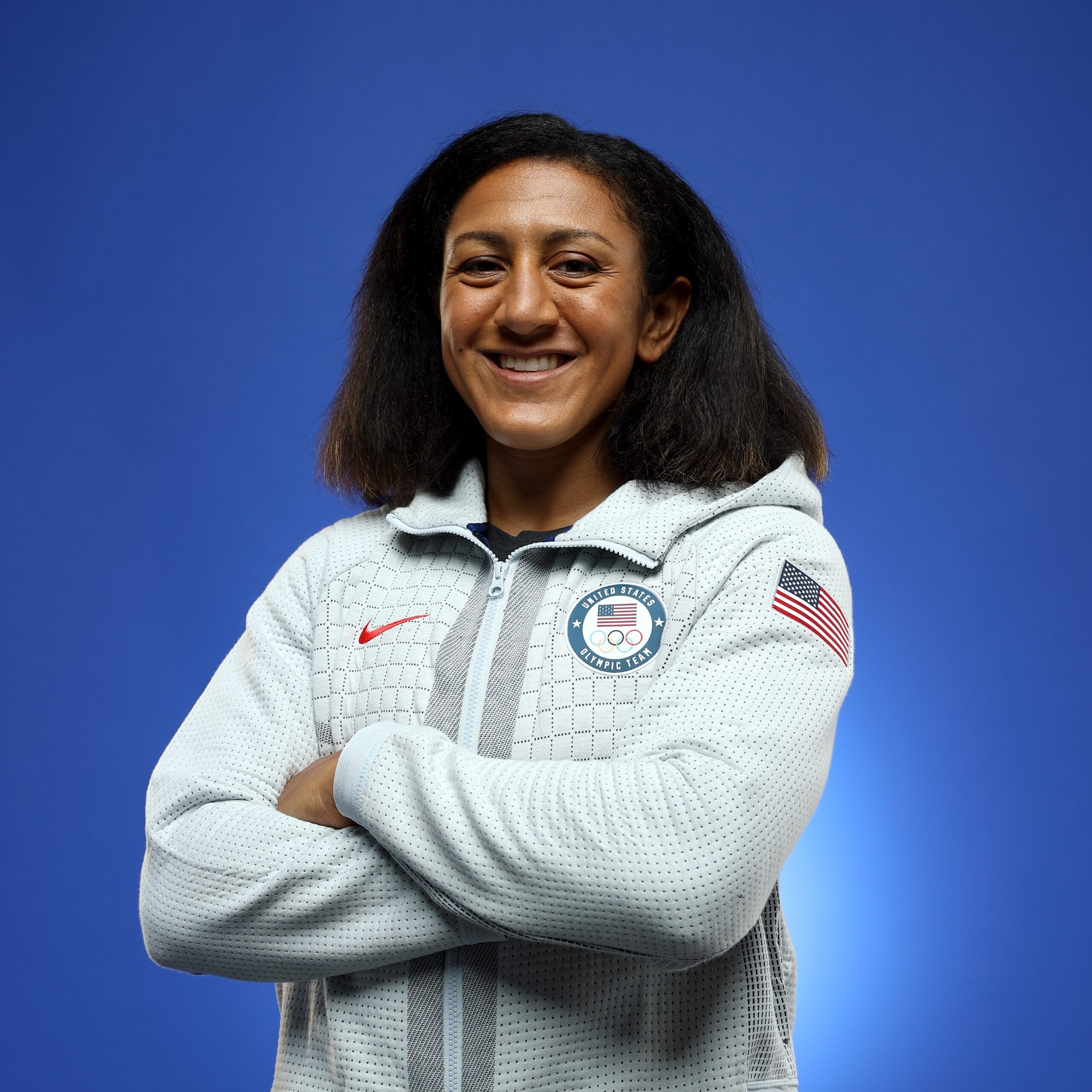
Growing up near Atlanta, Elana Meyers Taylor got to hold the Olympic torch as an 11-year-old at the 1996 Games. She decided then and there she wanted to be an Olympic athlete. In high school, Meyers Taylor excelled in multiple sports and attended George Washington University on a softball scholarship. In 2007, Meyers Taylor began her bobsled career, making the national team in her rookie season and starting her transformation into one of the all-time greats in the sport. She currently has more Olympic medals than any other woman in bobsled and is the most decorated Black athlete in Winter Olympic history.

This podcast episode is made possible by the generous support of Lilly.
Your donation goes directly to what you read, hear, and see on Breastcancer.org.