Making HRT Decisions With a History of Breast Cancer

At the 2025 San Antonio Breast Cancer Symposium (SABCS), Dr. Tara Sanft, associate professor of medicine at the Yale School of Medicine and director of the Yale Survivorship Clinic, moderated a session called “Balancing Act: Hormone Replacement Therapy in Breast Cancer Care.”
Listen to the episode to hear Dr. Sanft explain:
- Sponsor Message
the difference between systemic and local HRT
- Sponsor Message
why HRT decisions need to be nuanced and individualized for anyone with a history of breast cancer – there is no one-size-fits-all
- Sponsor Message
her advice to people with a history of breast cancer who are considering HRT
This podcast episode is made possible by Lilly.
Welcome to The Breastcancer.org Podcast, the podcast that brings you the latest information on breast cancer research, treatments, side effects, and survivorship issues through expert interviews, as well as personal stories from people affected by breast cancer. Here's your host, Breastcancer.org Senior Editor, Jamie DePolo.
Jamie DePolo: Hi. I'm Jamie DePolo, senior editor at Breastcancer.org. I'm podcasting live at the 2025 San Antonio Breast Cancer Symposium. I'm joined by Dr. Tara Sanft, associate professor of medicine at the Yale School of Medicine and director of the Yale Survivorship Clinic. At this conference, she moderated a session called Balancing Act: Hormone Replacement Therapy in Breast Cancer Care. She's going to share highlights from the session with us.
Dr. Sanft, thank you so much for joining us.
Tara Sanft: Thank you, so much, for having me.
Jamie DePolo: So, what I took away from this session is that hormone replacement therapy or menopausal hormone therapy, whichever is the most appropriate term to call it, is very complicated, very nuanced, and you basically have to consider each person individually. Is that sort of correct?
Tara Sanft: You got it. In survivorship, we'd say one size does not fit all, and I think that equally applies to menopause hormone therapy, as it relates to people at risk for breast cancer and breast cancer survivors.
Jamie DePolo: What I took away from this session, too, is that there is a difference between local vaginal estrogen therapy versus systemic therapy, which means like a pill or a patch that goes through your whole body. Would it be helpful to sort of talk about those two things?
Tara Sanft: Yes, and I think, a reminder that menopause doesn't just mean hot flashes. So, we really started off the session with a broad overview about what menopause means to everyone, including breast cancer survivors. It's a lot more than hot flashes, and there's a lot of health consequences, going through menopause. And there's natural menopause, and then there's induced menopause, which our cancer treatments often cause, and that can depend on which of those a woman might undergo. Her severity of symptoms could differ based on that.
A lot of patients have vaginal dryness with menopause. So, it's not just hot flashes. It can also be vaginal dryness, which can also cause painful sex and also genitourinary symptoms, like frequent UTIs or feeling like you have UTIs. And so, we really highlighted the safety and value of using local vaginal estrogen in the management of vaginal dryness that's causing symptoms, even in the setting of breast cancer treatment.
Jamie DePolo: And I just want to clarify, too, local estrogen, that's not really going to help with hot flashes or other, as they're called, vasomotor symptoms, night sweats. Or am I misunderstanding that? Because that's what I took away from it, but that could be incorrect.
Tara Sanft: No, you're right. Local vaginal estrogen is placed in the vaginal vault, and helps with the tissue right around it. There is very little systemic absorption, which is what leads us to know that it's safe in breast cancer survivors. So, if it's not systemically absorbed though, then you're not going to get the benefits of what systemic hormone therapy can do for, again, the general population, which is lower the vasomotor symptom burden. We have other treatments for that that we did discuss during our session that we can try in our breast cancer patients.
Jamie DePolo: And let me ask you this, this was a big topic in the session, the black box warning was just removed from systemic…well, actually, from all menopause hormone therapy. And I'm wondering, what does that mean for people with a history of breast cancer? It suggests, and people have asked me about it, oh, does that mean I can have that now, even though I have a history of breast cancer? And I always say, well, it depends, and that's where we kind of go down that whole complicated path of what type of breast cancer, what's your risk, what's your risk of recurrence, how old are you? So, if you could just talk a little bit about that.
Tara Sanft: We saw several slides that had a pendulum swing graphic, and we are almost going from nothing to everything, overnight, with the lifting of this warning. And so, I think our experts cautioned that this does not, again, fit all sizes, right? So, we are encouraged to think seriously about using menopause hormone therapy in certain populations. So maybe women who are at “high risk for breast cancer," really understanding what the addition of menopause hormone therapy does to that risk level and having a shared decision.
So, if you're at 30% risk and you're on menopause hormone therapy, it might increase that by 20% to 30% risk of breast cancer development in your lifetime. Is that acceptable to a patient with severe symptoms or not? That's one thing to look at.
In the breast cancer survivor population, we think about subtypes and what's hormonally driven?
So, I think if you have triple-negative breast cancer, we're understanding that after a certain amount of time with your risk going down, after three to five years, you know, could there be some role for menopause hormone therapy in specific instances?
And then, on that spectrum, if you are an ER- PR-positive breast cancer survivor and you're on anti-estrogen therapy, the addition of systemic menopause hormone therapy is really still not something we're comfortable endorsing. Although I think what was pointed out in our session was that women can get this online, and so, we really need to be educated on how to talk to our patients about this. Help understand what's driving them to these decisions, and then see if we can tailor an approach that is right for them and that might mitigate the risk as much as possible.
Jamie DePolo: And keeping with that population, somebody that has a history of either estrogen receptor- or progesterone receptor-positive disease, we do have fezolinetant, or Veozah, and then elinzanetant was just approved, and that was tested in people with a history of breast cancer. So, are you using either? Both? One of those with your patients a lot? And have you seen them be effective?
Tara Sanft: I will use it. I think we talk about this, too, like elinzanetant…I got to practice that one, was just approved, and so, I have my eyes out for patients who might be eligible for this medication. You know, it's not without side effects, and I think what we didn't hear in this talk was that many of our patients are non-enthusiastic about any additional anything.
They kind of want to minimize their use of medications, and especially if it comes with side effects, because I don't know about you, but my patients say, well, if there's a side effect, I'm going to get it. So, I'm very open to it. I want to try it on the right patient, and then, I have to have a patient who is also interested in trying it. We're not sure the balance of…adding additional medications to mitigate side effects isn't always palatable to every patient, either.
Jamie DePolo: And then, I guess I'm curious, too, for the people you take care of that say I don't want another medicine, especially one that has side effects. But are they not viewing menopause hormone therapy as another medicine? Or because it's hormones, is it viewed as being more natural? But it does have side effects.
Tara Sanft: Yeah. Well, and let me be clear. I don't have patients that are taking menopausal hormone therapy, either, except for one, which inspired this entire session. At least one that was willing to tell me. And she bravely told me this a year ago. And I thought, like, there's something here, and women who are talking about menopausal hormone therapy, some of the providers, I think, do sell it as something more natural.
I'm not prescribing it, but I do think that there's some replacement, natural, or bio-identical language that gets very confusing. And there's a whole population of women that do not want anything extra. They want everything out of their body. Maybe they don't even want to take endocrine therapy, which, again, it's my job to try to work with them to stay on it as long as possible, all those things can be true.
Jamie DePolo: And then, one final question, we have the two medicines for hot flashes and night sweats. We have local vaginal estrogen for, you know, libido and pain with sex, things like that. But there are other things that come along with menopause, like UTIs, like, I don't know if either one of those help with that. I know, like, sometimes people have trouble just like wearing a pair of jeans, riding in a car for a long time. And I could be wrong, but it seems like sometimes the systemic therapy is the only thing that's going to help with all those. So, I can understand why people look to it. But you know, is there any work to come up with something that could maybe treat more than one thing?
Tara Sanft: The symptoms that you just described, I would posit that good local vaginal estrogen should help women wear their clothes. So, severe vaginal atrophy, I've seen it also causes UTIs or feelings of UTIs, even, and this should really help with that. And yes, adding on multiple things to target each individual symptom isn't ideal, either.
But what I will say, too, is that what I see in my social media feeds is that if you have a hair out of place that you don't like, give it some estrogen, and it's going to develop into luxurious locks. If you wake up in the night, it's because your estrogen is so low, and you obviously need estrogen.
Like, I worry a little bit about every sign of aging being a bad thing and that you must have to have estrogen, then. And so, I worry that we're going to see a huge push to get me on that as like an anti-aging solution, and our breast cancer survivors are not immune to that, either. They don't want to be aging prematurely. So, I do worry a little bit about overselling the benefits of a systemic therapy and that our survivors are going to be all-in on some of that because of how it's being sold.
Jamie DePolo: Right. And I know I said that was the last question, but I just…will ask you to summarize, like, it is very complicated, nuanced, individualized. And so, if somebody is having symptoms, is the best place to start…I know there was some discussion in there about do you start with your primary care doctor? Do you start with your oncologist? Do you start with your gynecologist? I guess what would you advise somebody to do if they are having these issues?
Tara Sanft: Well, I hope that you can feel comfortable bringing this up with your oncologist. As an oncologist, I will say that, and I hope that, after today's session, there are many more oncologists who are curious and open and wanting to discuss this. I don't know that we are yet in a driver's seat position on some of this, so I do think that OB/GYNs and primary care doctors, especially those who have an emphasis in women's health and/or are certified in menopause health, in conjunction with your oncologist, can give you the most informed medical decision.
There are a lot of information and influencers on social media. I think they add to the conversation, and I think we all need to be aware that influencers are not our friends and that there are often drivers underneath all of that that we do not see. And so, while it might give you something to think about, I am not sure you want to hang your hat on the advice that you're getting from an influencer, per se. So take it all into context. I hope you have providers that you trust and that you can have an open conversation with, and that person, whoever that is to you, in your life, is probably the place to start.
Jamie DePolo: Dr. Sanft, thank you so much. I appreciate your time.
Thank you for listening to The Breastcancer.org Podcast. Please subscribe on Apple Podcasts, Google Podcasts on Android, Spotify, or wherever you listen to podcasts. To share your thoughts about this or any episode, email us at podcast@breastcancer.org or leave feedback on the podcast episode landing page on our website. And remember, you can find out a lot more information about breast cancer at Breastcancer.org and you can connect with thousands of people affected by breast cancer by joining our online community.
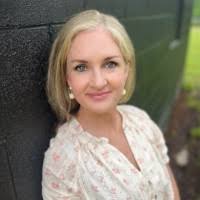
Tara Sanft, MD, is associate professor of medicine at the Yale School of Medicine and director of the Yale Survivorship Clinic. She is board-certified in both medical oncology and hospice and palliative medicine.

This podcast episode is made possible by Lilly.
Your donation goes directly to what you read, hear, and see on Breastcancer.org.