Final Results From Early Trials on a Vaccine to Prevent TNBC
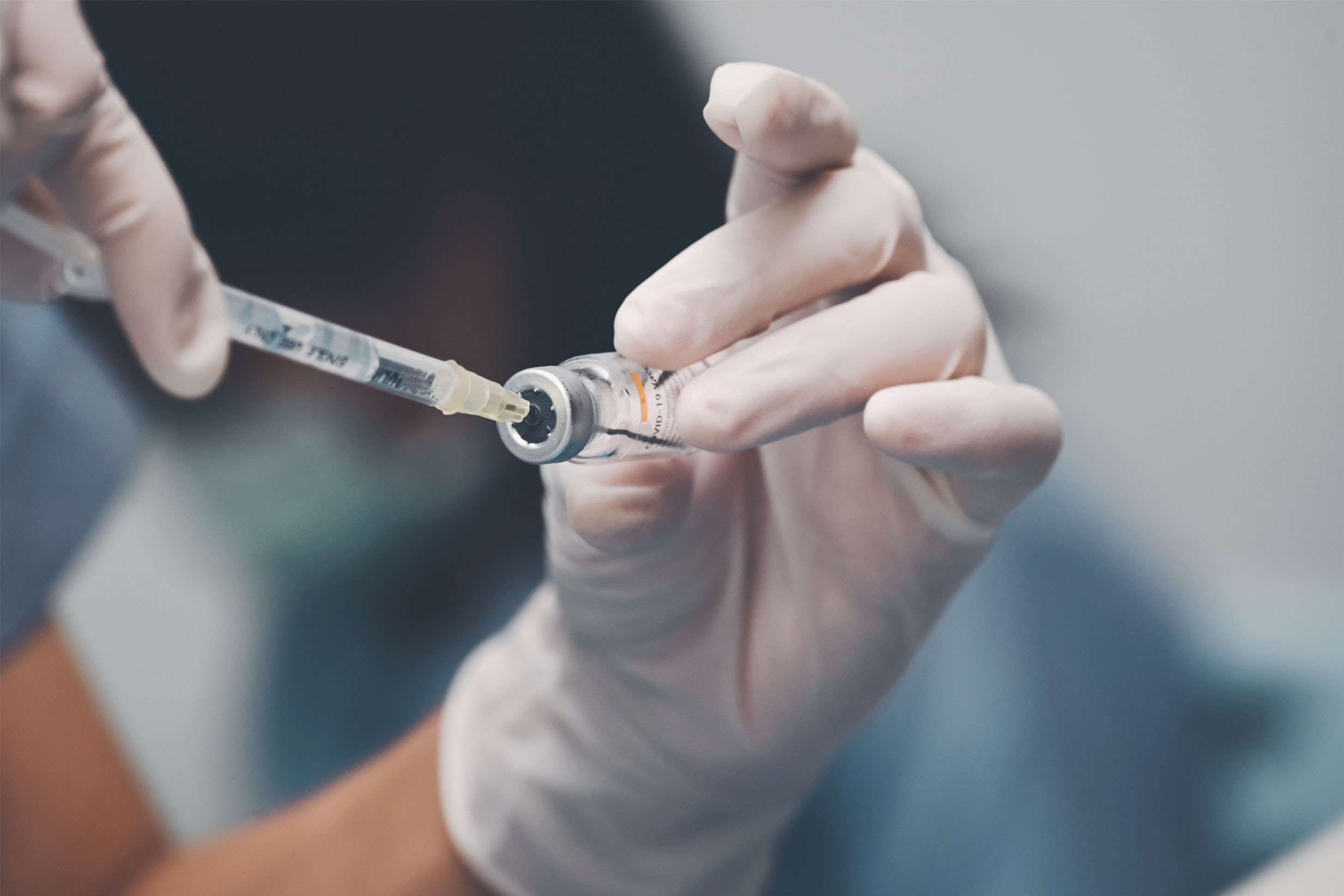
At the 2025 San Antonio Breast Cancer Symposium, Justin Johnson, PhD, presented a poster detailing the final results from three groups of people in a phase I trial on a vaccine to prevent triple-negative breast cancer.
Listen to the episode to hear Dr. Johnson explain:
- Sponsor Message
why the vaccine targets the alpha-lactalbumin protein
- Sponsor Message
the safety and dose results of the study
- Sponsor Message
what’s next for the research
This podcast episode is made possible by Lilly.
Welcome to The Breastcancer.org Podcast, the podcast that brings you the latest information on breast cancer research, treatments, side effects, and survivorship issues through expert interviews, as well as personal stories from people affected by breast cancer. Here’s your host, Breastcancer.org Senior Editor, Jamie DePolo.
Jamie DePolo: Hi, I'm Jamie DePolo, senior editor at Breastcancer.org. I'm podcasting live from the 2025 San Antonio Breast Cancer Symposium. I'm joined by Dr. Justin Johnson, an inflammation and immunity researcher at the Cleveland Clinic. I've talked to him at previous conferences about research on a vaccine to prevent triple-negative breast cancer. At this conference, he presented final results from the three phase I trials on the vaccine and I'm very excited to have him share the results. Dr. Johnson, thanks for talking to me.
Dr. Justin Johnson: Thank you for having me.
Jamie DePolo: So, the vaccine targets the alpha-lactalbumin — if I said that correctly — protein. Can you remind us what the protein does and why it was selected as the target?
Dr. Justin Johnson: Sure. So, alpha-lactalbumin is a normal milk protein that’s produced by the mammary gland during lactation and only during lactation. So, at other times in a woman’s life it shouldn’t be present and certainly not after she’s past the age of childbearing. We selected that protein because although it is a normal protein that’s expressed in the breast as I mentioned, we found that later in life this protein can re-emerge when tumors begin to develop, particularly triple-negative breast cancer, or TNBC. So, these tumors start to express alpha-lactalbumin while the normal tissues do not. And that makes them different and that makes them targetable by creating a vaccine that homes in on alpha-lactalbumin.
Jamie DePolo: Okay. Thank you. And I'm wondering too, are there certain groups that are at higher risk for triple-negative breast cancer that might be more likely to produce this protein?
Dr. Justin Johnson: Yeah. That’s a great question. So, as I mentioned, we’re specifically trying to target and prevent TNBC and women that have certain genetic mutations that…you’ve probably heard of BRCA1 and 2, and PALB2, have a much greater risk of developing TNBC. So, we would absolutely want to recommend that these women consider getting vaccinated, if this vaccine gets through the phase II and phase III trials.
Jamie DePolo: Okay. We’ll get to those in a second. So, phase I trials, just so everyone knows, they’re small, usually very small, and they look at the safety and which dose is best. Am I understanding that correctly?
Dr. Justin Johnson: Yeah. That’s absolutely right. We had 35 women in this trial, it was actually more than we had anticipated, which was great. And they broke down into three different cohorts, and we called these phase IA, phase IB, and phase IC, but really, they were running concurrently. So, this is all part of phase I. But we started with phase IA and that was women that had had triple-negative breast cancer. They went through their initial therapy and were treated, but they had a high risk of recurrence. So, essentially, we wanted to prevent recurrence in this group if we could. There were 26 women in that group.
And then, after we started the trial, the standard of care changed. So, the women that initially came into the trial were not receiving pembrolizumab, also known as Keytruda, which is now the standard of care, and that happened during the few years that we had the trial ongoing. So, we had to create phase IC. I'm skipping Phase IB for now because this makes more sense. So, they were the same patient cohort as phase IA, but they got Keytruda and they were still getting Keytruda when they came into the trial.
Keytruda is a very potent immune modulator, and so we needed to know how that would interact with the vaccine, because it’s an immunotherapy.
And then, phase IB, were women…and this is a true prevention cohort. These were women who never had breast cancer, but they did have those genetic risk factors that I mentioned earlier that put them at very high risk for getting breast cancer and specifically TNBC. So, they had already made the painful decision of coming to the Cleveland Clinic and getting a risk-reducing mastectomy because, unfortunately, there’s little else you can do. We hope our vaccine will provide an alternative for that in the future.
But they came in, they had already signed up for a mastectomy. That wasn’t a requirement for the trial, but when they did so, their doctors would suggest for them to come into our trial. So, they would get vaccinated first, then they would have the mastectomy, and then we would get that tissue and be able to tell if the vaccine was having any negative effects on that tissue. So, that was another bonus for us. But for these women, hopefully maybe, if this vaccine proves to be effective against cancer, could give them additional protection because as you probably know a risk-reducing mastectomy, it’s risk reducing. It doesn’t mean that your risk is zero. So, hopefully this gets them closer to zero. We’ll see.
Jamie DePolo: No, and it would be an option for, as you said, people with genetic mutations BRCA1, 2, PALB2, who maybe don’t want to have a mastectomy. So, very exciting. So, what were the results from each cohort? I know you were just kind of looking at, you know, which dose might be best and were there any reactions. So, what did you see?
Dr. Justin Johnson: Great question. So, first of all, we wanted to look at safety, and I’ll get to that next, but in a phase I we’re not officially looking at efficacy. You know, in order to do that you need a lot more patients. You need a placebo control and all of that. And we are following these women for up to five years to look if they do have recurrences or not. So, we’ll get some information, but it won't be official.
So, the surrogate marker for that was, what was their immune response to the vaccine? Because an immune response to the vaccine doesn’t guarantee that the vaccine will prevent the tumors, but it’s a first and necessary step. If you don’t have the immune response, there’s little chance that it will work. So, we were able to take the patients’ blood and measure how their T-cells reacting to the vaccine specifically and if they were also producing antibodies in the blood, and all of these things would be a good indicator that the vaccine might work. And we had protocol defined criteria of what that would look like. I won't get too technical unless you want me to. I'm always happy to do that, but in short what we saw was greater than what we expected because about three-quarters of the women across all those 35 in the trial exhibited that specific immune response that we were looking for. And so, that really was exciting for us.
Jamie DePolo: Oh, that’s great. And now, was the level of response what you expected or is that what you were talking about when you said it was greater?
Dr. Justin Johnson: Well, I would say that the number of women that had a response that we would consider positive…and you know, these were very objective criteria, we didn’t just look and say, that looks like a positive.
And I should also mention that the person who really dreamed up and spearheaded was so determined to get phase I going and is unfortunately no longer with us, was my mentor, Dr. Vincent Tuohy. And I always want to mention him when we talk about this. But he was a very experienced immunologist and based on, you know, 35 years of work on cellular immunology, you know, he came up with these criteria of what a positive response would look like.
And it ended up being one in 30,000 cells that is making one of two inflammatory markers, Interferon gamma and/or IL-17 or Interluekin-17. And those were the criteria. And 74% of the women met those criteria. And to your earlier question, the response levels varied. So, if they were over that one in 30,000 mark that was positive, but some of them were way over. Some were closer to one in 30,000, some were somewhere in the middle. And of those two cytokines, you know, some responded to one or the other or both, and at different levels. But overall, you know, that’s very encouraging, you know. And we didn’t expect that many women to respond.
And then, as far as how it broke down for the cohorts was a little bit different. So, it looked like, we hypothesized that pembrolizumab, which essentially takes the brakes off the immune response, you know, the cancer exploits that, right? And cancer tries to keep the brakes on. It’s a very powerful immunomodulatory drug and we thought, well, this could increase the response. And it looks like in some of the women it may have. So, you know, we’ll see. That group only had five patients, so you can't draw a lot of conclusions. Our main phase IA cohort had 26 women and we had four women in the prevention cohort that came in for the risk-reducing mastectomies.
Jamie DePolo: And were the numbers in cohorts A and C, were there differences in, like, the percentages that responded or did you not track…I guess…and if you don’t know that’s fine. I guess, I'm just curious, like which group responded the most? Like you said, the people who got Keytruda, you know, there may have been a better response, but did say like 50% in group A respond versus 10% in group C? And I know the numbers are small so maybe that’s not an appropriate question, but I'm just curious.
Dr. Justin Johnson: Yeah, I'm mean, unfortunately, the numbers are too small, especially with the prevention cohort. There were only four women, and you know, you can't really draw a conclusion from that. But hopefully in phase II, which will hopefully recruit hundreds of women, we’ll be able to start making those kinds of conclusions.
Jamie DePolo: Well, that’s a perfect lead-in to my next question. So, these are promising results, very exciting. Where do we go from here? What would the phase II trials entail?
Dr. Justin Johnson: So, yeah, great question and that’s what we’re really excited to announce. So, first of all, like I said, we had this immune response that we were looking for, and we got and that was really encouraging.
The other thing that’s even more important is the safety. So, that’s the other really big thing you want to look for in a phase I. And that’s why you do it with a small number of patients, you know, because you haven’t established the safety. And what we found was very encouraging. So, there were no serious adverse events in any of the 35 women.
The only adverse events that we saw that appeared to be related to the vaccine were mild inflammation at the injection sites. And I should mention that in this trial, we gave women a series of three immunizations in different areas of their body, but under the skin. The vaccine is designed to remain under the skin for several weeks so that it can essentially get the immune system’s attention and that’s what we want. Unfortunately, what that also does is cause some irritation and inflammation at those sites. And that resolves with time on its own for most of the women, especially at the dose that we intend to take into phase II, and that would essentially consist of some itching and irritation and swelling. Some of the women that got the higher doses that we tested that we’re not going forward with, had it a little bit worse, where there was some breaking of the skin, ulceration of the skin, but nothing higher than a grade 3 on the CTCAE scale that the clinicians use, so nothing serious. And like I said, we’re not using those higher doses.
You know, all the women that came into the trial were extremely brave, I've got to say. And thank you to all of them because without their courage none of this would be possible. But you know, we weren’t a hundred percent certain what would happen until we actually started the trial. In our preclinical models we determined that it should be safe in women. We wouldn’t put them at undue risk. But some of the women, you know, we didn’t know what dose would be safe to give women versus in our preclinical models. So, at some of those higher doses some of the women had a little bit worse lesions, but they’ve all healed with time. And these women also had very good immune responses so hopefully they’ll get something out of it, too. So, that was phase I, establishing safety and making sure that we found a dose that worked that was safe and also gave us the immune response we wanted.
And it turned out to actually be the lowest dose that we gave and the first one we tried, which is dose level 1. Yeah, and so, that’s what we intend to take into phase II. We also started exploring a dose that was in between dose 1 and 2 that might even be more optimal, but in order to say it’s the maximum tolerated dose, or the optimal immunologic dose, you need to have at least six patients in our design, and by the end of the trial we only had five, but none of those women had any serious adverse events and so we think that may be a usable dose that we might explore in phase II.
Jamie DePolo: So, what is phase II? When does it start? It’s very exciting. I know for the phase ones, it was only at the Cleveland Clinic, so it was a little hard if someone was in say, Florida, and wanted to be part of the trial. That was difficult. But now phase II is going to be a little bit larger. Correct?
Dr. Justin Johnson: That is correct. Well, the interesting thing is yes, for phase I it was a one site Cleveland Clinic main campus, but they came from all over the country, yeah, yeah, and they had to make several visits. As I mentioned, there were three visits to get immunized. There were additional visits for screening and follow-up and nobody missed a single visit, which was amazing. No matter how far they came. So, again, so much gratitude to all these brave women. But as you mentioned, yeah, phase II. It’s going to be hundreds of women. It’s going to be multi-site. So, yeah, we’ll be able to give people more access to getting into the trial if they’re interested. The design of the trial is still being worked out so I can't really announce anything yet. And everybody wants to know when is it starting?
Jamie DePolo: I was going to say that.
Dr. Justin Johnson: Yeah. And I hate to over-promise because, you know, there’s so many things beyond our control. There’s a lot of preparation. There’s fundraising. There’s manufacture of the vaccine components that actually have to be made to a greater tolerance than in phase I. All of these are challenges and to be able to have the vaccine shipped out to all these different sites. So, there’s a lot of logistics and planning that still have to be done. But we hope that by the end of next year we will open. That’s just, you know, it’s a hope and it's our expectation, but I can't…don’t hold me to it. We’ll do our best.
Jamie DePolo: I won't hold you to it, but that’s very exciting and hopefully if we are both at San Antonio, SABCS 2026, we can be talking about that.
But I do have one final question. For the people on the three phase I cohorts, you mentioned you're going to follow them for five years and I'm assuming that part of that following is…are you going to track the immune response over time to see how that stays level, goes down, whatever?
Dr. Justin Johnson: That’s a great question. So, initially as we had imagined it, it would just be follow-ups over the phone. So, every six months the patient would be contacted, how are you doing, what’s your quality of life, have you had a recurrence, things like that.
But I should mention that the clinic now has a partnership with Anixa Biosciences and they are the ones that are going to be leading the charge for phase II and raising the funds. So, many thanks go out to them as well because for a small research lab to come up with $40 or $50 million to do a phase II is impossible, but I think Anixa can do it. I know they can do it and they’re working very hard on it.
They’ve also, in addition to that, invested in a grant back to our laboratory to do additional development work for other vaccines, for other types of breast cancer, for ovarian cancer, lung cancer, prostate cancer, colon cancer. And they’re funding a project that ties into phase I where we are going to do exactly what you asked. Where we’re going to follow these women immunologically because some of the questions we don’t know yet is how long does this immune response last, you know? Does it give you five years, 10 years of protection? Or do we need booster shots like you do with some traditional vaccines.
Jamie DePolo: Like the flu.
Dr. Justin Johnson: Exactly. So, we hope to get this study approved very soon and it will bring as many as these phase I patients back in, draw their blood, and see how are they doing, you know, a year out or two years out. Some of these women are more than three years out from having the vaccine. We want to know what that response looks like. We also want to know, you know, what part of alpha-lactalbumin are they responding to, because we immunized with the whole protein and it’s very challenging to make a whole protein like that that you can, you know, administer clinically.
So, most people do it…you probably heard of peptide-based vaccines. That’s a logistically more easy way to do it. And if we can figure out which peptides within alpha-lactalbumin are the ones that they’re specifically homing into, then, you know, we can just make a vaccine that may be a pool of peptides. And so, that will give us that information as well so we can improve the next generation of this vaccine.
Jamie DePolo: That’s really cool. Dr. Johnson, thank you so much. This is so exciting. We get so many questions about vaccines. It’s one topic that everyone is interested in, so I really appreciate you taking the time.
Dr. Justin Johnson: Well, thanks for having and as you mentioned I hope to see you here next year with a poster talking about phase II.
Thank you for listening to The Breastcancer.org Podcast. Please subscribe on Apple Podcasts, Google Podcasts on Android, Spotify, or wherever you listen to podcasts. To share your thoughts about this or any episode, email us at podcast@breastcancer.org or leave feedback on the podcast episode landing page on our website. And remember, you can find out a lot more information about breast cancer at Breastcancer.org and you can connect with thousands of people affected by breast cancer by joining our online community.
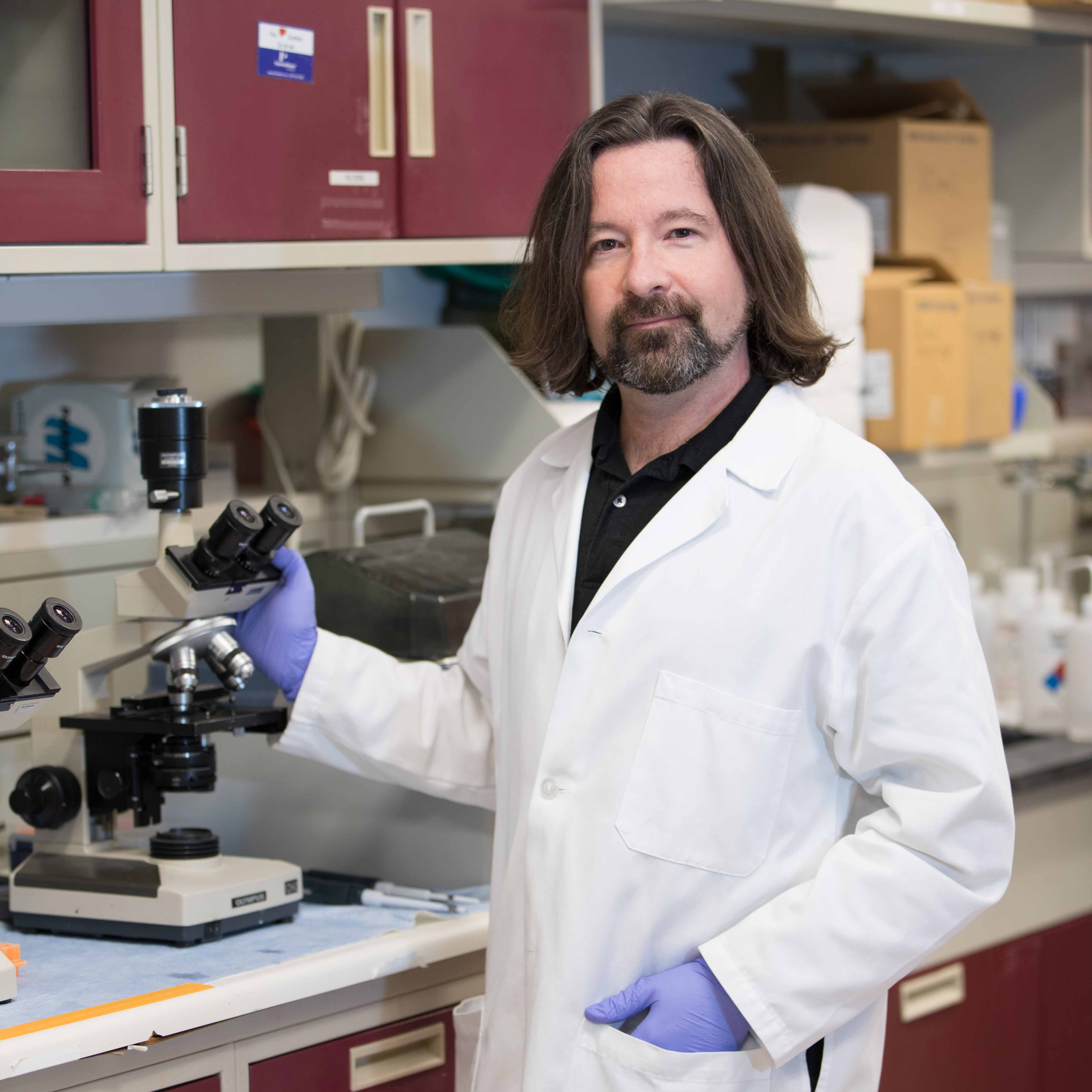
Justin Johnson, PhD, is a program manager in the Department of Inflammation and Immunity at the Cleveland Clinic.

This podcast episode is made possible by Lilly.
Your donation goes directly to what you read, hear, and see on Breastcancer.org.