It’s Breast Cancer, Now What?
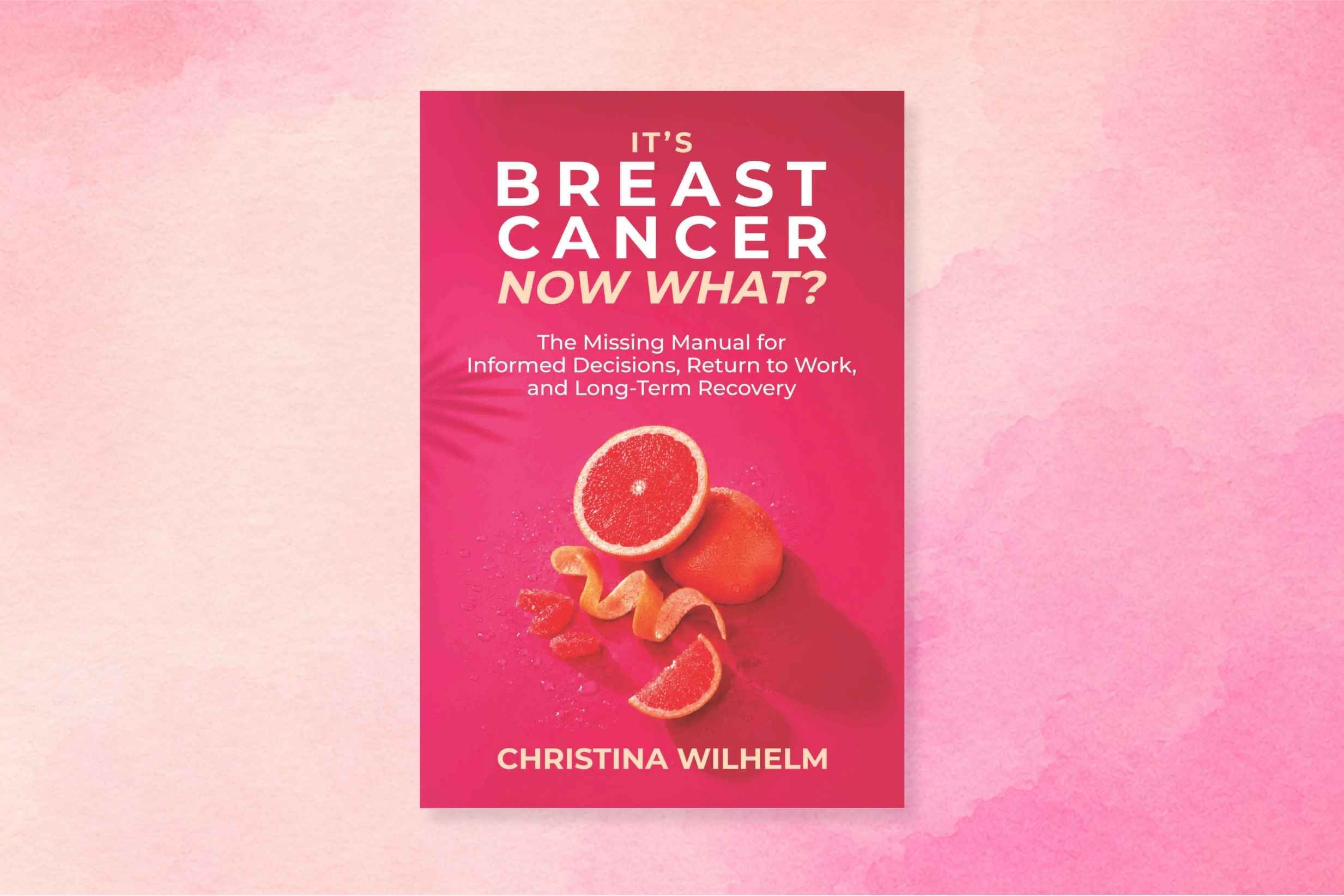
An advocate and communications expert with more than 20 years experience in international corporate marketing, Christina Wilhelm wrote It’s Breast Cancer, Now What? as a manual to help people navigate breast cancer treatment, return-to-work, and long-term follow-up care decisions.
Listen to the episode to hear Christina explain:
- Sponsor Message
what makes her book different from other breast cancer manuals
- Sponsor Message
how she maintained continuity of care while moving between several countries in Europe and the Middle East
- Sponsor Message
her journey from using only alternative therapies to transitioning to more traditional treatments
Welcome to The Breastcancer.org Podcast, the podcast that brings you the latest information on breast cancer research, treatments, side effects, and survivorship issues through expert interviews, as well as personal stories from people affected by breast cancer. Here's your host, Breastcancer.org Senior Editor, Jamie DePolo.
Jamie DePolo: Hello, thanks for listening.
Today, I’m joined by Christina Wilhelm, a breast cancer advocate and communications expert with more than 20 years’ experience in international corporate marketing and sales. She’s also the author of the forthcoming book, It's Breast Cancer, Now What? She’s going to share her experiences with breast cancer and talk about her book. Christina, welcome to the podcast.
Christina Wilhelm: Hi, Jamie. Thanks for having me on the show.
Jamie DePolo: Sure. I’m very happy to talk to you. Now, to start, before we get into the book, could you share your experiences with breast cancer?
Christina Wilhelm: Absolutely. So, I was diagnosed with breast cancer in October 2021, and it was stage I multifocal invasive cancer. So I had two different types of tumors in one breast, but my story really started two years before that. So in late 2019, I was still living in Dubai at the time, and then I discovered quite a big lump in my breast, but I didn't initially feel alarmed or that I had to act on it straight away because I felt it was just another benign cyst. I already had one from 10 years ago, and at the time, life was quite hectic, because I was just in the process of moving countries, moving back to Europe.
So, I kind of left it for a while, and then, when I was back in Europe, I had a doctor take an ultrasound, and he told me that it didn't look like cancer. And he was sort of vaguely suggesting that, as next steps, I could do a mammogram and a biopsy, and because the call for action was fairly vague, I kind of then started to search for thermography clinics instead. So, thermography is, basically, a technology that uses heat, based on the idea that cancer emits more heat, and you see inflammation and heat on the images, and you would take two separate images with a gap in between to see sort of what is a baseline and then if there’s any changes.
And this is something that’s extremely hyped in the alternative communities, and at the time, I had to learn the hard way that it’s actually not really a diagnosis. It can only give you an idea that something may need further investigation. So I kind of then ended up exactly where I started. I had to go and do a mammogram and further investigations, and then, for me, the shock was quite enormous, because I had dedicated, probably a decade prior to that, to healthy living and epigenetics, kind of optimizing every area of my life, and there’s a lot of cancer in my family. So, I really did feel like I could outsmart cancer and you know, support my own health this way, and then I got cancer anyway.
Jamie DePolo: I’m sorry to interrupt. I wanted to ask you, when you went for that mammogram, were you at an age where screening was recommended for you, or were you younger?
Christina Wilhelm: Yeah, I should've said that. So I was younger. I was 39 when I found the lump and then 41 when I was diagnosed. Yeah.
Jamie DePolo: Okay. Okay, and so, continue. So, the mammogram suggested that it was cancer, and then did you have to go for a biopsy?
Christina Wilhelm: Yeah, so, they did all of that in one go. And in the UK, where I was at the time, the way it works is you typically see a breast surgeon right away, and because they’re so experienced, they see it all the time. He basically gave me a diagnosis in the room, without even having the biopsy results. And I was very frustrated at the time, because I felt, okay, we don’t have the results. You’re kind of pre-framing that it’s cancer, and I was kind of pushing him to give me a number, and I think he said 95% that it was cancer. So he kind of really pre-framed that for me, and then I had to wait almost three weeks to get the actual results, but I was very, very calm when they came in, because I guess I kind of...even though I still had hope that it might not be, I think, at that point, I had internalized that it probably would have to do with a cancer diagnosis.
Jamie DePolo: Yeah, and we’re going to talk a little bit later on about your interest in alternative therapies, complementary medicine, but I know that your treatment decisions were…you put a lot of thought into them and really investigated what you wanted to do.
Christina Wilhelm: Yeah. So I think, for me personally, I came into those conversations with a different context, because I had done a lot of my own independent research 10 years prior to becoming a patient. So in that sense, I already had come across a lot of these topics and how treatment may or may not work and what questions I could ask, and so I’ll leave out the alternative part now, but in terms of the actual treatment, then I had a mastectomy with reconstruction, and, after, obviously, then followed the more important treatment decisions on adjuvant therapy, so chemotherapy, radiotherapy, and so on, and my particular case was considered high-risk.
So, the protocol that was proposed to me was to do chemo and also to do radiotherapy. But from my research, I knew that I had some concerns around that, because I knew that chemotherapy doesn't work for everybody equally. So for example, if you have 100 women and doing chemo, that some of them would already have been cured with the surgery alone, and then some of them end up doing chemo and have recurrence regardless. And some people actually truly benefit, and it’s really difficult to say who falls in what cluster. And so, that was one of my concerns. And then, also, I knew that cancer stem cells — the ones that are responsible for initiation and tumor growth — they can actually survive treatment. So they tend to be resistant to both chemotherapy and radiotherapy.
So those were some of my concerns and also what the treatment would do long-term to my immune system, and I was incredibly fortunate that I had a wonderful oncologist who really took his time to listen to all of my concerns and to really walk me through the numbers, because, in that case, what happens, typically, not everybody, but depending on your tumor profile, you would get something called a genomic assay that basically tells you the probability to have recurrence over the next 10 years, with or without chemo. And my specific numbers showed that I had an absolute benefit of 8% from chemo. Which means 81%, I was already considered cancer-free after the surgery, and then the 19% recurrence risk would be knocked down to 11. And so, for me personally, with all the concerns that I had and what I knew, it didn't make sense to opt for chemo.
My oncologist and I then, together, decided on a different alternative, on a personalized protocol for me, which was ovarian suppression plus aromatase inhibitors, and the same kind of applied to radiotherapy. I got a second opinion, because that was handled by a different doctor, and that doctor also said she was happy for me to decline, provided I do the ovarian suppression and start the alternative. So, that’s how I ended up, kind of deciding together with doctors, to follow a different approach. And I explore a lot of that in my book, because I’m a strong believer that, actually, it really comes down to the individual and the person’s circumstances, because we’re all really different.
We have different priorities, different circumstances, different risk tolerance. And the challenge, why these decisions are so difficult, is that we don’t have any guarantee, no matter how we decide. So that’s one of the biggest challenges, and then, for me, it kind of leaves...like, the only honest way to approach this is really to kind of take into account each individual and what’s most important to them in terms of the absolute treatment benefit and then kind of weigh that against the quality-of-life tradeoffs that they might be dealing with.
Jamie DePolo: Absolutely. Thank you for that.
Now, Breastcancer.org is based in the United States. You’ve lived all over Europe, the Middle East. Do you think being in Europe, the Middle East, did that affect anything about your diagnosis and treatment? I know, at one point in your book, you talk about… I think it was, you were you moving from Germany to somewhere else? I don't know. It sounded like you moved a lot. But just, like, the continuity of care, was that difficult? Because I’m assuming, when you moved countries, you had to see different doctors.
Christina Wilhelm: Yeah. So, actually, the moving between different systems really showed me that, even though somebody might have exactly the same diagnosis, it really depends where you’re being followed, because it has such a big impact on the kind of treatment that is available, but then, also, things like genetic testing, whether or not you could benefit from that, and the laws are all completely different. So there’s a huge question around the work-life support that somebody might have access to, where some countries are much weaker than others in terms of how employees are protected.
But then, for my situation personally, because I was living in England at the time and the criteria did not include someone like me for genetic testing, because there’s no breast cancer history in my family and so on, even though I was fairly young, I wasn’t offered genetic testing. And so, only after moving to Portugal, where the testing program is much broader, I was then, certainly, getting access to that, and then I found out that I actually was a BRCA2 [mutation] carrier.
Jamie DePolo: Oh wow.
Christina Wilhelm: So, that was quite a big one for me, because only the change in country actually enabled me to have that information and then follow a different surveillance approach or potentially, you know, further prophylactic surgeries.
So, that was a big one, but then, also, in terms of the treatment that is being offered, it could differ, you know, what access you have for clinical trials or things like immunotherapy. Where I lived in the UK, that was only available for triple-negative cancer subtype, for example. And in Germany, I also had to pay for the Fosamax treatments out of my own pocket, because it wasn’t covered. So, that’s a medication that is given to help with bone density loss. And so there were all these nuances, and depending on where you live, you can have a completely different surveillance program, different scans, different cadence of how these are done.
So that was really interesting, and it makes it, also of course, challenging when you do move and you have to move medical teams. And then, like I mentioned already, the workplace is probably one of the biggest areas, as well… because, for example, just as a side note, in the UK, cancer’s actually treated as a disability from the moment of diagnosis, and it gives you workplace protections for life. So it automatically entitles you to things like you could have a phased return or reduce your hours, take longer rests, hand over responsibilities, and that’s something that’s really strong on paper, for example.
However, it’s implemented poorly, because most employers still don’t know about the legal obligation, but that would be very different than, for example, living in Dubai, where employees have a lot less protection. So then it’s even more important, as the person having the experience, that you understand your legal protections or not and then become your own advocate. So, these are some of the biggest differences that I have observed.
Jamie DePolo: I’m wondering, how hard was it to compile all your medical records? I feel like every place you went might have a different system. I know in the States, we have electronic medical records, but there are a bunch of different software programs. So if your general practitioner has one program and say, the oncologist has another, how do you make sure they talk to each other? And I have to imagine the difficulty of that would be multiplied moving from country to country.
Christina Wilhelm: Yeah, so, the programs don’t always talk to each other, and sometimes, it was literally as basic as having a letter from my oncologist and showing it to the new oncologist to kind of confirm my diagnosis and what treatment approach I was currently on. And then you had to also...for example, if you were given six-month or biennially scans, then, suddenly, it’s only available once a year. You have to then decide whether or not you want to pay out of your own pocket to continue that cadence, or you just go with once a year, for instance. But for sure, there’s no way for them to check the history or anything, but because I was sort of on a different protocol than the standard protocol, that I think it felt like they were happier to just continue that and not ask too many questions, because they also weren’t the ones who had these conversations with me when that was decided.
Jamie DePolo: Got you. Now, your book is coming out in August, so why did you want to write this book? What was the rationale behind it?
Christina Wilhelm: So my reason to write this book is largely based on my own experience of having navigated both the alternative medicine world for a long time before I became a patient and then after I became a patient. And then also, conventional medicine and what I observed was that there’s a lot of gaps, currently, in how specifically the risk information is conveyed to patients and understanding the absolute benefit from treatment and so on.
And then specifically, through my advocacy work with breast cancer charities in the UK and also the workplace with a charity called Working with Cancer, I really realized, from that work and patient surveys that show that this is more of a systemic issue on a global scale, rather than just, you know, my individual experience, I felt really kind of passionate to close that gap. So my intent with the book is to provide that information that isn’t always proactively given. Sometimes it’s literally just down to having 15 minutes time to have that conversation and to really kind of help people, to ask their doctors better questions, and then I also included a lot of decision-making frameworks that they could use, because what was really important to me is I’m not trying to replace anything with something else.
It’s really to enable patients to have these conversations and understand the proposed treatment better, and then there is more option than they be presented with. So it’s always important that they have that conversation with their medical team and to make sure they really understand everything that they are being told, because we all are so overwhelmed in that moment, and everything may sound like a foreign language, and it’s really incredibly difficult, and like I said earlier, because whatever we choose, there’s no guarantee. You know, somebody could choose to follow all the treatment and have recurrence or somebody could decline it and live without recurrence forever. So it’s really complicated, and I think it’s exactly the honesty about, also, what treatments can and cannot do, to really understand some of these more difficult decisions.
Jamie DePolo: Sure. Now, there are other books similar to yours out there that have been written by both doctors and advocates. So, if you had to pick a couple things, what makes yours different? What sets it apart?
Christina Wilhelm: Yeah. I think, as you said, you typically have two types of books. One is written by surgeons, oncologists that kind of explain breast cancer and the clinical terminology around it in the system, and then you have more of a memoir type of book that’s written by patients, for example, about their personal experience. I think my book sits in a slightly different space, because I would describe it, it’s the honest guide ...it really tells people some of the limitations of the treatments, and then...because I’m somebody who actually navigated, also, the alternative medicine world, because typically there are gaps, kind of doctors criticizing it from the outside or people who are sort of really into it and selling miracle cures at times.
And so I think it’s the most honest perspective on each of the different worlds and how to integrate them, rather than choosing one side over another. And then, like I said, it’s more about teaching people the frameworks and what questions to ask so they can then identify what treatment plan makes most sense for them specifically, because everybody is different, and you know, I always use this example. If somebody, for example, has breast cancer in their family and their mother died of breast cancer, that would give you a completely different emotional calculus to make that decision than somebody who doesn't have breast cancer in their family.
So I think there’s a lot that goes into it, and then I also have quite a big section on recurrence prevention. So how you can help yourself with lifestyle factors, exercise, nervous system regulation, because I think that’s equally important, and to just understand what cancer really is and what it isn’t, because, again, we know from patient surveys, that there’s a lot of confusion, especially when women finish active treatment. They're kind of released back to their life, and then it’s really where a lot of us feel the lack of support.
Jamie DePolo: Sure. Yeah. Yeah. Now, we don’t have time to talk about everything in your book. It’s very extensive and thorough. So congratulations on that. But there were two sections that really stood out to me, and I’d like to focus on those, if that’s okay with you.
You have a chapter on the language of cancer, and this has always been an interest of mine as a writer. I’ve talked to a number of people who’ve been diagnosed, and they hate the battle and warrior language, and you talk about that. And they also hate the term survivor, and I personally hate the word patient, because it sounds like...I guess to, to me, it sounds like you’re weak and you’re not a person anymore. You’re a patient. So if you could just talk a little bit about, like, where did that chapter come from? What are your feelings about all the language of cancer?
Christina Wilhelm: Yeah, so, I actually have a background in communications, so I’ve been working in corporate communications for over 20 years. So my job is to help organizations communicate clearly and effectively and kind of get the right information to the right person at the right time. And so I have, also, a professional interest in this topic and not just from a patient’s perspective. I’m conscious of using the word patient now.
Jamie DePolo: Sorry about that.
Christina Wilhelm: So what I found is that there is a lot of challenges in these kind of war metaphors and the survivor narrative, as well. Because it kind of implies there is a clear endpoint to the cancer experience. So you kind of fight cancer. You battle. You beat it, and then you move on. So you become a survivor, and that kind of also leads to systems then abandoning patients or be it your workplace, who expects immediate return to normal and doesn't understand that, actually, you need ongoing support or you’re being discharged from healthcare providers, and then you still have ongoing challenges with the, for instance, hormone medication.
All your friends and family, they stop checking in because, you know, they think you’re good. You’re back to normal. Now that’s it. Yeah, case closed, and so, for me, that’s why that language is problematic. And also, it’s not very inclusive, because, obviously, we have those of us who are dealing with advanced cancers that has already spread to other organs, and it’s no longer considered curable by, you know, conventional medicine standards. And so, that kind of leaves them out of the conversation entirely. And then, to me personally, it creates a bit of a gap of cancer and what it really is. So it doesn't necessarily reflect cancer’s biology. So it’s not something that invades somebody’s body.
It’s your own internal cells going into chaos. Your immune system is compromised and can’t flush out damaged cells or repair DNA anymore. So that’s why cancer happens. And then, also, it hides the chronic nature of cancer, because...and this, unfortunately, is the challenging reality that we’re dealing with. There could always be microcells left behind from surgery or from adjuvant therapies, and they can lay dormant for years, sometimes decades, and reactivate, and we know that this happens to about 30% of breast cancer patients, and so, by using the language of a battle and something that we beat and then move on from, it kind of really disguises that.
And it leaves people blindsided very often, because they absolutely don’t expect that recurrence as a true possibility, but we know from surveys, for instance in the UK, that people are really in shock all over again when it happens, and then can lead them past it by not knowing what signs to look out for or when to call somebody for help. And so, there’s a lot of challenges around it, but for me specifically, also, I find that the survivor label is also...for a lot of people, it’s something really positive, because it is a terrible experience, and it takes a lot out of a person to go through cancer, and then it really feels like you’ve come out of something traumatic.
So, you kind of want to celebrate, and it absolutely deserves that celebration, but it does come with these problems that I mentioned. And we often see especially those terms used in social media campaigns and sort of slightly glamorized at times, where it doesn't so much tell the true story of what it really is like to live with cancer long-term. Because we know a lot of patients do struggle with ongoing medication symptoms, and you know, it’s a very fluid experience. So, I’m an absolute fan of using language that accurately reflects the cancer experience.
Jamie DePolo: Yeah. No, that makes sense, and another pet one of mine, while you were talking, I thought about it. A lot of times, doctors will talk about how a person failed on a treatment, and my thought always is, oh, no, no, no, no, no. That treatment failed the person. The person did nothing wrong. So there’s just a lot of language like that, so thank you for putting that in your book, because I feel like that needs to be talked about more and thought about more, and we don’t really have good language for cancer, I think, because nobody really wants to talk about it. So, thank you for that.
And then now we're going to talk about alternative medicine, because you have a chapter entitled The Appeal and Harm of Alternative Medicine, and you said you were a very staunch believer in alternative medicine, and I feel like, right now, so many people are looking for medical advice on social media and from chatbots, and anywhere but a doctor. And a lot of the people on social media, they...how do I want to say this? They’re championing unproven methods, or maybe they’re getting paid to do things. So could you talk about your journey from using only alternative treatments to kind of transitioning to more traditional therapies?
Christina Wilhelm: Absolutely. So I was a firm believer, as you said, and I really dedicated a lot of time to that. I visited alternative cancer clinics before I became sick. I watched so many documentaries. I went to seminars. I was really deeply into it. I was giving public lectures about it in the UAE. And so, I really believed in it, but then becoming a patient actually showed me that things are quite different from the other side. We already talked about the diagnosis and what thermography imaging can and cannot do, and so that, in my case, obviously delayed my diagnosis by a significant amount of time, which ended up being two years in which a lot of things can go wrong.
So I was extremely lucky that it was still only stage I and nothing had spread, but when I was diagnosed, I then felt almost like I owed it to myself to first try more alternative treatments. So I then got a sign-off from a doctor that, you know, I can go for a few months and try that, and I ended up throwing so many things at it for three months and spending an absolute fortune. I did so many things, be it, you know, hyperbaric oxygen chambers or high-dose vitamin C infusions, supplements, detoxification protocols, the whole lot, juicing, fasting. And after three months, actually, the ultrasound showed that despite all that, the tumors still kept growing.
And so it felt a bit more of an acute crisis then at that point, and I really felt that no matter how much more time or money I’m going to throw at this, it’s not going to make a difference. I’ll only be jeopardizing my life, so I had to literally hand myself over to conventional medicine to stabilize my condition. And I think, as you said before, there’s different circumstances where different things apply, I would say. Because, for example, if somebody is diagnosed with a stage IV terminal breast cancer, that’s a very different situation than somebody who still has a fully operable, curable, primary breast cancer diagnosis.
And that’s exactly, I think, where some of the harm exists, because somebody who was told by doctors that there’s nothing else that can be done for them, then it’s kind of natural that you might go to an interpretive clinic that can offer you experimental treatment that’s not available on public health insurance. So it’s sort of a different game at that point, but actually, we know from data, that somebody like me, who has a primary breast cancer diagnosis, the odds are actually stacked against you if you then start messing around with a lot of these alternative treatments, because the challenge is that, often, you end up just mixing things without any supervision.
You don’t know how each of these actually interact with each other, and there is no good long-term data available that really shows, across a huge population of patients, how different subtypes even respond to the same treatment. As you said, you know, even within the same subtypes, some patients, just their bodies respond differently. So, the challenge that I have with alternative medicine is that, more often than not, the message is always very out of context and oversimplified, and it kind of lacks that clinical context or that those kind of clinics or practitioners really follow their patients and have, like, long-term data. How is that person doing in six months from now? How is that doing in five years from now?
So we don’t really have a lot of data on that. And to me, now, it became even more complicated. Nowadays, it’s not just wellness influences. There’s so many different players. So even, like, a lot of doctors nowadays, they have their personal brand. They have their books and online media following, and so, they have a lot of credibility. So their work travels a long way, and some of the doctors are still sort of from the old paradigm. I describe it as where sort of there’s still the missing lifestyle factors, for example, for recurrence risk reduction.
So that makes it really difficult when we, as patients, that we’re working with charities, like, yourself, and we’re getting great advice on how, you know, we can eat better and exercise and things like that. And when we have patients themselves and friends, who are all really well-meaning, and they want to help, there is kind of this natural instinct, almost, that we want to help, you know, and share our experience, but often, it’s, unfortunately, out of context. If you’re reading a post or an article or something, you don’t ever get enough context to really apply that to your own individual situation. And the thing that really frustrates me...and it’s so complicated because a lot of the times, we meet friends, and then they say something with absolute conviction, like their aunt cured their breast cancer with apricot kernels, or you could replace it with, I don't know, ivermectin, or vitamin C infusions.
And you never have any information about what conventional treatment, if any, the patient did, as well, and how they’re doing today. How are they in two years? What exactly drove that response that made the tumors shrink? So it’s really out of context, and that makes it really difficult, and so, what I was doing with my book is, I think we don’t need more voices telling patients what to do. We need to teach people the tools to kind of differentiate all the noise and then evaluate each source critically for ourselves, because, as you said, there’s just too much information out there, and it’s overwhelming, and yeah.
Jamie DePolo: Yeah. Absolutely. Did you have any side effects from some of the treatments you tried? I’m curious about that because, a lot of times, on social media or wherever, these protocols are presented as almost, well, helpful, but nobody ever talks about side effects or risks or anything, and I’m just curious if you had any side effects from anything you tried?
Christina Wilhelm: Yeah. So, actually, I have quite a long section on that in my book, because, as you said, we end up reading things in books and putting them together ourselves, and there’s no doses, instructions, or any warnings attached to it. And so, what happened to me, several things. One of them was I was taking turmeric in such high amounts, that, actually, all my fingers and toes turned yellow. I became really concerned if it was jaundice or not. It’s like liver disease, basically. And it took several months to really get rid of the discoloration.
Then the other thing was I ended up at A&E from apricot kernels, and I had a mild form of cyanide poisoning, which, again, it can happen from eating too many apricot kernels. And usually, there’s no warning on the packages or in the books that talk about this. And everybody will react differently to it. If you eat five, it will be different if I eat five or double as much. And then I was using an infrared heating pad on my breast, as advised by one of the alternative cancer clinics, and what ended up happening is that I gave myself second-degree burns. So the skin was permanently damaged and couldn't use anymore doing reconstructive surgery, and there’s a number of other things I don’t remember now.
But it’s, basically, all of that is you can almost predict that some of that will happen because, more often than not, you end up doing it yourself. It’s not supervised, but even if you go to a clinic, you end up paying a lot of money, and it feels a bit more untargeted. But I think, more often than not, it’s kind of the same one-size-fits-all approach, even though every cancer’s different. Even within breast cancer, we have so many different subtypes that respond differently, and really, actually, it’s not as simple as just saying take high-dose vitamin C infusions, because the response will be different for everyone.
Jamie DePolo: Absolutely. Yeah. Well, that’s all very good to know.
And then, finally, if you just met someone who was recently diagnosed with breast cancer, what are the top three pieces of advice that you’d offer them? And I guess I’m basically asking you to summarize your book in three sentences.
Christina Wilhelm: So, my number one advice for anybody newly diagnosed or anybody facing a major medical decision is to always ask for your absolute benefit from the proposed treatment. The actual number, so not the percentage drop, but the actual number that will impact you, and then weigh that against your quality-of-life impact. And then, basically, everybody will have a different answer actually, again, we are all individuals with different priorities, life circumstances, and so on, and I think that is really important, because the understanding is that no matter what we do, there’s no guarantees.
So, I think the only honest basis to make this decision is really to then apply it to your specific situation, what it means for you specifically. So that you feel like you made an informed choice and you are comfortable with it, and of course, you can also change it along the line. You can make adjustments to medications.
My second advice is to really understand your work situation, depending where you live, to really know your legal rights, and then, early on, speak to your employer as early as possible and as early as it feels safe and comfortable for you to do so, to agree what reasonable adjustments are available for you, and know, also, that they will probably change over time.
And my third advice is that, find your community from day one. A lot of us, we go through hospital treatment phase, active treatment. We’re usually isolated. We don’t speak to a lot of other patients, and usually, then that happens much later on.
Say we’re back at home and we have questions about the treatment side effects, and then we may join online communities. But it’s so important and valuable to kind of surround yourself by people who get it, who know exactly what you’re dealing with, who understand why you’re still struggling two years later, and you don’t have to constantly explain that you’re still in treatment, still need support, and so on. And it always gives you that kind of confidence, but also feeling validated in your experience, feeling seen and heard and supported, and it’s one of the most important things on that cancer journey, to find your tribe, to find your community.
Jamie DePolo: That’s all very good advice. Christina, thank you so much for joining us today. I wish you much success with your book and wish you a lovely evening. Thank you.
Christina Wilhelm: Thanks for having me. Thank you.
Thank you for listening to The Breastcancer.org Podcast. Please subscribe on Apple Podcasts, Amazon Music, Spotify, or wherever you listen to podcasts. To share your thoughts about this or any episode, email us at podcast@breastcancer.org, or leave feedback on the podcast episode landing page on our website. And remember, you could find out a lot more information about breast cancer at Breastcancer.org, and you can connect with thousands of people affected by breast cancer by joining our online community.
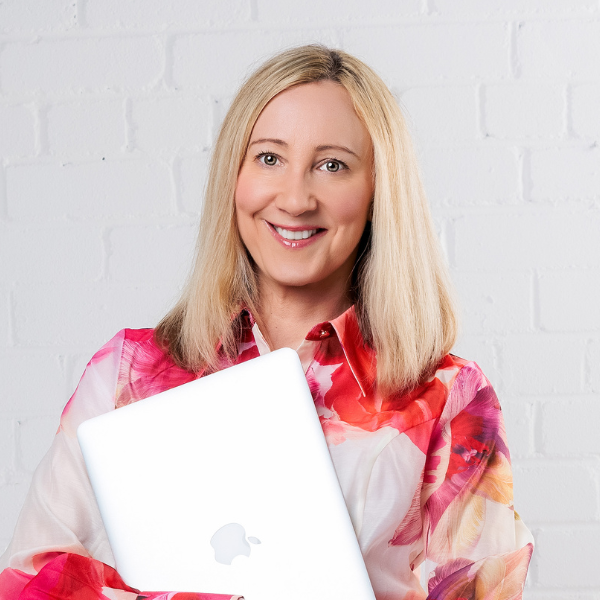
Christina Wilhelm is a BRCA2 mutation carrier and breast cancer advocate, with more than 20 years' experience in corporate communication across Europe, the Middle East and the United States. Having navigated cancer care across four countries, she brings a unique perspective on the gaps in patient information and support. Drawing on years of independent research, she worked with her doctors to develop a personalized treatment protocol grounded in shared decision-making. She is a member of Breast Cancer Now's Gamechanger Advisory Group and an ambassador for Working With Cancer. Her book, It's Breast Cancer: Now What?, is out now.
Your donation goes directly to what you read, hear, and see on Breastcancer.org.