“If There’s Anything Good That Can Come From My Experience, Why Not Do It?”
Julia Maués didn’t decide to become an advocate, but her passion for patients learning science and scientists learning patient experiences propelled her to talk about her experiences.
Listen to the episode to hear Julia explain:
- Sponsor Message
the breast changes that led to her diagnosis
- Sponsor Message
how she and her doctors decided on treatments
- Sponsor Message
why she and Christine Hodgdon founded GRASP Cancer
Welcome to The Breastcancer.org Podcast, the podcast that brings you the latest information on breast cancer research, treatments, side effects, and survivorship issues through expert interviews, as well as personal stories from people affected by breast cancer. Here's your host, Breastcancer.org Senior Science Reporter, Jamie DePolo.
Jamie DePolo: Hello, as always, thanks for tuning in. I’m honored to be joined by Julia Maués, the co-founder of GRASP Cancer. GRASP stands for Guiding Researchers and Advocates to Scientific Partnerships. Among other things, GRASP sponsors virtual poster walk-throughs for advocates at top oncology conferences.
Julia was diagnosed with breast cancer in 2013 at age 29 while pregnant. Following the birth of a healthy boy, she learned the cancer had spread to her brain, liver, and bones. Julia’s been living with metastatic breast cancer for more than 13 years, and has benefitted from treatment advances made possible by research, which has fueled her commitment to bringing the voices of people with breast cancer into clinical trials to ensure they’re inclusive and reflect real-world experiences. Julia, welcome to the podcast.
Julia Maués: Thank you so much for having me, Jamie. It’s nice to be here.
Jamie DePolo: So, if you’re comfortable, could you give us a few more details about your breast cancer experience? You were 29 when you were diagnosed, so too young to start regular screening. Did you have any family history? Did you find a lump? How was the cancer detected?
Julia Maués: Yeah, I did have a lump, and I was pregnant, so my breasts were changing due to the pregnancy, but my doctor, at the time, my OB, who I was seeing regularly because of the pregnancy, she took it seriously, and she said, “Well, this could be just changes from the pregnancy. Let’s wait until the next consult,” which was a short amount of time. And when it didn't change or maybe it grew, she said let’s do an ultrasound, and let’s look into it. And I remember talking with her admin and saying, oh, I could do, like, next Friday, and she said, oh, no, like, you need to go there now. And I left the OB appointment and got an ultrasound right away, and that led to a biopsy, and the next day, I had confirmation that the diagnosis was cancer.
Jamie DePolo: So, being pregnant limited some of the tests and treatments you could have. Could you talk a little bit about that? Like, you couldn't have a mammogram until after you gave birth. So how did you and your doctors proceed with that?
Julia Maués: Yeah. So, the first thing that it did is, it didn't allow me to have a mammogram. At the same time, I don’t think a mammogram is the best test for a young woman with dense breasts. So an ultrasound is often used in this population, even if someone is not pregnant, and yeah, so, an ultrasound is safe, and even an MRI can be done in some instances.
Obviously, the bigger problem was later in terms of treatment. Probably what I needed the most, because I have HER2-positive breast cancer, was Herceptin, and I couldn't take that. So there are some chemos that they know to be safe to pregnant people and the baby that they’re carrying, but it’s really toxic, and it’s old-school chemo. So it’s like, really, really mind-boggling to realize that these are the treatments that they’re going to give someone who wasn’t...I mean, I wasn’t drinking coffee until that moment because I was pregnant, right? And then the treatment is very toxic chemo.
Jamie DePolo: Yeah, that’s tough. How far along in your pregnancy were you when you were diagnosed?
Julia Maués: So, when I was diagnosed, I was about 25 weeks. So I was in the third trimester at that point, which is the “best” time to be diagnosed and the safest to give treatment. So I started a couple weeks later maybe. Received four cycles of Adriamycin and Cytoxan, and then finished that chemo while still pregnant. And then was able to give birth to a healthy baby at full term, but still needed to get going so that I could take the other treatments.
Jamie DePolo: Right. So you gave birth. Did they give you...what do I want to say? Sort of a window of time after you gave birth before they started, like, the Herceptin treatments and the other things that you couldn't have when you were pregnant?
Julia Maués: Yeah, so, that was a complicated time, because I finished the treatment while still pregnant. Then had my son, and when I was still in the hospital, I was brought down to radiology to do the scans that I couldn't do while pregnant. And at that point, we still thought that I had early-stage breast cancer and that I was going to, like, go on Herceptin for early-stage treatment. And those scans changed everything. My doctor told me...he gave me about a week, and he felt strongly that it was important for me not to know in the first days post-partum, and when I saw him to, like, see what the treatment was going to be like, he told me that the scans were really bad and that I had widespread metastatic disease.
Jamie DePolo: That’s tough dealing with all of that, all at the same time. Did you get some mental health support at that time?
Julia Maués: Yeah, I did. I mean, I had, like, therapy, and I was also put on antidepressants, and I had a lot of family support. I had someone helping at home. And yeah, no, it was...it feels like a blur. I don't remember that much. One of my biggest worries, when I realized my mortality and it didn't look like I was going to live very long, I was really afraid of my baby getting attached to me and losing me.
Jamie DePolo: Oh my god, that’s one of the saddest things anybody has ever told me. Did you get over that? I mean, how did you deal with that?
Julia Maués: I mean, I had a lot of help, and it was very important for me that he had many people in his life. I did not think that he was going to have a mom for a long time. Yes, those were really difficult times, and I mean, at the same time, while I was alive, I still wanted to be there, but it was a balance between, like, wanting to be there and giving him what he needed, but not doing it in a way where it was only going to make things more difficult. And I was working and then eventually left work, and then, like, our relationship, my son and I, like, was created over those first few years, and I kept living, right? So, I don't know if you want the spoiler now, but he’s a 13-year-old in the attic, and we’re dealing with screen time dynamics and all of the things you should be dealing with as a mom of a 13-year-old. So, yeah, it’s a cool story to share and to say that I’m doing well and that he's 13 and that I get to be here.
Jamie DePolo: Yeah, that’s amazing. That’s a good bow on top of the not-so-good story. Now, Herceptin can be damaging to the heart, and I know you had some heart problems. So, you’ve now found a regimen that’s good for you. If you’re comfortable, could you talk a little bit about that?
Julia Maués: Yes. I mean, it’s a lot of years, and it’s very complicated, but yes, I did have major cardiac injury, and Herceptin can do damage to the heart. Adriamycin, which I took while pregnant, can do damage to the heart, and the pregnancy itself can cause cardiac problems. So, we don’t know exactly what caused my cardiac problems. It could've been the mix of all three, but it was quite bad. I mean, my ejection fraction went down to the 20s. I was in-patient, and it kept decreasing. It was 10 when I was in the hospital, and I was taken off of all HER2 treatment.
In fact, of all treatment for a few weeks or months, and then eventually was put just on Taxol, which is not toxic to the heart, but is also not the drug you should give a HER2-positive breast cancer patient by itself. So it wasn’t as effective against the cancer. So I remember these days, thinking, like, I have this thing that’s going to kill me, and then my body doesn't let you give me the medicine that I need. It was really hard, but I was on Taxol for a long time, and it was really hard. The side effects were really hard. I lost all of my fingernails. I remember having a lot of pain in my hands, and one time, I told my doctors...and I had moved around a little bit, so I collected oncologists at that point.
I had them all trying to solve these difficult problems, and I told them I don’t want to do this anymore. This is not the life I want to live, and they said that they completely respect my view and that they will do what I want, but that there was this new drug that had just been approved, and obviously no patient with heart failure was on these trials, but there was some pre-clinical evidence that it was less toxic than Herceptin by itself. So that was T-DM1, Kadcyla, and they were willing to try it at lower doses and look at my heart function more regularly and see what I could take, and then got...that’s what I was on. We found a lower dose. My heart could handle it.
I had wonderful cardiology teams and a field of cardio-oncology, where the cardiologist actually specializes in seeing people with cancer and all the medications that can affect the heart in your cancer treatment and radiation and everything that patients go through. That specialty has made a huge difference in my life. And I’ve also been very lucky to be treated at comprehensive cancer centers with specialists that are all over, and they really focus on very specific problems, and they can address, really, the cutting edge of the field. So I was on T-DM1, Kadcyla, for over 10 years.
Jamie DePolo: Yeah, that’s a long time, but that’s great that it was effective.
Julia Maués: Yeah. Yeah.
Jamie DePolo: So moving a little bit forward, being an advocate isn’t really for everyone. I know some people are not comfortable being open about a cancer diagnosis, which is fine, but why did you decide to be open and talk about what had happened to you?
Julia Maués: So, it was not a...I didn't decide to become an advocate, and I also didn't really meet people with metastatic breast cancer for a while. I had a baby. My focus was on spending time at home. But one day, my doctor at the time who lived in St. Louis, my doctor at WashU, asked me to speak at a fundraiser for his lab, and I said sure. I mean, if there was anything positive that could come from my diagnosis, then I’d be happy to do it, and I think he raised a lot of money that day.
Just my story is so shocking with the pregnancy and everything. So I think a lot of people gave to his lab fundraiser. So that day, I realized, well, if there’s anything good that can come from my experience, then why not do it, right? And I had left my career. It also coincided with, as my son was starting to spend time in preschool and away from home, and I found myself with more time. And around that same time, maybe a year later, I moved to DC with my family, and it is a great place to do advocacy. So things just all went in that direction.
Jamie DePolo: Okay, and I know you’re the co-founder of GRASP. How did that come about? How did you get involved with GRASP?
Julia Maués: Yeah. So, Christine and I, Christine Hodgdon, who also has metastatic breast cancer and is also a young woman, diagnosed de novo. We met at a Living Beyond Breast Cancer conference, where, like, hundreds of metastatic breast cancer patients gather once a year, in around April, there’s a conference that’s been going for many years, and it’s a great way to meet other people dealing with this diagnosis. And we met, and there were many things that we had in common, and we became fast friends.
And then, on top of that, we were dealing with, right? Just life in general. Career, relationships, all of that, and then, on top of that, we both have metastatic breast cancer. So it really accelerates a friendship, and after a year of being friends, it seemed like we had known each other for decades, right? And she’s a scientist in a different field, so she did have a science background, and we both really enjoyed working with the researchers and learning about the science and then sharing with them about the patient experience.
And those moments of when the light bulb goes on and the researcher really gets what the patient is experiencing and then also understanding how the science is complicated and how we’ve gotten so far and the stories of medicines that we have today and things like that. Yeah, so, that’s pretty much how GRASP was born, our relationship and our passion for patients learning science and scientists learning patient experiences. And she was walking the posters at ASCO and realized that one huge perspective that is often missing from the science discussions is that patient perspective.
Jamie DePolo: Yes. Definitely. Definitely. And I know I’ve seen written and I’ve read interviews with you. Making a difference in the lives of metastatic breast cancer is very important to you, and so, you cofounded GRASP, but I know you’re involved in a lot of other organizations. You’re an economist. So can you tell me, like, does being an economist sort of influence how you approach some of this work to bring the voice of the patience in there? I mean, you’re a scientist, too. Not necessarily, like, a bench scientist, but you can kind of understand it from the viewpoint of how expensive it is to bring new drugs to market, the time, all those kinds of things. So, could you just sort of tell us how that all works?
Julia Maués: Yeah, I do think that economics is a very well-rounded science, social science, in that it helps you see incentives and how the world works. And it allows me to be in discussion while we’re talking about a data point where, really, it’s a person dying, and it helps me see data as data and still be a human being that is dealing with this disease. But yeah, absolutely. I think that it has helped me in these drug development conversations, and yeah.
Jamie DePolo: Okay. Okay. So finally, to sort of wrap up, if you just met somebody who was recently diagnosed with metastatic disease, what would you tell them? Do you have pieces of advice for them? Encouraging words? What would you say?
Julia Maués: Yeah, I mean, it’s a really hard question, and it really varies, obviously, person by person, and then the moment where you are meeting that person in terms of her diagnosis. Like, where does she stand, and what is she going through at that moment, or he? I think one thing that is always a good thing to say...two things, actually.
One is, always get a second opinion. And then try to connect with someone going through a similar experience. I think that’s a very helpful, just thing to happen in your life, and for me, connecting with other people, learning what they were going through...
I mean, I will say, a lot of stories about young women, especially young Black women, who were dismissed when they were diagnosed, right? Like, that made me mad. That made me want to fight for better treatment of patients, and as you learn about the disease and maybe what other people experience, then you might end up in advocacy and becoming an advocate, but not necessarily. Maybe it’s that human connection and having a friend that really gets what you’re going through. As close as your family is and your childhood friends, that part of your life, they will never get.
Jamie DePolo: Right. Yeah. Thank you. Julia, thank you so much. It’s been so lovely. I appreciate your time.
Julia Maués: Thank you for having me. It’s been great talking to you.
Thank you for listening to The Breastcancer.org Podcast. Please subscribe on Apple Podcasts, Amazon Music, Spotify, or wherever you listen to podcasts. To share your thoughts about this or any episode, email us at podcast@breastcancer.org, or leave feedback on the podcast episode landing page on our website. And remember, you could find out a lot more information about breast cancer at Breastcancer.org, and you can connect with thousands of people affected by breast cancer by joining our online community.
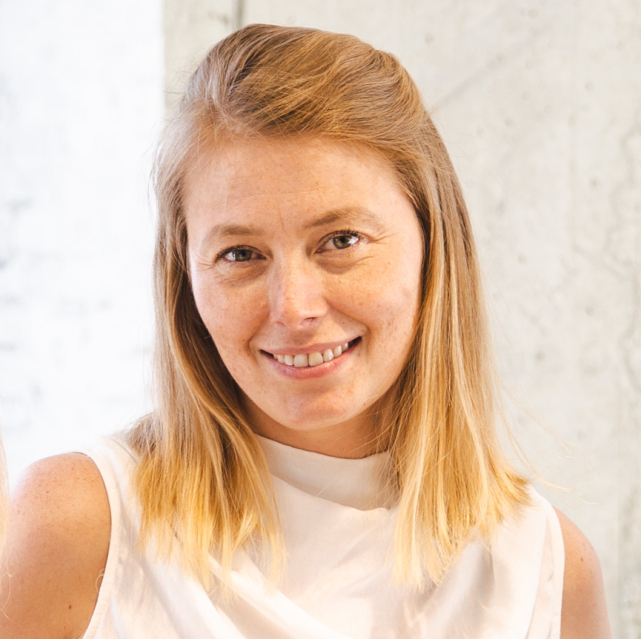
Julia Maués is the co-founder of GRASP Cancer. She was diagnosed with breast cancer in 2013 at age 29 while pregnant. Following the birth of a healthy boy, she learned the cancer had spread to her brain, liver, and bones. Julia’s been living with metastatic breast cancer for more than 13 years, and has benefitted from treatment advances made possible by research, which has fueled her commitment to bringing the voices of people with breast cancer into clinical trials to ensure they’re inclusive and reflect real-world experiences.
Your donation goes directly to what you read, hear, and see on Breastcancer.org.