Managing Mental Overload After a Breast Cancer Diagnosis
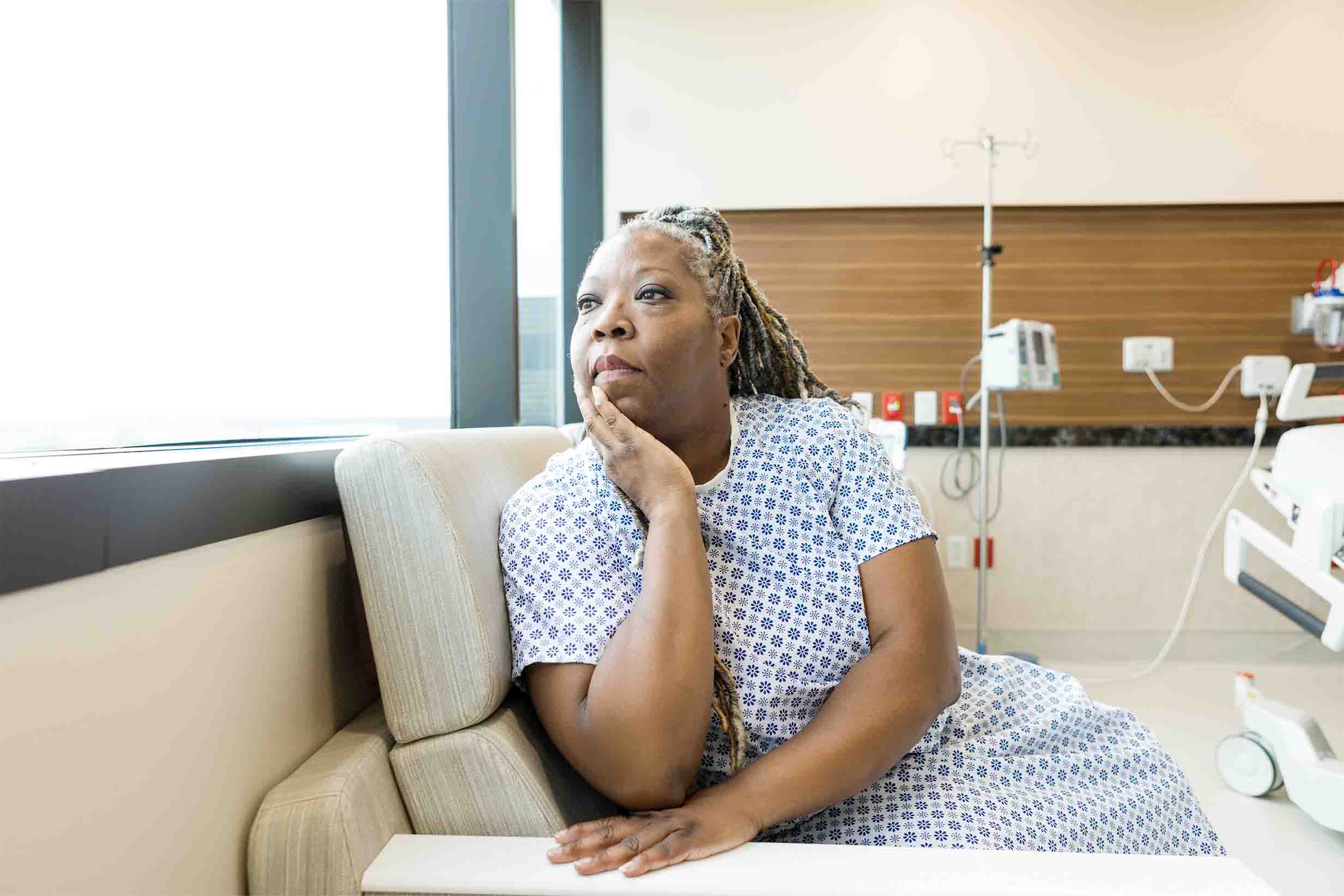
For some people a breast cancer diagnosis can bring on a rush of feelings: grief, anxiety, fear, hope, resentment, and anger. This podcast is the audio from a special Virtual Community Meetup featuring guest moderator Kelly Grosklags.
Listen to the episode to hear Kelly explain:
- Sponsor Message
why some people might feel more anxious after treatment is completed
- Sponsor Message
why feelings about a cancer diagnosis can be a form of grief
- Sponsor Message
how to make space for both/and instead of either/or
- Sponsor Message
how to move forward when you have ongoing oncology appointments
Welcome to The Breastcancer.org Podcast, the podcast that brings you the latest information on breast cancer research, treatments, side effects, and survivorship issues through expert interviews, as well as personal stories from people affected by breast cancer. Here's your host, Breastcancer.org Senior Editor, Jamie DePolo.
Jamie DePolo: As always, thank you for listening. This podcast is the audio from a special virtual community meetup featuring licensed clinical social worker and grief counselor Kelly Grosklags. Kelly helped Community Director Melissa Jenkins lead this meetup on the mental overload that can come with a breast cancer diagnosis, including feelings of grief and anxiety. We hope this podcast brings some hope and comfort to people with a history of breast cancer or who are living with the disease.
Kelly Grosklags: Hi everybody. Some of you I might know. Some of you I won’t know, but I am honored to be back with Breastcancer.org, and I would love to know where you’re from, like Melissa said. Often when we do this, we have people from around the globe, which is a wonderful thing that Breastcancer.org has such long arms that reach out and touch many people. I’m in Minneapolis, Minnesota. My name’s Kelly Grosklags. I have almost 30 years in the field of oncology, palliative care, and hospice. I had a private practice in Minneapolis, and my specialties are oncology and grief. And so, the two go hand in hand by the way, but I am honored to be here today.
We’re going to talk about the mental overload of a diagnosis. And you know, when I speak to groups like this, I always feel like, well, I’m just speaking to you about what you know already. But I come from, as I said, years of experience having been witness to many stories, many, many, many stories over the years.
Some people are living with stage 0 up to stage IV and lots in between. So I’ve paid attention and I’ve learned and one of the things I can say is that, I feel there should almost be a mandate of counseling and therapy that goes along with a diagnosis of breast cancer that is covered by insurance and that people should not have to pay for. It becomes a huge barrier. It doesn't mean that there’s anything wrong with you psychologically. It doesn't mean that you’re mentally ill. It means that you’re having a human experience with something that’s very traumatic. I was interviewed about PTSD, in particular with cancer, but in particular with breast cancer. I feel that a diagnosis of cancer can bring on the PTSD situation. It’s not just for war, rape, accidents. It’s anything that can threaten somebody's life or change somebody’s life. And so, some of you may really resonate with this, but I’ve had many patients that become very hypervigilant, which is a symptom of post-traumatic stress. They go into the doctor, they — I had a woman tell me once the minute the doctor opened the door, she felt like somebody scared her around the corner. People can become hypervigilant to body symptoms. Any single discomfort or pain can elicit a feeling of anxiety. It can activate feelings of not feeling safe.
And so, I just want to start off not with kind of this downer, but more of an acknowledgement. That even when people are diagnosed at stage 0, it changes and scares and brings kind of a dis-calibration if you will. Things are not calibrated in the family for a while and it’s that having to tell people, having to call people, having to deal with people’s reactions, having to deal with your family’s fear. All of these things, regardless of what stage, I just want to acknowledge that it can certainly bring up a lot of things.
I want to start, also, by just reading something quickly about hope because I think that hope is something that people with cancer dance with often, and people can be very scared to feel hope. I am holding space right now for a good friend of mine that has been diagnosed with cancer, a pretty serious type of cancer, and had follow-up scans yesterday. Was very scared to be hopeful because the fall down is more if you bring yourself up here with hope. And so, we had a lot of conversations, and just before I got on this call, I got a message that things are looking very, very good on the scan. So, the tumors have changed, which is just fantastic, because in reality, the type of cancer that they have is probably for the rest of their life. They’ll be doing the scan-xiety, but it was something that I thought I’m going to bring, I think it happened for that reason, because I’m supposed to bring here about, what do you hope for? And, do you allow yourself to hope? And, is hope something that you have a relationship with that’s pretty contingent or conditional? That if the original hope didn't come true — therefore everything’s hopeless.
So, in my first book A Comforted Heart there’s a chapter titled “Hope is Medicine,” and I just want to read a little bit of this because it’s going to kind of jumpstart a little bit of what we’re going to be talking about today.
“Does It Take Courage To Hope,” is the title.
I was interviewed for a publication regarding hope and living with cancer. I thought the interview could be difficult, as there can be a love-hate relationship with the word hope. I was asked, does it take courage to hope? The short answer is — yes. In my practice, I see people daily who dance with hope. It’s a bittersweet word to many, and most feel they will be let down if they allow themselves to believe in something. I see skepticism and fear of hoping acting as a protection of sorts. Unfortunately, fear is a major barrier to living and truly being present in our lives. Hope has its own cycle. It is always available. When one is diagnosed with cancer, the hope is for a cure. Of course it is. This is not always possible for some, so then what? Is there no hope? While the ultimate cure may be off the table, you can still hope for stability, tolerable treatment options, no evidence of disease, emotional support, and love. I work with many people who have said they feel they’re on a ride that they did not choose to get on. They often feel defeated that the original treatment maybe wasn’t successful, or that they have to switch treatments due to side effects. For some, this can cause significant anxiety and grief. It’s important for us and for you to talk out loud about what you are scared of. People will eventually transition to what their next goal or hope is. Anxiety can often, and often does, decrease after a plan is made.
So, when I was asked to do this talk, I saw some of the questions that came in when you were registering, and I lean back to my experience as a therapist. Anxiety, I think, is probably one of the number one things that people will feel, oftentimes post-treatment. If you're metastatic and there's never truly a post-treatment, it can almost be an anxiety that comes with chronic treatment, like if progression’s going to happen or if I'm going to have to change treatments.
But for those that are done with treatment, you may be surprised at the level of anxiety that comes with this. And for those that got to see me as a therapist or see other therapists during treatment, this is something we would talk about, and people would often say to me, oh, no, I cannot wait to be done with chemo. I cannot wait to stop this radiation. I cannot wait to be done. I'm crossing it off on my calendar. And for some, they really can just put it away and lock it away until their three-month scan or whatever.
But for the majority of humans, there can be something that gets ruffled up after treatment, and that is very, very common. And that's where this mental kind of overload can happen. Because during treatment, you're having constant check-ins with the healthcare team. You’re doing something about your cancer and it feels, maybe, empowering. People can be very surprised of the anxiety after treatment. And so, if you're currently in treatment, again I don't say this to scare you, I say this to empower you. In the majority of the patients that I have said to them, there's a high percentage of people that can feel anxious, then they get scan-xiety when they're going to go for their follow-up mammogram or their follow-up MRI or whatever that may be. And what we know about anxiety is that, if it is expressed, if it's talked about, if it's stated, people don't have to fix it. In fact, our loved ones can't fix it, but they can hold the space for it. And so, if you are struggling with anxiety, likely feeling some kind of anxiety, whether it's about an upcoming appointment or, again, maybe a feeling you have in your body, one of the number one things we want people to do is just say it. And if you're comfortable here, you can put in the chat what you're feeling anxious about at the moment.
And again, those things, the chat is not recorded so people aren't going to see your names and all that. But again, speaking that, if we're putting it out into the chat let's share it with other people knowing that probably someone else on this call has that same anxiety. And I want to deflate it a little bit by just putting it out here. And some of them I can maybe address specifically.
So, I mentioned when I read this grief, have any of you thought about your diagnosis as a form of loss? And if you have, have you leaned into or given yourself permission and space to grieve? Many times I meet with people and I say, this is a form of grief. And they'll say, but nobody died, and that's a common thing. Obviously, we relate grief to people dying. But this is about any time we are attached to something and we lose it or it changes, there is something that follows that's called grief. And when a diagnosis happens, it threatens your safety of health. It threatens — maybe you had to change a vacation, you had to move up a wedding, whatever that may be, which can be followed by a sense of grief. Maybe you don't recognize yourself. Maybe your sexual health has changed. Maybe your physical health and your stamina have changed. Grief brain and chemo brain are similar — forgetful, more emotional, more tired. All those things are very, very real and we can experience these things even years after a diagnosis if we did not allow ourselves in the process to honor that. So, I will get to some of these comments. Thank you. This is really amazing that you guys are willing to share this. I feel honored to hear this and if others can kind of look through those and hold the space for it, too.
And so, grief. Can you guys comment a little bit about what that feels like to hear that? Have you ever thought of having a diagnosis as grieving and really tuning into all of the different things that you've lost? Now, the other interesting thing about a diagnosis is that, with loss, there can also become some gains. Now, I'm not suggesting that this is a gift. That's not in my vernacular of what I talk about with people. If you consider it a gift because it moved you to do something, that's perfectly fine. I don't refer to it as a gift. I refer the diagnosis as an opportunity. Opportunities, possibly, to find your voice. I see some of your heads shaking and I like that this is resonating with some of you. An opportunity, possibly, for you to do things in your life that you've been putting off. An opportunity for some people to find their spiritual life, lots of different opportunities, and then to meet other people across the globe.
Friendships that are incredibly deep and authentic and real in a space that you can lean into that there's no pretending, no more pretending, and I think that that's a really important piece also to look at. That there's this space for both/and. Two things can be true. On one hand, it can be very, very upsetting, obviously. And on the other hand, you can feel hopeful. On one hand, there’s a lot that’s been taken from this diagnosis, and you’ve met some incredible people. So, we don’t have to live our lives as either/or. We don’t have to live our lives as either it’s one way or it’s another way. Two things can be true.
I remember when I spoke for a breast cancer conference out east and I brought this concept in, and one of the women just basically jumped out of her seat practically and said that was so helpful to her. That she could be scared of what was coming up in her appointment and hopeful. But she was doing it either/or. If she was hopeful, then that must have meant she wasn't scared. If she was scared, then she couldn't be hopeful, and I think it's important for us to know we can hold that; there's a container for two things to be true. In the morning you can feel really confident and still feel worried. And again, what is the antidote for all of this? It's to speak it. It's to say it. It's to share it. That's really, really important. Whether it's depression, anxiety. Sometimes people have obsessive-compulsive disorder where they're doing a lot of checking and compulsing and reading and constantly checking and constantly calling the doctor and all that, and that can feel very uncomfortable. But it can also be very common for some of these things to develop because for those who have had chemo, it actually impacts the brain chemistry. And so, it's not just a phenomenon of, oh, chemo brain like forgetfulness. It's also where it can change the brain chemistry and the different chemicals in the brain to actually contribute to clinical depression or anxiety. So, really important to be talking to your oncologist. My hope is that everyone on this call has been asked by their oncology team, how is your mood? How is your mental health? And that if you have been asked, that you have the honesty to talk about it. Because there is a lot that can be done for this mental health overload or grief and depression and anxiety.
So, let's get to — hello from Spain. That's wonderful. "So, how do we move forward when it feels like there's still so many cancer-related appointments that keep dragging you back in?" Yeah. What's really interesting, too, is sometimes my colleagues in medicine will say, you know, this patient is so focused on everything in their body. And I’ll say, well, we create that in the medical system because we ask them constantly. How's your pain? How's your symptoms? We're asking people to tune in. So, in some ways, they're doing exactly what we're asking them to do.
The problem with the anxiety piece or the trauma piece is those things can be misrepresented. We can get into a health anxiety cycle almost. And so, the thing about getting pulled into these appointments, again, two things can be true. An appointment is what? Generally, a half hour to an hour, maybe three if you have blood draws and you have to get infusions, whatever that may be. But then that entire day does not have to be dedicated to cancer. Again, two things can be true. So, we schedule that appointment, we go there, we give all the attention to the cancer experience and the cancer diagnosis.
And then what I really encourage people to do is schedule something fun, because if you don't have a lot of energy, it doesn't have to be a whirlwind thing but it can be coffee with a friend, tea with a friend, a walk with a relative, a visit to a zoo, whatever it may be to balance out the mental part of the day is really important. Because otherwise it can become very all-consuming. And if you are lacking energy, then ask somebody to come over for a cup of coffee. And what you really want to do is try and talk about something outside of the experience. That's how we retrain the brain that the total sum of your life is not this diagnosis, and that's how we rebalance things, and it might not feel genuine at first. You might be sitting and the anxiety is constantly this noise in your mind even when you're sitting there trying to have fun. That's okay. Give it grace. Kind of put it over here, have a container for it if you will. It can come along for the ride, but you're going to keep doing things that bring you comfort. Maybe you're a knitter. Maybe you schedule something in a beautiful park to go knitting. Anything that's going to soothe your nervous system is going to be really important to, again, train your brain and your psyche that the entire life isn't just cancer.
Sometimes people have the opposite problem where no one asks them about it and they don't have a space to talk about it. No one's asked them how they're doing because they look so good, so no one is bringing it up. You have to decide what's bringing you comfort and that's where these meetups, that's where these groups, that's where a therapist or a trusted person can be very, very helpful. Just somebody to say it to.
But I've also had many people say to me, I just want to talk about something else. I don’t want the first thing people do when they see me is identify, oh, there's the cancer patient. I want them to ask me about other things. What are my other interests? So, it's really kind of, you know, I hear two sides. I hear either people ask too much or they don't ask enough, and you have to decide for yourself what is comfortable.
As you get farther away from the initial diagnosis it can become, and likely becomes, more comfortable because it's your known and that's really important to hear today. That we get anxious when we live too far in the future, and we get depressed if we live too far in the past. So, it's learning to be comfortable in the moment, learning to be comfortable in the present. And it's just, it's so profound when we start thinking futuristically. Normally, it can be catastrophic. What if, what if, what if? What if it recurs? What if this immunotherapy doesn't work? What if? And that’s where we start living in the land of anxiety, and that’s when we have to do our best, pull ourself back, whatever you do to become in the now. But to also remember that whatever comes, it becomes your known, and there will be a team of people that will help you with it. Just like where you are right in this moment was once your unknown, and now is your known. And so, you know how to navigate your portal. You know how to advocate. You've maybe experienced one round of chemo. Maybe you've had the surgery, whatever that may be, and here you are showing up, getting through the day as best as you can. If I would have asked you 10 years ago, possibly, you were going to be diagnosed with breast cancer, stage II, it would likely be, oh my gosh, I don't know that I could do it. I couldn't handle it, whatever, and here you are doing it. So, it's an important reminder that when we get to our unknown time, it somehow becomes our known, and what I've always realized is there will be people there to help us through it. Even if we don't understand it.
And anticipation, by the way — and for those of you that have had a major loss of person, you've lost somebody that's died that's very close to you, I have — their birthday starts coming up. An anniversary starts coming up. The anticipation to the day — Father's Day just passed. Maybe you experienced a lot of anxiety or sadness or anger leading up to the day that felt more intense than the actual day itself. That can also be very common with appointments. It's that anticipation, anticipation or waiting for results. Waiting, waiting, waiting. A day can feel like a year. So, we have to soothe ourselves in that anticipation time also. It's not just about the day of, it's the days leading up to it. And then, also scheduling something very comforting and soothing for after the results or after the appointment or whatever that may be, whether it's good news or not good news. To really be able to, again, soothe that nervous system. Meditation, walking in nature, prayer, breathwork, even watching a funny movie. Laughing is key. Releases a lot of different chemicals into the body that — the cortisol that gets raised when we're anxious can also create this kind of mind fog that can be really difficult to work with.
Okay, bilateral mastectomy, yeah. "I am finished with active treatment for stage III. I have anxiety about not being here for my young kids." Absolutely, Cara, that's an understandable anxiety. I think what is really important is that we, again, acknowledge it, but that also to now be very, very present for your kids like you are. And to show up for your kiddos in the best way you can now.
One of the things I’ve done a lot with people is journaling to their kids, creating cards for their kids, whatever that may be. And that's not saying, oh, we think you're going to die. That is ways to stay present for the kids in the future. Things can happen. Car accidents, whatever that may be, things that aren't related to cancer. And I learned this early on from — my mother died when I was 11 from a cardiac episode and all these milestones that I went through in life, that I would have loved to had a card from her, a note of encouragement. I would have loved to have found a journal of what she thought about me as a child, or what are her wishes for me? So, I've done that and it's not necessarily easy to do, but it kind of helps with that anxiety of the what if not here. That, here are ways to be present.
But then, when people have anxiety about not being here for something, then we kick it into high gear about our moments of presence. See, we don't want to miss what is when we're worrying about what could be. And so, then we turn it into this really intense kind of moments of connection with the kids now, being very present in their lives, saying things to the people we love now. Forgiveness. You know, the four mantras that bring up so much healing, which are: I'm sorry, please forgive me, I love you, and thank you. And if you want to read more about these you can look up Ho'oponopono, which is a Hawaiian mantra. It talks a lot about the healing of people with psychiatric conditions in Hawaii by those four phrases and we can really, pretty much, apply them to anything in our lives, which is very powerful.
And I also will say, you know, tune into your kids. It's okay that kids, in fact, kids do need to hear the word cancer versus the euphemisms that sometimes are assigned to them, like monster. We don't want to use that. We want to use — and there's lots of things out there. I'm sure Breastcancer.org has things on the website about telling your children. Just very, very important to utilize the words and be age appropriate, but that it's also important to reassure them that mommy or daddy are going to the doctor to help with this illness that's called cancer. And especially if hair loss is a possibility, I mean, children realize that, and if we let them fill in the blanks they generally won't fill it in with accurate information and it's much scarier to them.
So, again, back to, okay, mental overload. Don't really have a lot of capacity to help with the kiddos. Then it is okay to get them in with child life specialists or to get them in with a therapist that maybe your pediatrician can recommend. Not saying there's anything wrong — there's nothing wrong with that. And again, in fact, back to my original statement, I wish therapy for the individual and the families was as much offered as nutrition counseling. I think we could alleviate a lot of the muck, if you will, in cancer treatment and help people be able to live much more quality of living if they're not bogged down by the noise of all this mental health and mental noise of fear and anxiety.
'The anxiety when you’re done with treatment and your doctor retires." Oh, yes. Yeah. Well, doctor retiring, boy, that can certainly bring up anxiety. Absolutely. Again, then, what I recommend people do is get referrals. You don't have to stay in your same clinic. Some people want to, but sometimes it's too hard for people to go to the clinic and have an association, maybe, with the original diagnosis. So, you can stay in your clinic, or sometimes people get referrals to go outside to other doctors when they're retiring.
But being done with treatment, you know, I wish this were an opportunity where we could talk about that because I think that, in of itself, it's to have a two-way conversation, but that could be for another time, is so profound. And again, I'm not trying to scare anybody that's in treatment because I do think the more you know and you're empowered, those patients tend to do better after treatment is done if they've even acknowledged that, oh, sometimes people get anxious because they're not having follow-ups, or they're not seeing their favorite nurse practitioner as often, or whatever that may be. And that's where you get into groups like this. That's where you can get into chats. That's where other women and men saying things like, oh, I've experienced that, too. That power of not feeling alone is profound medicine.
Some people are scared to say it out loud because they feel foolish or they feel whatever. I can tell you that if one of you on this call has an experience, there's a very good chance that another one has also experienced it. Whether it's a fear, whether it's a worry, whether it's a hope, whatever that may be, it's more common than not. But what we end up doing is shutting down, thinking we're foolish, thinking somebody's going to judge us, thinking we're silly. And so, we don't allow ourselves to speak it and what we know is anxiety, it manifests. It gets stronger when it's not spoken or written or shared or looked at or heard, and then it can create symptoms in the body that can actually be stress and psychosomatic. But again, with the trauma piece, can be misread as, oh no, it's back.
Now, we always recommend getting things checked out and you have to get to know your body post-treatment, post-diagnosis. People will split their lives in two — pre-diagnosis and post. That's it. It's kind of like before cancer and after. Life can look very different, but you know, we want you to get things checked out, but you're also going to know your new body and the way that it speaks and how you feel in the skin afterwards.
"ANC levels dropping too low." Yeah, there's a lot of anxiety about not only the recurrence, but things that — whether it's hemoglobin, whether it's magnesium, whether it's blood counts that can drop too low, that can create dangerous situations or people are worried about it. That it might impede them from going on a plane or going on vacation or seeing their family reunion. Again, very natural. And then, what do we do with those anxiety things? We find ways we can positively impact the ANC or positively impact different labs, and we try to lean into those things. And again, doing as much as we can do. Because really at all the basis of all of this, everyone is kind of at that loss of control, is feeling like everything else is in control but us. There are actually several things people can do to re-empower themselves after a diagnosis. And you know, I don't believe in, well, people didn't think positively enough so therefore they got cancer. I don't buy into any of that. But I will say, I want you to do what soothes your nervous system and if that's positively giving yourself affirmations about your health, there are lots of positive health meditations on YouTube that have been proven to be very helpful for people no matter what the diagnosis is. But it's kind of about retraining your brain because you've been thinking so much about this unhealthy body that we have to, again, retrain our brains that you're living in a healthy body when you're done with treatment. And again, this is for the people that are not metastatic.
I know there are some people with metastatic on here and I want to be sensitive that there will always be some form of treatment, but even in my work with hundreds of people living with metastatic disease, they can live very, very quality of life. And that comes back to kind of the things they're telling themselves. And so, for the sake of this particular — from what I've been told by Melissa and team, is that this was intended more for earlier stage or stage I, II, and III but that everyone’s welcome. So, I don’t want to be insensitive when I talk about post-treatment if there’s people living with metastatic on here, but I'm hoping a lot of this will still apply. I'm hoping, truly, that a lot of the things that I'm saying are going to be able to soothe you as well.
"Anxiety got stirred back up again after my mammogram a few weeks ago. I have complicated cysts that were benign, but it was obvious they had concerns during the scan due to how long it took." Oh, yes, I just — and you're just, you're in there alone. It's a cold room. You're trying to read their face. All the things that are going through your mind, oh my goodness, oh my goodness. Kristen, I hope it turned out okay. I think with people that have cysts, it can always be this thing, right? And especially with anybody that has a history, they take extra time. And what I've also learned is, sometimes, you know, you may be sitting in there, they're waiting for the radiologist. The radiologist could be working, could be doing a biopsy, but where we jump to is, oh my gosh they're looking at the scans. They're coming with bad news. All this, and again, what can be your coping in that moment? How do you soothe yourself? Do you reassure yourself that whatever this is going to be, there's going to be somebody that's going to help me, or do you have a mantra? Sometimes people bring a stone and they hold it. I have people that have rocks to help them stay grounded and they'll actually hold it in the mammogram. A little harder in an MRI. They don't let you take stuff in, but in mammograms, people — they bring their grounding stone, their lucky stone, whatever that may be, their lucky earrings, and it just kind of helps them remember — okay, I am going to be okay. But I can understand where that would stir up a lot.
"I feel like I've been punished." Yeah, you know, that is something I hear. Definitely. People ask, why? Why did this happen? Been a good person, never did anything to my body that was bad. Exercise, you know, all those things, and again, I think any of these things are just really, I really appreciate you saying that Jillian, because I think it's important that we have opportunities to say these things out loud without judgment. And by the way, generally, we are the ones that judge ourselves much more. So, we've already got this narrative in our mind. I don’t really want to say this. My hope is, for each one of you, is that when you put something out there like, I feel like I've been punished, that you have somebody or a group that can just say, wow, yeah, I’ve felt like that, too. Or that really sounds hard, or what does that feel like to just say that? Versus, what are you talking about? You're so lucky. It was only stage I. Blah, blah, blah. That is not helpful. Not at all. In fact, it's amazing that more people aren't getting smacked in this world when they're talking to people. It's like, why did you think that was okay to say? And that diminishes.
So, thank you Jillian for saying that, because, really, what I want to do, I want to, like — how many are on here have now seen that and held space for that? And you even got 100%. So, somebody else is feeling it. Again, we don't want to go down the rabbit hole too long with it, okay? But we want to be able to say it and we want, and we need people to meet it with tender hands and hold it for us. Not try to take it away, not try to diminish it, not try to change our mind with any of this stuff that we struggle with mentally. We have to have people that can hold it and not try to change our minds, not gaslight us into thinking we don't feel something we feel, or that we feel something we don't feel, or try to quickly change it around to have gratitude for something. Like, it's really powerful to let people kind of sit with the stuff that's hard and then maybe saying, how does that feel? And is there a way that I can support you? Is there something I can do to support you through this? Which is just really, really powerful to say to people.
Yeah, follow-up appointments. I think everybody can identify with that, especially that one-year mark. I just, I think the more that time goes on, I see — and these appointments get farther and farther away from the initial trauma of the diagnosis, I do see that people learn. I mean, I just was talking to somebody the other day and they had forgotten they had a mammo. It, like, popped up on their schedule in the morning. They'd forgotten they had a follow-up mammogram, it had been like 10 years. And just the acknowledgment of, oh my gosh, how she used to dread and think for days and days as it's coming up and this thing popped up on her schedule. And it was like, oh my gosh, it's this afternoon. That was an incredible, beautiful moment to experience with somebody, and she actually never thought she'd get there, but she did. Yeah.
Melissa Jenkins: We have 15 more minutes. I see a few questions, if you don't mind me guiding it a bit, Kelly. Is that okay?
Kelly Grosklags: Yeah.
Melissa Jenkins: Can you address, just briefly, the younger women of all stages who have been diagnosed and feel more robbed, rightly so, due to this experience? And then the second one is about cancer ghosting. How to sort of manage the people who — for people with any stage at any age.
Kelly Grosklags: Yeah. Absolutely. So, you have been robbed. I mean, I wish I had something beautiful to say about real young people. I mean, anybody that is diagnosed with a cancer has had parts of their lives that had been robbed from them. And again, that's where the grief comes in. I will say that, with some time, that tends to shift a little bit. People not only are robbed of the ways their bodies have changed, but they're robbed of peace and some feelings of being content in life or even the ability to make future plans and not think about, well, what if? What if there's a recurrence and you have that trip planned to Turkey, or the child's graduation from high school is next year? What if? What if? And so, it's not only being robbed of what is. It's that not ever feeling safe enough to be excited about something in the future. Again, that's a very natural thing, but I think it's important to talk about. And I think it's important to know that, with time, I have seen that get less and less intense. But while it's intense, it's something we talk about. It's something we just tell maybe your partner. As other people are just making plans for vacation and booking VRBOs and doing all these things real lightheartedly, you have this constant noise going on, but what if? What if? Or even, I've talked with people, you know, they are signing their kids up for camps next year and it's like, what if you don't feel well enough to take them to camp? What if? What if? What if? And again, I think these are just things that we have to be talking about, but I wish I could say something magical and beautiful to particularly younger people that are getting diagnosed. But I actually think it's — people are robbed. I think they're robbed of a lot of things. I don't know that — I can understand the feeling of punishment. I don't have anything, again, beautiful that I could eloquently say that would take away all of those feelings, because I don’t really want to take those away. I want you to be able to have those feelings, express them, and then have them held by somebody else. Because I think when we try to take things from people that are uncomfortable, especially people that love us, they want to grab it. And by doing that they diminish, they diminish, they diminish. What we need is people, and talking about ghosting, we need people to be able to show up for good times and hard times. That helps our mental health. We need somebody that isn't going to judge us.
Cancer ghosting is something that is talked about much more now. There is a podcast that I did with Breastcancer.org that is about cancer ghosting, but recently, one of the reporters reached out to me from The Washington Post. I think she's a 27-year-old lung cancer patient who did a reel on Instagram about cancer ghosting, and she wants to talk to me again about it in August because she has to go through some treatment. So, we had to take a break, but I would encourage you to look that up because the way she talks about it and that these people aren't necessarily bad people, but sometimes, they have their own health anxiety. They have their own reasoning. You know, it can often be the people we least expected.
And again, that's where the grief comes. It's really important to acknowledge that two things can be true. You can be grieving people that don't show up and celebrating people that you didn't expect to show up. So, two things can happen. Many people over the years have said to me — and Melissa, you probably have heard this, as well — that they feel closer to somebody at work than they do, maybe, their sister. They expected their sister to show up more. Now, sometimes people at work can get involved and it's not as emotionally intense for them. Sometimes our relatives have a harder time showing up for us because it's hard to see. Whatever the reason is, it doesn't matter, it hurts. And cancer ghosting — when people leave or when they stop asking or they pretend that just because it's been two years we're supposed to be on with it and not experience it anymore and not worry about it — very, very much betrayal. Betrayal is a very, very difficult thing to manage. And I've seen that be the reason that many people come to therapy, is because of betrayal. Not only do you feel betrayed by your body, but you’re feeling betrayed by people that, truly, you expect should be there.
And so, again, two things can be true. And people might say, but you've got so many friends. I don’t understand. I don’t — and that doesn't matter. It can be the one person that stands out that can be the hardest for people. So, when you feel like people have betrayed you, it's okay, and some people will let people know. They'll write them a letter. They'll send them a text. They'll talk to their face, and some people don't want to put the energy into it. It's really an individual thing, what you want to do when it comes to ghosting. But I will say that, for me, it's one of the saddest things. It actually comes with a lot of different diagnoses. It's not just cancer and it's heart-wrenching to see it, especially by the ones you never expected, but it's also okay to let new people in and let new people support you because, going back to the opportunity, that’s sometimes what the opportunity is. There are many women that feel closer to their breast cancer community than they do to anybody in their family and what I hope never happens is that people in your life would diminish.
Well, you haven't even met the person in person. How can you feel close to them? Oh, it’s amazing, human connection, especially after the pandemic. We have learned to be very connected to people even through a screen and if you feel close to somebody, then you are. Nobody else has to say, oh yeah, I validate that relationship for you. Or yeah, that if you feel close to somebody, then you are. And I think that that’s important. Those are the people that you lean into when you’re feeling scared about something or whatever that may be.
I know we have a couple minutes here so I do want to look at Mari's grief. "I ignored it initially. Kept working full-time through surgery, radiation, chemotherapy, with only a few days off. Finally hit me almost a year later. Was too exhausted to try to win over trust from a new boss, something I used to do easily. I resigned instead."
Yeah, I think that first year, people do kind of like, go full force into something. Some of it’s a distraction, to be distracted by something. But I see that a lot with working where people — you know, and I have to say that I know there’s a lot of situations, different financial situations out there. But if I can, I always try to get my patients maximum, maybe working 75%. It is really difficult to try and work full time and go through something like this emotionally. Because if you think about surgery alone, then you’ve got chemo, then you’ve got radiation, then you’ve got the mental component. Plus taking care of anything, and depending upon what state you work in or what size your company is, you can get disability coverage.
Melissa Jenkins: And what stage you are of breast cancer.
Kelly Grosklags: And what stage you are, yeah. And so, it’s not that you won’t go back and work full time. But my hope is — and sometimes people have enough vacation, that they can take every Friday off or something. They don’t even have to do any formal paperwork, but yeah, Mari, I could see. I mean, there wouldn't be any time to honor the grief, because you’re just trying to get through the physical stuff. And again, if you’re a single parent, if people are single parents, sometimes there’s no choice. But the ones that try to really work full-full time, kind of like what you say, it’ll hit, because the body keeps the score. And it keeps it in a place whether it’s grief or anxiety or fear, whatever that may be, and it will store it until it thinks we’re ready to deal with it. Which, typically, is after. And if we haven't kind of dealt with it in between or during, that’s when it tends to hit. And so, when people don’t have to go to work every day, I really encourage people to try and take some time off. I understand that’s a luxury for people. And so, I don’t say that lightly, but I’ll do whatever I can with the people I’m working with to try to find financial stability or resources for them to try and make it work, or even a GoFundMe or whatever that may be.
Melissa Jenkins: Kelly, maybe to end, people are asking a lot about, talking about the black cloud that lives above them. Again, regardless of what stage they’re in, to find joy again and that when one does find joy, not to be sort of like, pulled back down. Like, I’m just happy now and it’s going to fall again, but how to break through that dark cloud. How to allow that, not feel guilty about it. Also, how to sort of balance, like, having a good time, letting go with, "Oh, no, did I cause this? Am I causing anything?" You know, sort of this balance.
Kelly Grosklags: Yeah. The black cloud, as referred to by a lot of people, is something you actually — it’s kind of like with anxiety disorders or even grief. We actually have to befriend it, and it sounds strange, but the more we try to push it away, the stronger it’s going to get. And so, generally, things like black clouds or anxiety or discomfort have messages for us. That we have to kind of sit with it and tune into it. Maybe we journal it. Maybe we go to a therapist. It’s not about running away from that black cloud. It’s about, okay, what is it you need? Why do you keep following me? And if it’s robbing you of joy, whatever that might be, that would be an important insight to get, because then you can take it from there. But what happens is, people will say, I’m just trying to ignore this feeling I’m having, and I want to get rid of it. And I’m like, well, wait a minute, let’s let it sit here for a minute. Let’s let it sit here for a minute. Let’s try and talk with it. Let’s try and get some insight because it has messages for us that I believe are for our highest good, and it feels really scary until we allow it.
It’s kind of like when we’re working with children and they’re really scared of going into a dark room, and so they avoid the room. They avoid the room, but they really have to go into the room because it’s their bedroom. So, what do we do? We companion them. What scares you about this room? Okay, what do I have to do to make it less scary? Well, let’s turn on the light, and then we companion them. So, we ask somebody to companion you with this dark cloud. Which is somebody to listen to it, just to be able to say it. We walk into the room with the child, and then we discover that, okay, what are things in here that scare us? Oh, maybe this isn’t as scary but what we realized, and what the child learned, is they don’t have to do things alone. That's not what being brave is, was walking into the room by themselves. Being brave and courageous was telling us they had fear, which allows us, then, to partner with them. So, that’s what I would say about this thing, this cloud that’s following people around. Maybe stop. Maybe ask somebody to kind of look at it with you, whether that’s a professional, a friend, group, whatever that might be, journaling it. What messages does this have? Because when we see something and we hear something, it can diminish it, and I think that’s really important. And that the goal isn’t to completely get rid of the cloud, because, you know what? Especially for people that are newly in this, the first five years, that cloud, probably the what-if cloud, might stay. It’s about learning to navigate and integrate these new things into our lives. That’s when the power of it diminishes. But the running from it, just like with panic or grief, it runs faster and it picks up its momentum. So, journaling might be something that might be really helpful for people to kind of tune in. Like, even say, what messages do you have for me? And then, all of a sudden, it’s like, wow, this isn’t as intense as I thought. Or, wow, that just opened up something I think I want to get support for. So, again, maybe an opportunity.
So, this went fast. I’m grateful to all of you. You can certainly find me on Conversations With Kelly on Facebook, where I write about lots of different things, or Instagram @seemygrief. And then I do have a podcast called See My Grief also, but those are just ways to stay connected to me and certainly, I recognize some of your names that you’re already on there, so I love that. And I just want to thank you for giving your attention to all of this. I know some of you are joining from very different time zones and so, that means a lot. I’m very honored. And I will just encourage you to not betray yourself even if you’re feeling betrayed by others, but to really soothe yourself like you would a child that is scared. And to remember that if you are having this fear or anxiety, that there’s likely at least one other person that also is, and it’s in the sharing that we connect the most. Thank you, everybody. I’m so grateful.
Thank you for listening to The Breastcancer.org Podcast. Please subscribe on Apple Podcasts, Google Podcasts on Android, Spotify, or wherever you listen to podcasts. To share your thoughts about this or any episode, email us at podcast@breastcancer.org or leave feedback on the podcast episode landing page on our website. And remember, you can find out a lot more information about breast cancer at Breastcancer.org and you can connect with thousands of people affected by breast cancer by joining our online community.
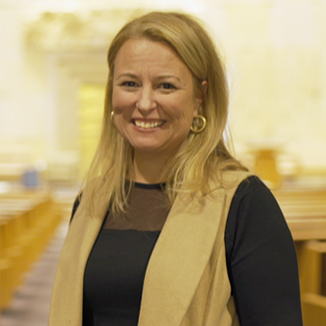
Kelly Grosklags is an experienced therapist who dedicated her practice to minimizing suffering through her work in oncology, palliative care, and hospice. Kelly is a licensed clinical social worker, a board-certified diplomate in clinical social work, and a fellow of the American Academy of Grief Counseling. She is the author of A Comforted Heart: An Oncology Psychotherapist Perspective on Finding Meaning and Hope During Illness and Loss. Kelly now teaches and speaks frequently about end-of-life issues, including care, grief and loss, both in person, on her website, Conversations With Kelly, and on her Conversations With Kelly Facebook page. Her passionate and supportive demeanor helps patients, caregivers and health professionals connect with the wisdom of making life more meaningful, coping with depression and anxiety, transforming fear into hope, healing versus curing, and the wisdom of dying a good death.
Your donation goes directly to what you read, hear, and see on Breastcancer.org.